
Oxford has a housing market unlike anywhere else in Butler County, and it changes the termite conversation. The Mile Square holds substantial homes from the 1800s and early 1900s on stone and brick foundations. Around and among them sit hundreds of properties that have been student rentals for decades — often the same old houses, subdivided, with deferred maintenance that accumulates in exactly the ways termites reward. And beyond the town, farmland edges and wooded lots supply colonies with plenty of natural cellulose within foraging distance. The result is a town where the age of the structure and the ownership model matter about equally.
Why Rental Properties Get Found Later
Termite damage is discovered by whoever is paying attention to the building, and in a rental market the incentives are not always aligned toward early discovery. A tenant who sees a few winged insects at a basement window in April is finishing a semester and moving out in three weeks. An owner who does not live locally sees the property between tenancies, when it is empty, in the summer, which is after swarm season has ended. That gap is how an infestation runs for several years unremarked.
The practical consequence is that when we are called to a long-term rental in Oxford, the damage is often more established than it would be on an owner-occupied house of the same age. That is not a criticism of anyone; it is a structural feature of how the information flows. It is also the argument for a periodic inspection on rental properties rather than waiting for somebody to report something.
The counterpoint worth stating: a great many Oxford rentals are well maintained by owners who have held them for decades and know exactly what they have. The variable is attention rather than ownership, and an annual look at the foundation line in April costs very little compared to a sill plate replacement.
Old Foundations and What They Hide
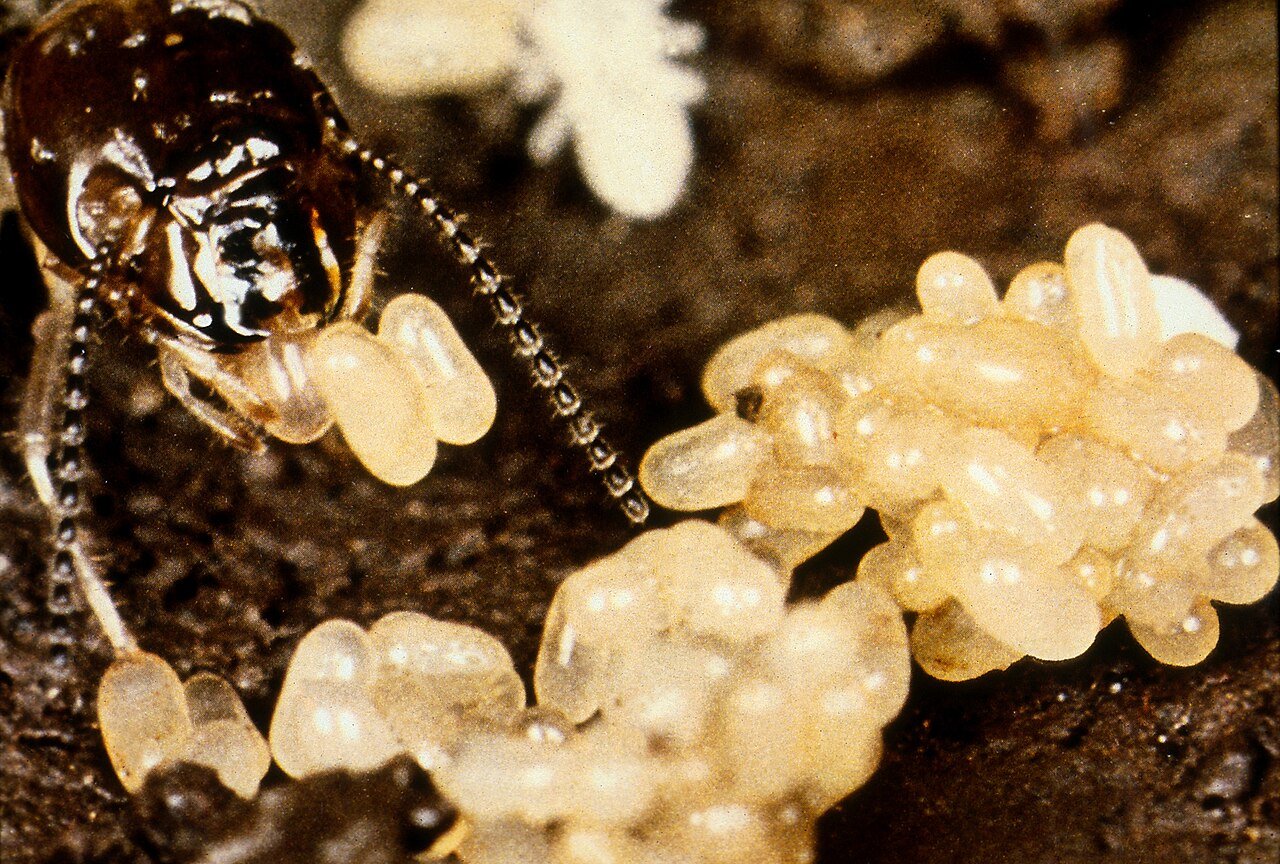
A modern poured footing is a continuous barrier. A stone or early brick foundation is not — it is a stacked assembly with mortar joints that have opened, been repointed, and in many Oxford basements been parged over with cement at some point. Termites do not need to breach masonry. They need a route through it, and old mortar joints provide one that is entirely concealed.
The joist pocket is the classic finding in this housing stock. Where floor joists bear on pockets cut into the masonry rather than on a sill plate sitting on top of it, the bearing end of the joist is surrounded by stone on three sides and invisible from every angle. It is where we most often find damage in houses of this age, and it takes deliberate looking rather than a glance around a basement.
Add the layers these houses have accumulated: a porch enclosed in the fifties, a kitchen extended in the seventies, a bathroom added upstairs when the house was subdivided into units, a deck bolted on in the nineties. Each creates a seam where new framing meets old masonry, and additions rarely received their own soil treatment. Those seams are where evidence turns up.
- Joist pockets in stone or brick walls — the classic finding, invisible without looking for it.
- Open or parged mortar joints providing concealed routes through the foundation.
- Dirt-floor basement sections and crawls beneath rear additions.
- Porch and addition slabs poured tight against original walls decades later.
- Stumps, buried lumber, and landscape timbers on wooded and farm-edge lots.
Swarm Season and the Academic Calendar
Termite swarms in Ohio happen on warm, still afternoons in March, April, and May, frequently the day after rain. That window sits squarely inside the spring semester, which means in Oxford the person most likely to witness a swarm is a student tenant who has no particular reason to know what they are looking at, and who will be gone by mid-May.
The evidence is specific and easy to describe, which makes it worth telling tenants what to look for: winged insects at a basement window or a sliding door track, and afterwards a small pile of shed wings, four to an insect and all the same length. That last detail is the diagnostic one, because no other insect around here leaves that behind. Ants swarm too, but ant wings are unequal in length and ants have elbowed antennae and a pinched waist.
A swarm indoors means a colony has been established in or under the structure long enough to mature, which generally takes three to five years. It is not the beginning of a problem. It is the announcement of one, and in a rental it is the single most valuable thing a tenant can report before they leave for the summer.
What Treatment Involves
The standard approach establishes a continuous treated zone in the soil around the entire foundation — trenched where there is soil, drilled and injected where a walk, stoop, porch slab, or driveway abuts the wall, and carried through expansion joints where they exist. On the tight lots common in and around the Mile Square, a substantial share of that perimeter is under concrete, and any quote that has not accounted for the hardscape has not looked at the property.
Interior work is more often part of the job on houses of this age than it is on newer construction. Where there is a dirt-floor basement section, a crawl beneath an addition, or joist pockets in a stone wall, treatment may need to address those directly rather than relying on an exterior band. That is a judgment made after looking at the specific building.
Where hardscape and construction history make a full liquid perimeter impractical, a monitored bait system is frequently the better answer — stations in the soil around the structure, inspected on a schedule, with active ones carrying material back to the colony. And the honest baseline either way: treatment is warranted when there is evidence. No live activity, no mud tubes, no damaged wood, no swarmers from the structure means the house is clear, and we will say so rather than sell a preventive application nobody needs.
The Farm and Woodland Edge
Beyond the town, Oxford properties frequently sit against farmland, fencerows, or woodlots, and that puts a substantial natural cellulose supply within easy foraging distance of a foundation. Subterranean termite colonies forage outward through soil looking for wood, and a colony established in a stump, a fencerow, or a pile of buried construction debris is not a problem until it encounters something better.
That argues for a few cheap habits on rural and edge lots: remove stumps and buried lumber during any landscaping work, keep firewood stacked off the ground and well away from the house, replace landscape timbers that sit in direct soil contact, and clear brush piles from against outbuildings. None of it eliminates termites from a property, and it should not try to. It reduces how many colonies are operating close enough to matter.
Across Butler County
Hamilton southeast has comparable historic stock, College Corner is west on the state line, and Eaton is north in Preble County.
If you are buying or selling, the $99 WDI inspection is the document a lender wants. General pest work is on the Oxford pest control page.
Frequently asked questions
I own a rental here. How often should it be looked at?
An annual look at the foundation line in spring is cheap insurance on an older property. In rentals the discovery gap is real — a tenant who sees swarmers in April is moving out in three weeks, and an owner who visits between tenancies is there in summer after swarm season has ended. That gap is how infestations run for years unremarked.
What should I tell my tenants to watch for?
Winged insects at a basement window or a sliding door track in spring, and afterwards a small pile of shed wings — four to an insect, all the same length. That last detail is diagnostic; no other insect here leaves it. Reporting it before they leave for the summer is genuinely valuable.
What is a joist pocket?
In older stone and brick foundations, floor joists bear on pockets cut into the wall rather than on a sill plate on top of it. That leaves the bearing end surrounded by masonry on three sides and invisible from any angle. It is the most common place we find damage in Oxford houses of this age.
The house is from 1890. Are termites inevitable?
No. Plenty of Mile Square houses have never had an infestation. What age changes is where evidence hides — joist pockets, open mortar joints, dirt-floor sections, and the seams where later additions meet old masonry. It means inspect carefully rather than assume the worst.
Do you treat preventively if nothing is found?
No. If there is no live activity, no mud tubes, no damaged wood, and no swarmers from the structure, we tell you the house is clear and you keep your money. Preemptive treatment on a clean house is not something we sell.
Does backing onto a field or woodlot make it worse?
It can. Stumps, fencerows, buried construction lumber, and landscape timbers in soil contact all support colonies within foraging distance. Removing that material during landscaping and keeping firewood off the ground reduces how many colonies operate near the structure.
Liquid treatment or bait stations?
Liquid establishes a continuous treated zone in the soil and is the usual choice where there is soil to trench. On tight Mile Square lots where much of the perimeter is under walks, drives, and porch slabs, a monitored bait system is frequently the more honest recommendation.
I am buying a student rental. Treatment or inspection first?
Inspection. A lender or purchase contract wants a WDI report on the NPMA-33 form documenting what was found, and that is $99 flat. Treatment only enters the conversation if the report actually finds something worth treating.