
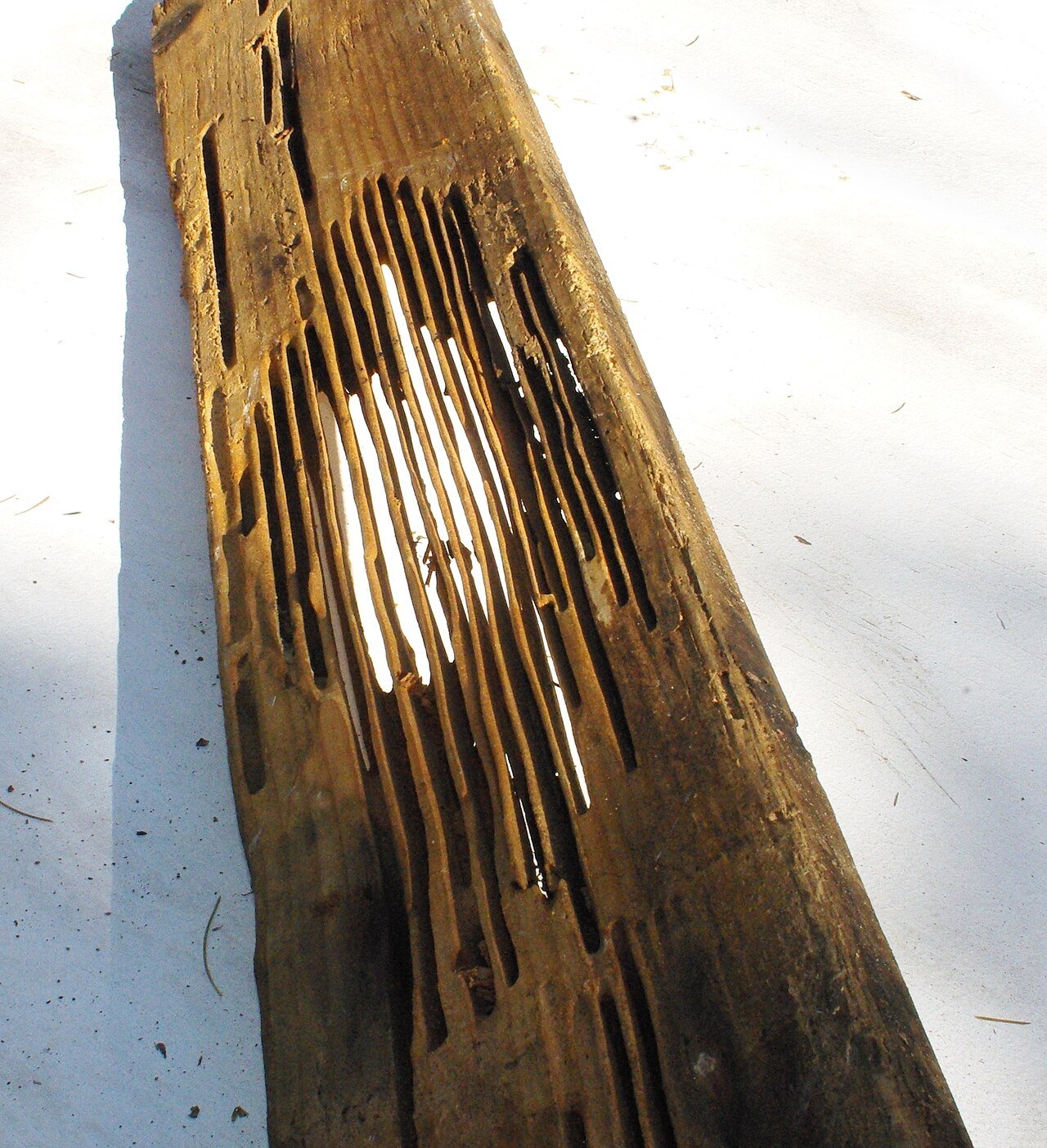
Hamilton is the oldest housing stock we work in, and termites here behave accordingly. The Dayton Lane and Rossville historic districts hold Victorians and four-squares from the 1880s and 1890s. German Village and Prospect Hill run brick two-flats and frame houses from the turn of the century. Lindenwald is largely 1920s through 1950s bungalows and ranches. These are houses built on limestone and brick foundations, sitting close to the Great Miami River, with a hundred and forty years of additions, porch enclosures, and basement conversions layered on. That history is exactly what an eastern subterranean termite is equipped to exploit.
Why Old Foundations Are Different
A modern poured concrete footing is a continuous barrier. A limestone or early brick foundation is not. It is a stacked assembly with mortar joints, and after a century of freeze-thaw cycling and settlement those joints have opened in places, been repointed in others, and in a great many Hamilton basements have been parged over with cement to hide the fact. Termites do not need to breach masonry. They only need a route through it, and old mortar joints provide one that is entirely concealed from view.
The second difference is the interior. A lot of these houses have a dirt-floor section in the basement or a crawl under a rear addition, and a dirt floor means soil in direct contact with the air of the structure. Where floor joists bear on a pocket in the stone wall, the bearing end of that joist can be surrounded by masonry on three sides and invisible from every angle. That joist pocket is the classic Hamilton termite finding, and it is not visible without knowing to look for it.
Third is the sheer number of eras stacked on one property. A Dayton Lane Victorian may have an original stone foundation, a 1920s brick rear addition on its own footing, a 1950s porch enclosure on piers, and a 1990s deck bolted to whatever was there. Four construction methods, four different ways wood meets ground, and no single vantage point from which to inspect them all at once.
The River and the Water Table
Hamilton sits on the Great Miami, and the parts of the city closest to it — Rossville, the neighborhoods below the levee line, the older streets running down toward the water — have a higher water table and heavier clay than ground further up. Subterranean termites require moisture, and consistently damp soil against a foundation is the condition that makes a colony viable close to a structure rather than out in a yard somewhere.
That shows up in basements as a familiar set of symptoms: efflorescence on the stone, a musty smell that never quite clears, a sump that runs more than it used to, and a section of sill plate that feels soft when probed. None of that is proof of termites, and plenty of Hamilton basements have every one of those conditions with no insect activity whatsoever. But it is the environment in which a colony that finds the house does very well, and it is why the moisture portion of the report carries more weight here than it does in a newer subdivision.
The practical corrections are the same ones that help the foundation generally: get downspouts discharging well away from the wall, regrade where soil slopes toward the house, keep the gutters genuinely clear, and address a sump that is no longer keeping up. Those are building repairs rather than pest control, and on a house like this they do more good than any chemical application.
What Treatment Looks Like on a Century Home
A perimeter treatment on a Hamilton house is more involved than on a subdivision home, and anybody quoting one sight unseen is guessing. The standard approach establishes a continuous treated zone in the soil around the foundation, trenched where there is soil and drilled and injected where a walk, stoop, porch slab, or driveway abuts the wall. On a city lot with the house set close to the property line, a shared drive, and a public sidewalk running past the foundation, a substantial share of that perimeter is under concrete.
Interior work is often necessary too, which is much less common on newer homes. Where a house has a dirt-floor basement section, a crawl under a rear addition, or joist pockets set into a stone wall, treatment may need to address those directly rather than relying on an exterior band alone. That is a judgment made after looking at the specific house, not before.
On houses where hardscape and construction history make a full liquid perimeter impractical, a monitored bait system is frequently the better answer. Stations go into the soil around the structure, get inspected on a schedule, and active ones carry material back to the colony. Bait eliminates colonies rather than excluding them, and on a tight urban lot with limited soil access it is often the more honest recommendation to make.
- Joist pockets in stone or brick walls — the classic Hamilton finding, invisible without deliberately looking.
- Open mortar joints in limestone foundations, frequently parged over at some point in the past.
- Dirt-floor basement sections and crawls under rear additions.
- Porch slabs and stoops poured tight against the original wall decades after it was built.
- Downspouts discharging at the foundation on lots with almost no side yard to carry water away.
Swarm Season in an Older Neighborhood
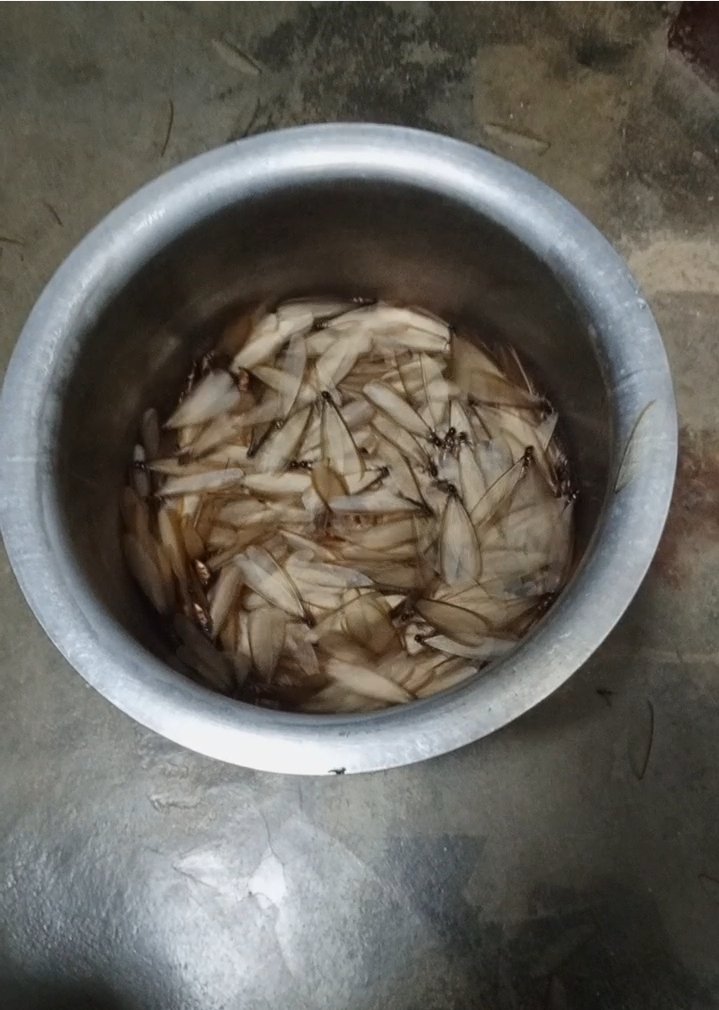
The visible event is the swarm. On a warm, still afternoon in March, April, or May — often the day after rain — a mature colony releases winged reproductives, and in a house like this they frequently emerge indoors: at a basement window, along a baseboard, or as a small pile of shed wings on a sill. Four equal-length wings dropped in a heap is the diagnostic detail, and it is not something any other insect around here leaves behind.
The instinct at that moment is relief, because the swarmers die indoors within hours and the pile vacuums up easily. That instinct is wrong. Swarmers emerging inside a structure indicate a colony established in or under that structure long enough to mature, which generally takes three to five years. The swarm is not the beginning of anything. It is an announcement about something that has been running quietly underneath the house for years.
In neighborhoods where houses sit fifteen feet apart, it is also worth understanding that a termite colony is a soil organism rather than a house organism. It forages outward through soil, and a colony feeding on your neighbor’s garage may well have foragers under your front porch. That is not cause for alarm, but it does mean a swarm reported on the block is worth paying attention to even when it did not happen at your address.
Additions Are Where It Starts
If there is one pattern that repeats across Hamilton, it is that termite evidence turns up at the seams between construction eras rather than in the original structure. A 1950s porch enclosure framed onto an 1890s house, a kitchen bumped out in the 1970s, a mud room added at some point by somebody working weekends — each of those creates a joint where new framing meets old masonry, and joints are where concealed routes exist.
Additions also rarely received their own soil treatment, and a slab poured tight against an existing foundation creates an expansion joint running straight down to soil. On an older house that joint is frequently hidden behind a later porch skirt or a run of landscaping that has been there for thirty years.
None of that makes an addition a liability. It makes it the part of the house that deserves the most attention during an inspection, and the part where a homeowner should be most willing to pull back mulch, open a skirt panel, or move stored items so somebody can actually see what is there.
Across Butler County
Fairfield to the south is a completely different housing era with a different set of entry points. Oxford is northwest and Middletown northeast, both with older cores comparable to Hamilton’s.
If you are buying or selling, the $99 WDI inspection is the document a lender wants. General pest work is on the Hamilton pest control page.
Frequently asked questions
My house is from 1895. Does that mean termites are inevitable?
No. Plenty of century homes in Dayton Lane and Rossville have never had an infestation. What age changes is where evidence hides — joist pockets in stone walls, open mortar joints, and dirt-floor sections give termites concealed routes a modern poured foundation does not. It means inspect carefully, not assume the worst.
What is a joist pocket and why does it matter?
In older stone and brick foundations, floor joists bear on pockets cut into the wall rather than on a sill plate sitting on top of it. That leaves the bearing end of the joist surrounded by masonry on three sides and invisible from any angle. It is the most common place we find termite damage in Hamilton, and it takes deliberate looking.
Does being close to the river make it worse?
Indirectly. Neighborhoods nearer the Great Miami have a higher water table and heavier clay, and subterranean termites need moisture. Persistently damp soil against a foundation makes a colony viable close to the house rather than out in the yard. Drainage corrections help more than anything chemical.
I found a pile of wings on the basement windowsill.
Almost certainly a termite swarm — four equal-length shed wings in a pile is the signature. It indicates a mature colony established in or under the structure, since colonies take three to five years to produce swarmers. That is the point to have it looked at rather than vacuum it up and move on.
Do you treat preventively?
No. If there is no live activity, no mud tubes, no damaged wood, and no swarmers from the structure, we tell you the house is clear and you keep your money. On old houses especially, we would rather see you fix drainage than buy a chemical application nobody needs.
My basement has a dirt floor in one section. Is that a problem?
It is a conducive condition and it has to be inspected directly rather than from the finished portion. A dirt floor puts soil in direct contact with the structure’s air and often with framing. It does not mean you have termites; it means that section carries more of the inspection.
Liquid treatment or bait on a city lot?
It depends on soil access. On a tight lot where the house sits close to the line, with a shared drive, public walk, and porch slabs against the foundation, much of the perimeter is under concrete, and a monitored bait system is frequently the more honest recommendation.
My neighbor had a swarm. Should I worry?
It is worth an inspection rather than worry. A termite colony is a soil organism that forages outward, so where houses sit close together a colony feeding on one property may have foragers under the next. A swarm on the block is a reason to look.