Two closely-related bugs run parallel careers in Ohio, and gardeners meet both without ever getting a clean introduction: the squash bug — the gray vine-killer behind every mysteriously wilting zucchini — and the leaf-footed bug, its larger cousin with the unmistakable flared hind legs, which splits its time between garden crops and, come October, your living room curtains. They’re constantly mistaken for each other, for stink bugs, and (worryingly and wrongly) for kissing bugs. This page runs the full file on both: identification, the wilt mechanism that makes squash bugs the pumpkin patch’s worst enemy, the coordinated hand-warfare that actually beats them (sprays mostly don’t), the fall-invader chapter, and the sort against the lookalikes that matter.
The Squash Bug: the Vine Assassin
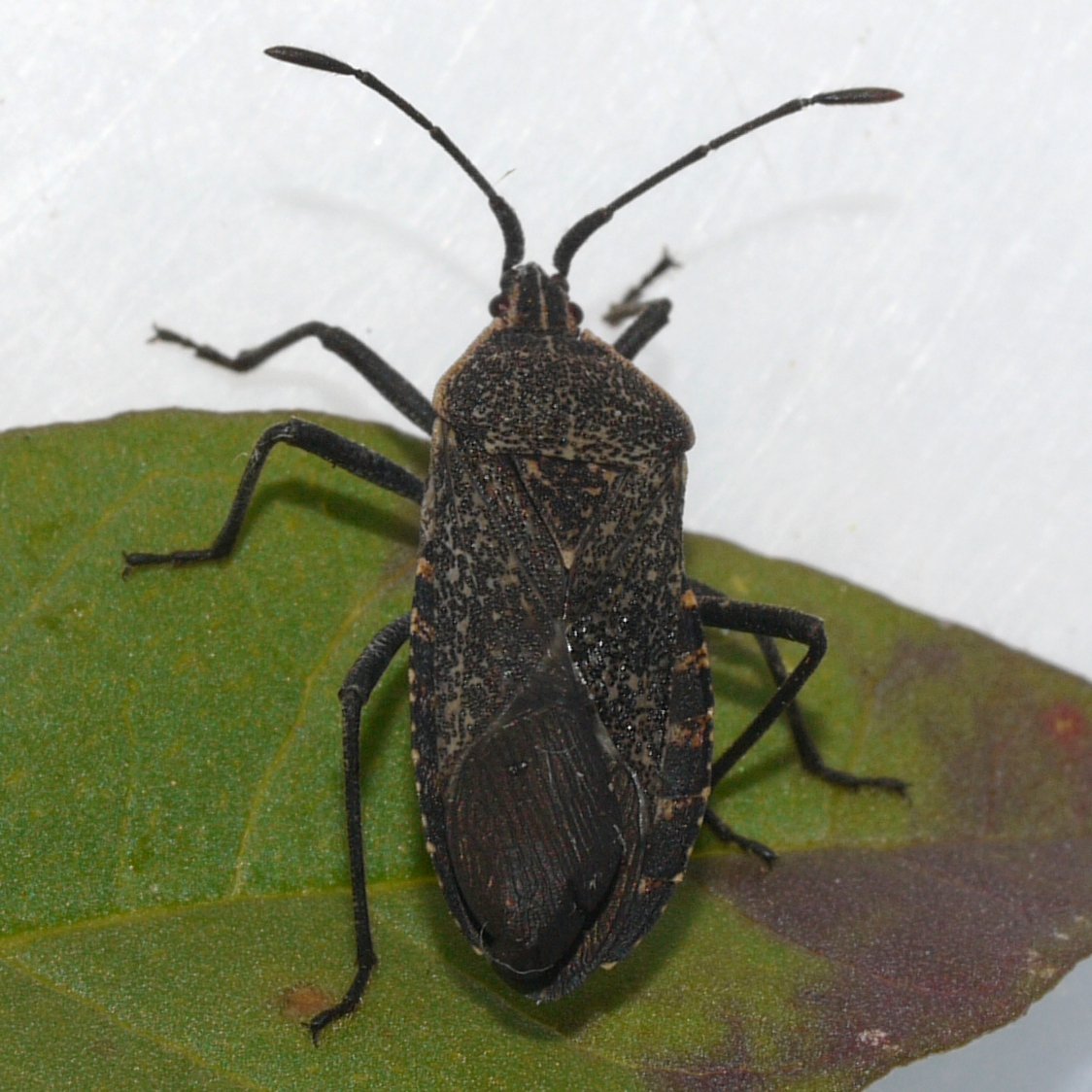
The squash bug (Anasa tristis) is a dark gray-brown shield-shaped bug about five-eighths of an inch, flat-backed with orange-striped abdomen edges peeking from under its wings, and it is a specialist: cucurbits — squash, zucchini, pumpkins, cucumbers, melons — and essentially nothing else. Its needle mouthparts drain sap and inject saliva that collapses the vine’s plumbing; enough feeding produces “anasa wilt,” where whole runners yellow, crisp, and die in days — the classic mid-July heartbreak of a bed that looked perfect on Sunday. The tells, in the order to hunt them: bronze egg clusters laid in neat diamonds on leaf undersides (often in the V of leaf veins), gray-green nymphs in gangs on stems and leaf backs, and the adults themselves hiding at the plant’s base under mulch and boards by day. They overwinter as adults in garden debris and emerge exactly when your transplants go in — a synchronized ambush honed on ten thousand years of agriculture.
Both belong in the vegetable patch, and the leaf-footed cousin is the one that wanders indoors in autumn. That part is pest control in Dayton.
The Leaf-Footed Bug: the Cousin With the Flags
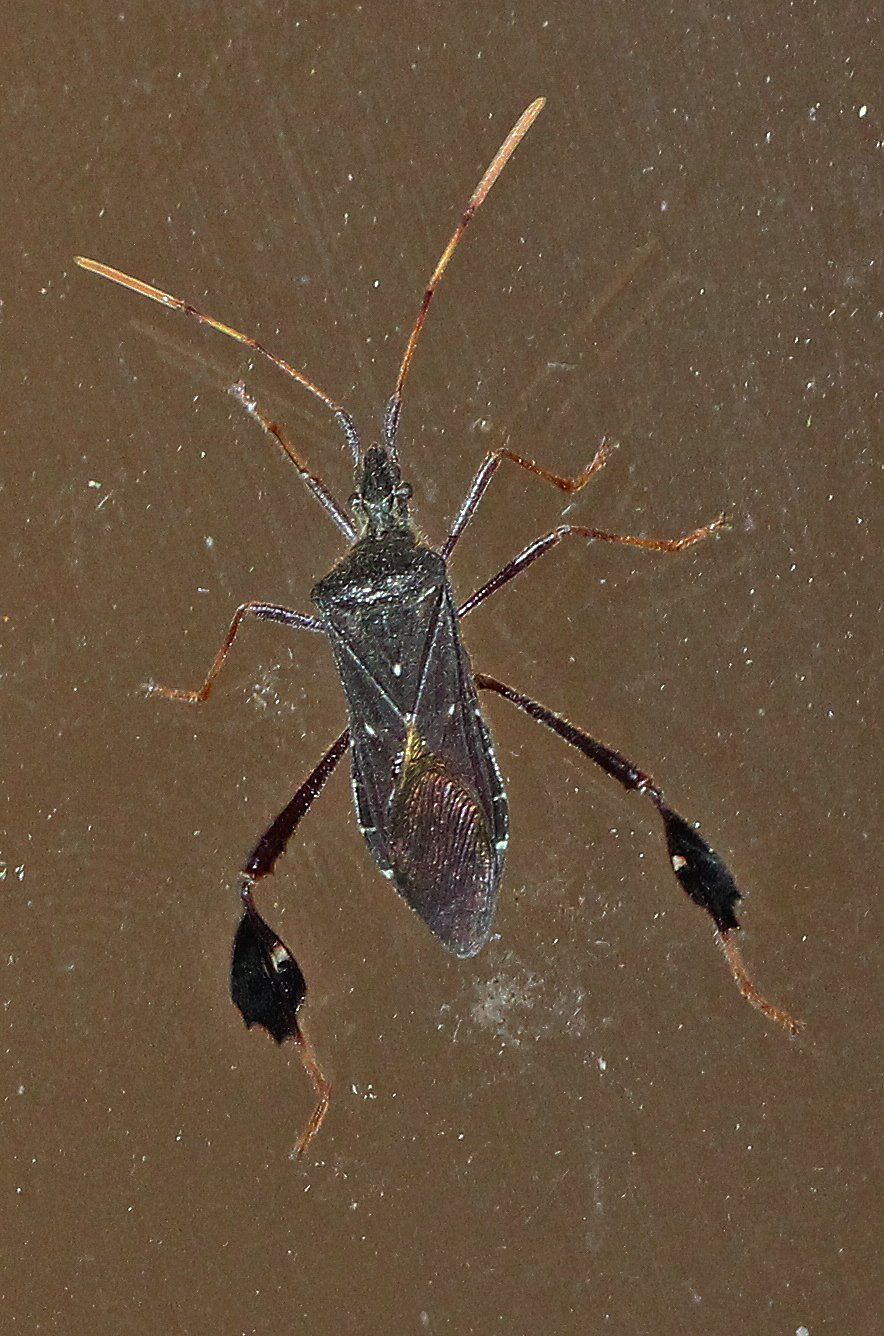
Leaf-footed bugs (Leptoglossus species) are longer — up to an inch — darker brown, and carry the family crest: hind legs flared into flat, leaf-shaped paddles, often with a white zigzag band across the wings. They’re generalists where squash bugs specialize: tomatoes (their pinprick feeding causes the pale cloudy spots on ripening fruit), peppers, beans, fruit and nut trees, and ornamental seeds all take casual damage — usually cosmetic, occasionally consequential in heavy years. Their second career matters to non-gardeners: like the brown marmorated stink bug and boxelder bug, leaf-footed bugs treat Ohio houses as overwintering hotels, appearing on sunny fall siding and slipping through gaps to spend January behind your curtains — harmless, mildly fragrant if swatted, and entirely a caulk-and-vacuum matter covered by the standard fall-invader playbook.
Beating Squash Bugs: the Hand-War Protocol (Sprays Mostly Lose)
The honest chemistry report first: adult squash bugs shrug off most garden insecticides behind their armor, the sprays that do touch them also execute the bees your cucurbit flowers require, and by the time wilt shows, the damage is plumbed in. The war that works is mechanical, weekly, and starts before you see damage:
- Egg patrol, twice a week: flip leaves, find the bronze diamond clusters, and crush or tape-strip them (packing tape lifts a whole cluster in one press). Every cluster is 15–40 future nymphs; June egg patrol is July’s harvest.
- The board trap: lay a shingle or board beside each plant; adults shelter under it overnight, and a dawn flip-and-stomp clears the neighborhood daily. The oldest trick in the garden book, still the best.
- Nymph gang removal: the gray gangs knock into soapy water with one glove swipe — they cluster obligingly.
- Trap cropping: a sacrificial early squash planted a few weeks ahead pulls the emerging overwinterers to one address for concentrated justice.
- Fall demolition: the year’s real move — clear the bed’s debris and old vines at season’s end, because that’s the overwintering hotel, and demolishing it in October is next June’s population control.
- Row cover with an asterisk: lightweight cover excludes them completely — until flowering, when it must come off for the bees; combine with the board traps from then on.
Insecticidal soap earns its narrow slot against young nymph gangs (contact-only, bee-safer at dusk); anything stronger costs more pollination than it saves squash. The garden’s whole cast and calendar live on the garden pest ID page — squash bugs are simply its most defeatable villain, provided the war starts at the egg stage.
The Lookalike Sort (One of These Matters Medically)
- Squash bug vs. stink bug: stink bugs are wider, shield-shaped, and wander everywhere; squash bugs are longer, flatter, and never far from cucurbits. Both aroma-capable; different careers.
- Leaf-footed vs. squash bug: check the hind legs — flags mean leaf-footed. No flags plus a zucchini address means squash bug.
- The one that matters: kissing bugs. Leaf-footed bugs are the #1 false alarm behind kissing-bug scares — similar size, similar shape. The separators: kissing bugs have a cone-shaped head, orange-and-black banded abdomen edges, and NO leg flags. Ohio kissing-bug encounters are genuinely rare; leaf-footed bugs on fall siding are constant — but the distinction deserves the careful look, and our kissing bug page runs the full protocol for the finds that fail the flag test.
- Assassin bugs generally: beneficial predators sharing the body plan — the wheel bug’s cog-crest is unmistakable; leave the predators to their work.
Garden under siege, fall siding hosting conventions, or a flag-less suspect you’d like ruled out? Send the photo — ID free, verdicts honest, and the only sprays we’ll recommend for this family are the ones that spare your bees. Serving Dayton and all of Montgomery, Greene, Miami, Clark, Warren, Butler, Preble, and Darke counties.
The Squash Bug Season, Week by Week
The campaign calendar that makes the hand-war manageable: late May–June — overwintered adults emerge from debris and fly to new transplants; board traps go down WITH the transplants, and the first egg patrols start two weeks later. June–July — peak egg-laying; the twice-weekly leaf-flip is the season’s decisive habit, and every taped cluster deletes a July gang. Mid-July–August — nymph gangs mature and wilt pressure peaks; this is when unmanaged beds collapse and managed ones shrug, the difference entirely purchased in June. September — the year’s adults feed lazily on remaining fruit and begin drifting toward overwintering cover; damage matters less, cleanup matters more. October — demolition month: vines out, debris cleared, boards stored, bed turned — the overwintering vacancy notice that halves next year’s emergence. An hour a week across the season, front-loaded in June: that’s the entire price of pumpkins that make it to Halloween.
One allocation note for mixed gardens: squash bugs’ strict cucurbit loyalty means the war never spreads — your tomatoes’ pale spots are the leaf-footed cousin’s casual work, and the two campaigns don’t share tactics beyond the fall cleanup both reward. Fight the specialist hard and the generalist barely at all; that division wins both fronts for one garden’s worth of effort.
Why This Family Defeats Sprays (the Design Story)
The chemistry failure isn’t bad luck — it’s anatomy. True bugs of this family drink through a sealed straw rather than chewing, so stomach poisons coating leaf surfaces never enter the meal; their waxy, armored exoskeletons shed contact sprays that soak softer insects; and their egg clusters’ bronze shells resist nearly everything labeled for a garden. Add the behavioral armor — adults dropping to mulch at the first disturbance, nymphs feeding on leaf undersides the spray never wets — and the family amounts to a design brief against exactly the products the garden center leads with. The mechanical war wins because it ignores the armor entirely: tape doesn’t care about wax, boards exploit the sheltering instinct, and October’s cleanup attacks the one life stage with no defense at all — the overwinterer with nowhere to sleep. It’s the same lesson our Japanese beetle and repellent pages keep teaching from different angles: when a pest’s biology defeats the shelf, the shelf keeps selling anyway — and the fix was in the tool shed the whole time.
The Tomato Spotting File (Leaf-Footed Edition)
Since the leaf-footed bug’s most-asked question is the tomato one, the specifics: their pinprick feeding on green fruit produces pale yellow “cloudy spots” under the skin of the ripening tomato — cosmetic corking a quarter-inch across, unpleasant to look at, harmless to eat around, and frequently blamed on disease or stink bugs (stink bugs cause identical marks; the two share the crime). Heavy years bring enough spotting to matter for market growers; garden-scale, the honest counsel is triage — pick promptly as fruit colors (spotting accrues on the vine), tolerate the cosmetic tax, and hand-remove the slow adults on morning rounds when numbers annoy. The nymphs are the ambush to know: young leaf-footed nymphs are bright orange-red and cluster dramatically, panicking gardeners into miscalling them something exotic; they’re the same harmless-to-you seed-feeder in its fire-colored youth. As with the whole family, the response scales to the crop’s stakes, and for a backyard tomato row the stakes rarely justify more than gloves and patience.
The two-cousin summary: the squash bug is a beatable specialist whose war is won with tape, boards, and an October rake; the leaf-footed bug is a tolerable generalist whose worst offense is cosmetic tomatoes and a fondness for your curtains in January. Neither earns a spray program, one earns a weekly habit, and both earn the careful glance that rules out the rare lookalike that actually matters. Garden literacy, as ever, is the cheapest treatment this library sells.
(Community-garden postscript: squash bug pressure runs highest where cucurbit beds sit close-packed year over year — community plots and school gardens are the textbook case — and the fixes are cooperative by nature: synchronized fall cleanups, shared board-trap rounds, and rotating the squash quarter annually. One organized plot meeting in October outperforms a season of individual julyheroics; if your plot association wants the two-paragraph how-to, this page IS it — share the link.)
And one last identification mercy for the June gardener: the squash VINE BORER — the other cucurbit killer, whose moth looks like a wasp and whose larva tunnels stems from inside — produces similar wilt with none of the bugs visible. If your vines collapse but the leaf-flips find no eggs and no gangs, check stem bases for entry holes and orange sawdust-frass; that’s the borer’s signature, its own management story, and the reason a wilting vine deserves both inspections before either verdict. Two assassins, one symptom; the autopsy tells them apart.
Frequently Asked Questions
What is killing my zucchini and squash vines?
If runners wilt, yellow, and crisp in days — classic “anasa wilt” — hunt squash bugs: bronze egg diamonds under leaves, gray nymph gangs on stems, adults under mulch at the base. Their sap-draining and toxic saliva collapse the vine’s plumbing; the fix is the egg-patrol-and-board-trap war, started early.
What do squash bug eggs look like?
Bronze-to-copper ovals laid in neat diamond clusters of 15–40 on leaf undersides, often in the vein V. Crush or tape-strip them on sight — packing tape lifts whole clusters — because June’s egg patrol is the highest-leverage hour in the cucurbit calendar.
Do sprays work on squash bugs?
Poorly and expensively: armored adults shrug off most garden insecticides, and the effective ones kill the bees your squash flowers require. Insecticidal soap on young nymphs at dusk is the narrow exception; everything else is hand warfare, board traps, row cover, and fall cleanup — which genuinely work.
What is the big brown bug with leaf-shaped back legs?
A leaf-footed bug — the squash bug’s inch-long cousin with flared hind-leg “flags” and usually a white zigzag wing band. Garden generalist (tomato spotting, seed feeding), fall houseguest, and completely harmless to people.
Are leaf-footed bugs kissing bugs?
Almost never — leaf-footed bugs are the #1 kissing-bug false alarm. Check the legs and head: leaf flags = leaf-footed, harmless. No flags + cone-shaped head + orange-black banded edges = run the kissing bug protocol on our dedicated page. The careful look is worth it; the odds favor the flags.
Why are these bugs on my house every fall?
Leaf-footed bugs overwinter as adults and treat warm siding as hotel check-in each October, exactly like stink bugs and boxelder bugs. The fix is the standard fall-invader plan: caulk gaps, screen vents, vacuum (don’t swat — they’re fragrant), no chemistry required.
Do squash bugs or leaf-footed bugs bite people?
Effectively no — both are plant-feeders whose mouthparts aren’t built for skin; at most a handled bug delivers a startled probe. The stakes are vines and tomatoes, never people or pets.
How do I keep squash bugs away next year?
October beats June: demolish the overwintering hotel by clearing bed debris, old vines, and board piles at season’s end; rotate cucurbit beds; start row cover at transplant; and plant a sacrificial early squash to concentrate the spring emergers. The population you prevent in fall never needs fighting in July.