
“Black beetle in my house” is one of the most-searched and least-answered pest questions on the internet, because the honest response is a lineup, not a name — Ohio homes host at least six regular black beetles, and they range from a predator actively working for you to a pantry breach announcing itself. The good news: the lineup sorts in under a minute on three questions — how fast, how many, and where — and the sort determines everything, because half these beetles need escorting and half need a cabinet audit. Here’s the full cast, the sixty-second sort, and the response each verdict earns.
The Sixty-Second Sort
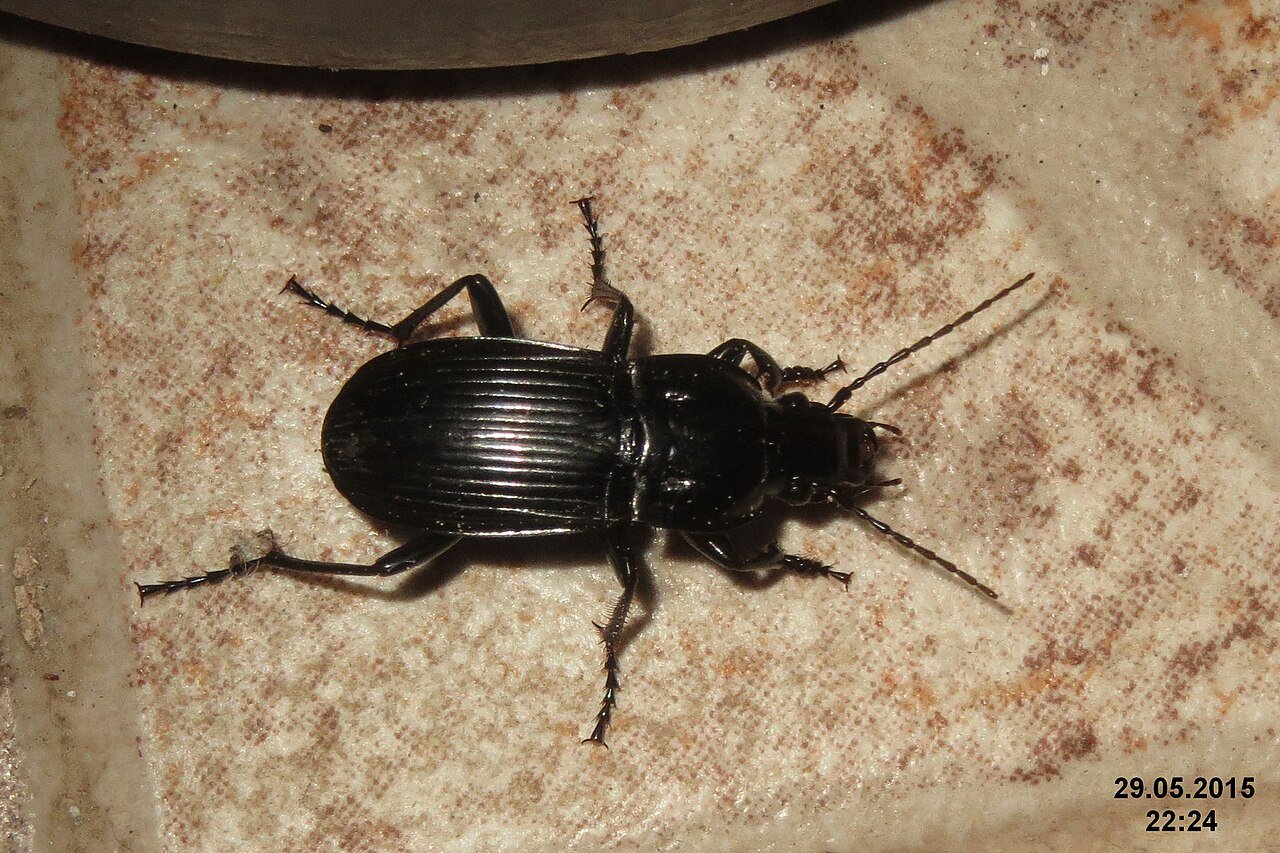
- Fast, glossy, alone, near a door or basement wall? Ground beetle — a wandering outdoor predator. Escort and done.
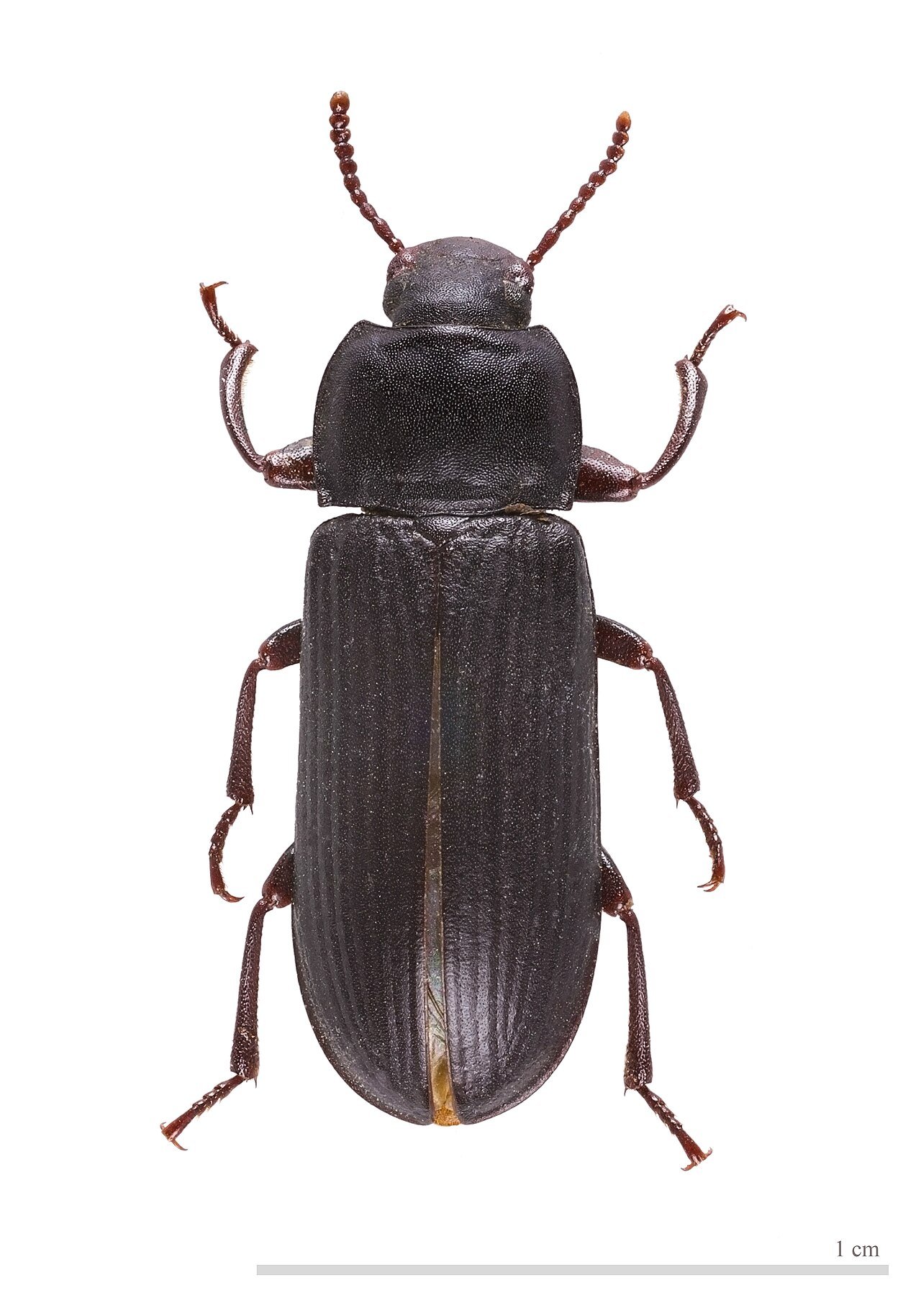
- Slow, matte or satin black, repeatedly near the pantry or pet food? Darkling beetle — stored-product breach. Audit the dry goods.
- Small (rice-grain), in or near flour, cereal, or the cabinet crack? Flour beetle or weevil — the pantry files take over.
- Tiny, domed, mottled-to-black, on windowsills in late winter? Carpet beetle — the fabric-pest file.
- Chunky, spiky legs, arrived at night near a porch light in June? A June bug’s darker cousin or a lost outdoor scarab — same porch-light story as the giants, smaller print.
- Glossy oval, NO visible antennae segments, scurrying the kitchen at night? Stop — that may be a young cockroach wearing a beetle costume, and the difference matters enormously; the nymph ID page settles it in one photo.
The Ground Beetle: the One Working for You
The single most common answer is the ground beetle — family Carabidae, several hundred Ohio species, the classic being a half-inch to inch of polished black armor with subtle grooved wing covers and serious running speed. They’re night-shift predators of slugs, caterpillars, and soft-bodied pests, patrolling mulch lines and foundations — and they wander indoors by accident under doors and through gaps, usually after rain or during summer heat, where they hide under things and panic-sprint when discovered. They cannot breed indoors, don’t touch food or fabric, and bite only if hand-squeezed (a pinch, no consequence; a few species add a vinegary defensive whiff). The complete protocol: cup, cardboard, garden — you’re releasing an unpaid contractor back to the job site. Recurring ground beetles are a door-sweep memo, not an infestation: the same quarter-inch exclusion standard that stops mice retires them entirely.
Six beetles, six different sources, and only one of them is the pantry. Sorting out which is what pest control in Dayton does first.
The Darkling Beetle: the One Reading Your Pantry
The second answer matters more: darkling beetles — the adult form of the mealworm — are slower, matte-to-satin black, and their repeated appearance indoors is a message with an address, because their larvae develop in stored grain products, spilled feed, and accumulated organic debris. One darkling is a wanderer; darklings weekly means mealworms somewhere — a torn flour bag at the cabinet back, the bird seed sack in the garage, the pet food bin’s crumb stratum, or (the sleeper source) a rodent’s abandoned seed cache in a wall or attic from a hoarding operation nobody cleaned up. The response is the standard stored-product audit: everything grain-based into sealed containers, the spill archaeology done behind and beneath, the source bag found and binned — the same protocol the pantry files runs for its whole cast.
The Impostor Check: Beetle or Roach?
The sort’s most consequential fork deserves its own section, because a German cockroach nymph and a small black beetle share a kitchen, a color, and a gait at first glance — and only one of them compounds weekly. The three-second separators: antennae (roach nymphs wave long, whip-thin antennae as long as their body; beetles carry short, segmented, often clubbed ones), texture (nymphs look soft-shelled with a pale back-stripe; beetles wear rigid armor with a visible seam down the wing covers), and behavior (nymphs freeze-then-dart for cover and are never truly alone; beetles blunder in the open). If your “beetle” fails the antenna test, stop reading this page and start the roach protocol — early-week response is the entire ballgame there, and misfiling a nymph as a beetle is how kitchens lose their head start.
The Response Menu, Verdict by Verdict
- Ground beetle: escort out; fit door sweeps and seal the gap it used. Zero chemistry warranted, ever.
- Darkling/mealworm evidence: the stored-product audit — sealed containers, spill archaeology, source bag binned; freeze salvageable dry goods four days if in doubt. Persistent darklings with a clean pantry = hunt the hidden cache (rodent hoards, wall voids, that garage seed bag).
- Flour beetles/weevils: the full pantry protocol on their pages — these breed IN the food, so the audit is the treatment.
- Carpet beetle: the fabric-and-vacuum program on its page; the beetle at the window is the adult stage of a larva already working somewhere soft.
- Roach nymph: gel bait and monitors this week, per the roach playbook.
- Recurring mixed traffic with no source found: that pattern — multiple species wandering in — is an exclusion-and-moisture audit wearing six costumes, and it’s a perimeter program conversation more than a species one.
The meta-lesson this page shares with the whole ID library: “black beetle” is a description, not a diagnosis — and the sixty seconds spent converting one to the other is the difference between escorting an ally, auditing a cabinet, and catching a roach problem in its opening week. Photo to us if the lineup doesn’t settle it; the ID is free and the verdict comes with its own instructions. Serving Dayton and all of Montgomery, Greene, Miami, Clark, Warren, Butler, Preble, and Darke counties.
The Seasonal Traffic Report: When Each Beetle Shows Up
The calendar sorts the lineup almost as well as the field marks. Spring (April–May): carpet beetle adults appear at windowsills — winter’s larvae maturing and heading for daylight; a spring windowsill beetle is a fabric-audit memo. Early summer (June): porch-light season opens — scarabs, June bugs, and the occasional lost giant; night arrivals near lights are almost always outdoor species navigating badly. High summer (July–August): ground beetle peak — heat and storm fronts push the foundation patrol under doors; this is the escort-service season, and the year’s door-sweep reminder. Fall (September–October): the darkling window — as outdoor food wanes, stored-product pressure rises, and pantry breaches from summer’s open-bag season announce themselves; the smart move is auditing the grain shelf BEFORE the holidays stock it deep. Winter: any beetle traffic is indoor-sourced by definition — pantry species, carpet beetles, or the cache in the wall — because nothing is commuting through January. Match the month to the beetle and half the identifications complete themselves before the flashlight comes out.
The Hidden-Cache Hunt (When the Pantry Audit Comes Up Clean)
The hardest black-beetle case — and the one that most often ends with our number — is persistent darklings after a genuinely clean pantry audit, because it means the breeding site is a food source nobody remembers owning. The hunt list, in hit-rate order from our files: the garage and basement seed strata (bird seed, grass seed, last year’s deer corn — bags soften and split invisibly at the bottom); the rodent inheritance — abandoned seed caches from a past mouse operation, packed into wall voids, ceiling corners, and appliance bases, sometimes years old and still farming mealworms (one more line item on the true cost of the poison-and-forget approach); the forgotten organics — decorative dried corn, gourds from two autumns ago, the emergency bucket of rice, pet-store crickets’ bedding; and the accumulation zones — under ranges and refrigerators, where years of crumbs compost into a modest but sufficient economy. Each is findable with a flashlight and honesty about what the house has stopped seeing; and when the cache is genuinely walled in, the inspection-camera visit finds in an hour what the audit couldn’t in a month. The beetles were never the mystery — they’re the flashlight’s guidance system, walking nightly from a pantry you forgot you had.
A Word for the Ground Beetle (the Ally Nobody Thanks)
Before the FAQ, the lineup’s hero deserves his paragraph. Ohio’s ground beetles are among the most economically valuable insects in any yard: a single beetle takes dozens of slugs, cutworms, and caterpillar pests in a season, several species specialize in weed-seed destruction (agricultural studies credit carabids with meaningful yield protection), and the family works the exact night shift when the pests do. Gardeners in the know build them “beetle banks” — undisturbed mulch and stone strips — on purpose. The one that sprinted out from under your basement box was mid-patrol on your property’s behalf, took a wrong turn at a door sweep your house should fix anyway, and lost a night of hunting to the detour. The cup-and-cardboard escort isn’t squeamishness; it’s returning a contractor to the job site. In a library that keeps finding the scariest-looking arthropods innocent, the ground beetle completes the pattern from the other side: unremarkable-looking, genuinely valuable, and the black beetle verdict everyone should hope for.
The page in one breath: fast-glossy-solo means escort, slow-matte-recurring means audit, rice-grain means pantry protocol, domed-at-the-window means fabric program, whip antennae means roach playbook this week — and every verdict starts with sixty seconds of looking instead of a can of spraying. That trade, offered on page after page of this library, is the whole difference between pest control and pest theater.
(Completists’ corner: Ohio’s black-beetle bench runs deeper — rove beetles that raise their tails like scorpions in miniature bluff, click beetles that snap themselves airborne with an audible tick, and the bombardier ground beetles whose boiling chemical defense is a legitimate scientific celebrity. All harmless to homes, all worth the ten seconds of watching before the escort. The bench is deep because the niche is rich; your foundation line is a working ecosystem wearing black.)
Frequently Asked Questions
What is the black beetle in my house?
Run the sixty-second sort: fast + glossy + alone near a door = ground beetle (harmless predator; escort out). Slow + matte + recurring near food = darkling beetle (stored-grain breach; audit the pantry). Rice-grain-small in flour = flour beetle/weevil. Domed and tiny at windows = carpet beetle. Long whip antennae = possibly a roach nymph — different page, urgent.
Are black ground beetles harmful?
No — they’re night predators of slugs and caterpillars that wander in by accident, can’t breed indoors, and touch neither food nor fabric. A hand-squeezed one can pinch; that’s the entire rap sheet. Escort it to the garden — it works for you out there.
Why do I keep finding black beetles in my house?
Recurrence is the tell that changes the verdict: repeated ground beetles = an entry gap (door sweeps, foundation cracks — the quarter-inch standard). Repeated darkling beetles = mealworms breeding in stored grain, pet food, bird seed, or a hidden cache. One-off visitors are weather; patterns have addresses.
What are mealworms and where do they come from?
Mealworm is the larval darkling beetle — golden-brown, segmented, living in grain products, feed, and organic debris. Finding adults indoors repeatedly means larvae somewhere: torn flour bags, the pet-food bin’s crumb layer, garage seed sacks, or an old rodent seed cache in a void.
How do I tell a black beetle from a cockroach?
Antennae first: roaches wave whip-thin antennae as long as their body; beetles carry short, segmented ones. Beetles wear rigid armor with a seam down the back; roach nymphs look soft with a pale stripe and dart for cover. Fail the antenna test = roach protocol, this week.
Do black beetles bite?
Essentially no — ground beetles pinch only when squeezed, darklings and pantry beetles not at all. Nothing in the household black-beetle lineup poses a bite risk to people or pets; the stakes are pantry and fabric, never skin.
Should I spray for black beetles?
Almost never — the lineup’s answers are exclusion (ground beetles), sanitation and sealed storage (darklings, pantry species), and the vacuum-and-fabric program (carpet beetles). Spraying treats the symptom of every one of those and the cause of none. The exception is the beetle that turns out to be a roach — and that gets bait, not spray, too.
When should I call about black beetles?
When recurrence survives your fixes: darklings after a genuine pantry audit (hidden cache hunting is our specialty), mixed beetle traffic that suggests entry and moisture issues, or any ID you can’t settle — especially the beetle-versus-roach-nymph question, where a free photo verdict beats a costly month of wrong assumptions.