
Franklin’s houses stand up off the ground — that’s the fact that runs its rodent file, its wasp file, and, more than anywhere else we serve, its termite file. The river-era frame housing sits on piers, posts, and low block walls, skirted around the base, with crawl spaces and under-porch voids beneath most of the town’s square footage. For termite control, that elevation is a double-edged inheritance: the crawl space is the best inspection access a termite professional can ask for — every sill, joist, and pier line reachable with a flashlight — and it is also, neglected, the best termite habitat Ohio construction ever produced: shaded soil, trapped moisture, and wood within a shelter tube’s reach of the ground everywhere. We call it the crawl inheritance, and whether it protects the house or spends it comes down to whether anyone goes under there.
The Void That Works Both Ways
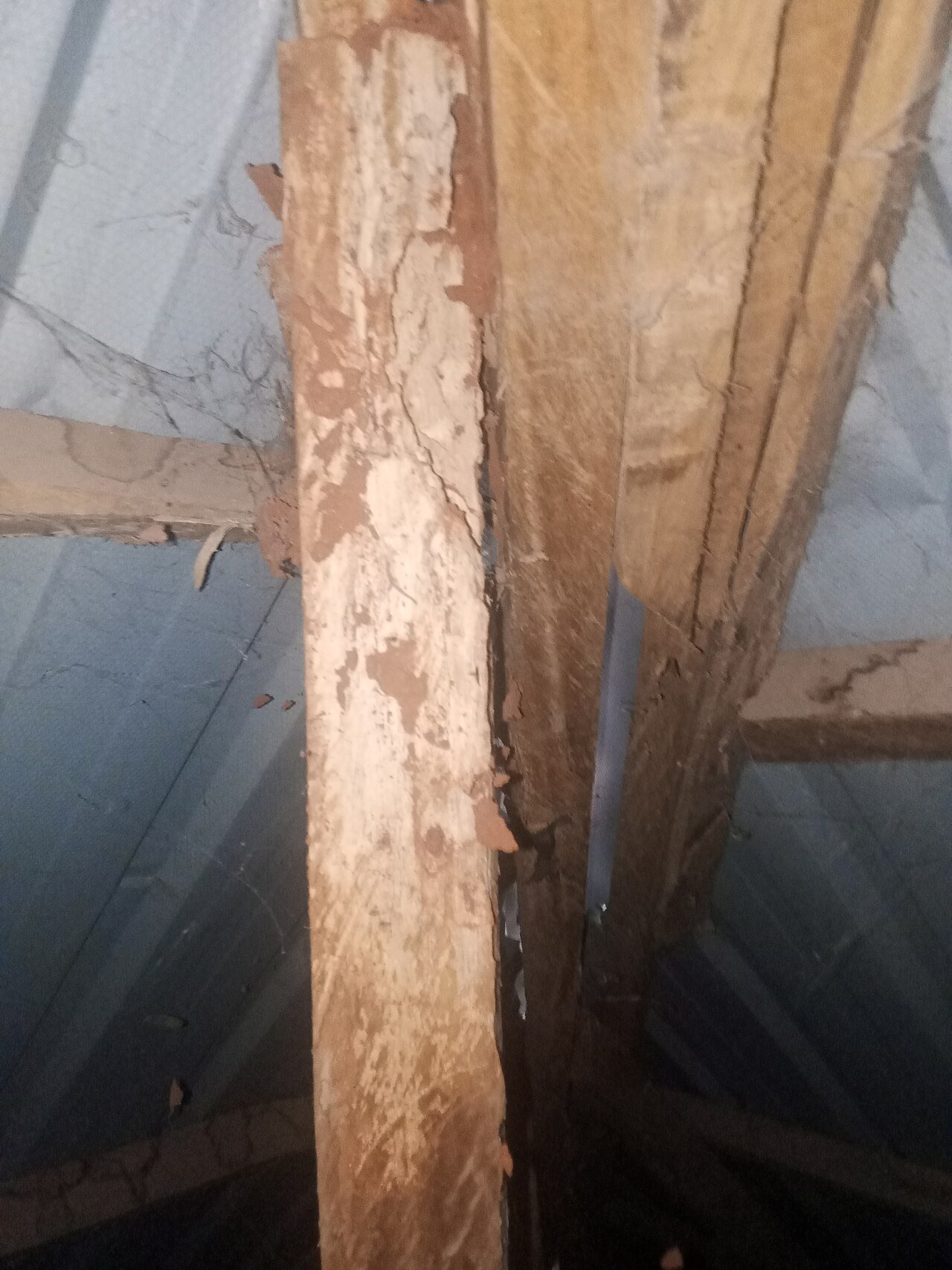
A subterranean colony reaching a Franklin house meets conditions built for it: pier bases surrounded by soil, sill plates a single tube-run above grade, skirting that blocks airflow and holds ground moisture, and the accumulated under-floor clutter — stored lumber, old formwork, a decade of leaf litter blown through the lattice — that gives colonies staging wood before they ever touch structure. The shelter tubes here don’t climb dramatic foundation walls; they run short hops up pier faces, hidden behind skirting nobody removes, in a void nobody enters. That’s the neglected version. The maintained version inverts every advantage: an annual crawl entry reads the entire structural underside in an hour — every pier probed, every sill line sighted, moisture metered at the corners — which is inspection coverage a slab house can only dream of. Slab construction hides its termite routes inside the concrete’s joints forever; a crawl house shows you everything, if you look.
The Under-Floor Housekeeping Rule
Half of Franklin’s termite prevention is janitorial, and we say so before we sell anything: wood out of the void — the stored boards, stump sections, and formwork scraps that stage colonies; skirting ventilation restored so the soil can dry (the same lattice-and-hardware-cloth conversation the rodent file already requires); grade and downspouts corrected so the void stops collecting the roof’s water; and the plumbing drip under the bathroom — the classic Franklin moisture source — fixed before it finishes softening the subfloor above it. A dry, empty, ventilated crawl is hostile termite ground; a damp cluttered one is an invitation with a roof over it.
The Franklin Program
- The annual crawl entry: full under-floor inspection — every pier probed, sills sighted end to end, moisture mapped, active-vs-archaeology stated plainly with photos you keep
- Treatment matched to elevated construction: soil treatment at pier bases and perimeter lines where access allows, monitored bait where skirting and additions complicate it
- The housekeeping list first: the wood-out, vent-open, water-away items quoted as what they are — often the highest-value line, sometimes the whole fix
- Swarm triage: April–May winged emergences from floor registers or porch lines ID’d free — in crawl-space housing, an indoor swarm is the void announcing itself, same-week
The honest comparison worth making for Franklin owners weighing cost: your housing stock’s termite economics are actually favorable — inspection access this good means problems get caught at the pier stage instead of the joist-replacement stage, and a maintained crawl plus an annual entry is cheaper protection than most slab owners can buy at any price. The inheritance pays whichever way it’s kept; keeping it the paying way costs an hour a year and a Saturday of housekeeping. The town’s full pest picture lives on our Franklin service page.
Send Someone Under There
One annual entry reads your entire structural underside — piers, sills, moisture, and the honest verdict with photos. The housekeeping list comes free, the archaeology gets labeled as history, and anything active gets caught at the cheap stage. That’s the crawl inheritance, kept.
Buying or selling in Franklin? What a lender, a VA file, or a listing agent asks for is not a treatment — it is a written report. That is a termite and WDI inspection in Franklin: $99 flat on the lender-ready NPMA-33, next business day, PDF the day we inspect. Treatment only enters the conversation if the report actually finds something.
Frequently asked questions
Are crawl-space houses more termite-prone than slab houses?
Neglected, yes — shaded moist soil, pier bases, and wood a tube-run from grade make a damp cluttered crawl the best termite habitat Ohio construction produced. Maintained, the equation flips: total inspection access means problems get caught at the pier stage. The void works whichever way it’s kept.
What does the annual crawl inspection actually involve?
Full entry, about an hour: every pier probed, sill lines sighted end to end, moisture metered at the corners, and photos of anything found — with active evidence (fresh mud, workers, new wings) separated plainly from the archaeology most river-era houses carry.
What should I clear out from under my house?
All of the wood: stored boards, stump sections, old formwork, leaf litter drifts. Under-floor cellulose is staging habitat that lets colonies establish before touching structure — and removing it is the highest-value free hour in Franklin termite prevention.
Does skirting cause termite problems?
Unventilated skirting does its share: blocked airflow traps ground moisture and keeps the void’s soil workable for colonies all summer. Restoring ventilation — the same hardware-cloth-behind-lattice fix the rodent file wants — dries the ground and serves both files at once.
I saw winged insects coming from a floor register in spring — how bad?
Take it seriously the same week: in crawl-space housing an indoor swarm is the void announcing an established colony below. Straight antennae and equal wings confirm termite — the photo ID is free, and the crawl entry that follows finds the source.
Can elevated houses get conventional termite treatment?
Yes, adapted to the architecture: soil treatment at pier bases and perimeter lines where access allows, monitored bait where skirting and additions complicate trenching. The crawl access that makes inspection easy makes treatment placement precise.
There’s old damage on a couple of joists — do I need a full treatment?
Only if it’s active — dry, empty galleries are history from a colony long dead, common in river-era frames, and they need documentation, not chemicals. We label archaeology as archaeology, because the difference is thousands of dollars.
What does termite control cost in Franklin?
The annual entry is priced as the hour it is; treatments quote by pier count and perimeter access; and the housekeeping list comes free — often as the top line, because a dry, empty, ventilated crawl outperforms anything we could sell you into a wet cluttered one.