
Piqua’s industrial era left the town a legacy in timber measured by the foot, not the inch: mill and factory buildings framed in beams a forearm thick, warehouse floors on joists sized for machinery, and the heavy-framed commercial blocks that grew up around them. Much of that stock now lives second lives — storage, retail, workshops, apartments — and termite control here has to think at that scale. We call it the heavy-timber file, and its defining trait cuts both ways: massive old-growth timber fails slowly, which buys time — and hides colonies magnificently, which spends it. A beam that would take a colony decades to compromise can host that colony, undetected, for every one of those decades, shipping foragers into everything nearby the whole time.
How Heavy Timber Changes the Problem
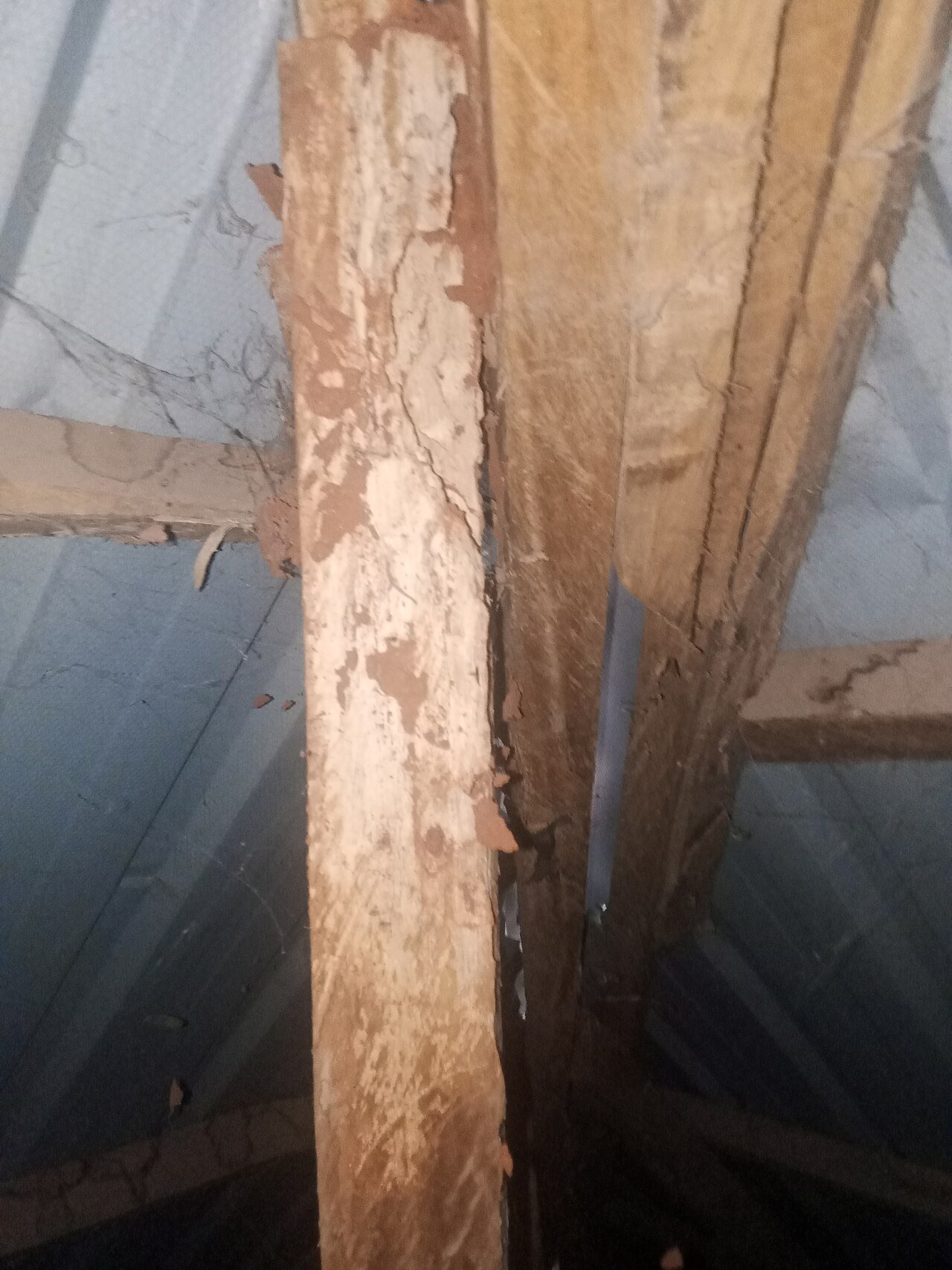
In a house, termite damage announces itself in human-scale wood — a spongy sill, a blistered baseboard, a door that stops latching. Mill-scale members give no such early warnings: a 12×12 beam can carry serious internal galleries while reading solid to a knuckle-rap, and the buildings’ grade-level timber — posts on stone footers, sleeper floors over dirt crawls in the rear sections, dock framing at soil height — offers colonies entry points that stay in shadow year-round. Add the moisture profile of a river-and-canal town (the same below-grade world that runs the canal ledger) and the conversion-era retrofits that boxed original members behind drywall, and you have the standing risk our commercial inspections here are built around: probe-and-sound work on the accessible members, moisture mapping at the grade-level timber, monitored stations on the perimeter, and a documented baseline so that next year’s inspection has something honest to compare against.
The Conversion Moment
The highest-leverage hour in a heavy-timber building’s termite life is the renovation. When a Piqua mill space gets converted — walls opened, floors lifted, grade slabs cut for plumbing — every hidden member is briefly visible and every soil interface briefly reachable, and protection installed then costs a fraction of protection retrofitted later. Our counsel to every owner and contractor working the older stock: put the termite inspection inside the demolition phase, treat the soil interfaces while they’re open, and document what the walls showed before they close again. The buildings’ next fifty years are decided in those weeks, and the line item is a rounding error inside any conversion budget.
The Whole Piqua File
- Commercial heavy-timber programs: baseline inspections, probe-and-moisture mapping, perimeter monitoring, and the conversion-phase protocol for buildings changing lives
- Residential stone-cellar work: the 1880s–1940s housing stock’s classic file — sills probed at the cellar line, active-vs-archaeology stated plainly, treatment matched to foundation access
- The newer edges: builder pretreatments aging out on the standard clock across the postwar and modern streets, renewed by barrier or bait as the lot allows
- Swarm triage: April–May winged emergences ID’d free — in a town with this much concealed timber, the swarm is often the first honest signal a building gives, and it deserves a same-week response
The stakes argument, stated plainly for owners of the heavy stock: this timber is irreplaceable at any sane price — old-growth members of that dimension effectively cannot be bought, and a compromised beam in a converted mill is an engineering event, not a carpentry repair. Monitoring a building like that costs less per year than insuring a car; discovering a decades-old colony at the point of structural failure costs the building. The full local file lives on our Piqua service page.
Baseline the Building
One inspection establishes what your timber actually holds — probe map, moisture map, perimeter stations, and the documented starting line every future inspection compares against. Converting a space this year? Put us inside the demolition phase and buy the next fifty years at the cheap price.
Buying or selling in Piqua? What a lender, a VA file, or a listing agent asks for is not a treatment — it is a written report. That is a termite and WDI inspection in Piqua: $99 flat on the lender-ready NPMA-33, next business day, PDF the day we inspect. Treatment only enters the conversation if the report actually finds something.
Frequently asked questions
Can termites really hurt those massive old mill beams?
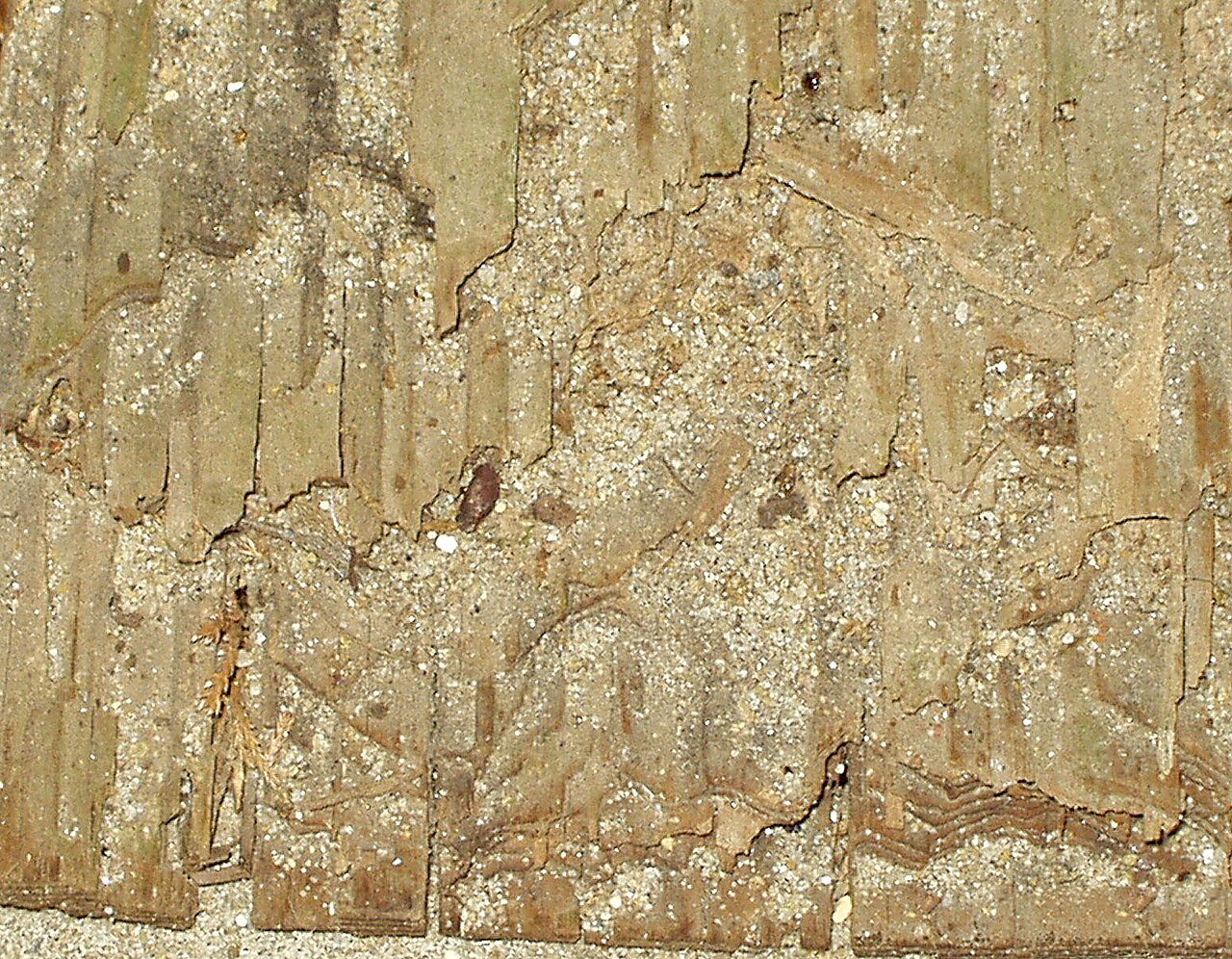
Slowly — and invisibly, which is the trap: a 12×12 can host serious internal galleries while reading solid to a knuckle-rap, and old-growth members of that dimension effectively can’t be replaced at any sane price. Heavy timber buys decades of time and hides colonies for every one of them.
How do you inspect timber you can’t see inside?
Probe-and-sound work on accessible members, moisture mapping at the grade-level wood (wet timber is where colonies start), perimeter monitoring stations, and — the honest core of it — a documented baseline, because the real detector is comparison across years.
We’re renovating an old Piqua building — when should termite work happen?
Inside the demolition phase — the highest-leverage hour the building will ever offer. Hidden members are briefly visible, soil interfaces briefly reachable, and protection installed then costs a rounding error against retrofitting it after the walls close.
What are the signs of termites in an old commercial building?
Spring swarmers indoors (often the first honest signal concealed timber gives), mud tubes on stone footers and cellar walls, mud spotting at sleeper-floor seams, and frass-free blistering on boxed members. Any of them warrants the same-week look.
My house has old damage in the cellar joists — active or not?
The distinction is everything: fresh mud, live workers, or new wings mean active; dry empty galleries are archaeology from a colony long dead — and Piqua’s century housing carries plenty of the latter. We state which plainly, with photos, because the difference is thousands.
Does the river and canal history actually raise termite risk?
Moisture is the multiplier: the below-grade world of a water town keeps soil against timber workable through summer, and grade-level wood in shadow — sleeper floors, dock framing, bermed rear sections — gives colonies entries that never see daylight.
Is my newer Piqua house covered by its builder treatment?
Check the clock: builder soil barriers last years, not decades, and nothing announces expiry. Postwar through 2010s stock is on the standard renewal schedule — barrier where trenching reaches, monitored bait where it doesn’t.
What does termite control cost in Piqua?
Commercial baselines and monitoring price by building — less per year than insuring a car, against a risk measured in engineering events. Residential inspection quotes from footage and foundation; swarm IDs and the active-or-archaeology verdict are free.