
Piqua kept something most Ohio towns tore out: its alley grid. Nearly every block in the older two-thirds of town runs a working alley behind the houses — brick-paved or gravel, lined with garages, utility poles, and fence lines — and that grid is the finest ant infrastructure in Miami County. Ant control in Piqua starts in the alley, not the kitchen: the paver joints and gravel margins are pavement-ant capital, the fence lines and pole bases are highway interchanges, and the garages that face the alley are the staging buildings between the grid and the house. We call it the alley grid, and it explains the pattern every long-time Piqua resident knows — the ants arrive from the back of the lot, every year, on the same routes their grandparents’ ants used.
The Grid’s Economy
Pavement ants are joint specialists: they colonize the gaps beneath and between hard surfaces, mounding their excavated soil in little volcano piles at the seams. A brick alley offers them more linear feet of joint per block than any modern street — and Piqua’s alleys add the full amenity package: sun-warmed pavers for brood incubation, gravel shoulders for satellite nests, trash-day calories on a weekly schedule, and garage slabs whose expansion joints extend the grid right up to the house-side lot line. From there the commute is short: down the fence line, along the walk, into the driveway joints, and to the back door — which is why Piqua’s ant traffic overwhelmingly enters houses from the rear, and why treating the front foundation while ignoring the alley half of the lot is washing one hand.
The Stone-Foundation Second Front
The older housing stock runs the companion file. Piqua’s 1880s–1940s houses sit on stone and early-block foundations whose mortar joints have spent a century opening — the same masonry literacy that runs the rodent file here applies at ant scale, with odorous house ants exploiting the moisture that stone foundations hold after every wet week. The tell is seasonal: a wet May, then trails appearing at baseboards on the alley side of the house, often from a wall void where a satellite colony has set up between the stone and the lath. The repellent-spray mistake is the same as everywhere — budding species split under chemical pressure — but the old-house version costs more, because the satellites disappear into generous voids. Non-repellent baits on the actual trails, moisture correction at the foundation line, and patience for the bait to travel: that’s the protocol the architecture demands.
Working the Whole Lot
- Alley-side first: perimeter treatment and granular baiting along the rear lot line, fence runs, and garage slab — intercepting the grid’s commute where it starts
- Foundation program: non-repellent treatment at the stone line, void baiting for interior satellites, and the mortar-gap list delivered honestly
- Joint-season pass: high-summer granular work on the driveway, walk, and patio joints — the pavement-ant front yard the alley feeds
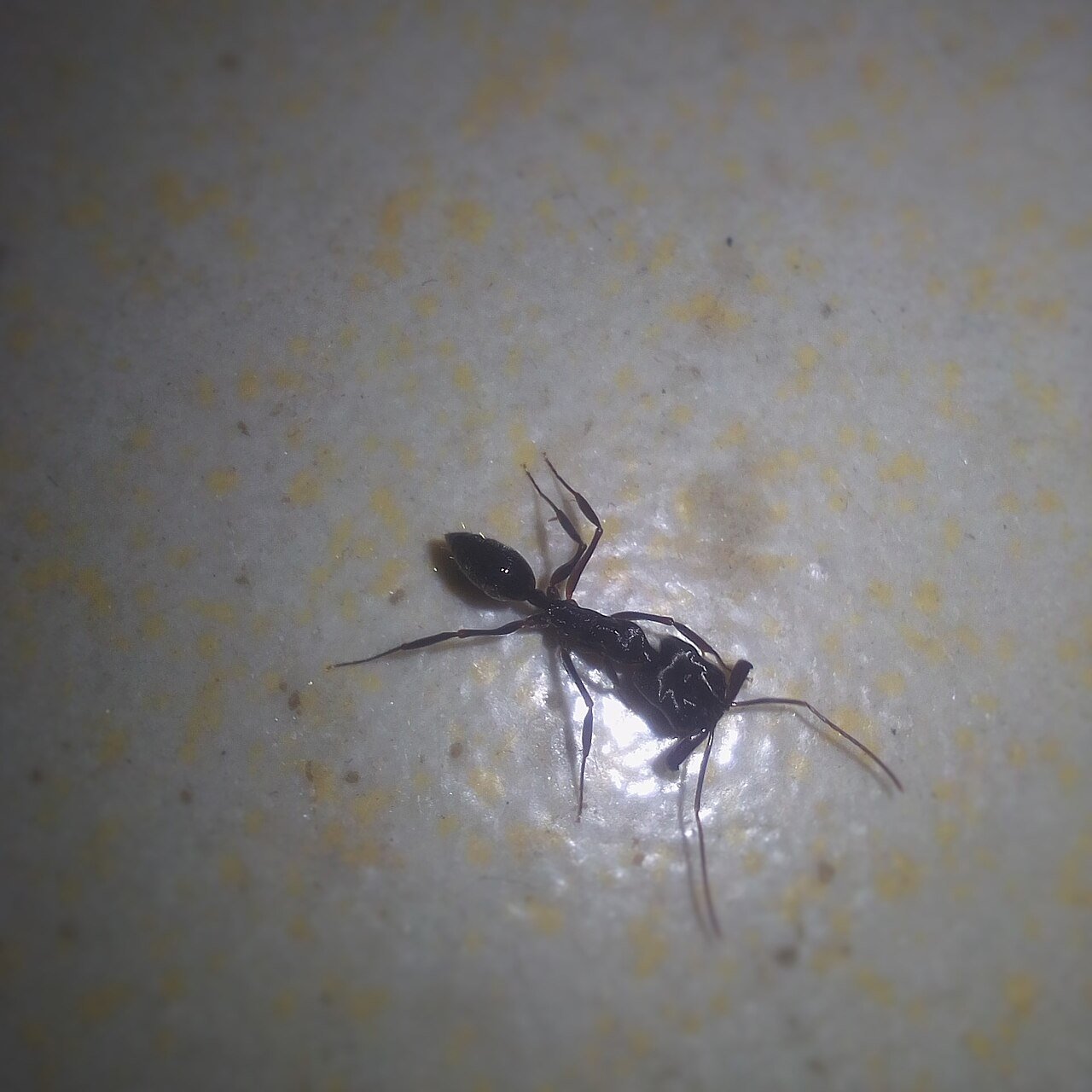
- The carpenter check: Piqua’s big shade trees keep carpenter ants in the rotation, and large black ants get the residency inspection — frass and rustle mean a structural conversation, a yard trail means bait and exclusion
The honest calibration for this town: the grid is permanent — the alleys aren’t going anywhere, and they shouldn’t, because they’re part of what makes Piqua’s blocks work. Permanent infrastructure means background pressure, and background pressure means the win condition is the house, not the lot line: rear-lot interception, foundation defense, and timed seasonal passes that meet the wet-week surges on schedule. Households on the plan see the same result year over year — alley full of ants, kitchen empty of them — which is precisely the deal. The town’s full file lives on our Piqua service page.
Cut the Commute at the Fence Line
One visit walks your lot back to front — alley margin, garage slab, fence runs, stone line — and sets the interception program that lets the grid keep its ants. Free photo ID on anything six-legged, big or small.
Frequently asked questions
Why do ants always come into my Piqua house from the back?
The alley grid: brick-paver joints, gravel margins, fence lines, and garage slabs form a permanent ant highway behind nearly every older block, and the commute runs rear lot line to back door. Front-only foundation treatment washes one hand.
What are the little dirt volcanoes between my pavers and driveway joints?
Pavement ant excavation mounds — the joint specialists colonizing the gaps under hard surfaces. The alley offers more joint-feet per block than any modern street, and your driveway is the grid’s residential extension. Granular baiting in joint season handles the front.
Why do ant trails appear at my baseboards after every wet spring?
Stone foundations hold moisture, and odorous house ants follow it — often to a satellite colony set up between the stone and the lath on the alley side. It’s a bait-and-moisture protocol, never a spray one: budding species split under repellent pressure and vanish deeper into century wall voids.
Does spraying the baseboards work?
It backfires twice in old housing: the colony buds into multiple satellites, and the survivors retreat into voids a spray can’t follow. Non-repellent baits carried home by workers are the tool that ends the network — slower to show, permanent when it does.
Should I worry about the big black ants from the shade trees?
They get the residency inspection: a trail in from the yard is carpenter ant foraging — bait and exclusion; frass piles or rustling in a wall void mean a satellite moved into moist timber, which is the structural conversation. The free photo ID starts the sorting.
Can the alley itself be treated?
Your lot’s margin of it, yes — and that’s where our rear-line interception works. The grid as a whole is permanent public infrastructure, which is why the honest win condition is a defended house beside a working alley, not an ant-free block.
When is ant season in Piqua?
Three pulses: the wet-week spring surge (moisture-followers off the stone lines), high-summer joint season (pavement ants at peak excavation), and a fall tightening as colonies bank calories. The three-pass calendar meets each on time instead of chasing all of them in August.
What does ant control cost in Piqua?
Flat-priced seasonal programs covering the whole lot alley-to-door — and the honest note that on this housing stock, a morning of mortar patching sometimes outperforms a second treatment, in which case we’ll say exactly that.