Oakwood’s two defining assets are its century houses and the century trees over them, and the two hold a standing negotiation that runs straight through the ant world. Ant control in this town is, more than anywhere else we serve, a carpenter ant story: the mature canopy that makes Schantz Park and the Far Hills corridor what they are is also a working carpenter ant habitat — every old pruning wound, storm-broken limb, and hollow veteran maple a satellite colony’s address — and the houses beneath, with their original wood windows, slate-line eaves, and hundred-year sill plates, are the natural expansion market. We call it the canopy mortgage: the trees appreciate the neighborhood, and the ants collect the interest.
How the Mortgage Gets Collected
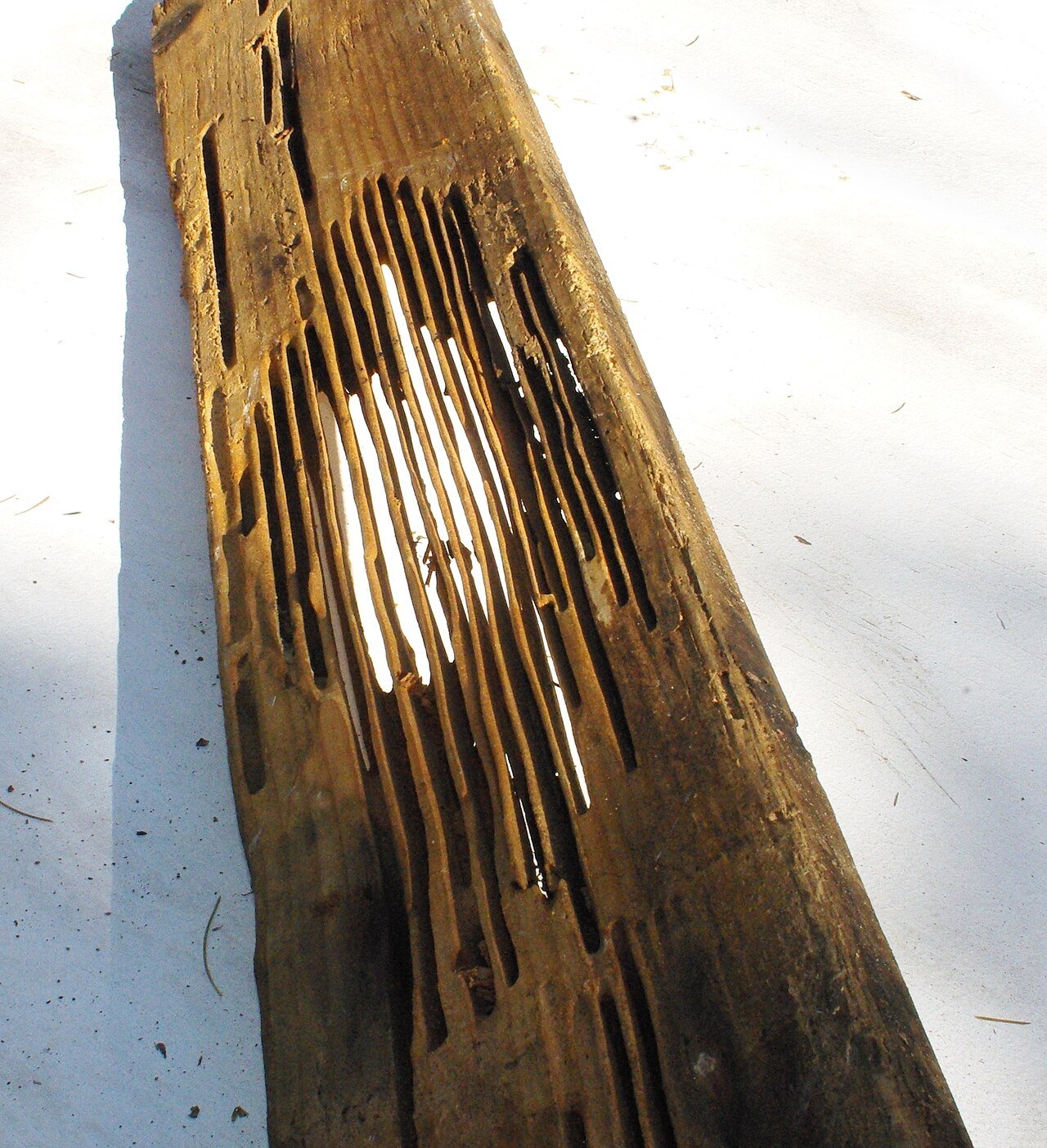
Carpenter ants don’t eat wood — they excavate it for housing, and they prefer wood that moisture has already softened. In Oakwood that preference maps with uncomfortable precision onto the housing stock’s age: the window sill whose glazing has been due for two summers, the porch column base wicking off masonry, the box gutter with a slow seam, the sill plate behind a hundred years of grade creep. A parent colony in a street tree sends foragers along fence lines and cable runs into the house at night; if they find softened wood, a satellite colony follows, and by the time sawdust-like frass appears at a baseboard the excavation is established. The big black ants Oakwood residents see on kitchen counters in May are the visible edge of that system — and the difference between a foraging visit and a resident satellite is the whole diagnosis.
Foragers or Residents: The Night Test
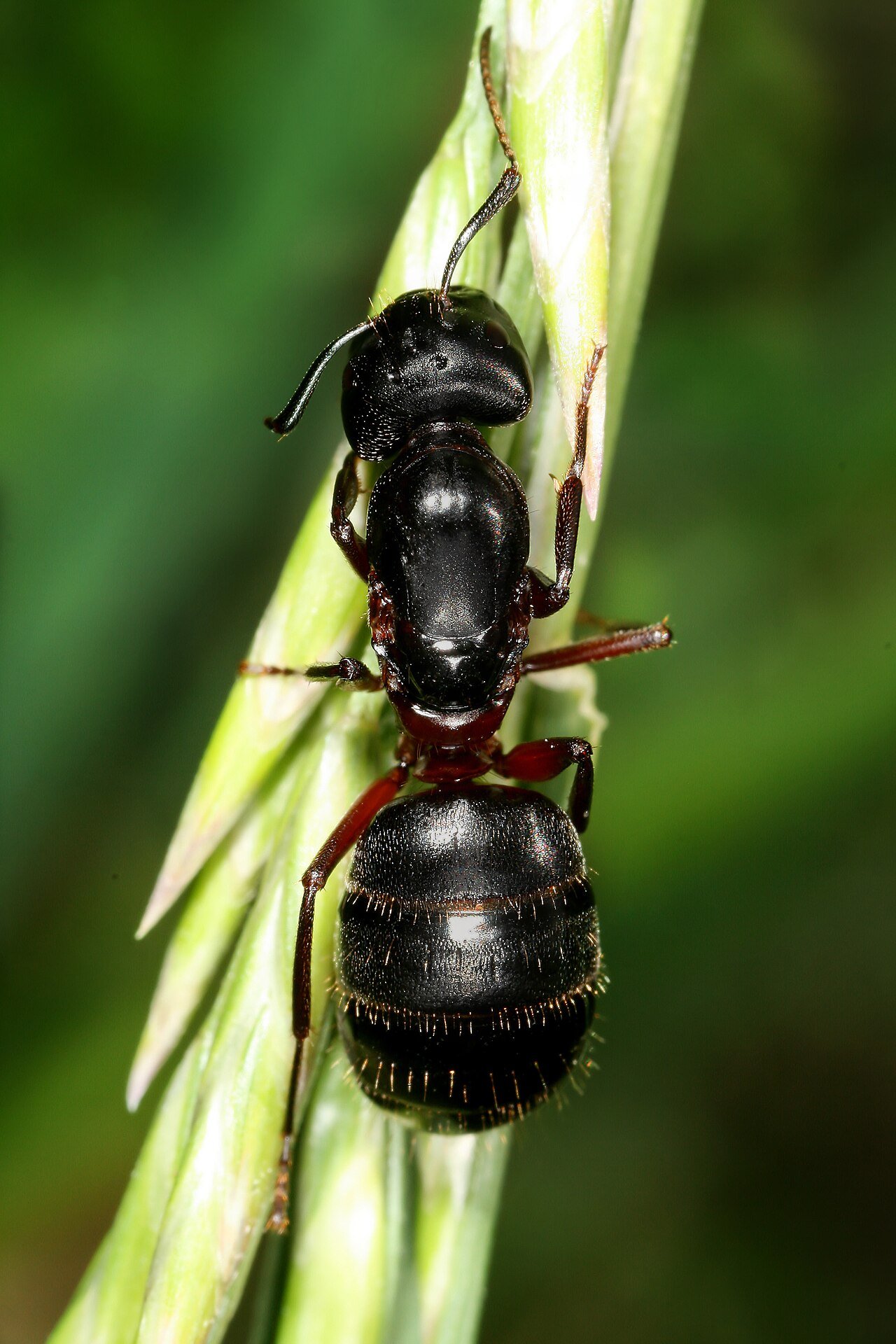
Here’s the test we teach: carpenter ants are nocturnal, so at 10 p.m., kitchen dark, watch with a red-filtered flashlight. A handful of ants crossing toward the sink and exiting under the back door are commuters from an outdoor colony — manageable with exterior baiting and trail treatment. Steady traffic emerging from a window frame, wall void, or ceiling line means the colony pays rent here now, and the fix involves locating the satellite — often with a moisture meter, because the nest tracks the wet wood — and treating the void directly. Rustling in a quiet wall (genuinely audible in a still room) and fine frass piles with insect fragments are the confirming signs. Either way, the free photo ID sorts carpenter ants from the pavement ants working the brick walks — size and a single smooth-arched waist segment tell the story.
Servicing a Canopy Town
- Nest-line inspection: the tree-to-house corridors walked — fence tops, service lines, limb contact points — because treating the kitchen without cutting the commute treats the symptom
- Moisture-mapped interior work: satellite colonies located by wet-wood logic and treated in the void, not sprayed at the counter
- Exterior program: non-repellent perimeter treatment and baiting timed to spring foraging, when colonies recruit hardest
- The carpentry conversation: the honest list of which sills, columns, and gutter seams are underwriting the problem — fix the moisture and the mortgage refinances in your favor
One boundary matters in a town this canopied: the trees themselves are the arborist’s file, not ours — a hollow veteran maple hosting a parent colony needs a tree-health decision, and we’ll say so plainly rather than sell a spray that can’t reach it. What we own is the house side of the negotiation: the corridors, the satellites, the moisture list, and a service calendar that respects how Oakwood’s architecture actually ages. The town’s full local file lives on our Oakwood pest control page.
Refinance the Canopy Mortgage
One evening inspection runs the night test, walks the tree-to-house corridors, and hands you the honest split: what’s ant work, what’s carpentry, and what’s the arborist’s call. Free photo ID on any ant that worries you.
Frequently asked questions
Are the big black ants in my Oakwood kitchen carpenter ants?
Very likely — a canopy town this mature runs carpenter ants as its default large ant. Confirm with size (up to 5/8”), a single smooth arched waist segment, and nocturnal habits — or skip the keying and send the free photo ID.
Do carpenter ants mean my house has structural damage?
Not automatically. Foragers commuting from a street-tree colony do no harm; a resident satellite excavating a moist sill or column is the damage case. The night test — where the traffic emerges from at 10 p.m. — separates the two, and so does our inspection.
What does carpenter ant frass look like?
Fine wood-shaving piles — like pencil sharpener output — often mixed with insect fragments, appearing below baseboards, window frames, or porch ceilings and returning after cleanup. It’s excavation debris, not eaten wood: the receipt from an active dig.
Why do I hear rustling in the wall at night?
A large enough carpenter ant satellite is genuinely audible in a still room — a dry papery rustle as the colony works. It’s one of the confirming signs we take most seriously, and it pinpoints the void worth opening.
Can you treat the colony in the tree?
The house side, yes — corridors, satellites, perimeter. The tree itself is an arborist’s call: a hollow veteran hosting a parent colony is a tree-health decision, and we’ll name that boundary honestly instead of selling a spray that can’t reach it.
Whats the difference between carpenter ants and termites in an old house?
Carpenter ants excavate clean, smooth galleries and dump frass outside; termites eat the wood, pack galleries with mud, and leave no sawdust. Spring swarmers tell it fastest: elbowed antennae and pinched waist = ant; straight antennae and equal wings = termite — and the treatments are completely different.
Why do the ants come back every May?
Spring is peak foraging and satellite-founding season — established parent colonies in the canopy re-run the same corridors annually. Non-repellent exterior treatment timed to that surge, plus the moisture fixes, breaks the yearly tradition.
What does ant control cost in Oakwood?
Flat-priced exterior programs; interior satellite work quoted after the inspection locates the void. The honest quote sometimes leads with carpentry — a $200 gutter-seam fix can retire more ant pressure than any treatment we sell.
Related reading from the same streets: wasp & hornet removal in Oakwood and rodent control in Oakwood.