
Let’s start with the honest number: Englewood is one of the lower bed bug pressure towns we serve. No interstate interchange, no student housing churn, no high-turnover hotel row — the engines that drive the species elsewhere in the region mostly idle here. So why write a full bed bug treatment page for this town? Because low-pressure towns have their own signature route, and in Englewood it runs through the secondhand economy: the Marketplace pickup, the church rummage sale, the estate clean-out, the recliner inherited from an aunt’s apartment, the curb find that looked too good to pass. We call it the marketplace mile, and nearly every established Englewood case we’ve worked traces back down it.
How a Quiet Town Gets Bed Bugs
Bed bugs travel by furniture and fabric, and a town of settled single-family homes generates exactly one steady stream of both: household goods changing hands. The economics make it worse, not better — the households furnishing a first apartment or stretching a budget are the ones shopping secondhand, and they’re also the ones least able to absorb a treatment bill. One upholstered item from an infested origin carries eggs invisibly in a seam, sits in the new living room for six weeks, and by the time the first bites get believed there are two generations banked. The other Englewood routes are the universal ones at low volume: travel returns, visiting family, a kid’s apartment moving home for the summer. But the interview that opens most of our local cases starts with “did any furniture come into the house in the last three months?” — and the answer is usually yes.
The Fifteen-Minute Inspection That Saves a Thousand Dollars
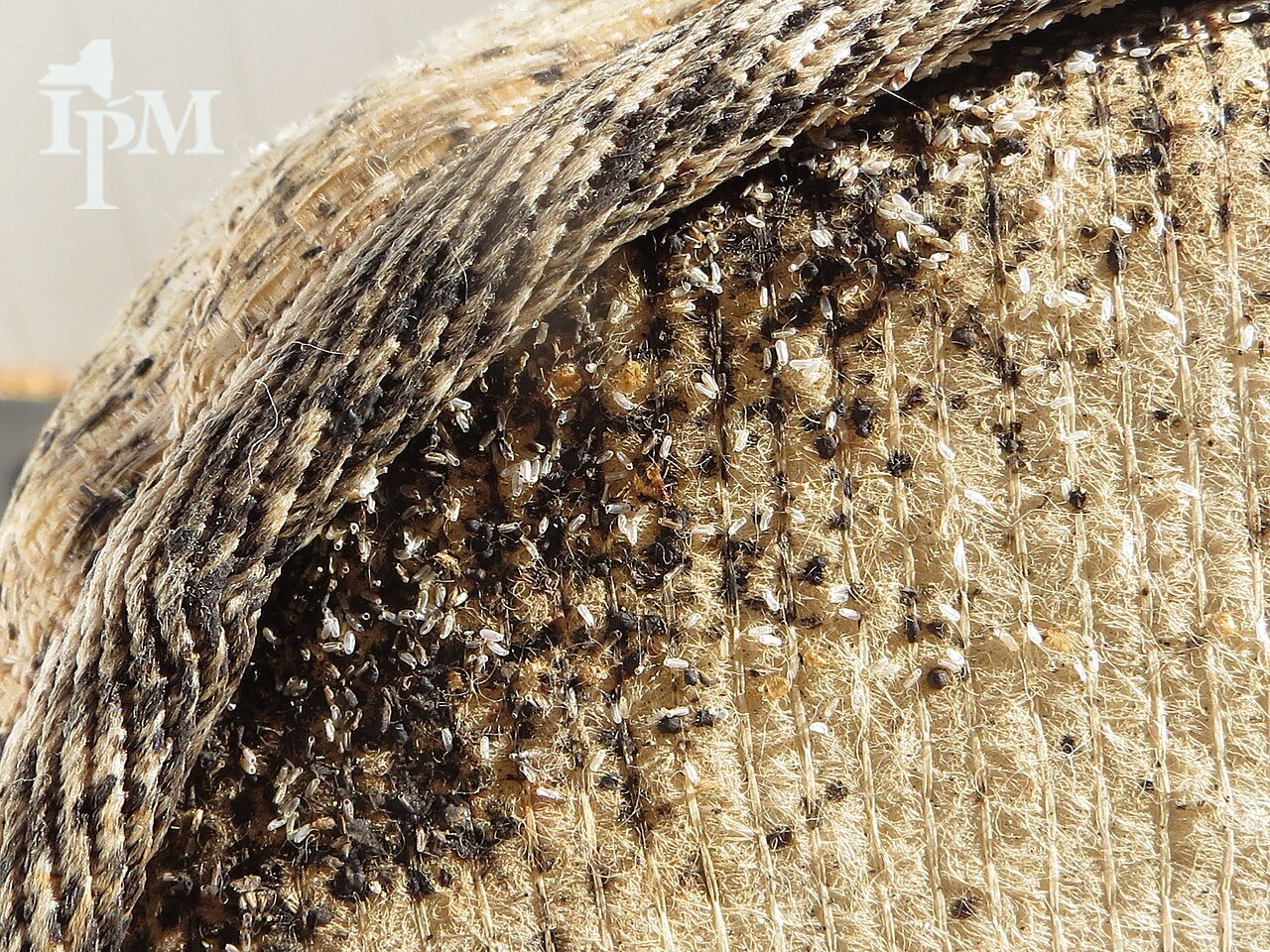
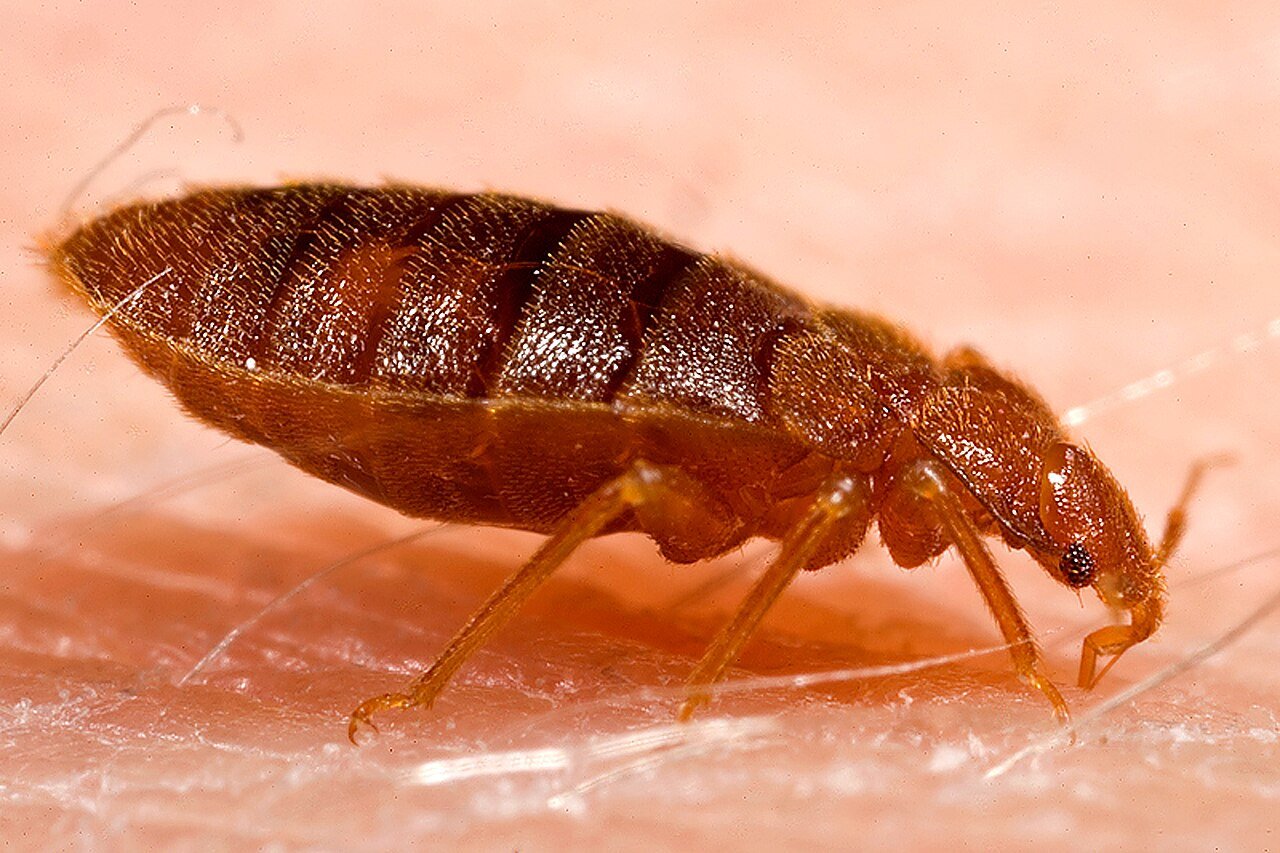
The fix is not avoiding secondhand furniture — it’s inspecting it like the underwriter of your own house. Before any used upholstered piece or mattress crosses your threshold: flip it, strip any cushion covers, and run a flashlight along every seam, staple line, and frame joint looking for the trio — rust-brown fecal spotting, translucent shed skins, live insects the size of an apple seed. Wood furniture gets the joint-and-crack check. Anything that can survive a hot dryer — cushion covers, throw pillows, fabric — takes a thirty-minute high-heat cycle on arrival day. Fifteen minutes in the driveway beats a whole-house course every time, and if a piece fails the check, the seller’s driveway is exactly where it should stay.
When It’s Already Inside
An established case in Englewood gets the same full course we run everywhere: physical inspection and free photo confirmation first (carpet beetle larvae impersonate bed bugs constantly, and treating the wrong species buys nothing), then an initial whole-sleeping-zone protocol — frame, baseboard, outlet-plate, and crevice-line treatment with encasements on mattress and box spring — followed by a scheduled retreatment timed to the egg-hatch cycle, because no single visit kills the eggs laid yesterday. The course is priced as one job with the retreatment built in. What we counsel against, every time: the fogger (it scatters the population into walls), the discarded mattress (it spreads insects down the hallway and re-arms the survivors with a new bed), and the six-month wait (the single variable that separates contained cases from expensive ones).
- Free confirmation first: photo ID or physical inspection before anyone spends a dollar
- Full course, one price: initial protocol + egg-cycle retreatment + encasements, no surprise second invoice
- Containment counsel: what to launder, what to bag, what NOT to throw away
- The marketplace protocol: the driveway inspection routine, taught free to every customer who wants it
The Neighborly Complication
Small-town cases carry one social wrinkle the big-city files don’t: the furniture usually came from someone you know. Telling a relative their recliner seeded your infestation — or wondering whether your donation seeded someone else’s — is genuinely awkward, and the awkwardness makes people delay calls. Two things worth knowing: bed bugs carry zero correlation with cleanliness, in your house or the origin house, so there is no accusation in the biology; and a quiet heads-up lets the origin household get their own free inspection before their case compounds. We handle these conversations with complete discretion — unmarked service, no yard signs, nobody’s business but yours. The full local picture lives on our Englewood service page, alongside the ant and rodent files this quiet town actually runs at volume.
Check Before It Crosses the Threshold
Free photo ID on anything suspicious, a driveway-inspection routine you can learn in one visit, and — if the marketplace mile already delivered — a full treatment course with the retreatment priced in. Quiet town, quiet service.
Frequently asked questions
Are bed bugs common in Englewood?
Less common than in the interchange and campus towns — and that’s the honest answer. Most established local cases trace to the secondhand-furniture route rather than travel, which means the driveway inspection habit prevents the majority of them.
Can I get bed bugs from Facebook Marketplace furniture?
It is the single most common origin in our Englewood case file. One upholstered piece from an infested household carries eggs invisibly in seams. Fifteen minutes with a flashlight in the seller’s driveway — seams, staple lines, frame joints — is the whole defense.
What are the first signs of bed bugs?
Physical evidence beats bites: rust-brown fecal spotting on mattress seams, translucent shed skins in piping, and live apple-seed-sized insects in crevices near the bed. Bites alone prove nothing — reactions vary too much to diagnose from skin.
Do bed bugs mean my house is dirty?
No correlation whatsoever — they follow furniture and sleeping humans, not sanitation. The stigma delays calls, and the delay is what makes cases expensive.
Should I throw away infested furniture?
Almost never. Carrying it out spreads insects along the route, and replacing the bed hands survivors fresh territory. Encasement and treatment keep the problem contained to where it already is.
Why does treatment require a second visit?
No product reliably kills eggs in place — the retreatment lands as the last eggs hatch, closing the generation. It’s built into the course and the price from day one, not sold later.
Will the neighbors know you treated my house?
No — unmarked service, no signage, complete discretion. Small towns talk; we don’t.
What does bed bug treatment cost in Englewood?
Quoted after free confirmation, priced as a complete course with retreatment included. Early single-room cases — which is what the marketplace route usually delivers when caught inside the first month — sit at the contained end of the range.
The Low-Pressure Advantage
Here is what Englewood’s quiet profile actually buys its residents: time. In high-churn towns, reinfection pressure means even a perfect treatment competes with the next introduction arriving through the building or the schedule. Here, once a case is cleared, it stays cleared — there is no hallway, no weekly crew rotation, no revolving guest room feeding new arrivals. That changes the strategy math: a single disciplined course plus the driveway habit gives an Englewood household better long-term odds than almost any address we serve. The species’ weakness is that it cannot walk to you; it has to be carried. In a town where the carrying happens mostly through one predictable route, guarding that route is nearly the whole war — and it costs fifteen minutes and a flashlight.