
Beavercreek is the region’s carpenter-ant-forward town, and its amenities are the reason. The wooded creek corridors that thread the city keep parent colonies dense in the deadfall and mature trunks; the big treed lots hang branch bridges over rooflines by the thousand; and the deck-and-walkout architecture stakes moist wood at grade across every backyard. Where a Kettering ant call usually means odorous house ants in the kitchen, a Beavercreek call carries meaningfully better odds of the big black species whose presence indoors is a structural question — and the town’s ant playbook leads accordingly: carpenter triage first, sugar-ant standards second, and the interface management that every wooded-lot file in this ledger runs. Here’s the creek-corridor edition.
The Carpenter-Forward File
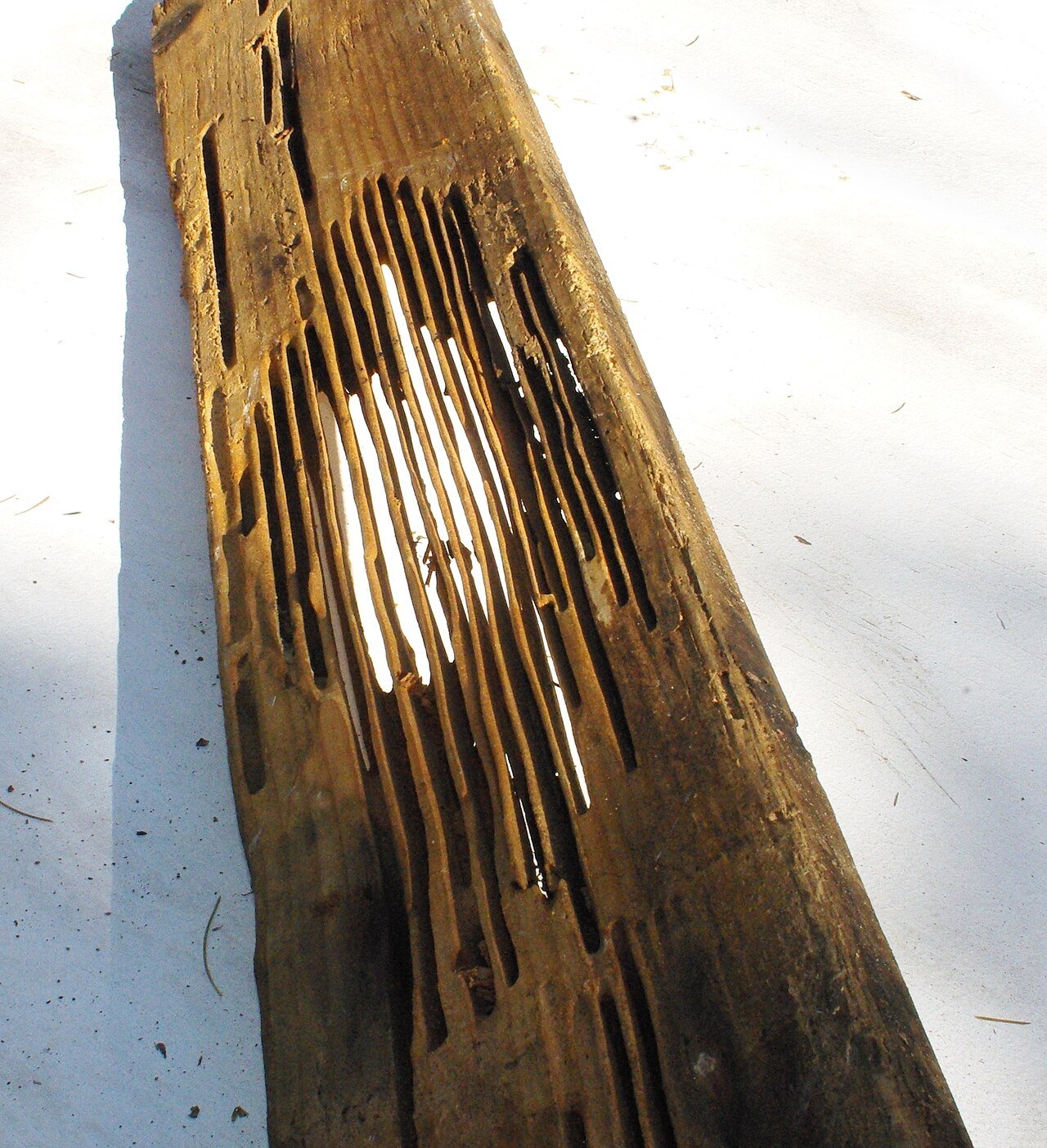
- The parent-colony network: creek-corridor deadfall and mature trunks host the big parent colonies whose satellite nests probe adjacent structures — the wood-facing side of the house takes the pressure, same wall the spider file maps for webs.
- The branch bridges: limbs within six feet of a roofline are carpenter highways — the aerial route that puts big ants in second-story bathrooms, and the trimming line item that outranks most treatments on wooded lots.
- The deck-and-walkout stakes: ground-contact posts, moisture-holding rim joists at the walkout level, and the shaded understructure — softened wood at grade is satellite-nest real estate, and the deck inspection is the town’s carpenter checkpoint.
- The triage that leads every call: big black ants indoors — especially spring, especially with frass or night rustling — get the structural protocol, winged emergences get the termite check first, and the moisture source gets named in writing alongside the treatment.
The Standard File, Wooded-Lot Edition
Behind the headline species run Beavercreek’s ordinary ants on ordinary rules. Odorous house ants work the landscaped beds and answer to non-repellent baiting beside the trails — never sprays, which scatter and split the networks (the budding problem) — with the post-rain kitchen surge running the regional clock. Pavement ants hold the driveways and walkout patios on the standard slab-joint pattern. Field ant mounds in the yards backing open corridor ground earn their annual fire-ant acquittal. And the interface levers the wooded lots demand do double duty from the other files: branch trimming off the roofline (carpenter highways and wasp scouting both), the deck-skirt and moisture discipline (ant satellites and flea nurseries alike), and the perimeter band at the wood-facing wall where every corridor pressure — six-legged and eight — concentrates. The home-remedy grades stay linked for the DIY-first (vinegar, borax), with pet-safe placements standard.

The Beavercreek Calendar and Bottom Line
March–April: carpenter season opens — indoor sightings now are the year’s loudest structural signal, and the town’s call volume leads the region. May–August: the standard file’s season — slab emergences, post-rain surges, and the corridor colonies’ satellite probing at its peak. September–October: peak baiting, the trimming-and-sealing window, and the deck inspection before winter closes access. Winter: steady indoor trails mean an indoor nest — and in this town, the carpenter question asked first. One flat price, triage-led treatment, the method at ant control with the identification file at black ants in the house — and the wooded-lot ledger, now five services deep, at Beavercreek pest control.
Big Black Ants on the Woods-Facing Wall?
Carpenter triage first, moisture named in writing, and the interface managed for good — flat-priced and guaranteed across Beavercreek.
Reading a Carpenter Case Before We Arrive
Because the town’s odds run carpenter-forward, the homeowner’s pre-call observations carry unusual value here, and the checklist is short. Size and season: ants over a quarter inch indoors, in early spring especially, move the odds hard — the standard kitchen species never reaches that size. The frass check: fine, clean wood shavings (like pencil-sharpener output) below window trim, sills, or deck framing mark active excavation; photograph before cleaning. The night listen: a dry rustling in a wall after dark — often described as faint cellophane — is gallery work audible through drywall. The moisture memory: where has water been? The roof stain from two winters ago, the deck ledger that sheds poorly, the walkout’s damp corner — satellite nests follow softened wood, and the house’s moisture history is the nest map’s first draft. Two or three of those observations in a photo-and-notes text gets you a same-day read on urgency — and turns our first visit from survey into treatment. On wooded lots, the head start matters: the parent colony has been working the corridor for years; the satellite in your sill is the recent arrival, and early eviction is cheap eviction.
Frequently asked questions
Why does Beavercreek see so many carpenter ants?
The amenities: creek-corridor deadfall hosts the parent colonies, branch bridges hang highways over rooflines, and deck-and-walkout construction stakes moist wood at grade. The wooded-lot town runs carpenter-forward odds by design.
Are big black ants in my Beavercreek house an emergency?
A priority, not a panic: carpenter ants excavate softened wood on a months-long clock. Spring indoor sightings, frass piles, or night rustling warrant the structural triage promptly — and winged emergences get the termite check first, always.
What is the sawdust under my window trim?
Likely frass — the clean excavation shavings of active carpenter work, resembling pencil-sharpener output. Photograph it before cleaning; its texture and location carry half the diagnosis.
Do tree branches near the roof really matter?
They’re the aerial highway — limbs within six feet of a roofline put big ants in second-story rooms no ground inspection explains. On wooded lots, the trimming line item outranks most treatments.
Is the deck a carpenter ant risk?
The town’s checkpoint: ground-contact posts, poorly-flashed ledgers, and the shaded understructure soften exactly the wood satellite nests want. The annual deck inspection is Beavercreek’s highest-value half hour.
What about the ordinary little ants in the kitchen?
The standard file on standard rules: non-repellent baits beside the trails (never sprays, which split the networks), perimeter banding, and the post-rain surge patience. Same playbook as everywhere — the town’s difference is the headline species, not the supporting cast.
Are the big mounds near the creek corridor fire ants?
No — field ant thatch mounds, the annual acquittal: Ohio has no established fire ants, and the corridor’s mound-builders bite but can’t sting. Photo confirmation free.
What does ant control cost in Beavercreek?
One flat price, triage-led: carpenter cases get the structural protocol with moisture findings in writing; standard cases get matched baiting and the perimeter — with the interface counsel (trimming, deck discipline) that makes wooded-lot results hold.
One closing note for the corridor-backed households weighing the live-and-let-live question: the parent colonies in the creek deadfall are permanent neighbors and largely beneficial ones — recycling the woods’ fallen timber is their day job, and no treatment plan should (or could) pursue them into the preserve. The managed boundary is the whole strategy: bridges trimmed, deck wood hardened and dry, the wood-facing perimeter banded, and the satellite probes met at the property line before they find softened framing. It’s the same interface philosophy as every wooded-lot file in this ledger — the corridor keeps its ecology, the house keeps its framing, and the arrangement holds for exactly as long as the boundary is maintained. On Beavercreek’s best lots, that maintenance is the price of the view — and paid annually, it stays a small one.