
Fairborn’s roach pressure concentrates where its housing turns over fastest — and no town in Greene County turns over faster. The student blocks around Wright State cycle tenants every August; the base-adjacent rentals cycle with every PCS season; and the multi-unit stock that serves both populations runs the connected-building biology that makes kitchen roaches a structural problem rather than a tenant one. Add the moving-box economy all that turnover generates — cardboard being the number-one roach delivery vehicle in America — and Fairborn’s roach story writes itself annually each late summer. The good news is that the story has a known ending: identification, building-aware baiting, and the turnover practices that break the cycle. Here’s the local file.
The Turnover Roach Cycle
- August is arrival month: student move-ins import the kitchen species in boxes, hand-me-down furniture, and secondhand appliances — a mini-fridge’s warm motor void is the classic Trojan horse — and by October the two-month reproduction clock has turned one importation into a population.
- The connected-unit problem: the multi-unit stock shares walls, chases, and plumbing runs, so populations move between apartments on the standard eight-week cycle — the reason unit-by-unit treatment in student housing is a subscription, and building-level programs are the fix we document for landlords.
- The PCS variant: household-goods shipments out of storage carry the same risk on the same timeline — the “weeks after the boxes arrived” discovery — and base-adjacent rentals inherit whatever the turnover leaves.
- The single-family baseline: Fairborn’s owner-occupied streets run ordinary regional pressure — drain-commuting basement roaches after storms, June wood roaches at the porch lights — covered honestly below so nobody treats a weather event like an infestation.
Students, Landlords, and the Building-Level Fix
Roach responsibility in rental housing follows the same evidence logic as everything else we document: Ohio’s habitability framework puts serious infestations in the landlord conversation, and our written findings — species confirmed, distribution mapped, establishment age read from the evidence — move that conversation from accusation to action. For tenants: photograph what you’re seeing (the pepper-fleck droppings in cabinet hinges, the nymphs, any daylight sightings — which mean crowding), report in writing, and know that a documented case in a connected building is the strongest argument for the coordinated treatment that actually works. For property owners running student or base-adjacent units: the building-level program — every unit baited in the same service window, growth regulator throughout, monitors reading the trend, follow-ups inside the reproduction cycle — costs less than the eternal unit-by-unit churn, and the between-tenant turnover treatment (bait refresh, crack-and-crevice pass, cardboard sweep) is the cheapest roach control in the rental industry. We run both, on documented schedules, with the paperwork that keeps everyone honest.
The Rest of the Roster (and the False Alarms)
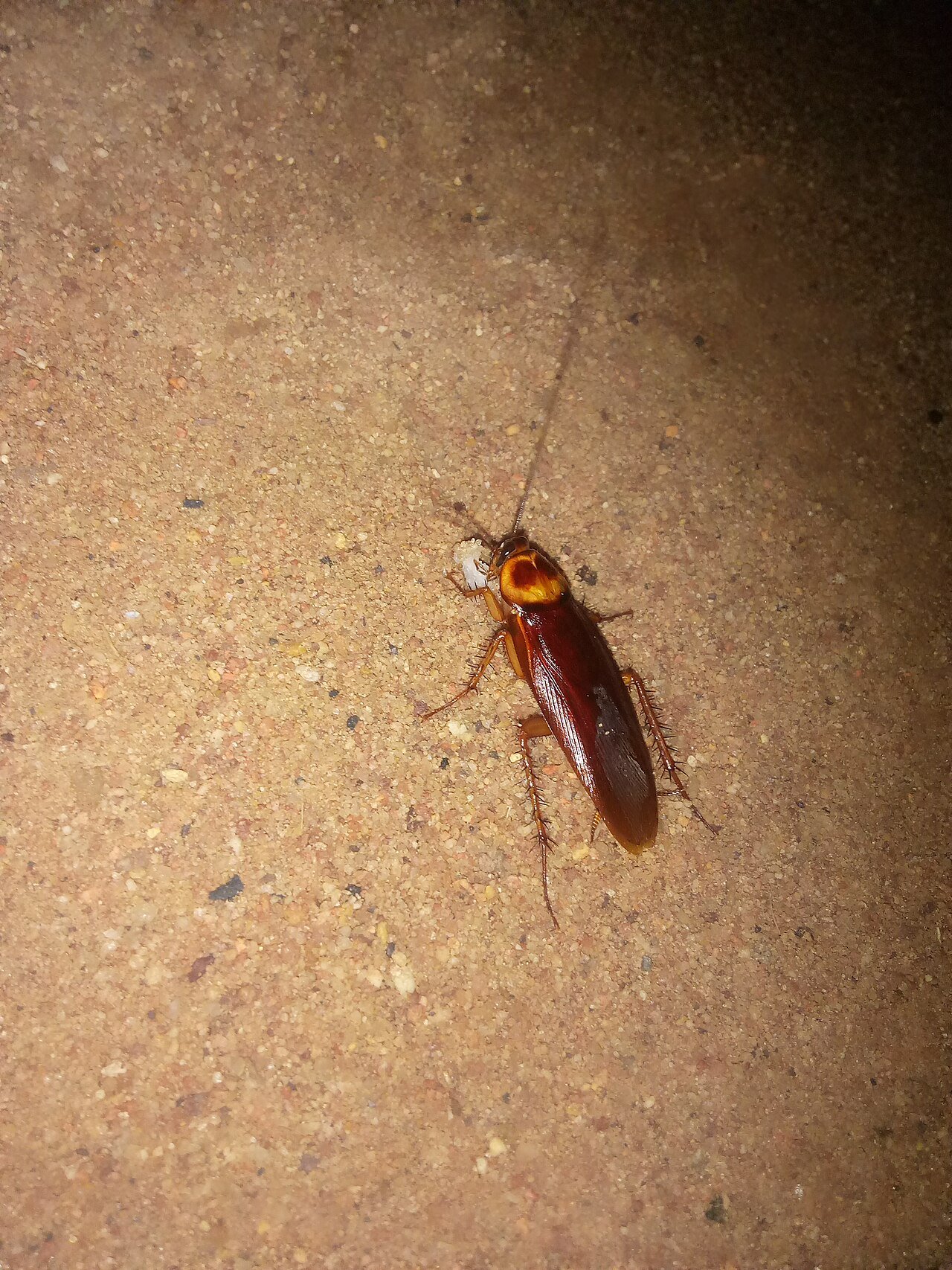
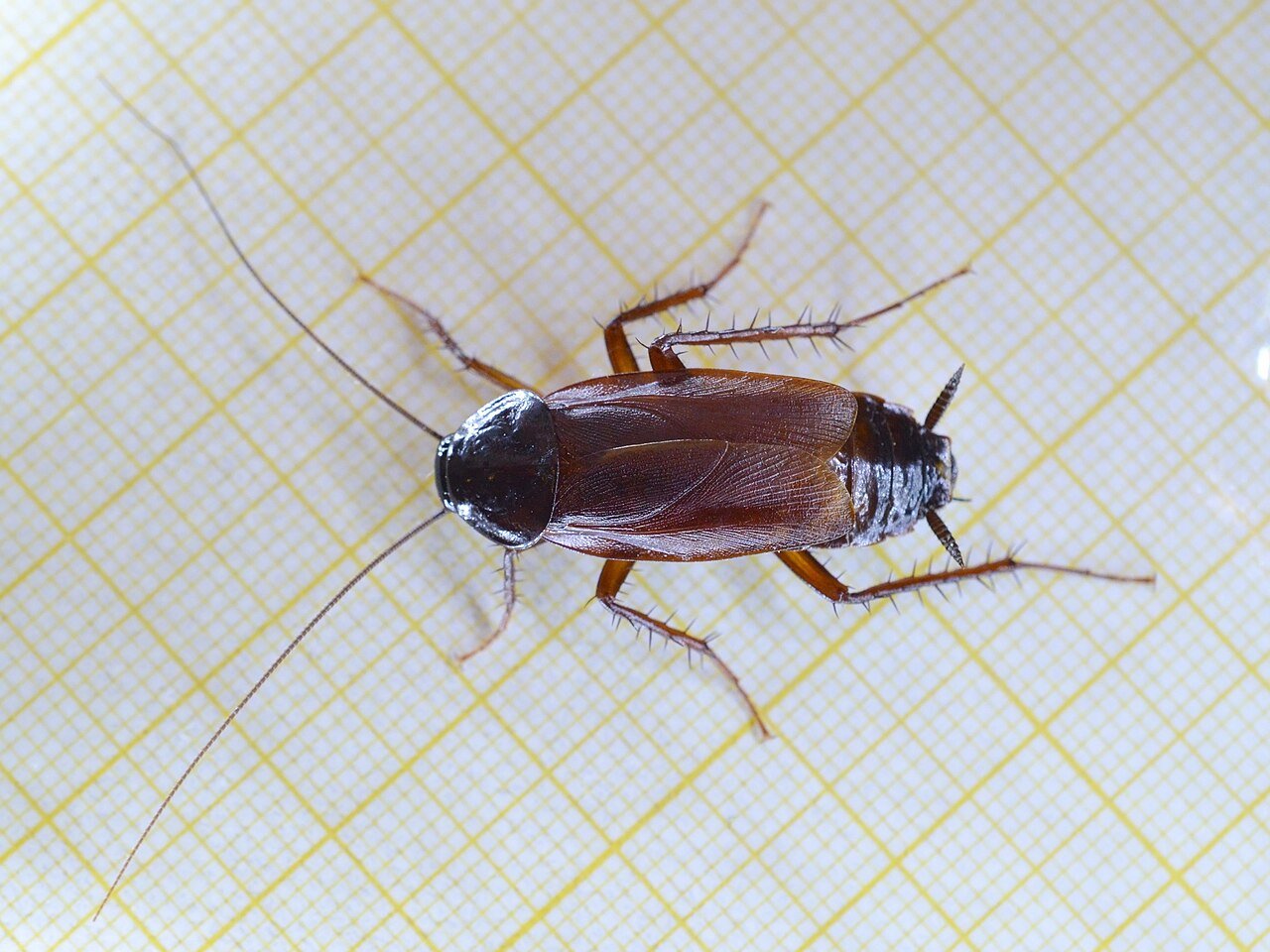
Beyond the kitchen species, Fairborn runs the standard supporting cast. The black drain roach surfaces near basement floor drains, laundry areas, and the older blocks’ storm-adjacent plumbing after heavy rain — an infrastructure commuter handled with the water-the-traps protocol, screening, and low-zone treatment rather than kitchen panic (the water bug file). The June wood roach blunders to porch lights from the wooded creek corridors and dies indoors without breeding — a dustpan event we identify free rather than treat. And the false-alarm gallery — ground beetles, crickets, the occasional big American roach that took a wrong turn — gets sorted by photo before anyone spends a dollar: our Ohio roach lineup makes the visual calls, and the two-stripe check (the kitchen species’ racing stripes behind the head) settles the only identification that changes the stakes. What never helps, in any housing type: foggers — which drive roaches deeper into shared voids and neighboring units while missing every egg case, the full indictment at do bug bombs work.
The Fairborn Calendar and the Bottom Line
The city’s roach year peaks on the academic calendar as much as the thermometer: August–September for arrivals, October–November for the discoveries (one importation, two reproduction cycles), spring semester for the established-infestation calls that started as October shrugs, and storm season for the drain-roach surfacing that follows every heavy rain. The strategic windows follow: turnover treatments in the July–August gap before new tenants arrive, building programs launched in fall before winter density peaks, and the move-in inspection habit — five minutes with a flashlight in the kitchen cabinets before unpacking — that catches inherited problems while they’re still the landlord’s clean-slate obligation. One flat price residential, documented agreements for multi-unit, the full method at cockroach control — and the town’s whole file, bed bugs included, at Fairborn pest control.
Roaches in a Fairborn Rental — Either Side of the Lease?
Species confirmed free, findings documented for the conversation that matters, and building-aware treatment that actually ends it. Flat-priced, guaranteed.
Frequently asked questions
Why do Fairborn student apartments get roaches every fall?
August move-ins import the kitchen species in boxes, hand-me-down furniture, and mini-fridges, and the two-month reproduction clock turns one importation into an October population. Move-in cabinet inspections and cardboard discipline break the annual cycle.
Whose responsibility are roaches in a Fairborn rental?
Serious infestations sit in Ohio’s habitability conversation, with lease terms and case facts mattering — which is why our written findings document species, distribution, and establishment age. Documented cases move landlords weeks faster than complaints.
Why does my apartment get roaches back after every treatment?
Connected buildings share populations through walls, chases, and plumbing — a treated unit refills from untreated neighbors on an eight-week cycle. Building-level coordinated treatment is the fix, and we show owners the math that makes it cheaper than the churn.
What is the black roach in the basement after it rains?
A drain-commuting Oriental roach surfacing from storm-flooded plumbing — an infrastructure event, not a housekeeping verdict. Water down unused traps monthly, screen the drains and sump, and the route closes.
Are the roaches at my porch light in June a problem?
Almost never — wood roaches wander in from the creek corridors, can’t breed indoors, and die within days. We identify them free from a photo so nobody buys a treatment for weather.
Should I bomb my Fairborn apartment before moving in?
No — foggers drive any existing roaches deeper into shared voids and neighboring units while missing egg cases entirely. A flashlight inspection of kitchen cabinets and appliance voids before unpacking — then documented reporting if anything shows — is the move-in play.
How do I know if it’s the serious kitchen roach or something harmless?
The two-stripe check: half-inch, tan, with two dark racing stripes behind the head means the kitchen species and a real case. Stripeless outdoor wanderers, crickets, and beetles get sorted free by photo before anyone spends a dollar.
Do you treat student housing and base-adjacent rentals?
Weekly — building-level programs on documented schedules, between-tenant turnover treatments in the July–August gap, and the paperwork that keeps tenants, landlords, and (where relevant) housing offices on the same page.