
Two lawn-and-skin searches share this page because they share a season and a merciful answer: how to get rid of ground bees, and how to get rid of sweat bees — and before either “get rid of” deploys anything, the identification fork does the season’s most important sorting, because “ground bees” names two completely different Aprils-through-Augusts: the gentle one — the solitary mining bees whose spring lawn mounds and the tiny sweat bees whose summer forearm landings frighten households out of proportion to a threat that rounds to zero — and the serious one — the ground-nesting yellowjacket colony whose late-summer lawn hole is the yard’s genuine appointment, carrying the defense-radius stakes the stinging wing exists to manage. One fork, read in ten seconds by traffic density and season, decides everything: the gentle file gets tolerance, lawn culture and a two-week calendar; the colony file gets the professional protocol. The complete page: the fork itself, the mining-bee season explained (two weeks, better than aeration, gone by Mother’s Day), the sweat-bee forearm diplomacy, the honest deterrents for households that want the gentle tenants moved anyway, the yellowjacket protocol’s summary with its never-DIY boundary, and the allergy exception that re-prices every file on the page. Greater Dayton Pest & Rodent: (937) 569-3330.
The fork: ten seconds that sort the whole season
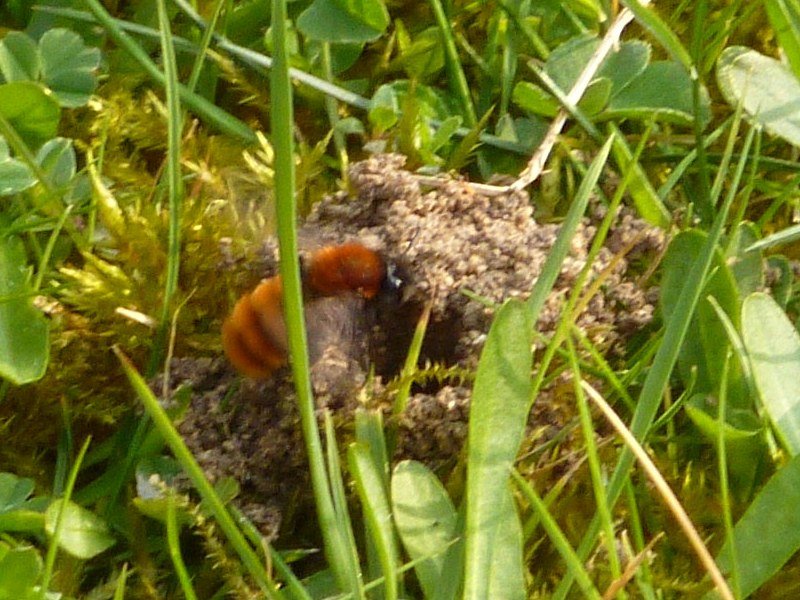
Run the traffic-and-season read before any product moves. Single bees, single holes, spring: scattered pencil-width burrows with soil-crumb volcanoes across a thin lawn in April–May, each hosting ONE unaggressive resident flying loose lazy patterns — mining bees (Andrena and kin, the native-bee parade’s ground division): solitary, sting-averse to the point of research legend, and temporary by design. Tiny bees landing on your skin, summer: the sweat-bee file, below — annoying, salt-motivated, nearly stingless in practice. Dense traffic, one hole, late summer: dozens of insects per minute streaming in and out of a single earthen entrance, fast and purposeful, July–September — ground yellowjackets: a social colony running hundreds-to-thousands, defense radius armed, and the one file on this page where “get rid of” means exactly what it says. The supporting tells: mining bees fly loose and hover-drift (and their males’ stingless-bluff patrols read from that page’s doctrine); yellowjackets fly hard, flat and straight; mining-bee mounds number dozens across the lawn while the colony owns one traffic-worn door; and the calendar splits clean — spring mounds are essentially never yellowjackets (colonies are founding, tiny and invisible in April), late-summer traffic essentially never mining bees. Ten seconds, one fork — and the page now splits with it.
The mining-bee file: two weeks of free aeration
The spring mounds’ complete biography defuses the file: each burrow is one female’s nursery — dug, provisioned with pollen loaves, egg-laid and sealed across a flight season that runs two to four weeks, after which the adults die, the lawn closes over, and the next generation sleeps underground until next April. The residents’ temperament is the parade’s gentlest: females CAN sting and functionally don’t (lawn-mowing directly over active aggregations proceeds statewide without incident — the bees dive for their holes; the entomology literature’s handled-bare-handed notes apply), males can’t at all, and the aggregation’s alarming look — dozens of bees low over the grass — is males patrolling for mates, the bluff-flight genre’s smallest edition. The services rendered while they visit: pollination exactly when the fruit trees bloom (mining bees are premier orchard workers — the mason-bee argument’s ground floor), and soil work — each burrow is honest aeration, and a heavy aggregation out-performs the rental machine. So the honest “get rid of” answer runs: wait two weeks (the file self-closes annually), and if the aggregation offends anyway, change the real estate rather than the residents — mining bees select thin, dry, bare-patched turf, so the fall overseed-and-water program that thickens the lawn is the permanent eviction (dense turf is un-diggable — the cicada-killer page’s same lever, downsized), with heavy spring watering during flight weeks as the humane interim nudge (they prefer dry soil; sprinklers persuade). What earns the standing no: dusting the mounds — insecticide on a two-week beneficial aggregation is the library’s definition of paying to lose services, and the pollinator-protection doctrine holds the line.
The sweat-bee file: forearm diplomacy
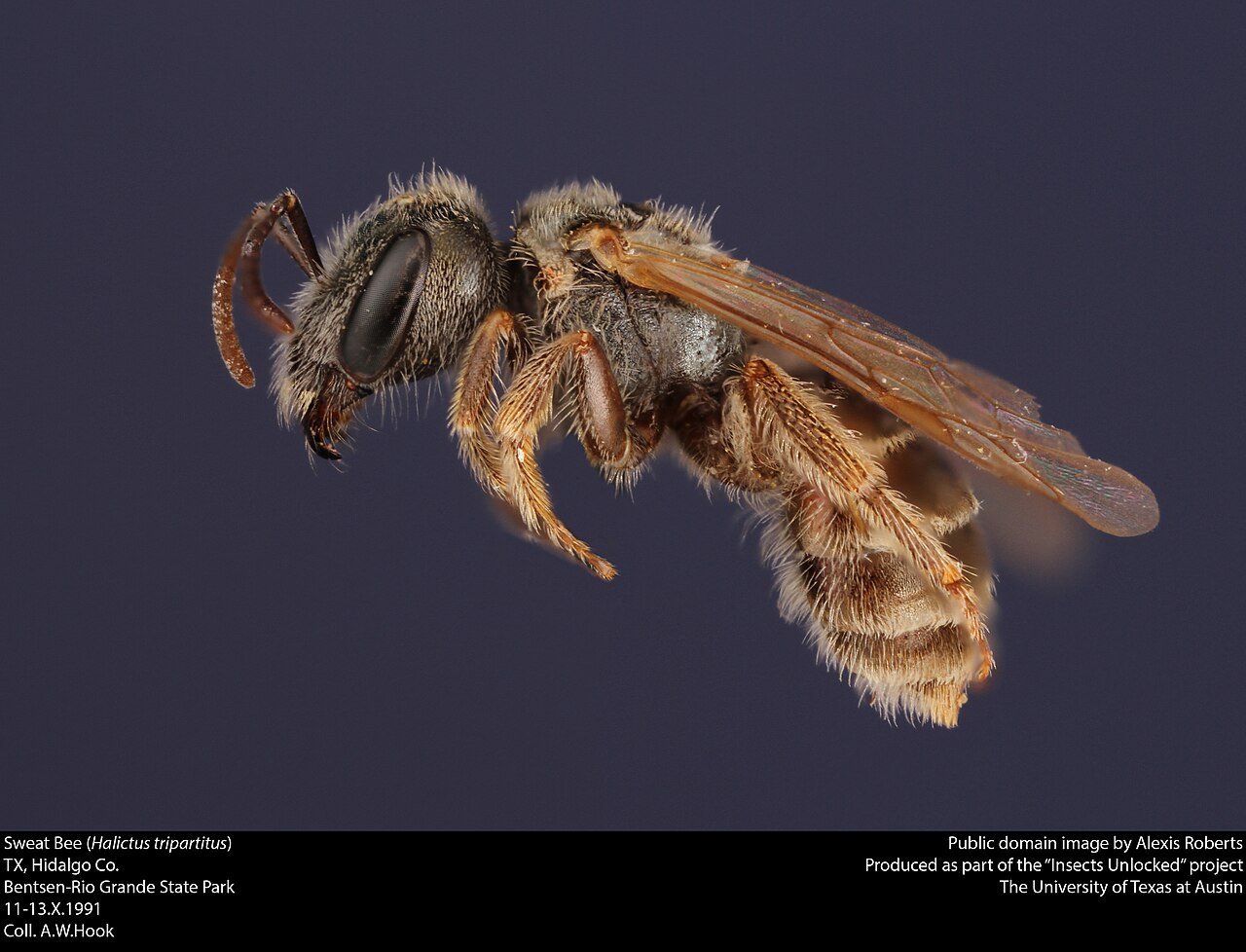
Summer’s tiny landers — the metallic-green jewels and small dark Halictus bees of the parade — visit skin for exactly one commodity: salt, lapped harmlessly from sweat, with a sting deployed only when pressed against skin (the swat-down, the elbow-crease trap) and ranking at the bottom of every pain index when it lands — the famous mildest sting in the American roster. The management program is etiquette plus habitat: brush sideways, never swat down (the pressed-bee scenario is the entire sting file); rinse or wipe before yard work in peak season (less salt, fewer visits); run the box-fan doctrine on the patio (weak fliers, fourth endorsement); and for the households that host heavy garden populations, note the honest trade — sweat bees are significant pollinators whose numbers track flower richness, so the “get rid of” lever is the same proportional one as everything gentle on this page: tolerate the season, manage the encounter, and reserve actual control (bare-patch reduction for the ground-nesting species) for genuine pressure. The one upgrade-trigger both gentle files share: a sting allergy in the household re-prices everything — the near-zero files become managed ones, the allergy-priority routing from the stinging wing applies to bee questions too, and the EpiPen conversation belongs to the physician before the season, not the ambulance during it.
The colony file: when “ground bees” means the appointment
The fork’s serious branch, summarized with its boundaries intact: the late-summer single-hole traffic jam is a ground yellowjacket colony — the lawn’s highest sting-count generator, defending a subterranean nest of hundreds-to-thousands through a defense radius that mowers, trimmers and footfall vibration trigger reliably (the August “mower ambush” is this file’s signature event, and the multi-sting capability plus alarm-pheromone recruitment from the hornet wing applies at ankle height). The response tiers per that wing’s doctrine: location-over-size triage first (the colony at the yard’s far margin, away from traffic, can genuinely run the leave-and-frost calendar — every colony dies at the first hard freeze, nests are never reused, and October’s discovery can simply be outwaited); the act-tier geometry — play areas, mowing lines, walkways, doorways — gets scheduled professional treatment: correct equipment, dusk timing when the colony’s home, protective gear rated for the recruitment response, and the entrance treated rather than plugged (never pour gasoline — the folk method that poisons soil, risks fire and features annually in emergency-room literature; never plug the hole on an untreated colony — the never-plug doctrine runs underground too, with redirected exits emerging into unexpected lawn); and the DIY boundary stated plainly — retail wasp sprays reach an entrance, not a nest chambered a foot down and sideways, and the half-treated colony is the angriest object in residential pest control. Prevention closes the file where the prevention calendar opened it: collapse the old rodent burrows each spring (abandoned vole and chipmunk holes are the colony’s starter real estate — the rodent wing’s work pays its stinging dividend), and walk the lawn in June when colonies are dozens, not thousands.
Ground bee questions, answered
Bees are coming out of the ground at my kids’ swing set — which file am I in?
Run the fork under pressure: springtime + multiple scattered holes + relaxed singles = mining bees (the swing set is safe; the season is short; the barefoot rule suffices). Late summer + one hole + hard traffic = the colony file at act-tier geometry — keep the kids off the zone today and make the call; play-area colonies are exactly what the scheduled treatment exists for, allergy-priority routing standing. Photos of the hole and traffic settle ambiguous cases same-day.
Can I just flood the holes with the hose?
Mining bees: heavy watering during flight weeks genuinely nudges them elsewhere humanely (their file’s honest interim tool). Yellowjackets: no — flooding an active colony produces wet, mobilized defenders and an intact nest (the chambers shed water better than folk physics assumes), and ranks just above gasoline on the list of afternoons the emergency-tier section exists to prevent. The hose is a spring tool for the gentle file only; the fork decides, as always.
Do carpenter bees count as ground bees? Something big is hovering by my deck.
Different address: the deck-rail hoverer is the carpenter bee — wood, not soil, and its own page — while the huge low-cruiser over the lawn in July is the cicada killer, the ground-nesting giant whose acquittal that page delivers. The ground-bee vocabulary absorbs both annually; the fork and the two links sort them in a minute.
The same lawn corner gets yellowjackets every single year. Coincidence?
Real estate, not luck: the corner offering old burrows, thin turf and undisturbed margins re-qualifies annually (nests are never reused, but the criteria are). The off-season fix is the corner’s renovation — burrows collapsed, turf thickened, margin mowed — plus a June walk-by each year; the corner that stops qualifying stops hosting, which is the prevention calendar’s whole method applied to one stubborn square yard.
The verdict at ground level
“Ground bees,” fully sorted: a gentle spring file that self-closes in two weeks and pays pollination-and-aeration rent while it runs; a summer forearm file managed by sideways brushing and a fan; and one genuine late-summer appointment — the single-hole traffic jam — handled by triage, professional treatment at act-tier geometry, and the frost calendar everywhere else. Read the fork before the aisle, thicken the turf as the permanent lever, collapse the burrows each spring, and let the allergy exception re-price whatever it touches. The lawn’s ground floor was never one story; it was three — and the household that tells them apart spends almost nothing on the two that were working for it all along. For the fork’s hard calls, the act-tier schedule and the photo that grades hole-and-traffic in minutes: (937) 569-3330, Greater Dayton Pest & Rodent, Dayton and all eight counties.
The season calendar, ground floor edition
- April–May: mining-bee mound season — identify by the scattered-singles read, mow freely, water heavily if nudging, and photograph for the parade’s prettiest entries; yellowjacket queens are founding invisibly — the June walk-by goes on the calendar now.
- June: the colony walk-by — scan the lawn margins, old burrow sites and thin corners for the season’s first light traffic; a June colony is dozens and treatable at minimum drama; collapse any rodent burrows found vacant.
- July: sweat-bee season opens with the heat; sideways-brush diplomacy and the patio fan deploy; cicada killers begin their patrols over the same ground — the acquittal page’s season, running parallel.
- August–September: colony peak — the single-hole traffic read at full stakes, act-tier geometry treated professionally, leave-tier colonies marked and mown around, and the mower ambush prevented by exactly that marking; allergy households run priority routing.
- October: first frosts close every colony file free of charge; entrance mounds can be raked flat; the corner-renovation projects (turf, burrows, margins) run now for next year’s non-season.
- November–March: nothing underground needs you; the overseed thickens; the fork sleeps until April’s first polite volcanoes.
One calendar, three files, and the ground floor’s whole year managed in a walk-by, a sprinkler setting and one well-timed phone call — the stinging wing’s gentlest chapter, closed at lawn height.
The pollinator ledger (what the gentle files pay in rent)
Since both gentle files end in tolerance, the rent they pay deserves its accounting. Ohio’s ground-nesting solitary bees — the mining bees leading a division that includes most of the state’s five hundred species — carry a disproportionate share of early-season pollination: they fly in the cool April weeks when honeybee clusters are still tight, they work the fruit-tree bloom at exactly its window (the orchard literature credits wild ground-nesters with meaningful shares of apple and cherry set), and their short-range, flower-faithful foraging style makes them premium pollinators per visit. The sweat bees extend the service through summer’s long tail — generalists on everything from garden vegetables to the roadside asters that feed the season’s end — and both divisions’ populations track two variables a household controls: bare-ground nesting habitat (the un-mulched sunny margin, the un-tarped garden edge — total lawn perfection is, ironically, pollinator homelessness, and the wildlife-gardening compromise leaves one sunny strip informal) and the broadcast-spray restraint this library’s every outdoor page enforces. The ledger’s bottom line rewrites the page’s title question honestly: the household that “gets rid of” its gentle ground bees by turf-thickening alone loses nothing (they relocate); the one that dusts the mounds pays in fruit set and garden yield for a two-week problem that was never one. Rent collected, services rendered, fork honored — the gentle files close in the black, where they always ran.
A eight-county ground report
The local pattern, from the spring-and-summer call logs: mining-bee alarm calls peak in the last April weeks and cluster in the thin-lawn belts — new subdivisions’ first-year turf and the historic districts’ tree-shaded patchy yards both qualify as prime aggregation habitat, and both convert to relieved no-action verdicts at the photo stage; sweat-bee complaints track the garden-rich addresses and the August humidity; and the colony files concentrate exactly where the prevention calendar predicts — the field-margin subdivisions of Huber Heights and the farm campuses whose rodent-burrow inventories restock the yellowjacket real-estate market annually (the barn-lot colony is the rural mower’s standing August hazard, and the June walk-by is farm practice for a reason). The report’s cheerful constant: across every county, the fork’s gentle branches outnumber its serious one by wide margins — most “ground bee” seasons end in photographs and two-week patience, the act-tier colonies get their scheduled endings, and the lawn’s ground floor runs another year on the arrangement this page formalizes: rent from the gentle, respect for the armed, and the fork — ten seconds, free — standing guard over the difference.
Polite volcanoes in April, salt-seekers in July, one armed address in August — the ground floor’s whole cast, forked in ten seconds and managed for the price of an overseed and a phone call. The mining bees keep their two weeks; the sweat bees keep their sideways-brush truce; the colony keeps its appointment; and the lawn keeps everything else — pollinated, aerated, and read correctly at last, from the grass up.
And if the fork just sorted your lawn into the serious branch — one hole, hard traffic, act-tier geometry — the scheduling line is the next ten seconds: dusk treatment, rated gear, entrance never plugged, and the zone back in service by the weekend. The gentle files got the tolerance they earned; the colony gets the professionals it requires; and both verdicts came free, which is how the fork has always preferred to work.
Scattered and spring: leave. Single and streaming: call. Everything else: lemonade.
Frequently asked questions
How do I get rid of ground bees in my lawn?
First confirm which tenant you have — solitary mining bees (scattered pencil holes, one bee each, spring) need nothing: they neither sting nor persist, and their pollination is a lawn benefit. The one that warrants removal is the yellowjacket ground colony: ONE hole, constant two-way traffic — and that one is professional work.
Are ground bees dangerous?
The spring miners, no — females essentially never sting and males cannot; children and mowers pass unharmed. Ground-nesting yellowjackets, very — thousands of defenders triggered by vibration. Counting holes and traffic tells you which you have before any decision.
What is the difference between ground bees and yellowjackets in the ground?
Architecture and traffic: miners dig many scattered holes with little soil aprons, one bee per hole, gentle activity; yellowjackets run a single entrance with rush-hour streams. Fuzzy-and-slow versus glossy-and-darting seals the ID at a glance.
Will ground bees go away on their own?
Mining bees: yes — the activity window is a few spring weeks, then the lawn is theirs no more until next April. Yellowjacket colonies: no — they grow until frost, peaking in exactly the months you use the yard most.
How do I stop bees from nesting in my lawn?
They choose bare, dry, sandy patches — so the durable fix is turf: overseed thin areas, water spring mornings during nesting season (miners avoid damp soil), and mulch bare beds. Dense healthy lawn is ground-bee prevention that compounds annually.
Should I pour anything into ground bee holes?
No on every count — boiling water and chemicals into miner holes kills beneficial pollinators pointlessly, and into a yellowjacket entrance they trigger the boil-out that fills emergency rooms. Miners need tolerance; yellowjackets need the professional dust protocol.
Do ground bees sting pets or kids playing in the yard?
Mining bees functionally cannot cause an incident — kids catch them barehanded (not endorsed, routinely survived). The yard rule protects against the impostor: any single busy hole gets flagged and given distance until identified.
Are ground bees protected pollinators?
Not legally protected in Ohio, but genuinely valuable — native miners out-pollinate honey bees per capita on spring crops and fruit trees. It is why our official recommendation for confirmed miners is: enjoy them, they leave in three weeks.
What about the big wasp digging in my lawn in July?
A cicada killer — different insect, same acquittal: solitary, non-defensive, and gone by September. Scattered summer digger holes follow the same tolerance rule as the spring miners; the calendar plus the traffic pattern separates all of them from yellowjackets.
Who do I call if it is actually yellowjackets?
Us, promptly — single-entrance rush-hour traffic in the ground is the region’s top multi-sting hazard, and one professional dust application ends it within days. Flag it, mow around it, (937) 569-3330.