
Every Ohio summer produces the same porch-light drama: a wobbling, gangly insect the size of a half-dollar blunders against the screen door, somebody yells “giant mosquito,” somebody else says “relax, it’s a mosquito hawk — it EATS mosquitoes,” and a third person mutters something about “the most venomous insect in the world, but its mouth is too small to bite.” Three claims, and all three are wrong. The insect is a crane fly, and the truth is stranger and more boring than every legend attached to it: it is not a mosquito, does not eat mosquitoes (as an adult it barely eats at all), has no venom whatsoever, cannot bite you, and spends its few adult days doing exactly one thing before dying — which is not, contrary to the internet, hunting the insect everyone wishes it hunted. This page gives the mosquito hawk its full trial: what crane flies actually are, where every piece of the folklore came from, how to tell a crane fly from an actual mosquito in two seconds, the one situation where crane flies genuinely earn pest status (ask your lawn), and what any of this means for the household that just wants fewer things bumping the porch light. From Greater Dayton Pest & Rodent, where free identification by photo is standing policy: (937) 569-3330.
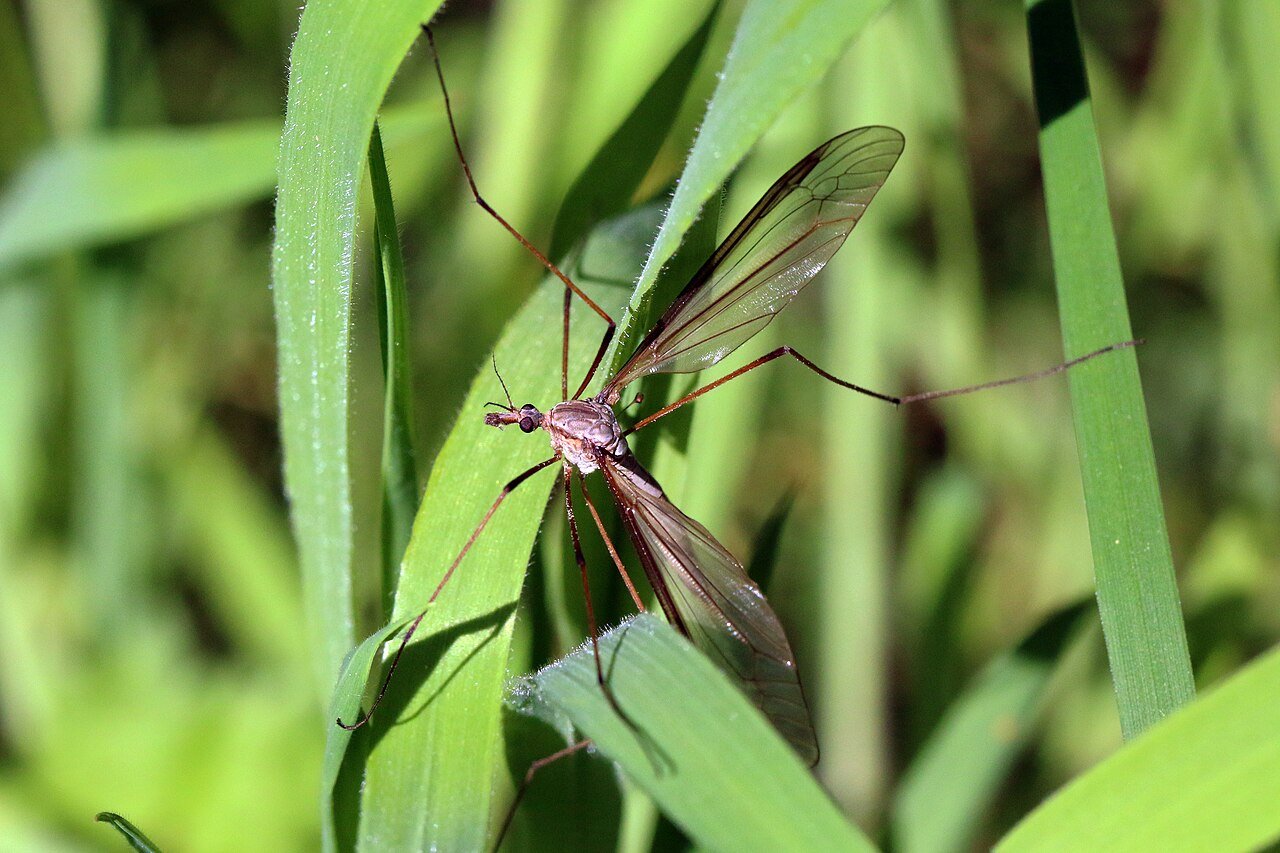
What a crane fly actually is
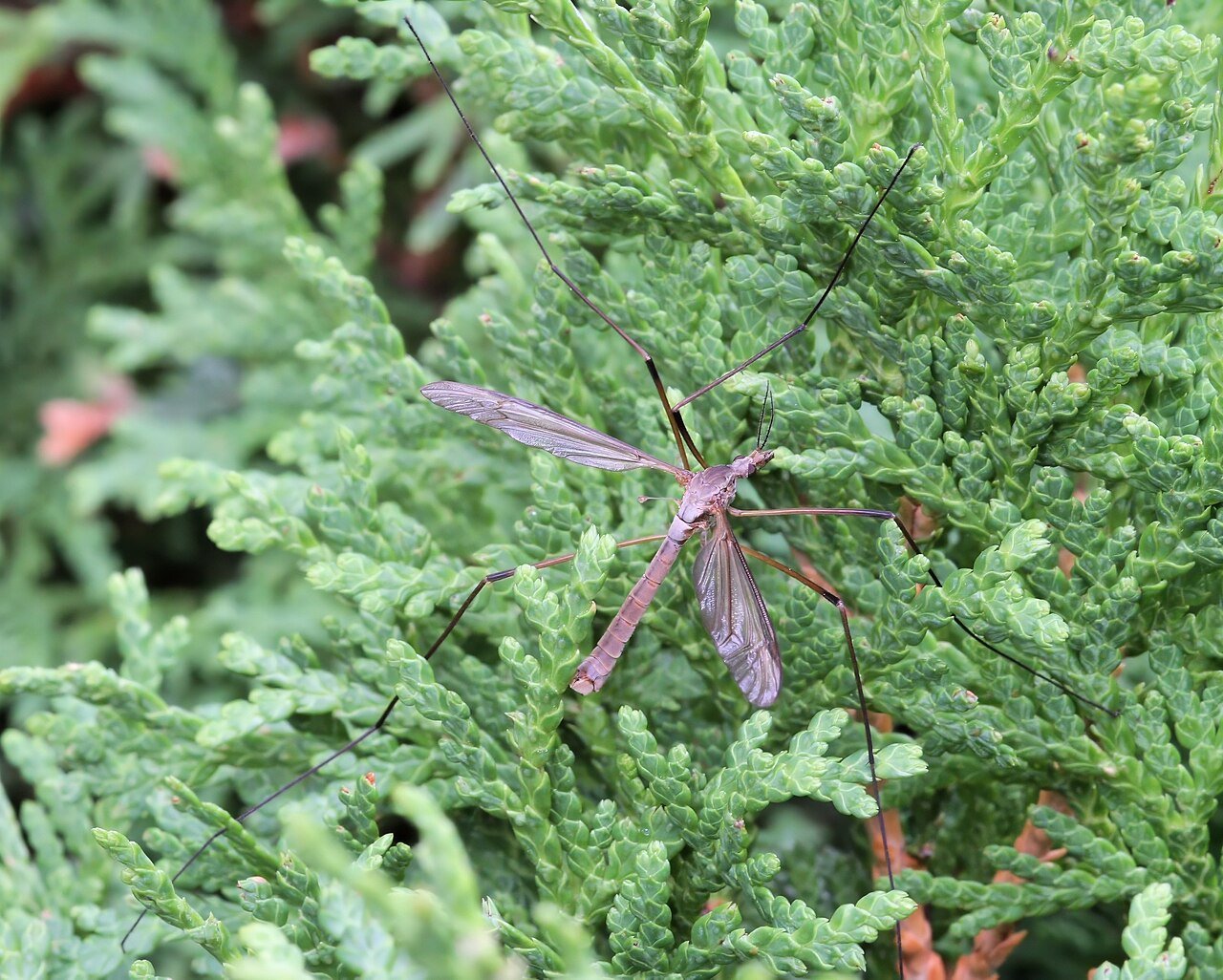
Crane flies are true flies of the family Tipulidae — one of the largest fly families on Earth, with hundreds of North American species, several dozen of them common across Ohio. The build is unmistakable: a slender body from half an inch to over an inch long, one pair of narrow wings, a pair of tiny knobbed “halteres” behind the wings (the gyroscopes all true flies carry), and those absurd legs — up to twice the body length, thread-thin, and famously disposable, snapping off at a predator’s (or a child’s, or a ceiling fan’s) touch without harming the fly, an escape trick borrowed from the lizard-tail school of survival. The flight is the second field mark: slow, bobbing, drifting — aeronautically closer to a badly thrown paper airplane than to the missile precision of an actual mosquito. Adults emerge in two Ohio pulses, spring and late summer, live roughly ten to fifteen days, and in many species never feed at all — some sip nectar, but plenty emerge without functional mouthparts for solid food, running out their whole adult lives on larval savings. Their single agenda item is reproduction: find a mate, lay eggs in moist soil or turf, exit. That’s the entire biography of the beast at your porch light.
Misidentifying the insect is the usual reason a treatment fails. If you would rather someone else made the call, that is part of pest control in Dayton.
The myth trial: three legends, zero convictions
“It’s a giant mosquito.” Same order (Diptera), different family, and the resemblance collapses at every detail: no piercing proboscis, no scale-fringed wings, no whining flight, and a body plan built for wafting over lawns rather than landing on skin. Nothing crane-fly-shaped in Ohio drinks blood. “It’s a mosquito hawk — it eats mosquitoes.” The most durable pest-control folklore in America, and pure wishful thinking: adult crane flies are physically incapable of predation — no grasping legs, no hunting flight, and mouthparts that couldn’t subdue a gnat. The confusion likely borrows from actual mosquito predators — dragonflies (which genuinely do eat mosquitoes by the hundred and are the yard ally the legend describes) and the aquatic larvae of a different insect, the phantom midge, which do hunt mosquito larvae. The crane fly inherited another insect’s résumé. “It’s the most venomous insect alive, but can’t bite.” A complete fabrication with a traceable family tree — the same legend attaches to cellar spiders (see our Ohio venomous spiders page for that cousin of the myth), and it’s false in both cases: crane flies have no venom glands, no delivery apparatus, and no toxin anywhere in their biology. They are, by any measure available to science, among the most harmless large insects that will ever enter your house.
Crane fly vs. mosquito: the two-second read
- Size: Ohio mosquitoes run a quarter-inch; crane flies half an inch to well past an inch. If your first thought was “that’s the biggest mosquito I’ve ever seen,” it’s a crane fly — real mosquitoes never earn that sentence.
- Flight: mosquitoes are quick, purposeful, and whine; crane flies bob and drift in silence, legs dangling like landing gear nobody retracted.
- Landing behavior: a mosquito lands on YOU; a crane fly lands on walls, screens and lampshades and stays there for hours.
- Legs: proportionally modest on a mosquito; comically long and often already missing one or two on a crane fly.
- The nose: mosquitoes carry a visible piercing proboscis; crane flies have blunt, harmless snouts — no needle, no bite.
- Season and place: a dusk ambusher near the birdbath is a mosquito; a May or September blunderer at the porch light is a crane fly.
Two seconds, six tells, zero ambiguity — and the distinction matters practically, because one of these insects transmits West Nile virus in Ohio and the other transmits nothing to anyone. If the yard has the real thing in numbers, that’s a breeding-site problem with a well-mapped fix: our yard mosquito program and the honest plant guide cover that entire war. Don’t spend a single treatment dollar on the impostor.
The one honest charge: leatherjackets and your lawn
Acquit the adult, then meet the family’s actual troublemaker. Crane fly larvae — gray-brown, legless, tough-skinned grubs an inch long, known to groundskeepers as leatherjackets — live in moist soil eating roots, decaying matter and, in heavy concentrations, the crowns of turfgrass. In most Ohio lawns their numbers stay far below damage thresholds and they quietly feed robins, starlings and skunks all spring. But wet autumns can concentrate egg-laying in lush, irrigated turf, and the invasive European crane fly species that have spread through parts of the Midwest raise the stakes: a heavy leatherjacket load shows up as irregular browning thin patches in spring, turf that peels like carpet where roots are gone, and — the classic secondary signal — skunks and birds excavating your lawn nightly for the grub buffet (the same forensic sign our mole page reads for different diggers). The honest thresholds: a few larvae per square foot is background nature; dozens per square foot with visible turf decline is a treatable problem. Diagnosis is a soap flush — a gallon of soapy water on a suspect square yard brings larvae surfacing within minutes for a count. If the count is high, late-summer or early-fall treatment timed to young larvae is the effective window, and cultural fixes carry most of the load: dethatch, aerate, and above all ease the irrigation — leatherjackets are moisture-dependent, and a lawn watered like a rice paddy is an invitation. Sound familiar? It’s the dehumidifier logic from our silverfish guide, translated outdoors: dry the habitat, starve the problem.
Why they swarm your porch light (and what actually helps)
Crane flies navigate by light-compass like most night fliers, so a bright porch fixture on a May evening collects them by the dozen — along with everything else in the yard’s night shift. Three honest mitigations, in effectiveness order: change the bulb — warm-spectrum LED “bug bulbs” (yellow, 2200K-ish) cut insect attraction dramatically versus cool-white, the single best dollar in porch entomology; move the light — a fixture ten feet from the door beats a beacon directly over it, an old motel trick that works on houses; and tighten the screens — crane flies indoors are a fit-and-gap report, not an infestation, because they neither breed nor feed inside; the same screen audit that keeps them out keeps the fall invaders out in October, so it pays twice. What doesn’t help: spraying anything. An adult crane fly is a ten-day insect that dies on schedule with or without your aerosol; treating them chemically is paying to accelerate the inevitable while misting your porch furniture.
Meet the actual mosquito hawks
Since the crane fly can’t live up to its nickname, it’s worth introducing the yard allies that genuinely can — because protecting them is free mosquito control and most homeowners don’t know who’s on their side. Dragonflies and damselflies are the real hawks: an adult dragonfly eats dozens to hundreds of flying insects daily, intercepting mosquitoes on the wing with a hunting success rate that embarrasses every predator larger than itself, while dragonfly nymphs prowl pond water eating mosquito larvae by the swarm. A yard near water that hosts dragonflies is running a serious air force. Bats work the night shift — a single little brown bat takes hundreds of flying insects an hour on good nights — and chimney swifts and swallows sweep the dusk layer where mosquitoes commute. Spiders’ orb webs at the porch line quietly tax every flight path (one more entry for the defense counsel’s file in our spider guide). The practical takeaway: broadcast-fogging a yard kills these allies along with the targets, which is exactly why our mosquito program leads with breeding-site elimination and targeted resting-vegetation treatment instead of indiscriminate fog — the approach that suppresses mosquitoes while leaving the dragonfly squadron flying. Ecology and effectiveness vote together on this one.
Mosquito hawk questions, answered
Can a crane fly hurt my kids or pets?
In no way known to science. No bite, no sting, no venom, no disease. A cat that eats one has consumed a gram of harmless protein. The worst a crane fly has ever done to a human is startle them into spilling a drink.
Why are there suddenly dozens on my siding this week?
You’re inside an emergence pulse — a generation that developed together in the neighborhood’s turf just reached adulthood together, typically for a week or two in mid-spring or around September. They’re resting on vertical surfaces between mating flights. The pulse ends on its own; no action required beyond the porch-light tweaks above.
Do crane flies mean my lawn has grubs?
Not by themselves — adults emerging nearby may have developed in any moist soil around. Pair the sighting with spring brown patches, peelable turf or nightly skunk excavation before suspecting leatherjackets, then run the soap-flush count. Adults on the screen are weather; larvae counts are data.
Is the “skeeter eater” the same thing?
Same insect, same myth, different accent. Mosquito hawk, skeeter eater, gallinipper (a name that properly belongs to one genuinely large true mosquito of the Gulf states), gollywhopper — American folk entomology has a dozen names for the crane fly and almost nothing true to say under any of them. Now you have the truth under all of them.
The verdict
Not a mosquito, not a hawk, not venomous, not a threat — the crane fly is a ten-day-lived lawn moth of an insect whose entire offense is bad flying and worse press. Spend nothing on it. Spend your attention where the biology points: on the actual mosquitoes breeding in the yard’s standing water (our program handles what the dragonflies miss), on the leatherjacket count if the lawn is browning, and on the bug bulb that ends the porch-light circus for two dollars. And when the next debate breaks out at the screen door, settle it the way we would: send the photo to (937) 569-3330 and get the free ID from Greater Dayton Pest & Rodent — identification first, treatment only when something actually needs treating. That policy is the whole reason this page exists.
How a myth this wrong lived this long
The mosquito hawk legend is worth a moment’s autopsy, because its survival machinery runs every pest myth this library debunks. It starts with a plausible visual: the crane fly looks like something that could eat mosquitoes — bigger, hovering in the same summer air, arriving in the same months. It flatters the listener: believing your porch guest is an ally feels better than believing it’s a clumsy bystander, so the claim gets repeated at exactly the moments (swatting season) when everyone wants it true. It borrows real evidence: dragonflies and phantom-midge larvae genuinely do hunt mosquitoes, so anyone who half-remembers a nature documentary has “proof.” And it’s cost-free to believe — nobody loses money trusting a crane fly, so the correction never feels urgent. Compare that to the myths that do cost money — the bleach cures, the bug bombs, the sonic mole spikes from our moles-vs-voles field guide — and you see the pattern: folklore fills whatever space accurate information hasn’t occupied, and the bill lands wherever the folklore steered you. The fix is the same in every case, and it’s the operating principle of this entire pest library: identify first, verify claims against biology, and let the evidence — not the porch-side folklore — decide where the treatment dollars go. The crane fly just happens to be the rare myth you can enjoy debunking with nothing at stake but a bar bet.
Case closed on the gentlest defendant this library will ever try. Next porch-light mystery, the photo line is open.
A Miami Valley season diary
For the record your porch will keep anyway, here’s the local crane fly year. Late April into June: the spring emergence — the big, showy pulse that fills window screens from Kettering cul-de-sacs to Preble County farmyards, peaking after warm rains when moist-soil emergence conditions align. This is peak “giant mosquito” text-message season on our photo line, and we enjoy every one. July: relative quiet; larvae of the next generation are feeding down in the turf while summer’s actual biters take the stage — any “huge mosquito” report in July deserves a real look, since a few true Ohio mosquitoes (the floodwater giants) do run large after river-bottom flooding, one more reason the two-second ID earns its keep along the Great Miami corridor. September: the fall pulse, smaller but reliable, overlapping the start of fall-invader season — a busy month for things on siding, and the month the screen audit pays double. October frost: curtain down; leatherjackets tunnel deeper to wait out winter under the lawn, and the porch light goes back to moths. No other insect on this site runs a calendar this harmless — enjoy it, and save the vigilance for the species that earn it.
One closing scene, because every myth deserves a better ending than a correction: the next time a crane fly wobbles past the porch swing, you now know you’re watching an insect that waited a year underground for ten days of flight, that will neither bite you nor save you from anything, and that has carried three false identities through a century of American summers without ever once being asked. Let it bump the screen. Point it out to the kids with its real name. And save the phone call for the quarter-inch whiner that lands on your ankle at dusk — that one, Greater Dayton Pest & Rodent takes very seriously indeed.
Ten days of flight, a hundred years of slander, two seconds to the truth — not a bad exchange rate for one page.
Frequently asked questions
Do mosquito hawks eat mosquitoes?
No — the gangly giant is a crane fly, and adults eat little or nothing at all: most species do not feed as adults, living days on larval reserves to mate and lay eggs. The “mosquito hawk” name is a total misnomer; they neither hunt mosquitoes nor bite you.
Do crane flies bite or sting?
Cannot — no biting mouthparts, no stinger, no venom, no interest. The most alarming-looking insect on the porch screen is arguably the most harmless one in the yard.
What is the giant mosquito-looking bug in my house?
A crane fly that followed the porch light in — bumbling, leggy, and utterly safe. Cup-and-release or just open the screen; it wants out and will die within days regardless of your policy.
Are crane fly larvae bad for lawns?
The one legitimate gripe: “leatherjacket” larvae feed on turf roots, and dense populations can brown patches in wet years. Ohio pressure is mostly modest; brown patches with birds probing hard in spring are the sign worth checking.
Why are there so many crane flies this year?
Wet seasons breed them — larvae need moist soil, so rainy springs and soggy falls produce the porch-screen conventions. It is a weather report, not an infestation signal.
How do I get rid of crane flies around my house?
Mostly: lights and patience — amber porch bulbs cut the evening arrivals, screens keep them out, and the adults die in days. Lawn-larvae treatment (beneficial nematodes or a labeled product) belongs only to genuinely damaged turf, rarely warranted here.
What is the difference between a crane fly and a giant mosquito?
Ohio has no mosquito remotely that size — any inch-plus “mosquito” is a crane fly, distinguishable by trailing legs, weak drifting flight, and no biting proboscis. Actual mosquitoes cap out under a half inch.
Do crane flies do anything useful?
Larvae recycle organic matter and feed birds heavily (robins and starlings work spring lawns for them); adults feed swallows and bats. They are part of the yard’s food economy, not a threat to it.
Why do crane flies bounce against my windows and walls?
Phototaxis plus terrible piloting — they navigate to light with wings built for drifting, not steering. The bumbling is the whole species experience; nothing is trying to get to you.
Should I ever call pest control about crane flies?
For the flies, never — for the lawn, occasionally: spring brown patches with heavy bird-probing earn a larvae check and, in the rare heavy case, targeted treatment. And if the “giant mosquitoes” concern is actually about the biting kind, our mosquito program is the real answer: (937) 569-3330.