
Let’s open with the honesty that most “mosquito-repelling plants” articles bury: no plant, sitting quietly in a pot, will clear your patio of mosquitoes. The repellency lives in the plants’ essential oils, the oils live inside the leaves, and an undisturbed plant releases only traces — the research consensus is that a mosquito will happily rest on the leaves of a citronella geranium. What plants genuinely offer is different and still valuable: crushed and rubbed foliage releases meaningful short-range repellency (several of these oils are the parent compounds of commercial repellents), a well-designed planting supports the predator-and-pollinator ecosystem that pressures mosquitoes, smart plant choices avoid creating the shaded, water-holding conditions mosquitoes love, and a fragrant border makes the space where you sit measurably less inviting at the margins. This guide builds the honest version of the mosquito garden — every plant selected specifically for Dayton’s zone 6 winters, heavy clay soils, and humid summers, because a repellent plant that dies in a Miami Valley January or drowns in our spring clay repels nothing. From Greater Dayton Pest & Rodent, whose mosquito control service handles the part no garden can: (937) 569-3330.
The Dayton reality check: zone 6, clay, and humidity
Three local facts govern every plant on this list, and ignoring them is why so many “mosquito plant” purchases compost themselves by August. Winter (USDA zone 6a/6b): the Miami Valley’s single-digit cold snaps kill the tender celebrities of this genre — true citronella grasses (Cymbopogon, zone 9+) and the “citronella plant” scented geranium are annuals here, replanted yearly or overwintered indoors, and any list treating them as landscape plants was written for Florida. Soil: our glacial clay holds water beautifully — which the region’s farms love and Mediterranean herbs hate; lavender and rosemary in unamended Dayton clay die of wet feet, not cold, so they get raised beds, gritty amendments, or containers. Humidity: our thick summers push fungal pressure on tight-foliaged herbs (bee balm’s powdery mildew is a local rite of passage — buy resistant cultivars) and simultaneously supercharge plant growth, which cuts both ways: the herbs that do fit thrive extravagantly here. The strategic upside of the checklist: the plants that pass all three filters skew heavily toward Ohio natives and cottage-garden stalwarts — tough, pollinator-magnetic, and perennial — so the honest mosquito garden ends up being simply a superb Dayton garden that also fights on your side.
Plants help at the margins on a still evening. For a yard you actually want to sit in, that is mosquito control.
The Dayton-proof roster, tier one: the natives that carry the program
Bee balm / wild bergamot (Monarda) — the flagship: an Ohio-native mint relative whose foliage carries thymol-family oils (crush a leaf and the medicine-cabinet scent is immediate), whose flowers feed every bee and hummingbird in the neighborhood, and which conquers clay happily; plant the mildew-resistant cultivars, give it air, and let it spread into the border’s backbone. Mountain mint (Pycnanthemum) — the insider’s pick: a native whose crushed leaves out-repel most of the famous names in comparative trials (pulegone-rich oils), unstoppable in clay, and the single busiest pollinator plant we know — one drift feeds the predatory wasps and flower flies that hunt your garden’s pests all season. Anise hyssop (Agastache) — native, licorice-scented foliage, purple summer spires, thrives in heat, laughs at zone 6. American beautyberry — the research darling: its leaves contain callicarpin compounds serious enough that the USDA studied them as repellent candidates; marginal-hardy here (a protected spot, or treat as a die-back shrub), rewarded with the famous purple fruit. Together this tier does what tier-one should: survives every Dayton winter, feeds the beneficial ecosystem, and puts real repellent chemistry within arm’s reach of every patio chair — literally, because the operating instruction for all of them is plant close enough to touch, and crush a sprig when you sit down.
Tier two: the cottage classics (with their Dayton fine print)
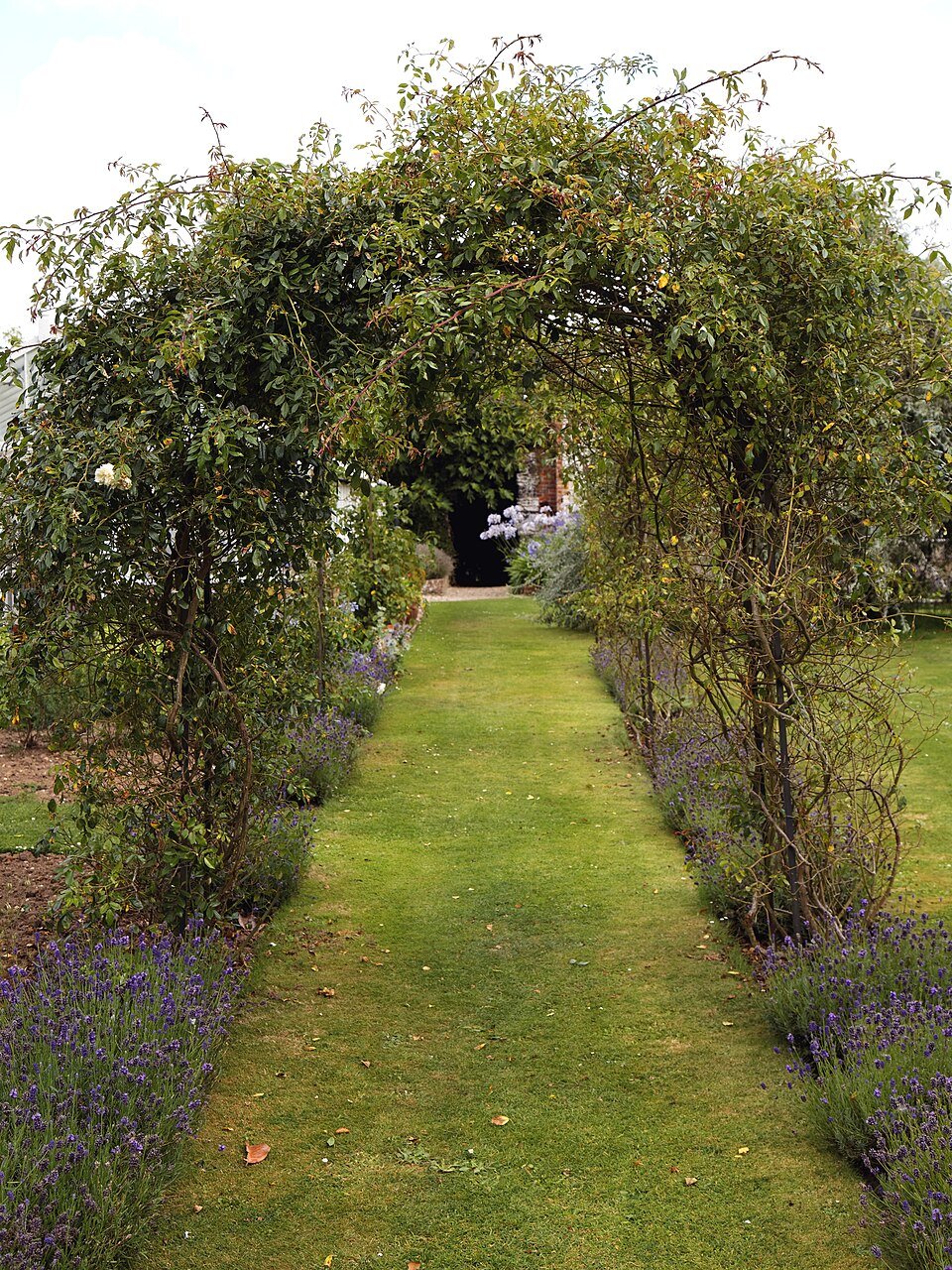
- Lavender: real linalool-family oils, spectacular borders — but in Dayton it’s a drainage project: raised beds or containers, gritty soil, full sun, no winter mulch smothering the crown; ‘Phenomenal’ and ‘Munstead’ are the zone-6-proven cultivars
- Catmint (Nepeta): nepetalactone — the same molecule that out-performed DEET in famous Iowa State trials — in a plant that grows in Dayton clay like it’s being paid; ‘Walker’s Low’ edges a patio beautifully and blooms for months (fine print: your cats and the neighborhood’s will visit)
- Marigolds: pyrethrum-adjacent thiophenes in that signature scent; cheap annual edging for beds and pots, doubling as vegetable-garden pest duty — the workhorse, not the star
- Rosemary: camphor-rich and kitchen-useful; a container annual here (or overwinter on a bright windowsill), and a sprig tossed on the grill’s coals is the one folk trick with a real mechanism — scented smoke IS a modest area repellent
- Basil: eugenol-carrying, mosquito-disliked in crushed form, and the only entry you’ll harvest for dinner weekly; lemon basil doubles the citrus notes
- Lemon balm: citronellal-rich leaves — the crushed-leaf champion of the mints — with the classic mint warning: it spreads like gossip, so container it or dedicate a patch you’ll never reclaim
- Scented ‘citronella’ geranium: the famous one, kept honest — pleasant, genuinely oil-rich when rubbed, dead by Thanksgiving outdoors; a porch-pot annual whose leaves you crush at dusk, not a force field
- Alliums (chives, garlic chives, ornamental): sulfur-compound foliage, deer-and-rabbit resistance as the bonus, and utterly Dayton-proof
Design: turning a plant list into an anti-mosquito patio
Arrangement does as much work as species. Concentrate at the human zones: pots and border drifts within arm’s reach of seating, door thresholds, and the grill — where crushed-leaf deployment and scent masking actually operate — rather than scattered where no one sits. Layer bloom across the season (catmint’s May start through beautyberry’s fall) so the pollinator-and-predator payroll never lapses: flower flies, predatory wasps, and the dragonfly traffic a healthy garden supports are quietly eating mosquitoes at every life stage. Keep the plantings breathable: dense, damp, shaded foliage against the house is mosquito resting habitat — the exact surfaces our barrier treatments target — so favor open, sun-loving structure near seating and save the lush shade plantings for the yard’s far edge. Mind the water ruthlessly: every saucer, bromeliad cup, and over-mulched soggy bed is a nursery that out-breeds whatever the foliage repels; the bucket-tipping circuit remains the most powerful “plant” in any design. And use the harvest: a handful of lemon balm and monarda rubbed on ankles and chair arms at dusk, rosemary on the coals, a crushed-herb bouquet on the table — the garden’s repellency is a verb, and the households that use it get the results the pot-on-the-railing crowd keeps waiting for.
The science, served straight: what the research actually supports
Because this topic runs on marketing more than most, here’s the evidence base in plain terms. The oils are real: citronellal, nepetalactone, thymol, eugenol, and their relatives demonstrably repel mosquitoes in controlled exposure — several are the active ingredients or parent compounds of EPA-registered repellents (oil of lemon eucalyptus’s PMD being the standout with efficacy approaching DEET). The delivery is the catch: intact plants release trace vapor, and field studies of potted “mosquito plants” on patios consistently find no significant bite reduction from presence alone — repellency requires liberating the oils (crushing, rubbing, burning) and operates at skin-and-chair range for an hour or so, not across a yard. The ecosystem effect is real but indirect: plantings that feed pollinators and predators, paired with eliminated standing water, measurably suppress local mosquito production — the garden fights as a system, not as an air freshener. And the skin-application warning stands: crushed-leaf rubbing is folk-scale and fine for most, but concentrated homemade oil extractions can irritate skin badly (lemon balm and geranium oils especially) — for reliable personal protection, the EPA-registered bottles formulated from these same plant compounds are the engineered version, and our mosquito page’s repellent rundown covers them. Honest summary: plant the garden for the crush-and-rub, the predators, the beauty, and the marginal gains — and let no one sell you a pot as a perimeter.
The Dayton planting calendar for the mosquito garden
- April: divide and move perennials (monarda, mountain mint, catmint); direct-sow nothing tender yet — and start the source-reduction circuit now, before first hatch
- Mid-May (after the frost-free date): plant the annuals — marigolds, basil, scented geraniums, rosemary pots — Dayton’s traditional Mother’s Day green light
- June: everything establishes in the humidity surge; pinch basil and monarda for bushiness; first catmint shear after bloom triggers the summer-long rebloom
- July–August: peak season — daily crush-and-rub harvest, deadheading, and vigilance on pot saucers (the mosquito garden’s own irrigation is its biggest hypocrisy risk)
- September: last herb harvests for drying; beautyberry shows its purple; keep the water circuit running through the warm evenings
- October: pot the rosemary and geraniums for the windowsill, let the natives stand (seed heads feed winter birds; hollow stems house next year’s mason bees), and dump every saucer one last time before frost closes the season
Plant questions, answered
If I plant enough of these, can I skip the barrier treatments?
Depends on your tolerance and your geography. A mid-block Kettering yard running impeccable water discipline plus a crush-and-rub garden may genuinely find the result livable; a greenway-edge or river-corridor address inherits flight-range pressure no planting touches. The layers stack rather than compete — garden, water circuit, barrier, repellents — and the free walk-through will tell you honestly which layers your address actually needs.
Won’t attracting all these pollinators mean more stinging insects at my patio?
Foraging bees and wasps at flowers are the docile version of those insects — the bee guide covers why — and drawing them to a border six feet from the table is categorically different from a defended nest under the deck rail. Plant the flowers, enjoy the traffic, and keep the nest patrol for the structures.
Three ready-made Dayton designs, sized to real spaces
The apartment balcony (three pots): a scented geranium for the rail-side crush habit, a lemon basil for dinner and dusk duty, and a ‘Walker’s Low’ catmint that blooms from May to frost — every saucer emptied after rain, which on a balcony is the entire water circuit. Total investment under thirty dollars, renewed partially each spring. The patio perimeter (one weekend): a monarda-and-mountain-mint drift anchoring the sunny border, lavender in a raised gritty corner or trio of terracotta pots, catmint edging the seating side, marigolds filling gaps, an allium cluster by the grill, and rosemary in the movable pot that follows the party — with the deck’s shade side kept deliberately open and the downspout extended past the beds. The full-yard system (the edge-property version): everything above, plus anise hyssop and beautyberry in the middle border, the far fence line planted lush for pollinators while the house perimeter stays breathable, a mounted mason bee house and the standing winter stems that stock it, and — because edge properties earn it — the seasonal barrier program layered underneath, treating the resting surfaces no design eliminates. Each design runs the same operating manual: crush when you sit, water in the morning, empty what holds, and let the garden’s predators work the night shift.
The honest bottom line
A mosquito-repelling garden in Dayton is a real thing — as long as you hold the honest definition: not a chemical fence grown from pots, but a stacked set of modest, genuine effects (crushable oils at arm’s reach, a predator payroll in bloom, zero nursery water, no resting jungle at the chairs) wrapped in a landscape that would be worth planting anyway. Set expectations there and the garden over-delivers: the patio smells like an herb market, the hummingbirds run their monarda circuits, dinner gets basil, winter gets bird-fed seed heads, and the mosquito pressure drops by the margins the plants honestly command — with the service layers available for everything beyond their reach. Plant the tier-one natives this spring, run the crush-and-rub like you mean it, and let the region’s best-smelling pest control company handle the rest: (937) 569-3330 — free walk-throughs, honest layer-by-layer advice, and genuine admiration for a client whose first line of defense is a perennial border.
Sourcing locally: where Dayton gardeners actually find these plants
The tier-one natives — monarda, mountain mint, anise hyssop — are easiest to find through the region’s native-plant channels: the spring native plant sales that Five Rivers MetroParks and local conservation groups run (April–May, and they sell out early), the Miami Valley’s independent garden centers that keep native benches, and the statewide native nurseries that ship plugs by the flat for anyone converting a whole border. The cottage tier is everywhere each May — big-box included — with two buying tips that matter here: choose lavender by cultivar name (‘Phenomenal’ earned its zone-6 reputation; unnamed “English lavender” is a coin flip in our clay), and buy monarda labeled mildew-resistant or accept the August foliage tax. Seed-starting favors the annual tier — marigolds and basil from seed cost pennies and fill a border — while the scented geranium overwinters so easily on a windowsill that one purchase can run a decade of porch pots via spring cuttings. And a neighborly local note: plant swaps and the region’s active gardening groups redistribute the spreaders (lemon balm, mountain mint, catmint divisions) for free every spring — the mosquito garden’s core, it turns out, is the exact set of plants Dayton gardeners are always trying to give away. Accept the gift, container the mints, and the whole tier-one design can cost a Saturday and a thank-you note.
The one-screen planting plan
- Tier one (native, clay-proof, perennial): bee balm/monarda (mildew-resistant cultivars) · mountain mint (the sleeper champion) · anise hyssop · American beautyberry (protected spot)
- Tier two (classics with fine print): lavender (‘Phenomenal’, drainage or death) · catmint ‘Walker’s Low’ (nepetalactone workhorse) · marigolds & basil (cheap annual infantry) · rosemary & scented geranium (pot-and-windowsill annuals) · lemon balm (container the spreader) · alliums
- The operating manual: plant within arm’s reach of seating · crush-and-rub at dusk (repellency is a verb) · rosemary on the coals for scented smoke · keep seating zones open and sunny, lush shade at the far fence
- The non-negotiable partner: the standing-water circuit — no saucer, barrel, or low spot left holding; the best plant in the design is still the tipped bucket
- What plants can’t do: perimeter force fields, flight-range defense, resting-site elimination — the service layers exist for exactly that stack: (937) 569-3330, free walk-through
- Dayton specifics: zone 6a/6b hardiness throughout · plant annuals after Mother’s Day · amend or raise anything Mediterranean · native sales in April sell out — calendar it
Screenshot the plan, hit the May sales, and by July the patio defends itself in lavender and monarda while the buckets stay dry and the barrier handles the border traffic — the honest mosquito garden, Dayton edition, complete. And with that, the flashlight, the trowel, and the phone line all point the same direction they always have around here: know the biology, work the layers, and call for the parts beyond reach.
Frequently asked questions
Do mosquito repelling plants actually work?
The honest grade: C− — the OILS in citronella, lavender, marigold, and catnip genuinely repel when crushed and applied, but the intact living plant releases too little to protect anything beyond its own leaves. A garden of them decorates beautifully and repels approximately nothing at patio scale.
What is the truth about citronella plants?
The “citronella plant” sold in garden centers is usually a scented geranium containing minimal citronella oil — marketing wearing leaves. True citronella grass (a tropical, in Ohio a container annual) holds the real oil, and even it protects only when crushed on skin, not by existing nearby.
Which plants have the best-documented repellent oils?
The research shortlist: catnip (nepetalactone — in lab tests rivals DEET), lemon eucalyptus (source of the one plant-derived repellent with CDC standing: OLE), lemongrass/citronella, and lavender — all as EXTRACTED, applied oils. The plant-to-protection gap is the entire story this page tells.
Is there any plant-based repellent that really works?
Oil of lemon eucalyptus (OLE/PMD) — the refined, standardized product (not the raw plant, not the essential oil aisle) carries genuine CDC-listed efficacy near DEET’s class. It is the honest answer for DEET-averse households; everything else botanical grades sharply lower.
Should I still plant a mosquito-repelling garden?
For every reason except mosquitoes: pollinator support, herbs, fragrance, beauty — plant away. Just pair it with the tools that work (source elimination, fans, repellent, barrier treatment) rather than expecting the lavender border to guard the patio.
What works better than plants for a mosquito-free patio?
The ranked stack from our mosquito pages: weekly tip-and-toss (A), Bti dunks in standing water (A), the box fan (A− and two dollars), DEET/picaridin/OLE on skin (A), professional barrier treatment on resting vegetation (A for season-scale). The plant border ranks below every entry.
Do crushed plant leaves work as emergency repellent?
Briefly and better than nothing — crushed catnip or lemon balm rubbed on skin buys short protection at real skin-sensitivity risk for some people. It is the camping-emergency tier; the bottle in the drawer outperforms the garden every time.
What about mosquito-repelling candles and torches?
Same oils, same verdict: citronella candles manage a few feet of partial protection in still air — and the still-air clause defeats them outdoors. The fan pointed across the seating area costs less and works categorically better.
Why does this myth persist so strongly?
Because the oils DO repel — the science is real at the extraction level, and marketing launders it onto the living plant. It is the pattern our whole remedy-grading library documents: a true mechanism, misapplied at a dose that cannot work.
What should Dayton yards actually do for mosquito season?
The program that works: April container scrub, weekly water patrol, dunks in the permanent water, fans on the patio, repellent for the skin, and — for yards that want the season handled — the barrier schedule: (937) 569-3330. Plant the lavender because it is lovely; hire the physics because it works.