Something is tunneling your yard, and before anyone can fix it, somebody has to answer one question correctly: moles or voles? The two get confused constantly — similar size, similar “something under my lawn” evidence, names one letter apart — and yet they are about as closely related as a cat and a rabbit, they cause completely different damage, and the treatments for one do absolutely nothing to the other. Companies that skip the identification step sell you the wrong program; homeowners who guess wrong spend a season fighting the animal they don’t have. This guide settles it: how to tell moles from voles in under five minutes using nothing but the evidence already in your yard, what each animal actually does to Ohio lawns and gardens, and what genuinely works on each. And if you’d rather text us a photo of the damage and let a professional make the call, that’s free: (937) 569-3330, or reach us through the contact page.
The one-paragraph answer
Moles are insect-eaters that live entirely underground, dig deep tunnels with their shovel-shaped front feet, push up volcano-shaped mounds of soil, and raise ridges you can feel underfoot. They eat earthworms and grubs — never your plants. Voles are rodents — mouse relatives — that travel in shallow surface runways clipped through the grass, eat roots, bark, bulbs and stems, and can kill young trees by girdling them at the base. Mounds and raised ridges: mole. Snaking bare trails at grass level and gnawed plants: vole. That single distinction routes every treatment decision that follows — and it is the first thing our technician confirms on any mole control visit, because a wrong ID here wastes everyone’s season.
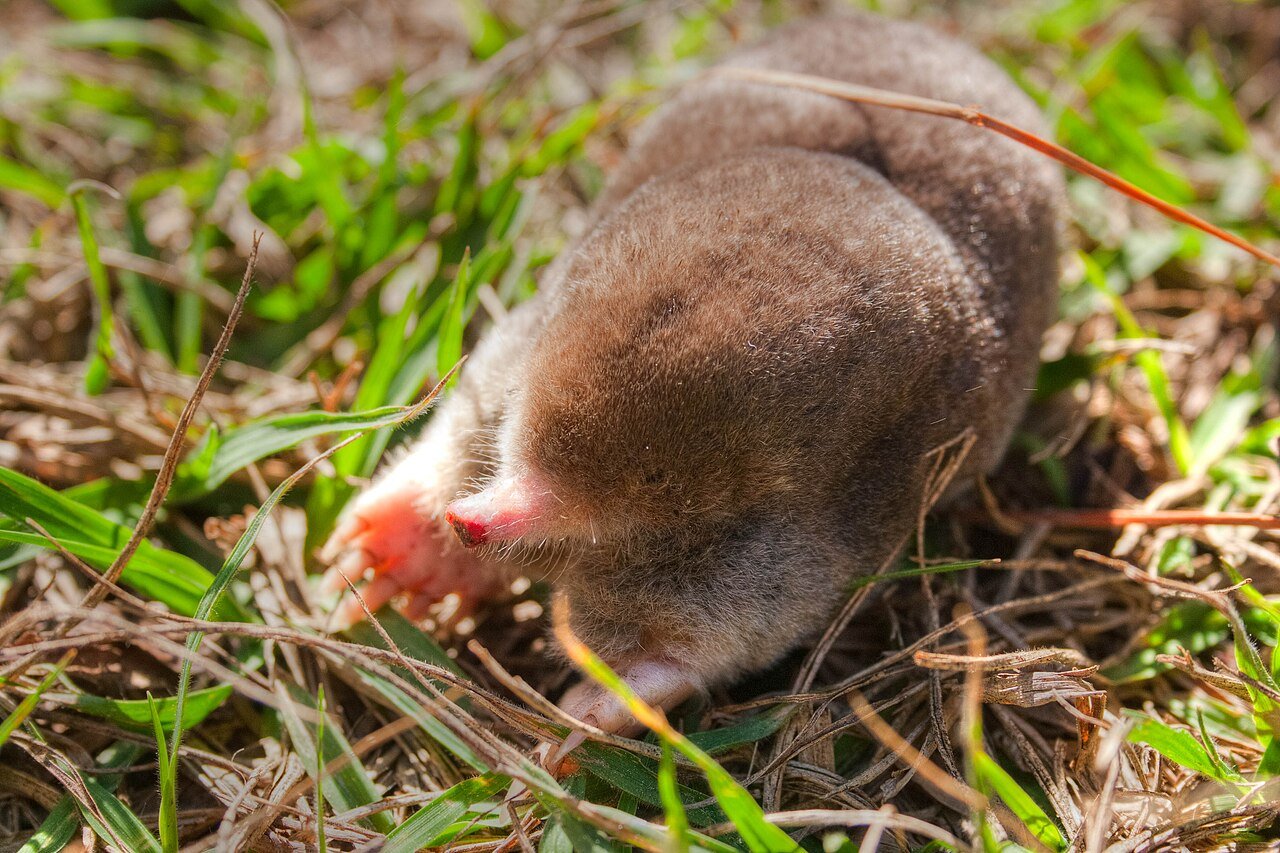
Meet the mole: Ohio’s underground insectivore
The eastern mole (Scalopus aquaticus) is the species under virtually every tunneled lawn in the Miami Valley. It is not a rodent — it belongs to an ancient line of insect-eating mammals, built like a furred torpedo: cylindrical body, velvet coat that lies flat in either direction so it can reverse through tunnels, eyes reduced to light-sensing dots, and front paws widened into digging blades that can move a pound of soil a minute through soft spring earth. A mole’s entire economy runs on soil invertebrates — earthworms above all, beetle grubs second — and a single adult eats close to its own body weight daily, which is why one mole can tunnel a shocking amount of lawn. What a mole will not do: eat a single plant. Bulbs pulled underground, hostas gnawed at the crown, bark stripped from a young maple — none of that is mole work, no matter how many mounds sit nearby. Full biology and treatment detail lives on our moles in Ohio guide.
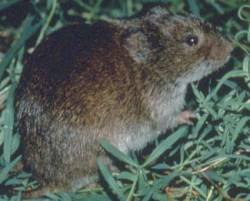
Meet the vole: the mouse that farms your lawn
The meadow vole (Microtus pennsylvanicus) and its woodland cousin the prairie vole are true rodents — stocky, short-tailed, blunt-nosed cousins of the house mouse, four to seven inches long including the stub of tail. Where a mole is a solitary engineer, voles are a population: they breed almost year-round, a female can produce five to ten litters annually, and a mild winter under good snow cover can turn a quiet field edge into hundreds of animals by March. Voles are herbivores with a rodent’s incisors and a rodent’s appetite for stems, roots, bulbs, seeds and — most expensively — the inner bark of young trees and shrubs. They are active day and night, summer and winter, and they do their best-hidden work under snow, where the runway network stays invisible until the thaw reveals a lawn cross-hatched with bare trails. If you keep fruit trees, new landscaping, or a fall bulb bed anywhere from Oakwood to the Preble County farm edges, voles are the one on this page that costs real money.
The five-minute field diagnosis
Walk your yard with this checklist and you will have your answer before the coffee cools. Look for mounds. Conical volcanoes of loose, crumbly soil with no visible entry hole are mole hills — the spoil from deep-tunnel excavation, pushed straight up. Voles never build them. Feel for ridges. A spongy, raised seam that gives underfoot is a mole’s shallow feeding tunnel, dug just under the turf where the earthworms run. Look for surface trails. Bare, snaking paths about two inches wide, worn down to soil through the grass — especially radiating from shrub bases, mulch beds or field edges — are vole runways, clipped and maintained by constant traffic. Check the plants. Gnawed bark in a neat band around the base of a young tree, bulbs excavated or eaten hollow, perennials whose roots vanished over winter: vole, every time. Look for holes. Clean, open holes about the diameter of a golf ball, flush with the ground, often at the edge of a runway — vole burrow entrances. Mole tunnels almost never open to the surface. And check the droppings if you find any: voles leave small green-brown pellets in the runways; moles, living entirely below, leave nothing visible — a distinction our droppings guide covers across every yard animal.
Why the confusion costs money
The moles-versus-voles mix-up isn’t academic — it routes real dollars in wrong directions. The classic failure: a homeowner sees tunnels, buys grub killer to “starve the moles,” and treats the lawn twice a year. If the animal is actually a vole, the grub treatment does nothing (voles don’t eat grubs); if it’s a mole, it still mostly fails, because moles eat earthworms first and grubs second, and no lawn should want its earthworms gone. Second failure: poison peanuts marketed for “moles and gophers” — moles are insectivores that won’t touch a grain bait, so the product treats the wrong species by design. Third: a vole infestation dismissed as “just moles being ugly” until spring reveals six girdled fruit trees — a four-figure landscaping loss from a rodent that trapping and habitat work would have stopped in October. The diagnosis is free; the wrong guess never is. That’s the whole reason this page exists, and why our mole program starts with confirmation, not assumption.
What actually works on moles
Short version, with the long one on the mole control service page: trapping is the gold standard — scissor or harpoon traps set in confirmed active runs, checked and re-set on a schedule, because a mole’s biology gives it no route around a properly placed trap in an active tunnel. Our season program runs the traps for six weeks with unlimited pulls. What earns honest skepticism: sonic spikes (moles tunnel happily beside them), vibration gadgets, castor-oil granules (mixed evidence at best — sometimes a brief relocation, never elimination), poison worms and gas bombs in occupied suburban yards (placement and safety problems that trapping simply doesn’t have). And the grub-treatment myth deserves its burial: killing grubs to remove a mole’s food supply fails because earthworms — the actual staple — remain, and a hungry mole digs more, not less. If a company’s mole plan starts with a lawn insecticide, you’ve learned what you needed to know about the plan.
What actually works on voles
Voles are a rodent problem, so the playbook looks like rodent control adapted to a lawn: habitat modification first — voles need cover, so pull mulch back six inches from trunks, keep grass mowed into fall (the pre-winter cut matters most), clear the tall-grass edges where populations stage, and store firewood off the ground. Trunk protection second: quarter-inch hardware-cloth cylinders around young trees, sunk two inches into soil and rising past snow line — the single highest-value hour a fruit-tree owner spends in November. Population knockdown third: snap traps set perpendicular to active runways under covers, baited with apple or peanut butter, in numbers that respect the fact that you’re trapping a colony, not an individual. Repellents rate the same honest grade as most: castor and predator-urine products show brief, weak effects that rain resets. Poison baits exist for orchard-scale problems but sit last on any residential list — secondary-exposure risk to owls, hawks, foxes and the neighborhood cat is real, and those predators are doing free vole control every night. If the population has outrun DIY, our rodent control team runs vole programs on the same exclusion-first philosophy as everything else we do.
Side by side: every difference that matters
- Classification: mole = insectivore (earthworm-eater, no rodent teeth); vole = rodent (ever-growing incisors, mouse family).
- Diet: mole = earthworms, grubs, soil insects, zero plants; vole = roots, bulbs, stems, seeds, bark — nearly all plants.
- Signature evidence: mole = volcano mounds + raised spongy ridges; vole = bare surface runways + golf-ball holes + gnawed bark.
- Depth: mole = inches to feet underground, almost never surfaces; vole = surface and shallow burrows, visible if you watch a runway quietly.
- Numbers: mole = solitary (2-3 per acre is a heavy load); vole = colonial, tens to hundreds in an outbreak year.
- Season of damage: mole = soft-soil months, spring and fall peaks; vole = year-round with the worst damage hidden under winter snow.
- Threat to plants: mole = indirect only (tunnels can dry roots); vole = direct and sometimes fatal (girdled trees, eaten bulbs).
- Fix: mole = run-trapping program; vole = habitat + trunk guards + trapping. Neither = sonic spikes, poison peanuts, or grub killer.
The gray areas an inspection sorts out
Real yards serve up mixed evidence, and three situations genuinely deserve a professional eye. Both at once is common: voles happily commandeer abandoned mole ridges as ready-made highways, so a lawn can show mounds and runways — two programs, coordinated. Chipmunks and shrews muddy the picture: chipmunk burrows are cleaner and bigger than vole holes and usually near structures or stone walls, while shrews — tiny, ferocious insectivores — borrow everyone’s tunnels and get blamed for all of it while eating slugs on your behalf. Ground bees and cicada killers throw soil mounds in late summer that panic homeowners toward mole treatments; the ground-nesting stinging insect guide covers telling a burrow mound from a mole hill (the giveaway: a bee mound has a visible entrance hole and air traffic). Send a photo of ambiguous evidence to (937) 569-3330 and we’ll make the call before anyone spends a dollar — the same free photo-first triage we run on every pest.
Moles vs voles questions, answered
Do voles ever come in the house like mice?
Rarely — voles are committed outdoor animals, and an indoor “vole” is almost always a house mouse or deer mouse. But vole populations at the foundation line put rodent pressure exactly where fall mouse intrusion starts, so a big vole year is a good year to review the twelve-doors checklist before September.
Will a cat solve either problem?
Cats and dogs catch individual voles and the occasional surfaced mole, and outdoor predators — owls especially — eat voles by the thousands. But a breeding vole colony out-reproduces any single predator, and moles under sod are effectively predator-proof. Enjoy the help; don’t call it a program.
Are either of them dangerous to people?
Neither bites people unprovoked, and neither carries the disease load of rats or mice. The danger is financial — turf, trees, bulbs and landscaping — which is real enough: voles alone account for millions in orchard and nursery losses across the Midwest every year.
My lawn has tunnels every spring but never in summer. Which one is that?
That pattern says mole: spring soil is soft and worm-rich near the surface, so tunneling is conspicuous; summer drought drives worms — and the moles following them — deep, and the surface evidence pauses. The mole didn’t leave; it commuted. A fall trapping program meets it on the way back up.
One yard, one answer, one fix
Every tunneled Ohio yard is a mole yard or a vole yard — sometimes both, never neither — and everything good that follows starts with reading the evidence right. Walk the checklist above, or skip straight to the free answer: text photos of the mounds, trails or gnawed bark to (937) 569-3330 and Greater Dayton Pest & Rodent will identify the animal and quote the actual fix — a trapping season for a mole, a habitat-and-guards program for voles, and a straight answer either way. Serving Dayton and all eight counties, from Kettering lawns to Miami County orchards.
The Ohio calendar for both animals
Spring (March–May): the season of revelation. Thawing lawns expose winter’s vole runways in full — the cross-hatched trails, the girdled saplings — while soft, worm-rich soil pulls moles into their most visible surface tunneling of the year. This is the best window for mole trapping (fresh runs are easy to confirm active) and the moment to assess vole damage before regrading and reseeding. Summer (June–August): mole evidence often quiets as drought pushes earthworms deep; vole colonies keep breeding in the cover of tall June grass and lush mulch beds. Mid-summer is habitat-work season: edge mowing, mulch discipline, the unglamorous prevention that sets up an easy fall. Fall (September–November): the money season. Moles surge back up with the autumn rains — our trapping programs fill from Labor Day on — and October is the last comfortable month to install trunk guards and pull mulch before voles move to winter quarters against your foundation plantings and orchard rows. The September anchor-visit logic that runs our whole perimeter calendar applies underground too. Winter (December–February): moles keep working below the frost line, invisibly; voles do their worst work of the year under snow, safe from every predator. If November ended with unprotected fruit trees and a known vole presence, January is when the bill accrues — silently, until March shows the receipts.
A Dayton-area field note
Our route data sorts the two animals by neighborhood personality. Mole calls cluster where lawns are irrigated, mature and worm-rich — Oakwood, Centerville, the golf-adjacent streets of Beavercreek — because a well-fed lawn is a well-fed mole. Vole calls cluster at the habitat seams: the field-backed subdivisions of Huber Heights and Miami County’s orchard-and-garden properties, the new landscaping of Springboro (young trees + fresh mulch = vole banquet), and everywhere a preserved meadow or bike-trail corridor delivers a breeding population to the back fence. The same edge-pressure doctrine that runs our rural-county September mouse defense predicts voles almost perfectly: where field meets lawn, rodents commute. Neither animal reads the county line, and neither do we.
The do-it-yourself starting line
If you want to try before you call: for a suspected mole, stamp down a short section of raised ridge in the evening and check it at breakfast — re-raised means an active run, which is where a trap belongs and proof your diagnosis is right. For suspected voles, set an apple slice under a flowerpot beside a runway overnight; paired incisor gouges in the flesh by morning are a rodent’s signature and settle the question for free. Both tests cost nothing, take two minutes, and produce exactly the evidence a professional would want to see in your photos anyway. What we’d steer you away from buying on day one: any device with “sonic” in the name, any bait labeled for both “moles and gophers,” and any treatment promised to fix both animals at once — because as this whole page has argued, nothing honestly can.
Two animals, one letter apart, and a season of difference between the right call and the wrong one. Make the right one first — it’s free.
Frequently asked questions
What is the difference between moles and voles?
Different orders entirely: moles are insect-eating tunnelers (raised ridges, volcano mounds, virtually never seen) that damage lawns cosmetically; voles are plant-eating rodents (surface runways, gnawed bark, visible mouse-like animals) that kill plants and girdle trees. The M/V mnemonic: Moles make Mounds; Voles are Vegetarians.
Do I have moles or voles — how do I tell from the damage?
Read the ground: raised tunnels you can feel underfoot and conical dirt mounds = mole; snaking surface paths worn through grass (especially revealed at snowmelt) plus gnawed bulbs and bark = vole. Both at once is common — voles happily commute through mole tunnels, which is why the confusion persists.
Which one is killing my plants?
Voles, always — moles eat grubs and worms, not roots; the hosta that vanished and the girdled apple tree are vole work. The classic misdirect: blaming the visible mole ridges for the invisible vole’s appetite, then treating the wrong animal.
Which one is wrecking my lawn?
Moles, mostly — the ridges, mounds, and spongy ground are their excavation; vole runways are cosmetic and regrow. Severity check: mole damage is worst in spring and fall moisture; a truly torn-up winter lawn under snow was a vole metropolis.
Do moles turn into voles or work together?
Neither — unrelated animals sharing real estate: voles borrow mole tunnels as highways (and take the blame or credit accordingly). One yard can host both; the treatment programs are completely separate and start with the ID.
How do you get rid of voles specifically?
The rodent playbook adapted outdoors: habitat removal (tall grass mowed, mulch pulled from trunks, brush cleared), trunk guards on young trees, snap traps in runway boxes at active paths, and — for orchards and heavy pressure — managed baiting in tamper-resistant stations. Winter prevention (guards before snow) saves more trees than any spring response.
How do you get rid of moles?
Trapping the active runs — the only reliably documented method, detailed on our mole control page: identify active tunnels by the collapse-and-recheck test, set professional traps, pull and reset until quiet. The grub-treatment and sonic-spike folklore fails for reasons that page enjoys explaining.
Are voles dangerous like other rodents?
Lower-risk than house mice (outdoor lifestyle, minimal human contact) but real enough at the margins: they carry the standard rodent parasite cargo, and their runways against foundations invite the indoor cousins. The damage file — trees, bulbs, turf — is the honest concern.
Why does my yard get both every year?
Habitat: moist, wormy soil (mole food) plus dense cover and mulch (vole shelter) — the well-tended landscape feeds both economies. The shared fix is the foundation moat and mulch discipline; the separate fixes are trap programs matched to each animal.
Who handles moles and voles near Dayton?
We do — ID first (photos of damage work), then the matched program: mole season-trapping flat-priced by lawn, vole habitat-and-trap work scoped by property: (937) 569-3330. Bring the tunnel-versus-runway photos and the diagnosis is done before the visit.