
What do mosquitoes eat? Here’s the answer almost nobody expects: flower nectar. That’s the meal. That’s what mosquitoes — all of them, male and female, every species in Ohio — actually run on, day in and day out. Blood isn’t food to a mosquito at all; it’s a protein package that females of most species collect solely to develop eggs, the way a builder orders lumber for a specific project. The distinction sounds like trivia and turns out to be the opposite: nearly everything that works in mosquito control — and a good deal of what’s sold that doesn’t — traces straight back to what these insects actually eat, where they find it, and why your yard may be serving all three courses. This page runs the full menu: the sugar economy that powers every mosquito, the males’ strictly vegetarian career, the blood-meal biology behind the bites, what larvae eat in the water (and why that’s the control jackpot), who eats mosquitoes in turn — and how every answer becomes a lever for a quieter backyard.
The real diet: sugar, sugar, and more sugar
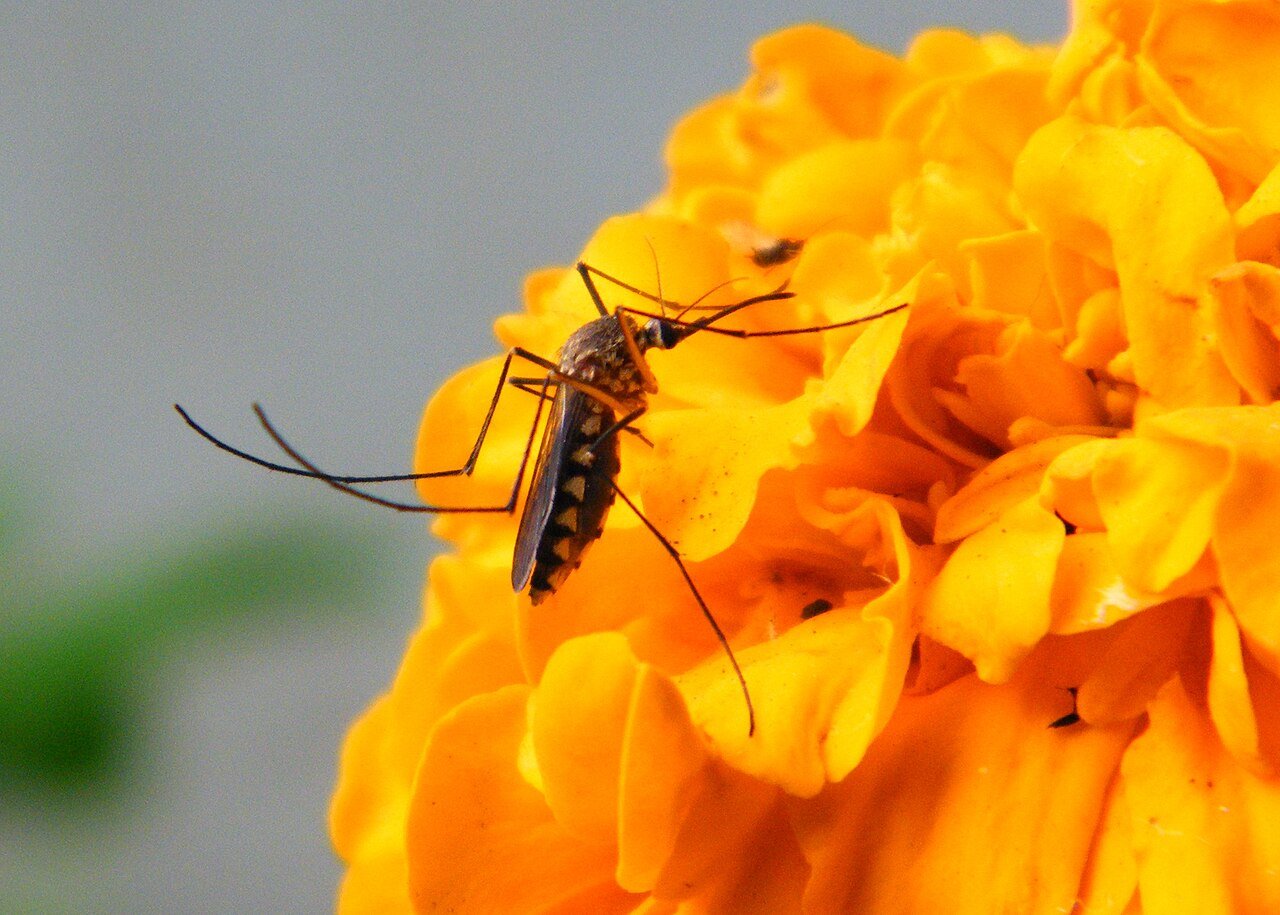
A mosquito’s working fuel is carbohydrate, taken as liquid sugar wherever plants offer it: flower nectar first, but also extrafloral nectaries (the sugar taps many plants keep on stems and leaf bases), honeydew — the sweet excretion aphids rain onto leaves — sap oozing from wounded trees, and the juice of split or rotting fruit. Both sexes feed on sugar daily when they can get it, storing it in a dedicated crop and burning it for flight the way you burn breakfast. Watch a flower bed at dusk and you’re watching the mosquito’s actual dining room; a female’s famous visit to your ankle is, by meal count, a rare errand. Two practical notes fall straight out of this. First, mosquitoes are genuine (if minor) pollinators — several orchid species depend on them — which is a fun fact with a serious edge: a yard’s mosquito population is partly set by its sugar supply. Second, dense, aphid-infested, honeydew-glazed vegetation isn’t just mosquito shade — it’s a mosquito buffet, which is one more reason the shrub-trimming advice on our mosquito control page earns its place in every treatment plan we run.
Standing water is the lever, and most of it is on your own property. For the rest of what the yard brings in, see pest control in Dayton.
What male mosquitoes eat: the strictly vegetarian half
The “what do male mosquitoes eat” question deserves its clean, absolute answer: nectar and other plant sugars, exclusively, for their entire lives. Male mosquitoes cannot bite. It isn’t restraint — it’s hardware: a male’s proboscis lacks the piercing stylets females carry, the way a butterfly’s straw can’t drill wood. His whole career is short and single-minded — emerge, drink nectar, join the dusk mating swarms (those hovering columns of insects you see over lawns and hedges on summer evenings are often exactly this), mate, and die within a week or so. Every mosquito that has ever bitten you was female, without exception. The feathery, plume-like antennae that distinguish males up close aren’t for finding you at all — they’re tuned to the wingbeat frequency of females. From a control standpoint, the male’s diet is quietly important: sugar-baited traps and attractive-toxic-sugar-bait research target the one meal every mosquito must take, which is a far wider funnel than blood ever offers.
The blood meal: not dinner — a construction order
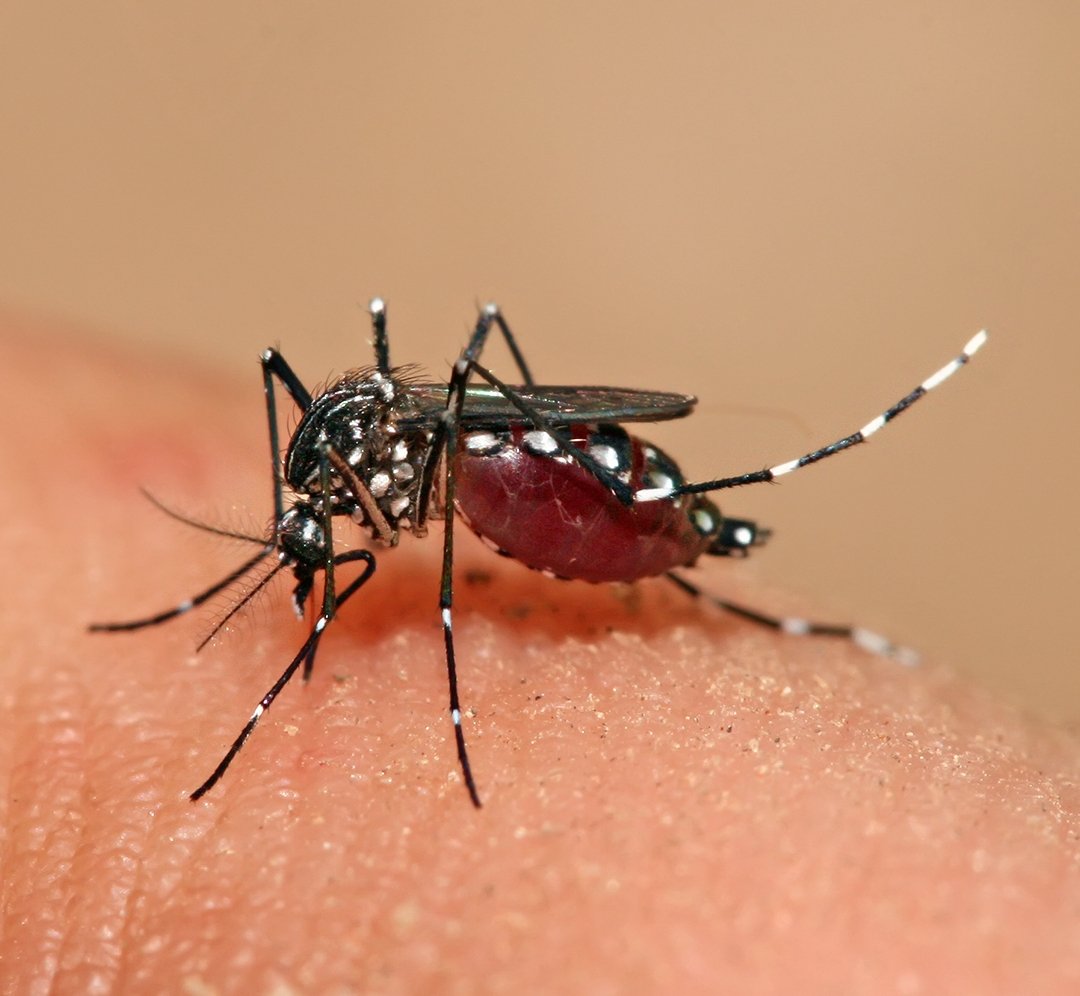
When a female of a biting species does seek blood, the errand has one purpose: protein and iron for egg development. She can live her whole life on nectar; she simply can’t build most of her eggs from sugar alone. The sequence is rigid — blood meal, three days of digestion while the eggs mature, egg-laying on standing water, then usually another blood meal for the next batch, a cycle she may run several times in her two-to-six-week life. The targeting system that finds you is a three-stage marvel worth knowing because every repellent on the shelf attacks one stage of it: long-range, she rides plumes of exhaled carbon dioxide from up to a hundred-plus feet; mid-range, she reads body heat and the lactic acid, ammonia, and octenol in skin odor (why “mosquito magnets” are real — skin chemistry and CO₂ output vary person to person); close-range, she lands and tastes with her feet before committing. DEET and picaridin work by jamming the odor stage — you become confusing, not repellent — and a fan works by out-blowing her flight and dispersing your CO₂ plume, which is why the cheapest defense at any Dayton cookout is a box fan on the patio table. One more myth for the compost pile: nothing about the blood is nutritive craving — “sweet blood” isn’t a thing, and neither sugar intake nor blood type meaningfully drives preference compared to CO₂ and skin flora.
What larvae eat — and why their menu is the control jackpot
The most consequential mosquito meals happen where nobody watches: in the water. Larvae — the wrigglers in the birdbath, the clogged gutter, the forgotten bucket — are filter feeders, sweeping microorganisms, algae, bacteria, and decaying organic particles into their mouths with feeding brushes, with some species grazing surfaces and a few (Toxorhynchites, the “elephant mosquito”) actually preying on other mosquito larvae. Two control levers fall out of the larval menu. First, nutrient-rich water breeds more and bigger mosquitoes: a gutter full of rotting leaves is a soup kitchen, a birdbath green with algae is a nursery with catering — which is why “dump standing water” is really “dump the food supply,” and why the weekly tip-and-toss beats any spray for cost-effectiveness. Second, the larval diet is exactly what Bti dunks exploit: the bacterium Bacillus thuringiensis israelensis is eaten by filter-feeding larvae and destroys their gut, while being harmless to birds, pets, fish, and bees — the rare pesticide that works because of the target’s menu, and the right answer for the water you can’t dump (rain barrels, koi-less ponds, persistent low spots). The full property audit — every container, every micro-puddle, the tarp folds and the kids’ toys — lives on the mosquito control page; the diet science here is why it works.
Who eats mosquitoes? The predator file, honestly graded
The food web runs both ways, and the “natural control” aisle deserves the same honest grading as every other aisle on this site. Dragonflies (B+): genuine mosquito assassins in both life stages — aquatic dragonfly nymphs eat mosquito larvae, adults take mosquitoes on the wing. A healthy pond ecosystem is real, if partial, suppression. Fish (A, where applicable): in permanent water features, mosquitofish and even ordinary minnows make larvae functionally impossible — the reason our audits flag the fishless ornamental pond, not the stocked one. Bats (C− as mosquito control): a big brown bat eats thousands of insects nightly, but diet studies show mosquitoes are a small fraction — moths and beetles dominate. Build the bat house for the bats, not the marketing. Purple martins (D for mosquitoes): beloved, beautiful, and they feed high and by day while mosquitoes fly low and at dusk — the overlap is nearly nil. Spiders, swallows, frogs (C): real participants, minor percentages. The honest summary: predators are a reason to keep your pond healthy and your ecosystem intact — and no substitute for draining the gutter, because no predator can out-eat a species that turns a bottle cap of water into forty new adults a week.
Turning the menu into a quieter yard: the diet-based control plan
- Cut the nursery catering: weekly tip-and-toss of every container; gutters cleaned so leaf soup never forms; Bti dunks in the water you can’t dump. Attacking the larval menu is the highest-leverage move in mosquito control, full stop.
- Trim the sugar bar and the lounge together: dense, overgrown, aphid-ridden vegetation supplies nectar, honeydew, and the humid daytime shelter adults require. Thinning shrubs and managing aphids removes the restaurant and the hotel in one pass.
- Jam the targeting system: DEET or picaridin on skin for the odor stage; a box fan for the CO₂ plume and flight interference; light-colored clothing (heat-seekers key on dark, warm silhouettes).
- Respect the exception list: citronella candles (D — a few feet of partial effect in still air), ultrasonic apps and gadgets (F — decades of testing, zero effect), bug zappers (D — kill moths and beneficials by the tray-full, mosquitoes barely register), and repellent plants (C− — the oils repel when crushed on skin; the living plant mostly decorates).
- For the season-long fix: our barrier treatments hit the resting vegetation adults can’t skip, and the service calendar on the mosquito control page pairs it with the audit above — the combination is why treated yards stay quiet from May to frost.
Mosquito diet questions, quick-fire round
“Do mosquitoes eat anything solid?” Never — the proboscis is liquid-only plumbing, cradle to grave. “How long can they go without blood?” Indefinitely — blood isn’t survival food; females without a blood source simply lay fewer or no eggs (and a few species can produce a first batch with no blood at all). “What did the one in my bathroom eat all week?” Probably nothing, or a houseplant’s nectar traces — adults can coast days on stored sugar and humidity. “Why are they worse near my compost?” Twice over: fermenting fruit is a sugar bar, and the moist pile edges plus any collection pan offer both food and nursery. “If I plant fewer flowers, will I have fewer mosquitoes?” Marginally at best — nectar sources are everywhere in an Ohio summer; the water is your bottleneck, not the sugar. “Does anything eat enough of them to matter?” In your yard, only the interventions do; the predators are supporting cast — see the grades above.
The eight-county menu report
The diet story plays out differently across our service map. Dayton, Kettering, and Oakwood’s older neighborhoods run on container breeding — gutters, saucers, tarps — where the larval-menu levers (cleaning, dumping, dunks) do most of the work. Beavercreek, Huber Heights, and Springboro’s newer plats add retention ponds and drainage swales: stocked or well-managed ponds are fine neighbors, scummy fishless ones are commissaries, and it’s worth knowing which yours is. Miami and Preble counties’ rural properties stack the deck — troughs, tire ruts, barn gutters, and honeydew-heavy fencerows supply every course at once, which is why farm-adjacent treatment plans lean hardest on the audit. Same insect, same menu, different kitchens.
The bottom line
Mosquitoes eat sugar — nectar, honeydew, sap, fruit — every day of their lives; males eat nothing else and cannot bite; females add rare blood meals as egg-building material, found via a CO₂-heat-odor targeting chain; and larvae filter-feed on whatever your standing water is serving. Every effective control on the market is an attack on one of those meals: dump and dunk the nursery, trim the sugar-and-shelter thickets, jam the targeting with repellent and a fan, and grade the gadget aisle by whether it touches the menu at all (it almost never does). Get the diet right and mosquito control stops being mysterious — it’s restaurant demolition. For the property-wide version with a season guarantee behind it: (937) 569-3330, and we’ll bring the audit checklist.
The species course card: who’s eating what in a Dayton backyard
Ohio hosts around sixty mosquito species, but three do most of the local biting, and their dining habits differ enough to matter. The northern house mosquito (Culex pipiens) is the dusk-and-evening biter and the West Nile vector of record; it favors birds over people (part of why the virus cycles through bird populations), breeds enthusiastically in foul, nutrient-rich water — catch basins, neglected gutters, green birdbaths — and sips nectar between egg batches like everyone else. The Asian tiger mosquito (Aedes albopictus) — the striped daytime ambusher with its own page — is the container-breeding specialist: bottle caps, plant saucers, toy dump trucks. It bites aggressively by day, prefers mammals (you), and rarely flies more than a few hundred feet from its birth container — meaning the tiger biting your ankles at noon was almost certainly born on your property or your neighbor’s, which turns the tip-and-toss from civic virtue into direct self-interest. The inland floodwater mosquito (Aedes vexans) is the after-the-rain horde: eggs laid in soil depressions hatch when storms flood them, producing the synchronized swarms that follow Ohio downpours by about a week. It commutes miles, so it’s the one local species your own audit can’t fully prevent — and the main reason barrier treatments and fans stay on the menu even for immaculate yards. Three species, three kitchens, one moral: know whose reservation you’re canceling.
And that completes the menu — sugar for everyone, blood for the builders, soup for the wrigglers, and a shorter guest list for every host who reads the kitchen honestly. The box fan is still the best two dollars in the business; the phone number above is for everything the fan can’t reach.
One last course: what mosquito feeding means for disease — the Ohio version
The blood meal’s biology is also the disease story, so here’s the calibrated local file. West Nile virus is Ohio’s headline mosquito-borne disease, and its mechanics live entirely in the feeding behavior described above: Culex mosquitoes acquire the virus from infected birds, incubate it, and pass it to people at a later blood meal — which is why case counts spike in late summer (more infected mosquitoes after a season of amplification) and why health departments monitor catch basins rather than backyards. Most human infections are asymptomatic or flu-like; severe cases are rare but real, concentrated among older adults — reason enough for dusk repellent discipline in August without any need for alarm. La Crosse encephalitis, carried by the tree-hole-breeding eastern treehole mosquito, appears in southern Ohio at low levels most years and disproportionately affects children playing near wooded areas — the control lever, true to this page’s theme, is diet-and-nursery again: fill tree holes, dump tire water. Eastern equine encephalitis and the travel diseases (Zika, dengue, malaria) remain essentially absent from local transmission. No scare stories required — just the standing rule that every ankle-bite prevented is also a vector meal canceled, which gives the fan, the repellent, and the Saturday tip-and-toss a quiet second job.
- Every mosquito’s daily food: plant sugar — nectar, honeydew, sap, fruit juice.
- Males: sugar only, for life; no piercing mouthparts, no bites, ever.
- Females: sugar daily, blood occasionally — egg protein, found by CO₂, heat, and skin odor.
- Larvae: filter-fed microorganisms in standing water — the menu Bti dunks weaponize.
- Best predators: dragonflies and pond fish; bats and martins are marketing.
- Best levers, in order: dump the water, dunk the rest, trim the thickets, run the fan, wear the repellent, call for the barrier.
The whole menu on one card — and a yard that reads it rarely needs the citronella aisle again.
Dinner, canceled — with the mosquito’s compliments to whoever finally cleaned the gutter.
Frequently asked questions
What do mosquitoes actually eat?
Flower nectar — that is the real diet, daily, for every mosquito of every species and sex, plus honeydew, sap, and fruit juice. Blood is not food at all: females of biting species collect it solely as protein for egg development.
What do male mosquitoes eat?
Nectar and plant sugars exclusively, for their entire one-week lives — males lack the piercing mouthparts to bite anything. Every mosquito that has ever bitten you was female, without exception.
Why do female mosquitoes need blood?
Egg construction — sugar keeps her alive, but most species cannot build eggs from carbohydrates alone. The cycle runs blood meal, three days of digestion, egg-laying on standing water, repeat — several times in a two-to-six-week life.
What do mosquito larvae eat?
Microorganisms, algae, bacteria, and decaying particles filter-fed from standing water — which is the control jackpot: nutrient-rich water (leaf-soup gutters, green birdbaths) breeds more and bigger mosquitoes, and Bti dunks kill larvae precisely because they eat it.
How long can mosquitoes live without biting anyone?
Indefinitely — blood is not survival food. Females without a blood source simply lay fewer or no eggs, and a few species can produce a first batch with no blood at all. The one in your bathroom is fine; it is coasting on stored sugar.
What attracts mosquitoes to certain people?
A three-stage targeting chain: exhaled CO₂ from a hundred feet, then body heat and skin-odor chemistry (lactic acid, ammonia — real person-to-person variation), then a landing taste-test. “Sweet blood” is folklore; skin flora and CO₂ output are the actual variables.
Do mosquitoes eat anything solid?
Never — the proboscis is liquid-only plumbing from cradle to grave. Nectar, honeydew, sap, juice, and (females, occasionally) blood: the entire menu.
What eats mosquitoes — and does it help?
Honestly graded: dragonflies (B+, both life stages genuinely hunt them), pond fish (A within their pond), bats (C− — they eat thousands of insects but mosquitoes are a small fraction), purple martins (D — wrong altitude, wrong hour). No predator out-eats a species that turns a bottle cap into forty adults; dump the water first.
Does removing flowers reduce mosquitoes?
Marginally at best — nectar sources saturate every Ohio summer landscape; standing water is the bottleneck. Trim the dense, aphid-glazed shade vegetation instead: it is simultaneously their sugar bar, humidity shelter, and daytime lounge.
Why are mosquitoes worse near my compost or fruit trees?
Fermenting fruit is a sugar bar, moist pile edges are both diet and daycare, and fallen fruit windfalls feed foragers directly. Pick up drops, lid the compost, and the buffet closes.
What do mosquitoes eat in winter?
Mostly nothing — Ohio’s overwinter as dormant mated females (or cold-hardy eggs) living off fall fat reserves in sheltered crevices, which is why a warm January day sometimes produces one confused flier and why season control starts in spring, not February.
How does knowing the diet help get rid of them?
Every effective control attacks a meal: dump-and-dunk hits the larval menu, vegetation-thinning closes the sugar bar and the lounge, repellents and fans jam the blood-targeting chain, and barrier treatments hit the resting sites between meals. The gadget aisle fails precisely because it touches none of the four: (937) 569-3330 for the property-wide version.