
The deck is where Fairfield meets its wasps. Nearly every house in these subdivisions has one, most were built in the eighties or nineties, and the underside of a deck — the joists, the rail undersides, the stair stringers, the space behind the ledger board — is protected, shaded, dry in a storm, and looked at by nobody. Paper wasps find it in April. By the second week of August the colony is at full size and the deck is in daily use, which is when the phone rings.
Under the Deck and Behind the Rail
A deck offers wasps several distinct nesting positions and homeowners routinely find only the obvious one. The underside of the top rail and the inside face of the rail cap are the most common paper wasp sites, because they are shaded and out of the rain but easy to fly to. The joist bays underneath are next, then the stair stringers, then the gap behind a ledger board that was never properly flashed.
That last one matters for a second reason. A ledger board with failed or missing flashing has been wicking water into the rim joist for years, which softens the wood and interests carpenter ants as well. So a deck that has wasps in the rail frequently has a moisture problem behind the ledger too, and it is worth looking at both while somebody is under there.
The habit that prevents most of this is a look underneath in June, when a paper wasp nest is a queen and a dozen cells and knocking it down is trivial and safe. By late August the same nest holds a full colony over a surface people are using every evening. Checking the deck in June costs five minutes and it is the single highest-value wasp habit in this city.
Why August Is Always the Month
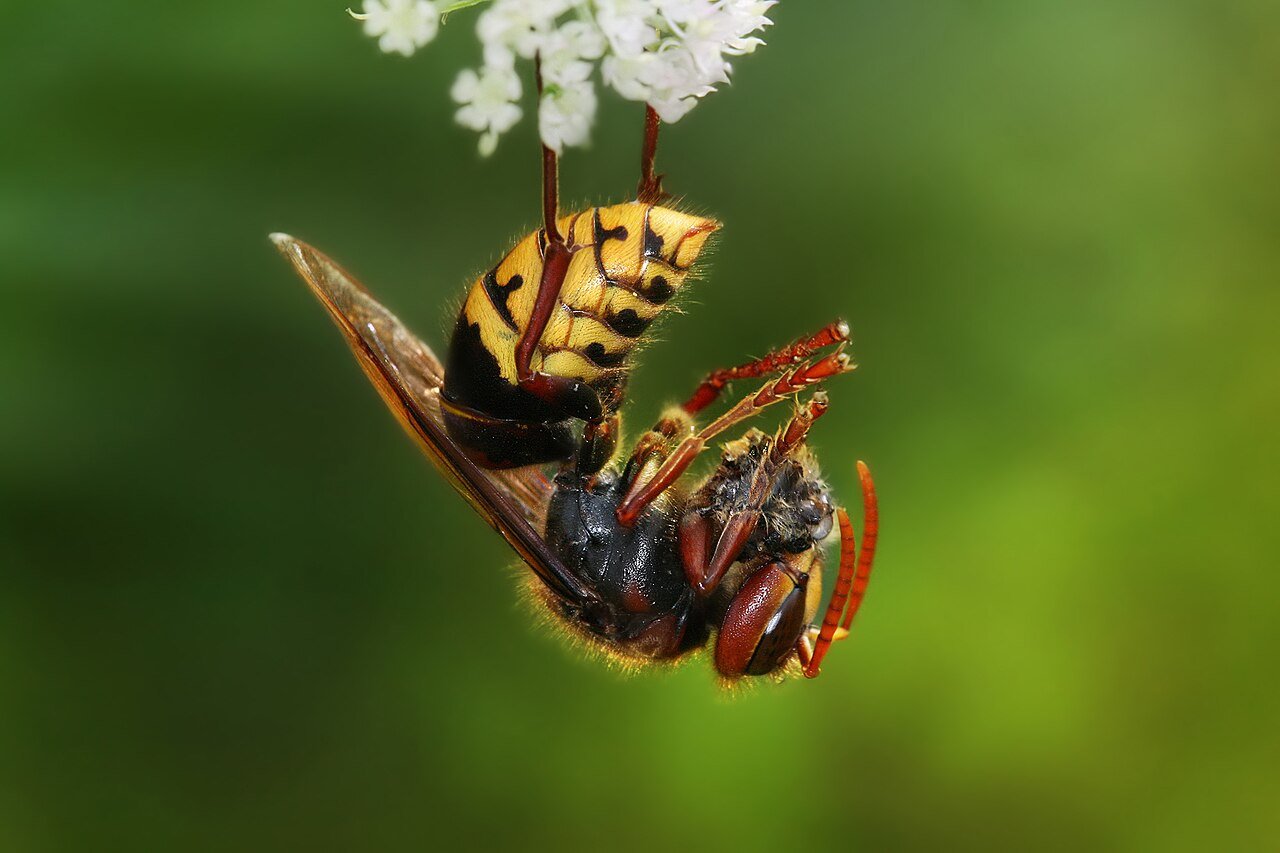
A social wasp colony begins in spring with a single overwintered queen. She builds a small nest, raises the first workers herself, and through early summer the colony is genuinely tiny and goes unnoticed. Growth is exponential from there, and by mid-August a yellowjacket colony that held a few dozen workers in June may hold several thousand. Nothing about the property changed. The colony reached the steep part of its curve.
Late summer also changes behavior in a way people feel directly. For most of the season workers hunt protein to feed larvae, and those larvae reward foragers with a sugary secretion. As the colony shifts toward producing next year’s queens that reward stops, and workers switch to seeking carbohydrates aggressively. That is why yellowjackets suddenly appear at patio tables, drinks, and trash cans in late August after being invisible in June.
The colony dies with the first hard frosts, and only fertilized queens survive to overwinter under bark, in leaf litter, and in structural voids. That means an exposed aerial nest in October is a rapidly emptying problem, while a nest in a wall or soffit void in June has the whole summer ahead of it.
The Ground Nest and the Mower
Fairfield lawns are mature, and mature lawns come with the features ground-nesting yellowjackets use: abandoned rodent burrows, gaps under landscape timbers and edging, voids beneath ornamental grasses, and the loose soil at the edge of a long-established bed. The entrance is small and easy to miss, and the nest below is frequently far larger than that entrance suggests.
Mowing is how most people find them, and it is the worst possible way. A mower passing over or near the entrance produces exactly the vibration that triggers a defensive response, and the person on the mower has no route away and no protection. Every year this puts people in urgent care, and it is genuinely one of the more dangerous pest encounters available in a suburban yard.
The practical advice for August and September is simple: walk the yard before the first mow of the week and look for insects moving in and out of a hole in the ground, along a bed edge, or under edging. If you find one, mark the spot, keep people and mowers away from it, and have the entrance treated directly. Do not flood it, do not burn it, and do not try to seal it — all three produce a large number of very angry insects and none of them reliably works.
- Check the deck underside and rails in June — five minutes, and it prevents most of the season.
- Open umbrella comb under a rail, joist bay, or stair stringer — paper wasps.
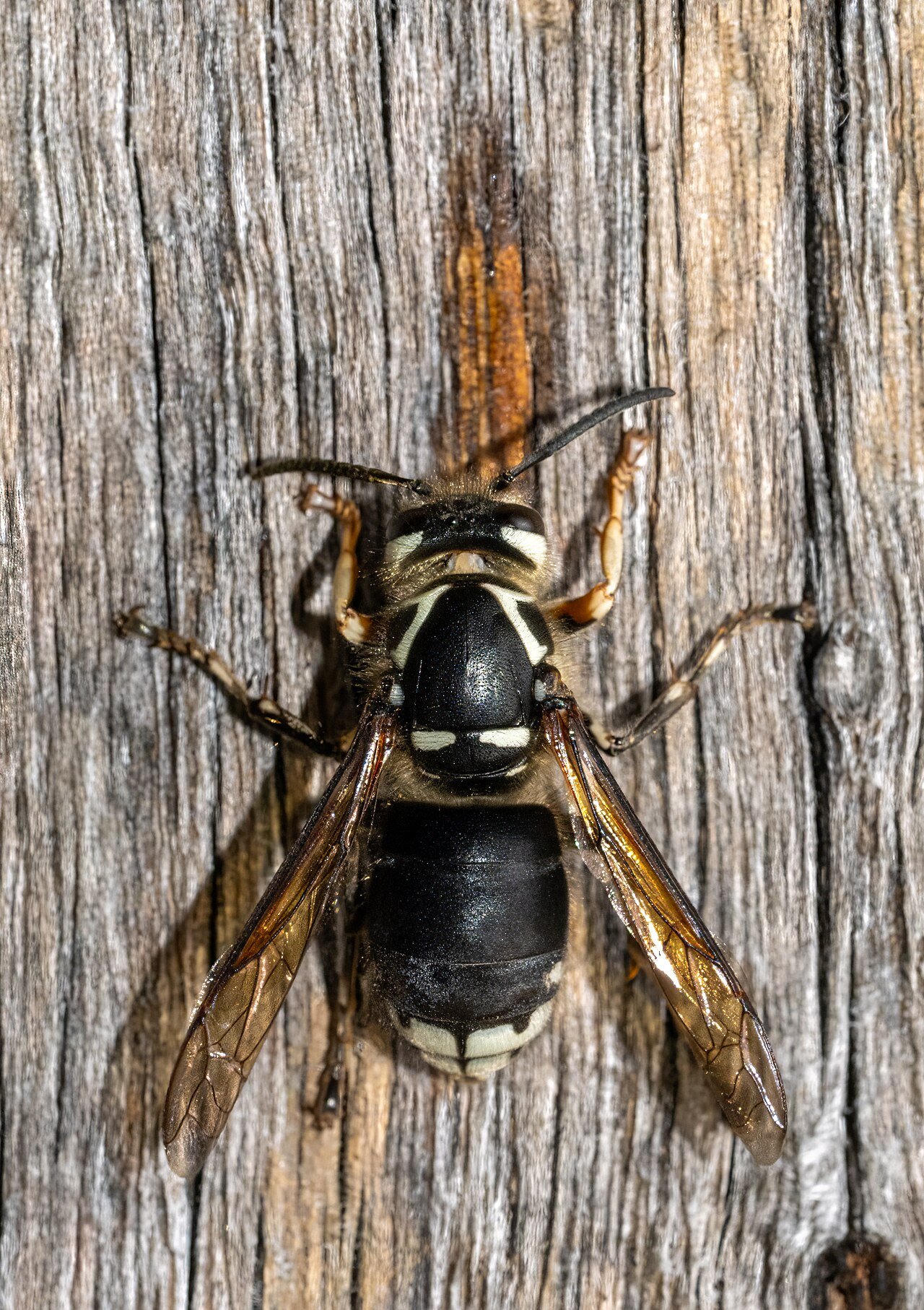
- Large gray enclosed football in a yard tree or under a high eave — bald-faced hornets.
- Walk the yard before mowing in August, looking for traffic at a hole in the ground.
- Two-way traffic at one gap in siding or soffit — a void nest. Do not seal it.
The Mistake That Puts Wasps Inside
When homeowners find yellowjackets using a gap in the siding or the soffit, the intuitive response is to seal it. It is entirely logical and it is the worst available option. A void colony has one familiar exit and a nest that may hold thousands of insects. Close it and they do not leave — they look for another way out, and the next available route is very often inward, through a ceiling seam, a can light, an attic access panel, or a gap at a top plate.
That turns an exterior nuisance into wasps in a bedroom, which is both dangerous and considerably more expensive to resolve. The correct sequence never varies: treat first, confirm the colony is dead, seal afterward. Sealing genuinely matters as the final step, because an untreated void left open will attract next year’s queens to precisely the same space — which is why the same house has the same problem in the same spot year after year.
The related mistake is the ladder. Most severe wasp injuries happen to people who were on one when they got stung, and the sting is rarely the actual injury. Standing at eave height with a can of spray, working on a soffit seam you cannot see into, with a colony that defends a radius rather than a point, is a poor place to discover you are more allergic than you assumed.
Across Butler County
Hamilton to the north has older architecture with far more concealed void. West Chester is east with taller rooflines, and Middletown is north with the same retrofit-soffit issue.
General service is on the Fairfield pest control page.
Frequently asked questions
Where should I look on my deck?
Four places, and most people find only the first. The underside of the top rail and the inside face of the rail cap, the joist bays underneath, the stair stringers, and the gap behind the ledger board. That last one is worth checking anyway, because a ledger with failed flashing has usually been wicking water into the rim joist for years.
When is the best time to check?
June. A paper wasp nest at that point is a queen and a dozen cells, and knocking it down is trivial and safe. By late August the same nest holds a full colony directly over a surface your family is using every evening. Five minutes in June prevents most of the season.
Why do wasps take over the patio in August?
Two things at once. The colony reaches its largest size of the year, and the workers switch from hunting protein to seeking carbohydrates because the larvae stop rewarding them. Drinks, food, and trash on a patio are exactly what they are now looking for.
There are wasps coming out of a hole in my lawn.
Ground-nesting yellowjackets, and a genuine hazard — the nest is usually far larger than the entrance suggests, and mowing over it produces the vibration that triggers a defensive response. Mark it, keep people and mowers away, and have the entrance treated directly. Do not flood, burn, or seal it.
Should I seal the gap where they are entering my soffit?
No — that is the one thing not to do. A void colony that loses its familiar exit looks for another way out, and the next route is often inward through a ceiling seam, a can light, or an attic access. Treat first, confirm the colony is dead, then seal.
Can I spray it myself?
For a small paper wasp nest you can reach from the ground, often yes. For anything requiring a ladder, anything enclosed in a wall or soffit, or anything in the ground, it is a genuinely bad idea. Most serious wasp injuries happen to people who were on a ladder at the time.
They nest in the same place every year.
Because it is good real estate — protected, shaded, sheltered from rain — and because an unsealed void that hosted a colony is prime re-nesting space for a different queen next spring. Treating and then physically sealing or screening that specific spot is what breaks the cycle.
Is it worth removing a nest in October?
Usually not for an exposed aerial nest — the colony dies with the first hard frosts and the nest is not reused. A void nest inside the structure is different, because that space stays attractive to next year’s queens and is worth treating and sealing properly.