Ticks in Ohio used to be a footnote — a dog-tick-in-June nuisance that most families met twice a summer and forgot. That Ohio is gone. Over the past two decades the state’s tick map has been redrawn: the blacklegged (deer) tick — the Lyme disease carrier — has marched from a few southeastern counties to essentially statewide, the lone star tick is pushing up from the south with an aggression all its own, and Ohio’s reported tick-borne disease cases have climbed year over year with them. Southwest Ohio sits squarely in the expansion zone. This page is the county-level briefing: the three ticks that matter here (plus the bit players), the diseases each actually carries, the yard conditions that recruit them, the personal-protection stack that genuinely works, and the property-level program — habitat work plus targeted treatment — that turns a tick-heavy lot back into a lawn you can sit in.
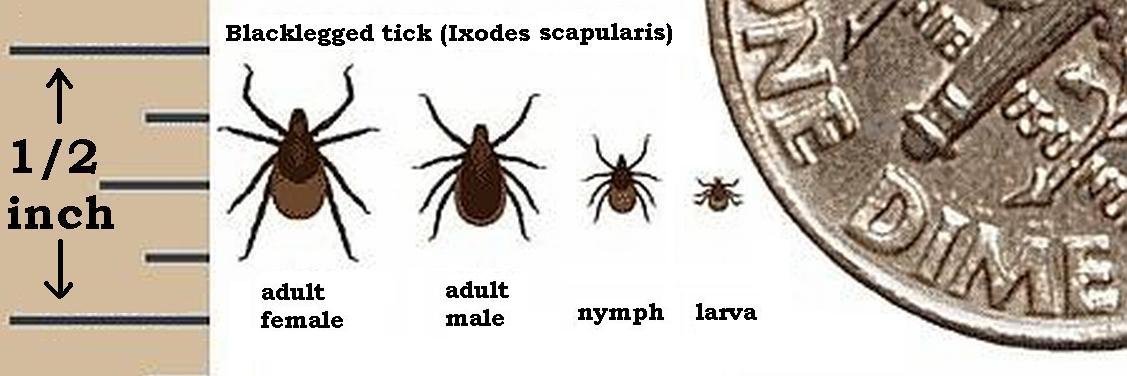
The Ohio tick roster: three that matter, two that visit
The American dog tick is the one you have probably met — Ohio’s most common human encounter: big (for a tick), brown with an ornate whitish shield, active April through August in tall grass and field edges, and the classic on-the-dog, on-your-jeans discovery. Disease file: it is the state’s main carrier of Rocky Mountain spotted fever (rare in Ohio but real) and can cause tick paralysis in pets; it does NOT transmit Lyme. The blacklegged tick (deer tick) is the one rewriting the map — small, dark, and now established in the wooded corridors of virtually every Ohio county. It carries Lyme disease, anaplasmosis, and babesiosis, and its danger is its size: the nymphs that transmit most Lyme cases are poppy-seed small and active precisely in the May–July yard season. The lone star tick is the newcomer moving up from the south — aggressive, fast, and famous for two things: the white dot on the female’s back (the “tick with a white spot” of a thousand searches, covered fully in our tick identification guide) and its association with alpha-gal syndrome, the acquired red-meat allergy. Bit players: the brown dog tick (a kennel specialist that can — uniquely — infest buildings) and the winter-active adult blacklegged ticks that quest on any above-freezing January day, which is why the “tick season is over” assumption keeps producing December surprises.
Ticks live at the edge where lawn meets cover, which makes the yard perimeter the whole defense. See pest control in Dayton.
The disease file, calibrated for southwest Ohio
Honest numbers beat scary ones. Lyme disease is the headline: Ohio’s reported cases have roughly tripled over the past decade as the blacklegged tick expanded, and the CDC-estimated true burden runs far higher than reports. The practical facts: transmission generally requires 24–36+ hours of attachment (the entire argument for daily tick checks), the bullseye rash appears in most-but-not-all cases, and early treatment is straightforwardly effective — which converts vigilance from paranoia into a genuinely winning strategy. Rocky Mountain spotted fever remains rare here but serious; fever-plus-rash after a dog-tick encounter earns a same-week doctor visit with the tick history volunteered. Alpha-gal syndrome — the lone star’s red-meat allergy — has moved from medical curiosity to documented Ohio reality as the species spreads; delayed allergic reactions (hours after eating beef or pork) plus a tick history is the pattern physicians now screen for. Anaplasmosis and babesiosis ride the blacklegged expansion at lower rates. And for pets: Lyme, ehrlichiosis, and tick paralysis make the vet-preventive conversation non-optional for any dog that touches the yard’s edges. None of this is cause for staying indoors — every risk on this list collapses under the protection stack below.
Where ticks actually live on your property (it is not the lawn)
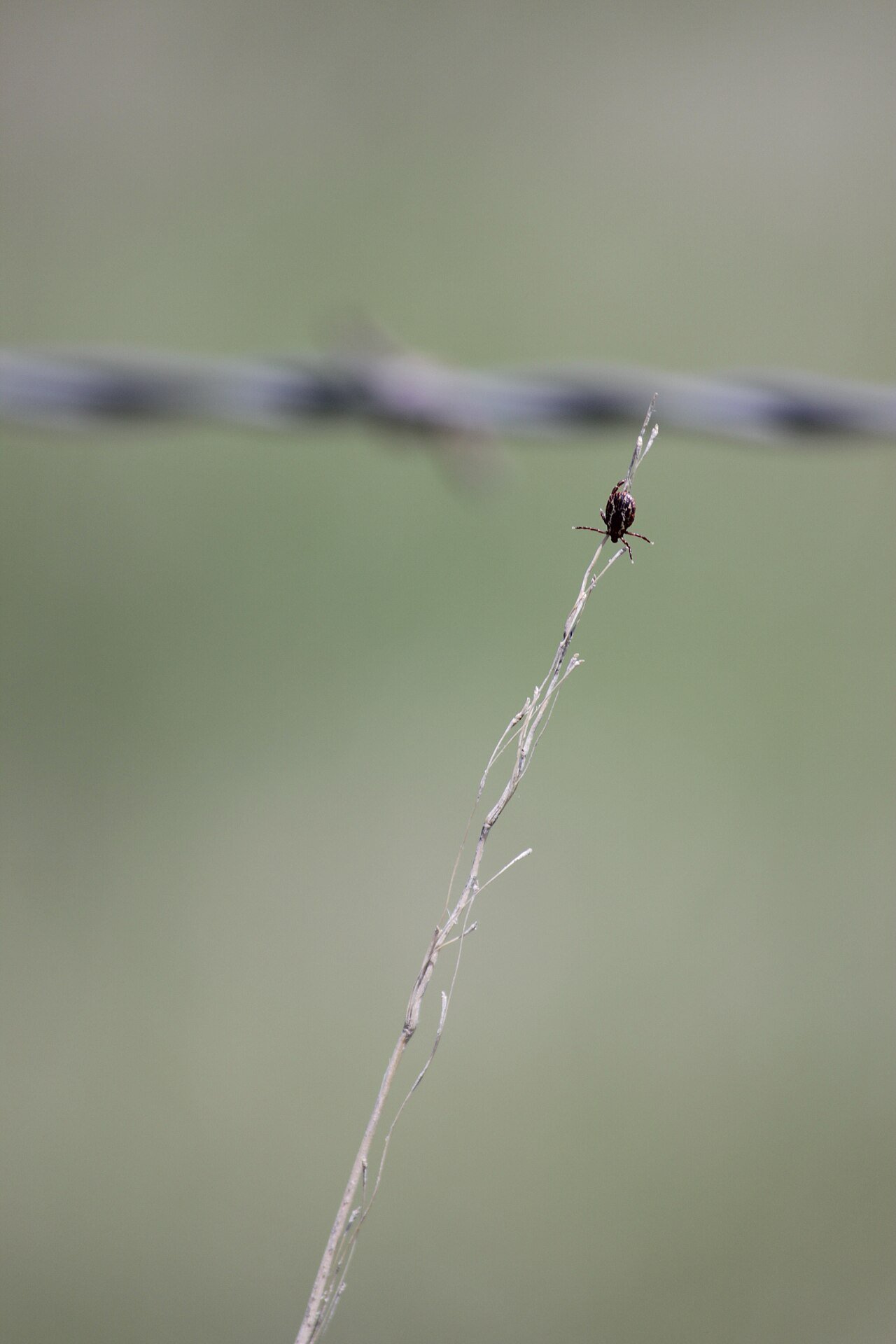
Ticks are moisture-chained ambushers, not roamers — they desiccate fast in open sun, which concentrates them with map-like precision in the transition zones: the lawn-to-woods edge, tall-grass margins, leaf-litter accumulations, stone walls and woodpiles (small-mammal hotels — the tick’s host taxi), shaded groundcover beds, and the brushy fence lines. A mowed, sunny lawn center is functionally tick-free; the ecotone twenty feet away can hold hundreds per hundred square meters. They hunt by “questing” — climbing a grass stem, extending forelegs, and waiting for warmth and CO₂ to brush past — which is why the photo below is the whole story of how every tick finds every host, and why the property program is about managing edges rather than treating lawns.
The personal protection stack (what field biologists actually wear)
Ranked by evidence: Permethrin-treated clothing leads everything — 0.5% permethrin applied to pants, socks, and boots (dried before wearing) kills ticks on contact and survives several washes; treated footwear alone cuts tick attachment dramatically in trials. DEET 20–30% or picaridin 20% on exposed skin and sock lines handles the rest. Mechanical discipline: pants tucked into socks in real tick habitat (fashion surrenders to function), light-colored clothing for spotting crawlers, and paths walked center rather than brushing the margins. The post-exposure routine is half the game: shower within two hours (unattached ticks rinse off), run the full-body check — scalp, ears, neck, armpits, waistband, groin, behind knees — and blast worn clothes in a hot dryer for ten minutes, which kills hitchhikers the washer misses. For the dogs: vet-prescribed preventives, non-negotiable, plus the collar-ears-toes check after every field day. One warning worth bolding: permethrin is toxic to cats — never apply it to or near them; treat your clothing away from feline supervision.
Tick removal, done right (and the folklore that makes it worse)
Fine-tipped tweezers, gripped at the skin line, steady straight pull — done. No twisting (mouthparts break off), and none of the folklore: burning matches, petroleum jelly, and nail polish all stress the tick into regurgitating — actively increasing pathogen transfer while accomplishing nothing. Afterward: cleanse the site, and save the tick — sealed bag, date noted — because species and engorgement level meaningfully inform any medical decision. Then watch four weeks: expanding rash (bullseye or otherwise), fever, aches, or — per the alpha-gal file — delayed reactions after red meat all earn the doctor visit with the bagged evidence in hand. The head-buried panic is mostly myth: a retained mouthpart is a splinter-grade problem the body handles, not a venom risk.
The property program: making a yard hostile to ticks
The habitat half: mow the margins and keep transition zones cut back; rake leaf litter out of the use-zones each spring (it is tick nursery bedding); install the evidence-backed classic — a three-foot barrier of wood chips or gravel between woods and lawn, which ticks cross poorly (desiccation) and which visually fences the risk zone; manage the small-mammal economy — woodpiles racked and sealed, stone walls kept clear, bird-feeder spill raked, because mice and chipmunks are the blacklegged tick’s primary hosts and its taxi service into your yard (one more compounding return on the rodent program); and move the play set and hammock into full sun, away from edges. The treatment half: targeted acaricide applications to the transition zones — not broadcast lawn spraying — timed to nymph season (May–June) and repeated for the fall adult wave, which knocks questing populations down where they actually stand. Our tick service runs exactly this two-front program, and wooded, creek-adjacent, and preserve-bordering properties across all eight counties are its natural constituency.
The Ohio tick calendar
March–April: adult blacklegged ticks resume questing with the first sustained warmth; dog ticks wake as fields green. The season’s first yard treatments and the pet-preventive restart belong here. May–July: the critical window — blacklegged NYMPHS, poppy-seed small and responsible for most Lyme transmission, are active exactly as families move outdoors; dog ticks peak simultaneously. Daily checks earn their keep now. August–September: lone star activity holds; dog ticks fade; the yard’s margins stay live. October–November: the adult blacklegged fall wave — hunters, leaf-rakers, and dog-walkers meet the year’s second peak. December–February: the season that is not over — adult blacklegged ticks quest on any day above freezing, which is why the January hike still ends with a tick check and why “winter immunity” keeps surprising people.
The eight-county tick geography
Pressure tracks habitat: Miami and Preble counties’ field-edge and fencerow country runs heavy dog-tick traffic with the blacklegged expansion filling in along wooded creek corridors; Greene County’s preserve-and-trail network (the bikeway system, Sugarcreek, the Little Miami corridor) concentrates blacklegged encounters where recreation meets woods; Warren County’s Caesar Creek and river valleys mirror it; and Montgomery County’s MetroParks edges bring the same ecology to suburban fence lines. The lone star’s northward push is being reported county by county across our whole map — the white-dot female in our identification guide is the sighting worth photographing. Wherever you are, the rule holds: the risk is the edge, not the address.
When to bring us in
The property program earns its fee for: wooded and preserve-adjacent lots where family or pets use the margins, properties with confirmed tick encounters (especially blacklegged or lone star — photo ID is free), households with alpha-gal or Lyme history where tolerance is rightly zero, and the kennel-adjacent brown-dog-tick cases where a structure itself is involved. The visit maps your transition zones, runs the habitat consult, and quotes the seasonal treatment plan honestly — including the DIY habitat half we will happily hand you free: (937) 569-3330. Suburban lots with sunny fenced lawns and no edge habitat get told the truth: your tick risk is the park, not the yard, and the protection stack above is your whole program.
The bottom line
Ohio’s tick story changed — the Lyme carrier is statewide, the white-dot newcomer is arriving, and the old twice-a-summer nuisance is now a managed seasonal reality. But every line of the defense holds: permethrin on the clothes, repellent on the skin, the two-hour shower-and-check habit, tweezers-not-folklore removal, vet preventives for the dogs, and a property managed at its edges — chips, mowing, litter, rodents — with targeted treatment where the pressure warrants. Respect the edge, keep the calendar, and the woods stay yours: (937) 569-3330 for the property version, and our tick identification guide for the “what just bit me” moments.
The tick-borne disease early-warning card
- Expanding rash at or near a bite site (bullseye or solid, typically 3–30 days out): doctor this week, tick bag in hand — early Lyme treatment is short, cheap, and reliably effective.
- Summer “flu” — fever, aches, fatigue in tick season with any exposure history: worth the call even without a rash; a third of Lyme cases never print the bullseye.
- Fever plus spotted rash (wrists and ankles first) after dog-tick country: the Rocky Mountain spotted fever pattern — rare, serious, same-week medicine.
- Hives, GI distress, or worse 2–6 hours after eating red meat, weeks-to-months after a lone star encounter: the alpha-gal signature — allergist referral territory, increasingly recognized in Ohio.
- A pet gone wobbly or weak with a found tick: tick paralysis — removal typically reverses it fast, but the vet call happens same-day.
- Any saved tick makes every one of these conversations better — species and engorgement guide real decisions. Bag it, date it, keep it a month.
One card, six patterns, and the whole medical file converts from vague dread into a checklist — which is the entire posture this page recommends: outdoors as usual, edges respected, evidence bagged, and the doctor called early on the rare day the card lights up.
Why the tick map moved: the thirty-year backstory
The blacklegged expansion is not mysterious — it is reforestation economics plus deer plus climate, in that order. Ohio’s forest cover has roughly doubled since its 1900s low, and the regrown woodlots reconnected the habitat corridors ticks travel by host; the white-tailed deer herd — the blacklegged adult’s primary reproductive host — exploded across the same century from near-extirpation to suburban abundance; and milder winters lengthened questing seasons while shortening the die-off windows. Add the white-footed mouse (the Lyme bacterium’s actual reservoir — deer amplify ticks, mice infect them), thriving in the same fragmented edge habitat that suburbia manufactures by the subdivision, and the expansion becomes almost mechanical. The practical takeaways hiding in the ecology: fragmented suburban woods-edge is BETTER tick habitat than deep forest (your cul-de-sac backing to a woodlot is the hot zone, not the state park interior); the mouse connection means every rodent-management dollar quietly buys tick control; and deer management — fencing, plantings deer skip — belongs in the property conversation for edge lots. The map moved because the landscape did; the defense works because it reads the same map.
The trail-and-park playbook (for the risk that is not your yard)
Half of southwest Ohio’s tick encounters happen off-property — the bikeway corridors, the MetroParks, Caesar Creek’s meadows, the dog parks — and the playbook there is pure personal-stack discipline with three venue-specific additions. Stay center-path: questing ticks wait at vegetation edges; the middle of a mowed trail is a tick desert, and every brush against the margin grass is a boarding opportunity — kids and dogs drift, adults herd. Treat the gear, not just the clothes: permethrin on the daypack, the picnic blanket, and the camp chairs closes the soft-surface loophole; a blanket spread at a meadow edge is otherwise a tick collection tray you then fold into the car. Stage the return: the parking-lot check before seats (a thirty-second scan of pants and shoes catches most crawlers), gear into the trunk rather than the back seat, and the two-hour shower-and-dryer routine at home. Dogs get the collar-ears-toes-tail sweep before boarding — the number of ticks that enter cars as canine passengers exceeds every other route combined. The park is worth it; the ritual is two minutes; and the families that run it treat tick season the way boaters treat life jackets — automatic, unremarkable, and non-negotiable.
The season-one checklist for edge-lot owners
- April: chip-or-gravel barrier installed at the woods line; leaf litter raked from use zones; pet preventives current; first transition-zone treatment if last year ran hot.
- May–June: nymph-season vigilance — daily checks after yard time, permethrin refresh on the yard-work clothes, second targeted treatment on the margins.
- July–August: mow the edges short, keep the play zones sunny, watch the dog like the sentinel it is.
- September–October: the adult-wave treatment window; woodpile racked and cleared; rodent program running (the mouse-tick pipeline cut at the source).
- November: final litter cleanup — and the reminder that above-freezing winter days still quest.
- Any month: photo every unusual tick — the lone star’s county-by-county arrival is being mapped in real time, and your white-dot photo is a data point we genuinely want: (937) 569-3330.
One season of the checklist typically drops an edge lot’s tick encounters from routine to rare — and the pieces are the same rakes, chips, and habits this library keeps reusing, because the pests keep sharing an ecology. The edge is the whole game; manage the edge and Ohio’s new tick map stops being your problem.
Edges managed, clothes treated, tweezers ready, evidence bagged — the new map, answered.
Related: How to identify a tick by species and life stage.
Related: Whether ticks can fly or jump.
Frequently asked questions
Are ticks bad in Ohio?
Worse than they were and worth taking seriously: blacklegged (deer) ticks are now established in virtually every county, Lyme cases have climbed accordingly, and the lone star tick is spreading north into our region. The risk is real, edge-concentrated, and very manageable with the standard protection stack.
What ticks carry Lyme disease in Ohio?
Only the blacklegged (deer) tick — the small dark one. American dog ticks, for all their abundance, do not transmit Lyme; their file is Rocky Mountain spotted fever (rare here). Species ID matters for exactly this reason, and ours is free from a photo.
When is tick season in Ohio?
April through November headline season, with the danger window in May–July when poppy-seed-sized blacklegged nymphs are active — plus the footnote most people miss: adult blacklegged ticks quest on any above-freezing winter day, so December hikes still end with a check.
Where do ticks live in a yard?
The edges, almost exclusively — lawn-to-woods transitions, tall-grass margins, leaf litter, woodpiles, and stone walls. Open mowed sunny lawn is functionally tick-free; the management program targets the transition zones because that is the entire habitat.
How do I remove a tick correctly?
Fine-tipped tweezers at the skin line, steady straight pull, no twisting — and none of the folklore (matches, petroleum jelly, nail polish increase pathogen transfer). Cleanse the site, bag and date the tick, and watch four weeks for rash or fever.
How long does a tick need to be attached to transmit Lyme?
Generally 24–36+ hours — which is why the daily tick check is the single most effective medical intervention in this file: ticks found and removed same-day almost never transmit. The two-hour shower rule catches the unattached ones first.
Does yard treatment for ticks actually work?
Targeted acaricide on the transition zones — timed to nymph season and the fall adult wave — measurably knocks down questing populations; broadcast lawn spraying mostly wastes product on habitat ticks never use. Pair it with the chip barrier and litter management and edge lots go from routine encounters to rare ones.
What is the tick with the white dot on its back?
A female lone star tick — the aggressive southern species now spreading into southwest Ohio, and the one associated with alpha-gal syndrome (the acquired red-meat allergy). Worth photographing and sending us; its county-by-county arrival is being tracked.
Do opossums or guinea hens really control ticks?
The folklore outruns the evidence — the famous opossum tick-vacuum study has been walked back, and free-range fowl help modestly at real cost. The evidence-backed levers remain habitat management, host (rodent) control, targeted treatment, and the personal stack.
What kills ticks in the yard naturally?
The mechanical program IS the natural program: the wood-chip barrier, short-mowed margins, raked litter, racked woodpiles, and sun exposure kill by desiccation and habitat denial — no product involved. Cedar oil and DE sprays underperform their marketing; the rake outranks both.