
“What does a tick look like?” gets asked at two very different moments: calmly, before a hike — and urgently, with tweezers in hand and something small and brown clamped to a family member. This page serves both. Ticks are genuinely confusable: unfed ones are seed-sized and flat, engorged ones balloon into gray grapes that look like a different animal entirely, larvae have six legs instead of eight, and a whole lineup of harmless look-alikes (beetles, spider beetles, even skin tags) gets tweezed every summer. Below is the complete visual key for southwest Ohio: each of our three ticks at every life stage and feeding state, the white-dot question answered properly, the dog-tick-versus-deer-tick call that actually changes medical decisions, the look-alike acquittals, and what to do with the specimen once you have identified it.
Tick anatomy in one paragraph (the parts that identify)
Every tick shares the layout: a fused, rounded body (no separate head-thorax-abdomen like insects), eight legs as adults and nymphs (six as larvae — a genuine ID trap), no wings, no antennae, and a small forward mouthpart cluster people mistake for a head. The identification real estate is the scutum — the hard dorsal shield behind the mouthparts: its color and pattern name the species, and because the scutum never stretches, it stays readable even on an engorged tick (a gray balloon with a small dark plate near the front is still identifiable by that plate). Males across species carry a full-body shield and barely engorge; females carry a partial shield and do the dramatic ballooning. Size at a glance, unfed: larvae ≈ poppy seed grain, nymphs ≈ poppy seed to pinhead, adults ≈ sesame seed to apple seed. Anything larger is feeding.
Identifying the species tells you the risk; treating the yard edge reduces the encounters. That part is pest control in Dayton.
The American dog tick: the one you have probably met
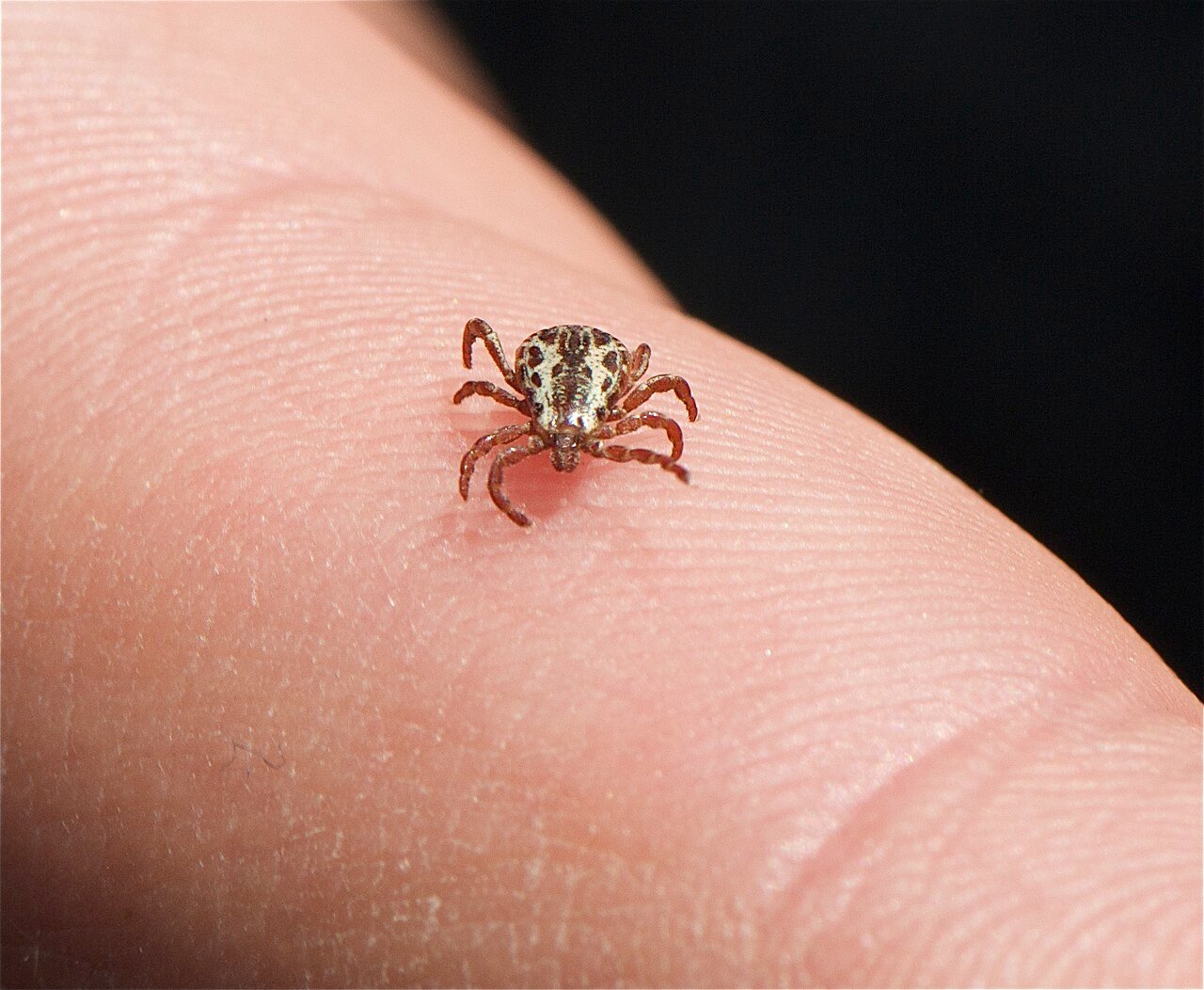
Unfed: the biggest of our three — apple-seed-plus, chestnut brown, with the giveaway ornate whitish-silver mottling on the shield: full-shield marbling on males, a bright forward patch on females (the photo above shows the pattern exactly). Legs brown, body oval and flat. Engorged: females swell to fat gray-olive raisins with the mottled front plate still visible — the most commonly photographed “giant gray tick” on every pet forum. Where and when: tall grass, field edges, and trail margins April–August; the classic on-the-dog and on-the-pant-leg discovery. Medical file: no Lyme — its rap sheet is Rocky Mountain spotted fever (rare in Ohio) and tick paralysis in dogs. A dog tick bite is a wash-and-watch event, not a Lyme conversation: which is precisely why the ID matters.
The blacklegged (deer) tick: small, dark, and the one that matters medically
Unfed adults: sesame-seed small — noticeably smaller than a dog tick — with a plain solid dark shield, no white markings anywhere, dark legs (the namesake), and on females a distinctive orange-red abdomen framing the black shield. The nymph is the whole story: poppy-seed sized, translucent-to-dark, active May through July, and responsible for the majority of Lyme transmission precisely because it is nearly invisible at the attachment stage — the “freckle that moved” of a thousand case histories. Engorged: females swell to gray-blue teardrops; the small plain dark front plate remains the ID. The one-glance rule against the dog tick: white or silvery pattern on the shield = dog tick, relax about Lyme; solid dark shield with no pattern = blacklegged, start the attachment-time math. Size backs it up (dog ticks run visibly bigger), but the shield pattern is the reliable witness at every stage.
The lone star tick: the white dot, explained properly
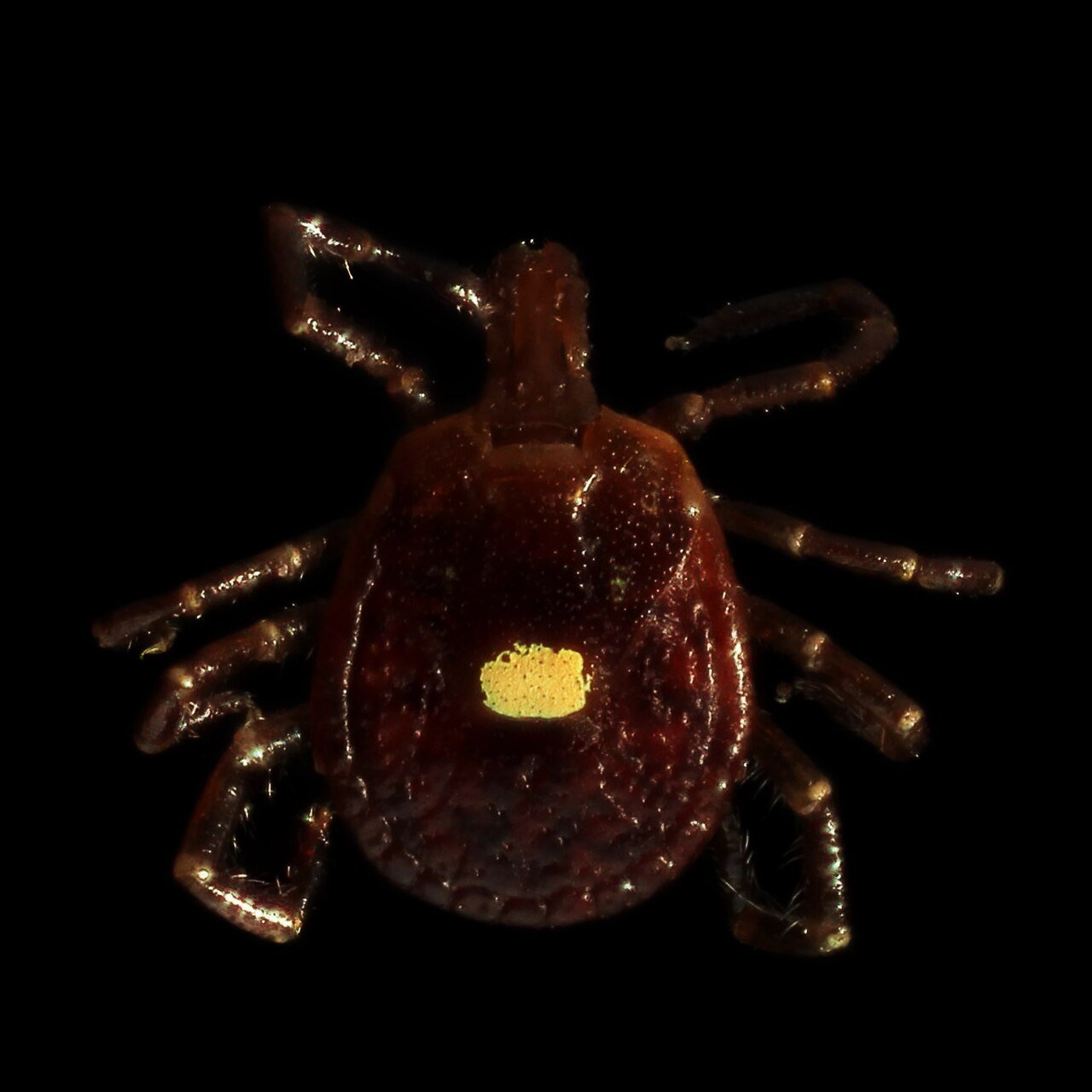
The famous mark: one single cream-white dot in the center of the female’s reddish-brown back — not spots, not a pattern: one dot, like a drop of paint (males instead carry faint pale streaks at the rear edge, routinely missed). Rounder-bodied and longer-legged than our other two, and behaviorally unmistakable: lone stars are aggressive hunters that detect CO₂ and actively walk toward hosts — the tick that finds you sitting still, sometimes several at once. The larval ambush: “seed tick” encounters — dozens of pinpoint ticks from a single brush of vegetation — are lone star larvae, a late-summer signature as the species establishes. Medical file: no Lyme, but ehrlichiosis, STARI, and the headline — alpha-gal syndrome, the acquired red-meat allergy now documented in Ohio as the species spreads north. A confirmed white-dot female in your yard is worth a photo to us: the county-by-county arrival is being mapped, and your sighting is genuine data.
Engorged ticks: the gray grape problem
Feeding rewrites everything the eye keys on: a fed female of ANY species becomes a swollen gray-olive-to-blue bead — grape-shaped, leathery, utterly unlike its flat unfed self, and the source of most “what IS this thing on my dog” panic. The recovery move: ignore the balloon, find the front — the legs and the small hard shield plate near the mouthparts never stretch. Mottled silver plate = dog tick; small plain dark plate = blacklegged; white dot (if female) = lone star. Engorgement also carries information: a flat tick was attached briefly (transmission unlikely); a visibly fed one has been on for a day-plus, which changes the medical conversation — one more reason the specimen goes in the bag, not the toilet.
The look-alike lineup: things tweezed in error every summer
- Spider beetles and small weevils: the top impostors — rounded, brown, tick-sized. The tell: visible antennae and six legs with a distinct head; ticks have neither antennae nor a separated head.
- Bed bug nymphs: flat, brown, and panic-adjacent — but six-legged, antennaed, and found in seams rather than attached to skin. (Attached and swollen bed bugs do not happen; they feed and leave.)
- Clover mites and velvet mites: red, eight-legged, and mite-family kin — but far smaller (clover) or plush-velvety (velvet), and neither attaches to people.
- Skin tags and scabs: genuinely the most-tweezed non-tick in family medicine — the flashlight-and-magnifier test: legs. No legs, no tick.
- Poppy seeds and dirt flecks (on kids, post-picnic): they wipe off. A tick does not wipe off — resistance to a gentle swipe is itself diagnostic.
- Harvest mites (chiggers): the bites are ferocious but the animal is functionally invisible — if you can see a red bug comfortably, it is not the chigger that bit you.
Found one attached — the sixty-second protocol
Identify from the photo you take BEFORE removal (thirty seconds, best light you have — the attached photo is often the best ID evidence you will get), then: fine-tipped tweezers at the skin line, steady straight pull, cleanse, and bag the specimen with the date. Match your ID to the response: dog tick — wash, watch for fever-plus-rash, expect nothing; blacklegged — note the attachment estimate (flat = short, fed = long), watch thirty days for expanding rash or summer-flu symptoms, call the doctor early with the bag in hand if either appears; lone star — same vigilance plus the delayed red-meat-reaction awareness for the following months. Uncertain? Text the photo to (937) 569-3330 — tick IDs are free, same-day, and among our favorite calls to get right.
The bottom line
Every Ohio tick reads from the same three clues: size class, shield pattern, and — for the newcomer — the single white dot. Silver-mottled and big: dog tick, no Lyme file. Small, plain, and dark: blacklegged, run the attachment math. One cream dot on a fast, hunting tick: lone star, welcome to the new map. Engorged balloons identify by their unstretched front plate; look-alikes acquit themselves by antennae, leg count, and wipe tests; and every specimen worth wondering about is worth bagging and photographing. The full county briefing — where each species lives, the disease file, and the yard defense — is on our ticks in Ohio guide; the free ID line is always open.
Life stages: the four-act structure every species shares
Ticks run a two-to-three-year, four-stage program — egg, larva, nymph, adult — with one blood meal powering each molt, and the stage you meet changes both the look and the stakes. Larvae (“seed ticks”): six-legged pinpoints, hatched in masses — the dozens-at-once ankle ambush is a larval encounter, dramatic but low-risk since larvae hatch uninfected (pathogens are acquired from their first host). Nymphs: eight legs now, poppy-seed scale, and the medical heavyweight of the whole cycle — blacklegged nymphs carry infection from their larval meal and are small enough to feed unnoticed through the 36-hour window; May-through-July nymph season is when the daily check earns its keep. Adults: the recognizable stage this page keys out — females feed and balloon toward egg-laying (thousands per clutch, deposited in leaf litter); males of most species barely feed at all, wandering hosts in search of females. The strategic reading: the stage progression is why leaf-litter management hits eggs and larvae, why rodent control intercepts the larval infection step, and why the fall adult wave and spring nymph wave get separate treatment timings on our property program — each act of the play has its own stagecraft.
Ticks on dogs and cats: the pet-specific field guide
Pets meet more ticks than people do, and the ID work is the same with three adjustments. Where to look: the warm thin-skinned real estate — ears (inside and base), face and eyelids, collar line, armpits, groin, and between toes; the post-adventure sweep runs collar-ears-toes-tail in twenty seconds. What you will find: attached dog ticks (the gray raisin behind the ear is the classic), blacklegged ticks in fall and winter (the cold-season dog tick is usually this), and — increasingly — lone stars. The removal difference: same tweezers-straight-pull, with fur parted and a helper on distraction duty; the “leave it and let the preventive kill it” option is legitimate for treated pets, since modern isoxazoline preventives kill attached ticks within hours. The escalation line: any wobbliness, weakness, or hind-end trouble with a tick history is the tick-paralysis pattern — vet same-day, and removal typically reverses it fast. And the standing reminder from the yard guide: the number of ticks entering houses as canine passengers exceeds every other route combined — the pet check is household defense, not just pet care.
What a tick bite looks like (with and without the tick)
Post-removal and found-too-late bites have their own visual file. The normal aftermath: a small red papule at the site, mild local itching, sometimes a pea-sized firm bump lasting days to weeks — all unremarkable healing. The one that matters: an EXPANDING ring or solid red patch growing over days (the erythema migrans of early Lyme — bullseye-shaped in the textbook, solid in plenty of real cases), typically 3–30 days out and often at least two inches across; that one is a this-week doctor visit with the bagged tick. The distraction: immediate small-ring irritation in the first day is usually just bite reaction, not the rash — the diagnostic feature is growth over days, not redness on day one. The mimics: chigger welts (sock lines, multiple, ferocious itch), spider-bite folklore (usually not spiders, per our bite pages), and ringworm (fungal, scaly border) all get mistaken for tick work; when in doubt, photograph daily against a coin for scale — the growth pattern answers the question better than any single look.
The quick-reference card
- Big + silver-mottled shield: American dog tick. No Lyme; wash and watch.
- Small + solid dark shield + dark legs: blacklegged (deer) tick. Run the attachment math; thirty-day watch.
- Reddish + ONE white dot (female), fast and hunting: lone star. Watch bites AND the delayed red-meat reaction file; photo to us — arrival data.
- Poppy seed with legs, May–July: blacklegged nymph — the stage that transmits most Lyme. The daily check exists for this one.
- Dozens of pinpoints at once: lone star larvae (“seed ticks”) — dramatic, low-risk, shower-and-launder.
- Gray grape on the dog: engorged female — ID by the unstretched front plate, bag after removal.
- Has antennae, a distinct head, or six legs (adult-sized): not a tick — see the impostor lineup above and stand down.
Seven lines cover every tick call we have ever taken — and the photo line stays open for the rest: (937) 569-3330, free, same-day, and happiest when the answer is “spider beetle, go enjoy your evening.”
Three shields, one dot, four life stages, and a lineup of acquitted impostors — the whole visual key, pocket-sized. Photograph first, tweeze second, bag always: identification is the step every good tick decision stands on, and now it is a step you own.
Frequently asked questions
What does a tick look like on skin?
A small flat brown-to-dark oval, seed-sized, attached firmly enough to resist a gentle swipe — often mistaken for a new freckle, scab, or skin tag until magnification shows legs at the front edge. No antennae, no visible head, eight legs (six if a larva).
What does an embedded tick look like?
Only the mouthparts embed — the body always remains outside, so an attached tick looks like a seed standing slightly proud of the skin, ballooning over days if female. Fully “buried” ticks are folklore; what people call buried is usually a well-fed tick pressed flat or a retained mouthpart after a bad pull.
What does a deer tick look like compared to a dog tick?
Deer tick: smaller (sesame seed), solid dark shield, no white markings, dark legs, orange-red abdomen edge on females. Dog tick: larger, chestnut with silvery-white ornate mottling on the shield. Pattern beats size as the tell — mottled = dog tick, plain dark = deer tick.
What does a tick look like when engorged?
A gray-olive-to-blue leathery bead — grape or teardrop shaped, up to ten times unfed size — with the legs and small unstretched shield plate still visible at the front. Species ID survives engorgement at that front plate: mottled = dog tick, plain dark = blacklegged.
How big is a tick?
By stage: larvae are poppy-seed pinpoints, nymphs poppy-seed-to-pinhead, unfed adults sesame-to-apple-seed (dog ticks the largest of our three), and fed females up to pea-or-grape size. If it is bigger than an apple seed, it has been feeding.
What has a white dot on its back like a tick?
A female lone star tick — one single cream dot centered on a reddish-brown back is diagnostic; no other Ohio tick carries it. Multiple spots or overall mottling means a dog tick; a white-spotted BEETLE has antennae and a separate head.
Do ticks have six or eight legs?
Adults and nymphs: eight (they are arachnids). Larvae: six — the one honest exception, and a genuine ID trap with seed-tick masses. Any adult-sized “tick” with six legs plus antennae is an insect impostor.
What looks like a tick but isn’t?
The regulars: spider beetles and small weevils (antennae, distinct heads), bed bug nymphs (seams, not skin), clover mites (far smaller), poppy seeds and scabs (they wipe off or lack legs), and skin tags (the most-tweezed non-tick in medicine). Legs-no-antennae-no-separate-head is the tick signature.
What color are ticks?
Brown to reddish-brown to nearly black unfed — dog ticks chestnut with silver mottling, blacklegged dark with an orange-red female edge, lone stars reddish with the white dot — and gray-olive-blue once engorged, whatever the species. No Ohio tick is white, green, or striped.
Should I save a tick after removing it?
Always — sealed bag, date written on it, kept a month. Species and engorgement level materially guide medical decisions if symptoms appear, and the free photo ID line means the bag converts to answers in minutes: (937) 569-3330.