
Sugarcreek Township is Greene County’s quiet money — a township that wraps almost entirely around Bellbrook and runs from the Wilmington Pike corridor east toward Spring Valley, holding walkout-basement subdivisions off Feedwire and Clyo, older farmhouses on the township roads, and a school district families move here specifically to buy into. The WDI inspection here is usually part of a transaction that is already moving fast: $99 flat on the lender-ready NPMA-33, next business day, PDF the day we inspect, pay at booking or on the settlement statement.
What Inspections Actually Find in Sugarcreek Township
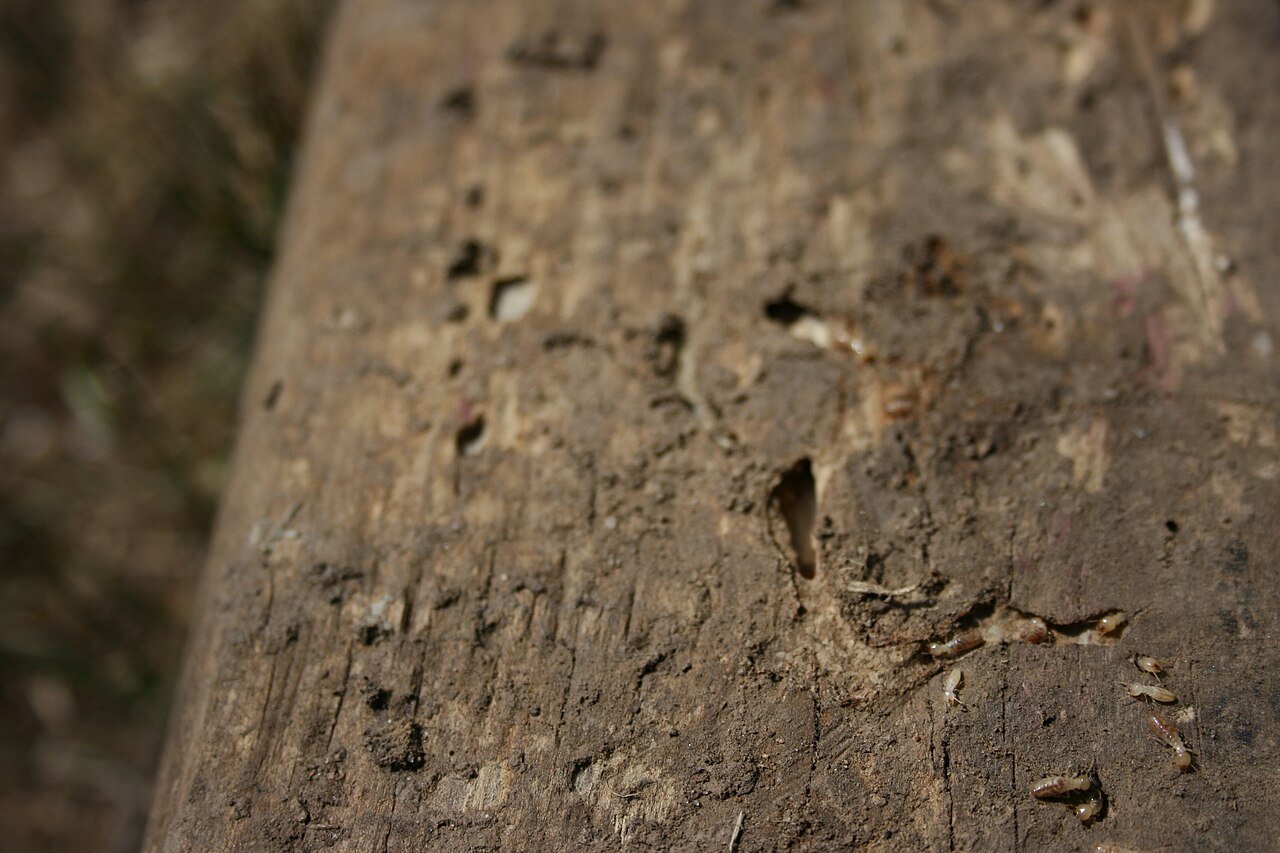
Ohio has one termite that matters for a real estate file: the eastern subterranean termite. It lives in soil, needs moisture, and travels to wood through mud tubes it builds itself. Everything an inspector does in this township is organized around finding where soil and structure meet — and in Sugarcreek, they meet in ways the flat parts of the county never see.
The township’s defining feature is grade. Lots roll toward Sugar Creek and the Little Sugarcreek drainages, and builders used that grade the obvious way: walkout basements, tiered retaining walls, and patios cut into the slope. That gives a house two very different foundation stories on two different sides. The front elevation may sit a clean eight inches above grade while the back corner is buried, with a deck ledger, a stair stringer, and a mulch bed all touching soil at the same elevation as the sill plate.
The subdivisions built between the late 1980s and the mid 2000s share a second habit: deep landscape beds pushed right up against the siding, mulched annually and never dug back out. Thirty years of that raises grade three or four inches above where the builder left it, and the treated zone the original builder installed — if one was installed at all — is now buried under the thing termites like most. Older places along Feedwire, Conference Road, and the township’s farm frontage bring the other set: stone and block foundations, crawl spaces with dirt floors, and additions framed on at some point without much thought about where the wood stopped and the ground started.
The Walkout Lot’s Blind Side
A well-kept 1990s two-story with a finished walkout is one of the harder inspections in the county, and not because the house is in bad shape. It is because the evidence is on the side nobody looks at. The front is landscaped and visible. The back has a deck over the walkout, a patio poured tight to the foundation, and a finished lower level whose drywall covers the exact band of sill plate an inspector most wants to see.
So the work happens at the margins: the unfinished mechanical room, the rim joist visible above the drop ceiling, the gap where the stair stringer meets the slab, the post bases under the deck, and the soil line behind the patio. That is where mud tubes show up on these lots, and it is why the report matters more than the walkthrough — a written NPMA-33 records what was accessible and what was not, in language a lender and an underwriter both accept.
Built for the Transaction Timeline
Nobody orders a WDI report because they want one. It gets ordered because a lender asked, a VA file requires it, or a listing agent wants the question settled before the first showing. So the whole thing is built to not be the reason a closing slips: $99 flat, scheduled for the next business day in most weeks, and the signed NPMA-33 delivered as a PDF the same day we inspect. Pay at booking, or have it billed on the settlement statement.
- The form lenders want. NPMA-33 is the national standard form; it is what underwriters, VA files, and relocation companies are looking for.
- A licensed applicator does the inspection. Ohio-licensed in the categories that cover wood-destroying insects, not a general home inspector adding a checkbox.
- Findings are written plainly. Active, previous, conducive conditions, or none — with locations, so an agent can hand it to the other side without translating it.
- No treatment quoted unless it is warranted. If the report is clean, it is clean. We are not looking for a reason to sell a job.
Bellbrook Inside It, Centerville Across the Line
Sugarcreek Township is an unusual service area because its address lines do not match its map. Plenty of homes here carry a Bellbrook mailing address while sitting in the township, and plenty of people describe themselves as living in Centerville when the county line — and the taxing authority, and the school district — says otherwise. For an inspection that never matters. We work the whole corridor on one route, so the township, the village inside it, and the communities on every side are the same trip and the same price.
Same-corridor WDI inspections: Bellbrook sits inside the township. Centerville and Washington Township are directly west across the Montgomery County line. Beavercreek is north up Wilmington Pike, and Xenia is east on 35. If your file has two properties in two of those, they can usually go on the same morning.
Listing Season on the Bellbrook–Sugarcreek Line
Houses in this district tend to move in a tight window built around the school calendar, which means a lot of listings hit inside the same six weeks and a lot of inspections get ordered on top of each other. The sellers who do best are the ones who order the WDI before the sign goes in the yard rather than after the contract is signed.
The reason is leverage. A clean NPMA-33 in the listing file removes a contingency before a buyer has a chance to attach a number to it. And if the report is not clean, finding that out in April with an empty calendar is a very different problem from finding it out eleven days before closing with a rate lock expiring. Old evidence with no live activity is a normal, explainable finding in a house this age — but only if you get to explain it first.
The Landscape File
If there is one conducive condition that shows up on Sugarcreek reports more than any other, it is the mulch bed. Not because mulch is dangerous on its own, but because of what a well-maintained bed does over twenty years: it raises grade, it holds moisture against the foundation, it hides the sill line, and it often buries the weep holes on a brick veneer that were the wall’s only drainage path. Add irrigation on a timer and a downspout that discharges at the corner, and you have built a termite-friendly microclimate against the one part of the house that had to stay dry.
None of that means an infestation. It means the report will name it, because an inspector who does not name it is doing the next owner a disservice. Most of it is fixable in a weekend with a shovel and a downspout extension — which is a much better sentence to read on a listing report than on a closing file.

Frequently Asked Questions
How much is a termite inspection in Sugarcreek Township?
$99 flat — lender-ready NPMA-33, next business day in most weeks, PDF the day we inspect. Pay at booking or on the settlement statement. Same price township-wide, including Bellbrook addresses.
My house has a finished walkout basement. Can you still inspect it?
Yes, and it is the most common house type here. Finished lower levels limit what is visible — drywall covers the sill band an inspector most wants to see. We work the accessible margins: mechanical room, rim joist above drop ceilings, stair stringer at the slab, deck post bases, and the exterior soil line. The NPMA-33 records what was accessible and what was obstructed, which is exactly what an underwriter needs.
Is a WDI report required for a VA loan?
VA purchases in Ohio require a wood-destroying insect report. FHA and conventional files order it case by case — usually when the lender, the appraiser, or the buyer’s agent asks. If you are not sure, order it; $99 is cheaper than a delayed closing.
What if you find termites?
You get a written verdict with the location and extent of what was found, and treatment is quoted only when it is actually warranted. If the finding is old evidence with no live activity — common in houses this age — the report says that plainly, because it is a very different conversation than an active infestation.
Do you serve Bellbrook addresses and township addresses the same?
Yes. A large share of Sugarcreek Township homes carry a Bellbrook mailing address, and a lot of residents describe themselves as being in Centerville. It makes no difference to scheduling or price — it is one route and one flat rate.
Should I order it before listing or wait for the buyer?
Before listing, if you have the choice. A clean report removes a contingency before a buyer can put a number on it, and an unclean one is far easier to deal with in an open calendar than eleven days before closing with a rate lock running out.
Are mulch beds against the house really a problem?
They are a conducive condition, not an infestation. Over the years a maintained bed raises grade, holds moisture at the foundation, hides the sill line, and can bury brick weep holes. It will be named on the report. Most of it is a weekend fix with a shovel and a downspout extension.
How do agents book?
greaterdaytonpest.com/realtor — one minute on a phone, and bookmarkable. Or call (937) 569-3330.