
Bellbrook layers two markets over its ravines: the old village core along Main and Franklin with its nineteenth-century bones, and the wooded upscale stock of Sugarcreek Township — big lots, mature canopy, and the moisture microclimates that come with building beautifully among trees. Both meet the WDI inspection on the same terms: $99 flat, NPMA-33, next business day, same-day PDF, pay at booking or on the settlement statement.
What Inspections Actually Find in Bellbrook
The wooded-lot signature dominates: tree canopy holds foundation-line moisture, leaf litter banks against siding, and landscape timbers and stumps sit within foraging range of sills — the conducive-condition profile our Bellbrook termite work maps stump by stump. The village core adds the historic file — old timber, old treatments, dating over drama — and Sugarcreek’s 1990s-2000s streets carry the pretreatment-expiry footnote their landscaping makes more relevant, not less. The report separates all three registers so the negotiation never has to.
The Stump Map
Bellbrook’s most useful inspection artifact is the stump map: every wooded lot has its buried root systems and cut stumps — termite staging grounds within striking distance of the house — and our walk marks them. Buyers get a foraging-pressure picture, not just a structure verdict; owners get the grind-or-monitor decision laid out with honest prices.

Built for the Transaction Timeline
- $99 flat — VA, FHA, conventional, jumbo-accepted NPMA-33
- Stump-map walk included on wooded lots
- Next business day across Bellbrook, Sugarcreek Township, and the Little Miami edges
- Same-day PDF to every party you name
- Pay now or at closing on the settlement statement
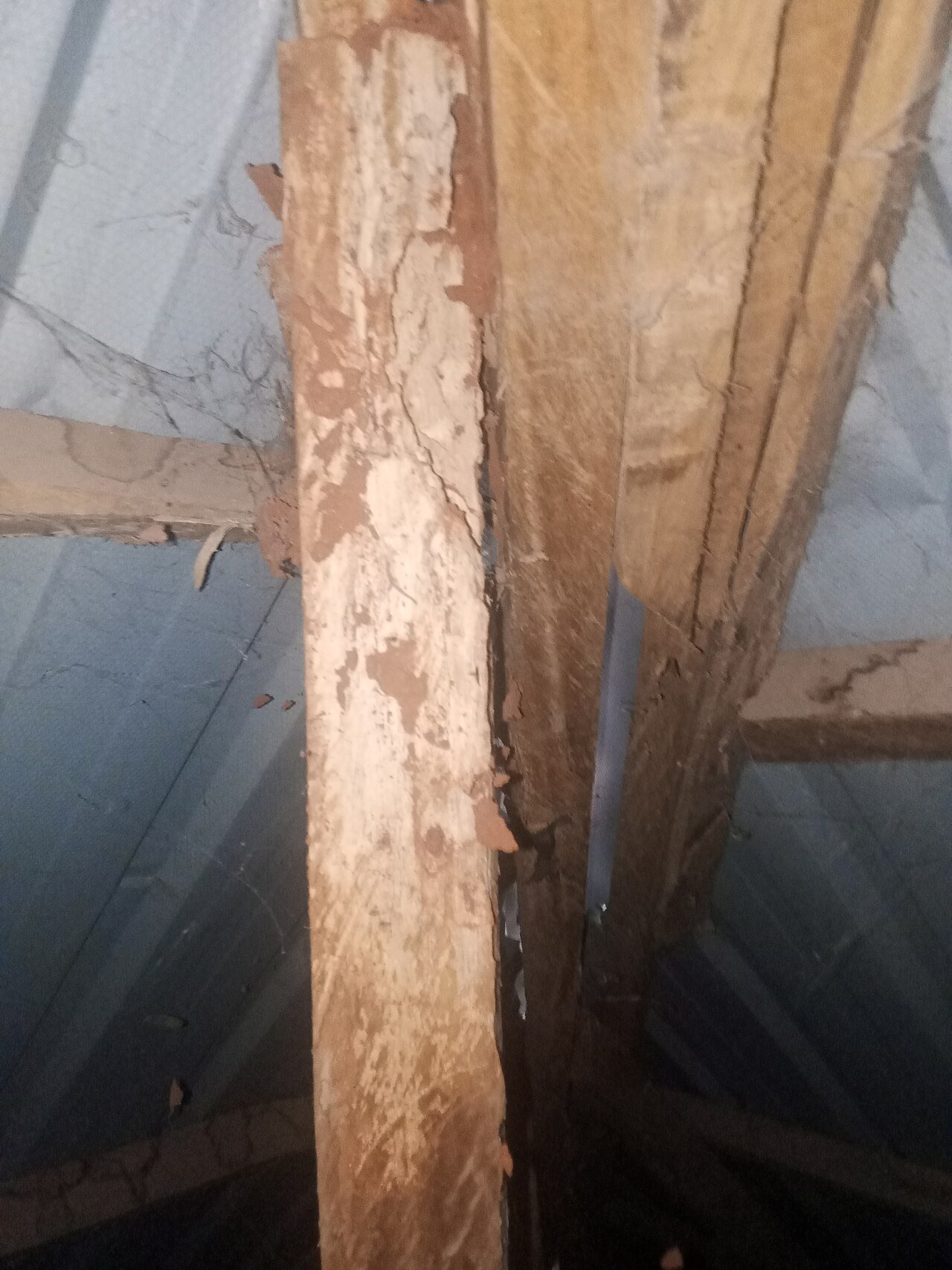
For Agents on the Ravine Streets
Bellbrook trades alongside Beavercreek and Centerville in most agents’ weeks; the local guides for each live on the realtor page, and every address books the same way: one minute at the realtor link.
Ravine Microclimates: Why Two Bellbrook Lots Read Differently
Sugarcreek’s ravine topography does something flat suburbs don’t: it builds microclimates lot by lot. A ridge-line house with southern exposure runs dry foundations and quiet conducive columns; its neighbor two hundred yards down the ravine — same builder, same year — sits in canopy shade with a north-facing foundation that holds moisture into July, and its report reads a class damper. Neither is a defect; both are geography, and the inspection’s job is saying which microclimate a house occupies so its maintenance plan matches. The practical buyer’s translation: in Bellbrook, walk the lot’s shade at viewing and read the report’s conducive column as the lot’s weather report — then budget the dehumidifier or the gutter work accordingly, the way you’d budget for any other feature of a property you chose for its trees.
The Little Miami edges add the scenic-corridor version: properties backing to the bike trail and the river corridor carry the full wooded-moisture profile plus the stump inventories of managed woodland. The stump-map walk earns its keep most exactly there.
The Estate and Downsize File
Bellbrook’s long-held homes — village core especially — produce the same estate-settlement transactions we serve across the county line in Centerville, and the same workflow applies: executors and out-of-state heirs order remotely, lockbox access, counsel or agent as contact, PDFs to every party the estate names, and the $99 on the settlement statement so no personal card touches a probate ledger. A thirty-year home’s first termite report converts its biggest unknown into a documented fact — usually a calming one — and does it before the listing photos are even scheduled. For the downsize generation’s families, that’s one fewer hard conversation; for the estate’s attorney, it’s one more exhibit that closes clean.
What the Stump Map Prevents (a Composite Case)
A composite from the service files, because it teaches the lot-reading better than theory: wooded Sugarcreek property, 1990s build, clean structure at purchase — and a report whose stump map flagged three cut stumps and a buried root system inside twenty feet of the foundation, with monitoring recommended. The buyers filed the map and skipped the monitoring; five summers of canopy moisture later, the colony that had been working the stumps found the garage sill, and the eventual treatment-plus-repair invoice ran fifteen times what five years of monitoring would have. The map had named the exact staging ground. Nothing about the story is dramatic — no negligence, no bad luck, just foraging pressure doing what the map said it would, on the timeline stumps always offer. That’s the entire case for treating the stump-map walk as the report’s second verdict: the structure’s answer covers today; the lot’s answer covers the decade.
The grind-or-monitor decision the map sets up is honestly priced either way — grinding retires the staging ground once; monitoring watches it for less per year than a dinner out. What the map won’t do is choose for you; it just makes the choice visible while it’s still cheap.
Bellbrook chose its trees, and the trees choose the maintenance calendar — that’s the whole trade, and it’s a good one when the map is drawn. The $99 inspection delivers the structure’s verdict and the lot’s weather report in one visit; the stump map turns the decade’s biggest variable into a listed decision; and the ravines keep being worth every bit of it.
The Full Pass, Ravine Rate
What the $99 executes on every Bellbrook lot: complete interior probe, basement or crawl entered where accessible, garage and utility penetrations read, exterior foundation walked, the wooded-lot stump map drawn with distances noted, microclimate observations folded into the conducive column, and the NPMA-33 same-day to every party — jumbo files getting the attorney-readable specificity higher-value closings expect. The ravines complicate the moisture story; they don’t complicate the standard.
Buying closer to the city? We also schedule termite inspections in Dayton, Ohio — same $99 NPMA-33 report, same next-business-day turnaround for realtors, from our office at 733 Salem Ave.
Frequently Asked Questions
How much is a termite inspection in Bellbrook?
$99 flat — lender-ready NPMA-33, next business day, PDF the day we inspect, pay at booking or on the settlement statement.
Do wooded lots really raise termite risk?
They raise conducive pressure: canopy moisture, leaf litter at siding, and buried roots/stumps within foraging range. That’s a maintenance map, not an infestation — and our stump-map walk draws it for every wooded inspection.
What about the old village core homes?
Nineteenth-century timber gets the dating discipline: old treatments and dry galleries read as provenance, not panic, when the report is precise. Dense history with no activity closes routinely.
Is newer Sugarcreek construction safe?
Its builder pretreatment aged out on the standard five-to-ten-year clock, and wooded landscaping keeps soil inviting. Most reports are clean and fast; the occasional early catch is the inspection’s whole point.
Is the WDI required for VA loans?
VA purchases in Ohio require it; FHA/conventional order case-by-case. The NPMA-33 satisfies every loan type, jumbo included.
Can the buyer be absent?
Yes — lockbox or agent access, same-day PDF, findings call wherever they are.
What if you find active termites?
Written verdict with location and extent, treatment quoted honestly (bait or barrier, matched to the lot), re-inspection on the same file after work.
How do agents book?
greaterdaytonpest.com/realtor — one minute, bookmarkable.
Nearby: Bellbrook sits inside Sugarcreek Township, and a great many addresses here are township parcels with a Bellbrook mailing address. Same route, same $99 flat rate.