
Move-in weekend in Oxford is also the peak of spider season, and the two are related. A rental that has been empty and undisturbed since May has had three months of nobody knocking down a web, nobody vacuuming a basement corner, and porch lights that may have been burning all summer pulling insects to the door every night. Then everybody arrives in one weekend, in late August, right as the autumn wandering season begins. It looks like an infestation. It is mostly three months of accumulation meeting the worst possible timing.
What Three Empty Months Produce
Webs are cumulative. In an occupied house somebody knocks them down constantly without thinking about it — walking through a doorway, moving a box, running a vacuum along a baseboard. In an empty house nothing does, so a summer’s worth of web, egg sacs, and shed exoskeletons accumulates in porch corners, basement joist bays, window wells, and behind stored furniture.
Egg sacs are the part that matters most, because each one represents the next generation sitting in place waiting to disperse. Physically removing webs and sacs is genuinely more effective than any spray for reducing next season’s population, and in an empty rental it is quick work that nobody has done.
The single highest-value thing a landlord can do here is add a spider pass to the summer turnover walkthrough: knock down webs and egg sacs on porches, in basement corners, in window wells, and in outbuildings, clear the window wells of leaf litter, and check that basement sashes still seal. That is thirty minutes and it changes what tenants walk into in August.
Old Basements Are Excellent Habitat
The long-legged, fragile spider hanging in a loose, untidy web in a basement corner or a joist bay is a cellar spider. They are harmless to people, their fangs cannot do anything meaningful to human skin, and they are genuinely useful because they prey on other spiders and insects. In stone-walled Oxford basements they are the most common complaint we hear, and the honest answer is usually a broom rather than a treatment.
What makes an old basement so hospitable is texture and humidity. A poured concrete wall offers almost nowhere to anchor a web and dries reasonably well. A stacked stone or early brick wall offers a thousand anchor points, deep shadowed recesses, joist pockets, and mortar joints, and it holds moisture against the soil behind it. Both spiders and the small insects they eat do well in that.
That is why moisture correction does more for a spider problem in these houses than almost anything else. A basement that gets drier — through downspout extensions, grade correction, a functioning sump, and dealing with standing water — supports fewer of the insects spiders feed on, and the spider population follows the food down over the following season.
The Autumn Wandering Season
Spider calls cluster in September and October, and it has little to do with spiders seeking warmth. What happens is that mature males abandon their webs and wander looking for females, and a wandering spider that meets an old house with settled thresholds and rotted sash corners ends up inside.
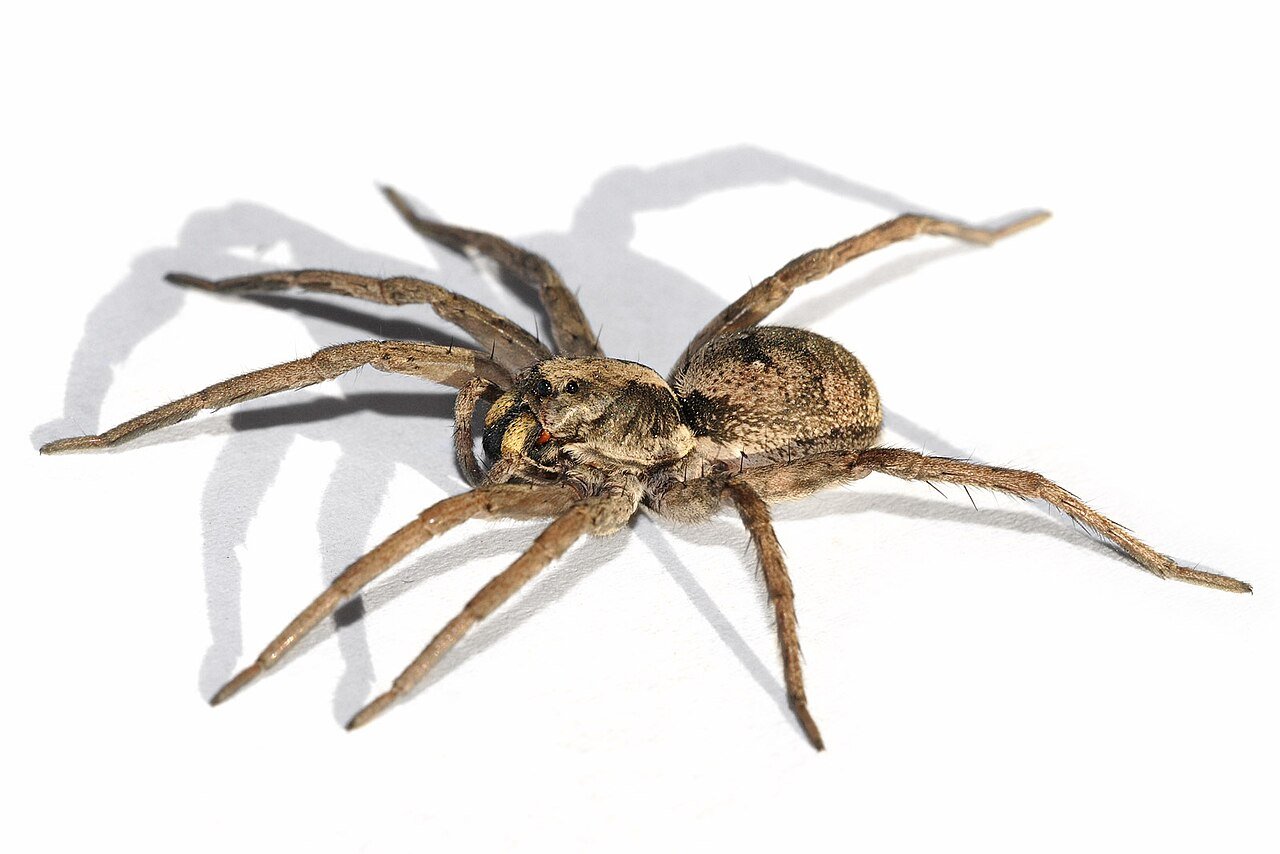
The larger, fast, hairy spider that turns up on a basement floor or sprints across a kitchen in October is a wolf spider. They hunt actively rather than building webs, which is exactly why you see them moving. They are alarming because of size and speed, they will bite if genuinely trapped against skin, and they are not dangerous and not interested in people. On lots backing onto fields, fencerows, or woodlots — common around Oxford — they are more frequent, because that is where they live the rest of the year.
The ones spinning orderly circular webs across a porch light or a window frame overnight in late summer are orb weavers — seasonal, harmless, and a reliable sign that exterior lighting is doing an excellent job of attracting flying insects. On streets with mature trees and old fixtures they can be spectacular, and they are why people call in August after walking into one.
- Add a spider pass to summer turnover — webs, egg sacs, window wells, basement corners.
- Warm or amber exterior bulbs on motion rather than dusk-to-dawn burning all summer.
- Window wells cleared and covered — accumulated leaf litter is prime harborage.
- Basement moisture corrected — fewer insects means fewer spiders, with a season’s lag.
- Firewood off the ground and away from the house, with gloves when handling it.
Lighting Is the Lever Nobody Pulls
Spiders are predators, and predator populations track prey populations. A building with a persistent spider problem almost always has a persistent supply of the insects spiders eat, and in this town the most reliable supply line is exterior lighting left burning all night. Bright white fixtures at porches, entries, and parking areas pull in flying insects continuously, and the spiders simply set up where the food is.
On rental property the problem compounds, because porch and entry lights are frequently left on for security or simply never switched off, including through an empty summer. Three months of a bright fixture over a porch is three months of insects delivered to that exact spot every night, and the webbing that greets tenants in August is the direct result.
The fix costs almost nothing and it works. Switch exterior fixtures to warm-toned or amber bulbs, which attract dramatically fewer insects than bright white. Put them on motion activation rather than dusk-to-dawn where security allows. Move fixtures away from doorways where practical, so what is attracted is not attracted to the entrance. Spider numbers follow the insect supply down within a few weeks, and it is a permanent change rather than a treatment that has to be repeated.
The Two Everyone Asks About
Black widows do occur in Ohio, and Oxford has more of the conditions they favor than a subdivision does — undisturbed, protected, low spaces. Stacked firewood, the underside of a porch, a detached garage or shed corner, a basement bulkhead, a window well nobody has cleaned in a decade, and stored items in an outbuilding. The identification is specific: a glossy black spider with a distinctly globular abdomen and a red hourglass on the underside, in a tangled irregular web close to the ground. Gloves when handling stored materials covers most of the realistic risk.
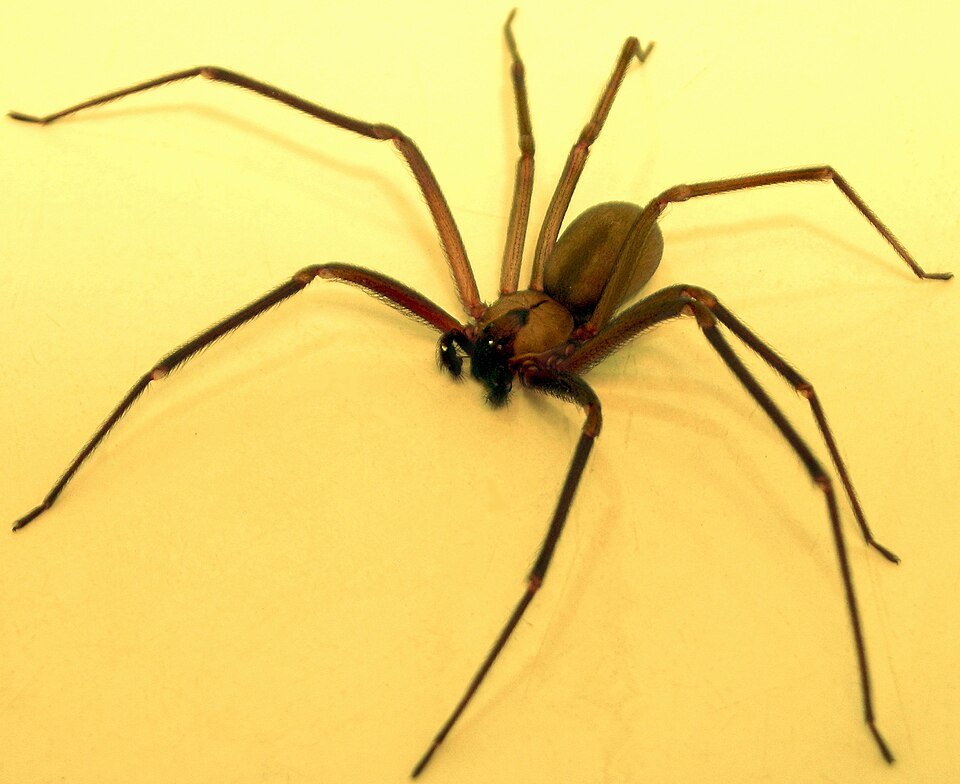
Brown recluse is the one people worry about most and encounter least. Ohio sits outside the established range for the species, and the overwhelming majority of suspected recluse spiders submitted for identification in this state turn out to be something else — commonly a house spider, a grass spider, or a sac spider. A handful of isolated Ohio populations exist, but a spider in an Oxford basement is far more likely to be almost anything else.
It is also worth saying that most reported spider bites are not spider bites. A great many turn out to be bacterial skin infections, and attributing one to a recluse can delay appropriate treatment. If a lesion is worsening, that is a medical question rather than a pest question, and it is worth saying so to a student who has read something alarming online.
Across Butler County
Hamilton southeast has the same old-basement profile, College Corner is west on the state line, and Eaton is north in Preble County.
General service is on the Oxford pest control page.
Frequently asked questions
We moved in and the house is full of webs. Is it infested?
Usually it is three months of accumulation rather than an infestation. Nothing knocked down a web all summer, so porches, basement corners, and window wells built up webs, egg sacs, and shed skins. Physically clearing them makes an immediate difference, and it also removes next season’s generation.
What should a landlord do during turnover?
Add a thirty-minute spider pass: knock down webs and egg sacs on porches, in basement corners, in window wells, and in outbuildings; clear leaf litter from window wells; and check that basement sashes still seal. That changes substantially what tenants walk into in August.
Why do spiders suddenly appear every September?
Mature males leave their webs in autumn and wander looking for females. A wandering spider that meets an old house with settled thresholds and rotted sash corners ends up inside. It is a seasonal movement rather than an infestation, and it passes.
Do we have brown recluse in Oxford?
Almost certainly not. Ohio sits outside the established range, and the large majority of suspected recluse spiders submitted for identification here turn out to be common house spiders, grass spiders, or sac spiders. We identify what you actually have rather than assume.
Are black widows really in Ohio?
Yes, uncommonly but genuinely, and Oxford has more of the spaces they like — firewood stacks, under porches, detached garage and shed corners, bulkheads, and neglected window wells. Look for a glossy black spider with a globular abdomen and a red hourglass underneath, and wear gloves handling stored materials.
What are the long-legged spiders in every basement corner?
Cellar spiders. Harmless, unable to meaningfully bite human skin, and useful because they eat other spiders and insects. In most old basements a broom is a better response than a treatment.
Will spraying get rid of them all?
No, and in a stone basement especially. Spiders walk on their leg tips and keep their bodies clear of treated surfaces, so they pick up much less residual than crawling insects. Treatment works mainly by reducing the insects they eat and by hitting specific harborage.
I think I was bitten by a spider.
Most reported spider bites turn out not to be — a great many are bacterial skin infections, and attributing one to a recluse can delay the right treatment. If a lesion is worsening, that is a medical question rather than a pest one.
What actually reduces spiders the most?
Exterior lighting, by a wide margin. Bright white fixtures burning all night pull flying insects to the porch, and spiders set up where the food is — which is why an empty rental with a porch light left on all summer greets tenants with webs in August. Warm or amber bulbs on motion activation cuts the food supply, and spider numbers follow within weeks.