
Hamilton is the one place on our map where the first question is genuinely open: mice or rats? In most of the region the answer is mice almost every time. Here, the combination of an old sewer system, alleys running behind dense residential blocks, detached garages and outbuildings on small lots, a downtown restaurant corridor, and housing that predates modern construction sealing means Norway rats are a realistic possibility rather than a remote one. Those are two different jobs, and getting the identification right before anyone quotes anything is the whole first step.
Mice Versus Rats, and Why It Matters
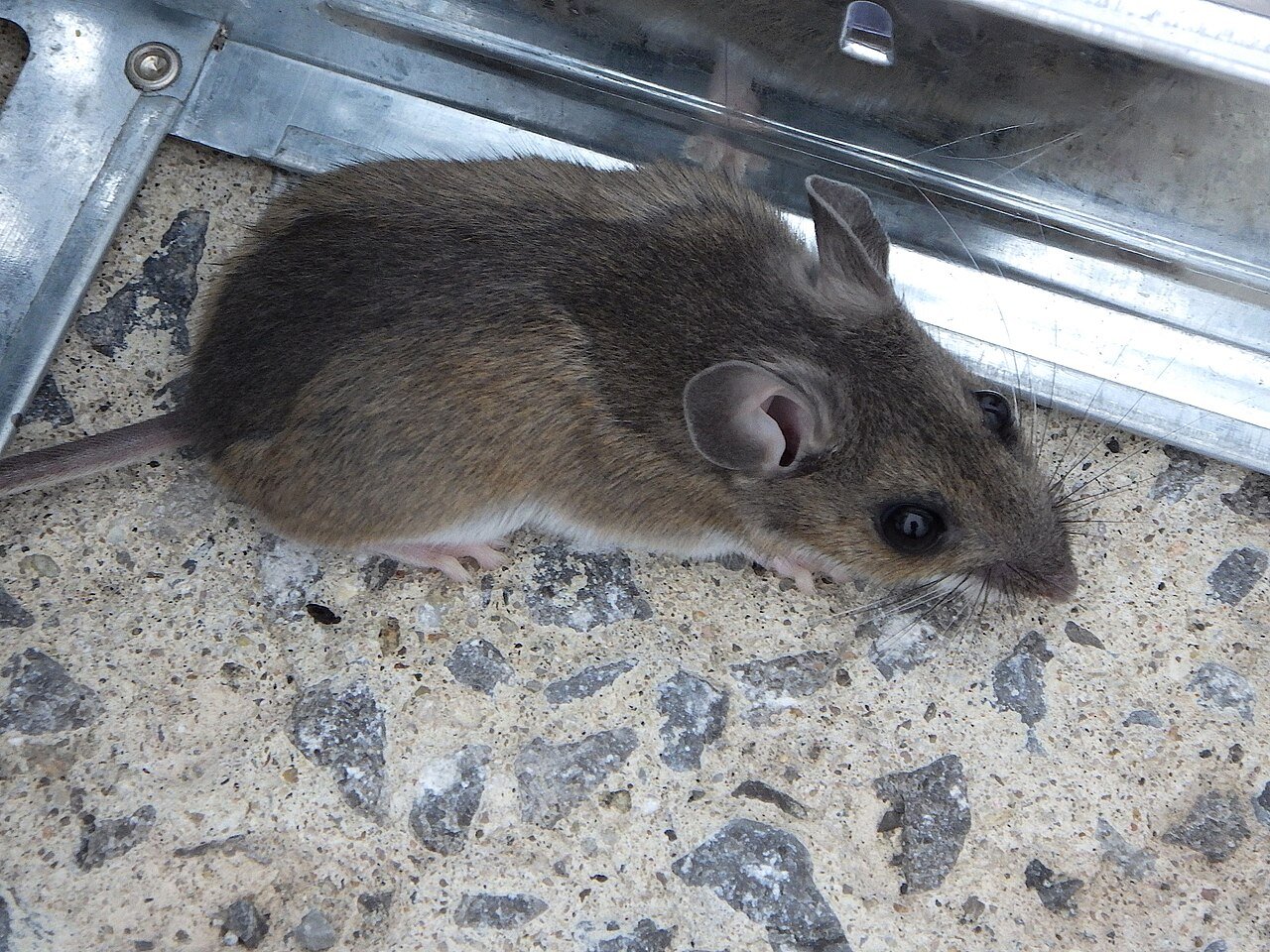
A house mouse is small, needs a gap about a quarter inch wide, produces droppings the size of a grain of rice, and travels a range measured in feet rather than yards. It lives in wall voids, drawers, insulation, and stored boxes, and it is looking for warmth and crumbs. Almost every Hamilton rodent call is this.
A Norway rat is a different animal in every practical sense. It needs a gap closer to half an inch, produces droppings the size of an olive pit, burrows in soil rather than nesting in walls, and travels established runways along foundations, fence lines, and alley edges. Rats are strongly associated with three things in this city: a compromised sewer lateral, a sustained outdoor food source such as an unsecured commercial dumpster, and construction or demolition that displaced an existing burrow system.
The reason the distinction matters is that the work diverges immediately. Mouse work is envelope sealing at penetrations plus interior trapping. Rat work is burrow treatment, grade and sanitation correction, much larger exclusion, and often a conversation about a sewer line that needs a camera rather than a pest technician. Treating a rat problem like a mouse problem simply does not work, and we will tell you which one you have before we quote.
The Alley and Detached Garage Problem
A large share of Hamilton’s older residential blocks are served by alleys, and alleys concentrate everything rodents want in a single corridor: trash containers, cover, uninterrupted travel routes, and detached garages that are almost never sealed to the standard of a house. That corridor runs behind dozens of properties, which means rodent pressure is a block-level phenomenon rather than a house-level one.
Detached garages are the specific weak point. They typically sit on a slab with a gap at the sill, have a door that no longer closes tightly, hold stored cardboard, birdseed, grass seed, and pet food, and are entered by the owner perhaps twice a week. A population establishes there in comfort and then works its way toward the house when weather turns.
That has a practical consequence worth being honest about: sealing your house perfectly while the garage and the alley stay as they are reduces the problem without ending it. The most durable results in these neighborhoods come from treating the property as a unit — house, garage, and the ground between them — and from neighbors on a block dealing with it at roughly the same time. We cannot organize a block, but it is worth knowing that is the dynamic.
Where They Get Into an Older House
Old houses leak in different places than new ones. The foundation itself is a route here in a way it is not in a subdivision: open mortar joints in limestone and early brick walls, gaps where a coal chute was filled in badly, and the space around a sewer or water line that was cut through masonry decades ago and packed with whatever was handy.
Balloon framing is the second feature and it is specific to houses of this era. In a balloon-framed wall the stud cavity runs uninterrupted from the basement sill all the way to the attic, with no fire blocking in between. A mouse entering at the sill has a clear vertical highway to the top floor, which is why people in these houses report scratching in a second-floor wall when the entry point is in the basement.
Third is everything at grade that has settled. Porch steps pulling away from the house, a basement window frame that has rotted at a corner, a bulkhead door that no longer seats, a dryer vent whose flap has broken off, and the gap under a threshold on a door that has dropped. On a house of this age those are ordinary maintenance items, and they are also the entry list.
- Droppings the size of a grain of rice — mice. Olive-pit sized — rats, and a different job.
- Open mortar joints and filled coal chutes in limestone and brick foundations.
- Balloon-framed wall cavities running basement to attic with no fire blocking.
- Detached garages and alley frontage — the population source on most blocks.
- Burrows along a foundation or fence line — rats, and worth a sewer lateral conversation.
What the Work Involves
Bait stations set outside and left alone are a subscription rather than a solution. They reduce pressure, and on a block with alley frontage there is a genuine role for exterior stations, but if the entry points stay open the house keeps receiving arrivals indefinitely. Exclusion is what closes it, and exclusion is physical.
On an old house that means mortar and masonry repair as much as mesh and sealant. Open joints get pointed. Penetrations get packed with copper mesh or hardware cloth before anything is sealed over them, because mice chew through foam and caulk without difficulty. Where balloon framing is present, closing the cavity at the sill is worth far more than chasing sounds on the second floor.
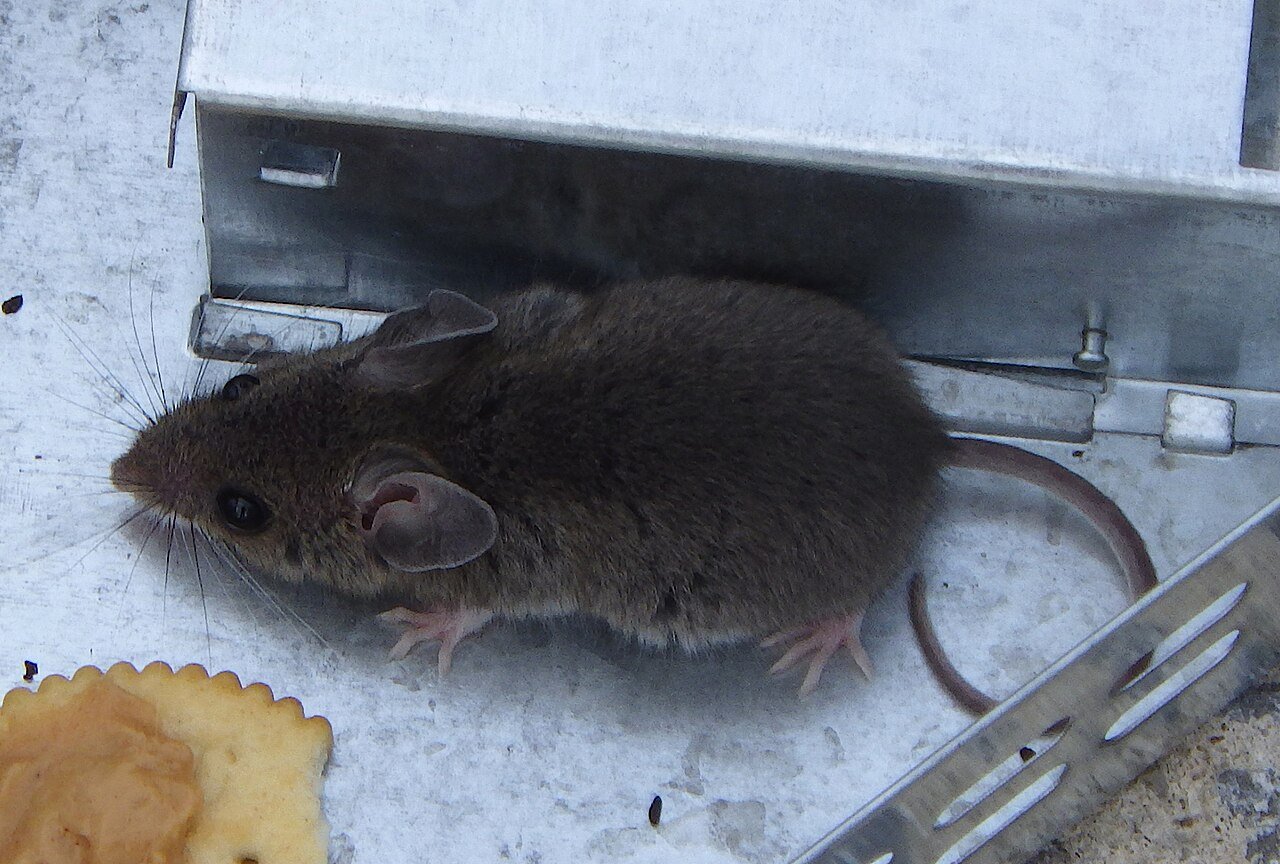
Interior removal is trapping rather than bait, deliberately. A mouse that eats bait and dies inside a plaster wall or a balloon-framed cavity is an odor problem for weeks in a house where those cavities are tall, deep, and effectively unreachable. Then we verify at about two weeks, because the honest measure of the job is whether anything is still being caught then, not what came out on day one.
What We Do Not Handle
We handle rodents — nothing larger than rats and mice. On Hamilton’s older properties that boundary comes up regularly, because detached garages, open porch skirts, and outbuildings attract animals well beyond our scope. If what is under the porch is a groundhog, what is in the attic is a raccoon or an opossum, or what is in the chimney is a bat, that is wildlife control, and we will tell you plainly and point you toward someone who does that work rather than improvising.
It is worth ruling out early. Heavy, slow, or dragging sounds concentrated around dusk and dawn are usually not mice, and a homeowner who spends six weeks on a mouse program for a raccoon problem has lost six weeks. A short conversation about what you are hearing and when usually sorts it out before anybody schedules anything.
Across Butler County
Fairfield to the south is newer stock without alleys and behaves quite differently. Oxford is northwest and Middletown northeast, both with comparable older cores.
General service is on the Hamilton pest control page.
Frequently asked questions
How do I know whether I have mice or rats?
Droppings are the quickest tell — grain-of-rice sized means mice, olive-pit sized means rats. Rats also burrow in soil along foundations and fence lines rather than nesting in walls, and they need a gap closer to half an inch. The two are different jobs, so we identify which before quoting anything.
Why are rats more of a possibility in Hamilton?
Older sewer infrastructure, alleys running behind dense residential blocks, a downtown restaurant corridor, and detached garages on small lots. Rats are usually tied to a compromised sewer lateral, a steady outdoor food source, or construction that displaced an existing burrow system.
I hear scratching upstairs but I think they are getting in downstairs.
That is balloon framing, and it is very common in houses of this age. The stud cavity runs uninterrupted from the basement sill to the attic with no fire blocking, so a mouse entering at the sill has a clear vertical route to the top floor. Closing the cavity at the sill matters more than chasing the sound.
My detached garage is full of mice. Does that affect the house?
Almost always. A garage with a gap at the sill, a door that no longer seals, and stored seed or pet food supports a comfortable population fifty feet from your back door, and they move toward the house when weather turns. Treating house and garage as one property is what produces durable results.
Can you just put out bait?
Exterior bait has a real role on a block with alley frontage, but on its own it is a subscription rather than a fix. If the entries stay open the house keeps receiving arrivals. Inside we prefer traps, because a mouse dying in a plaster or balloon-framed cavity is an odor problem for weeks.
The mortar in my basement wall has gaps. Is that the way in?
Frequently, yes. Open mortar joints, badly filled coal chutes, and the space around old pipe penetrations cut through masonry are all standard entries in this housing stock. Sealing has to use mesh or hardware cloth packed in first, since mice chew through foam and caulk.
I hear something heavy in the attic. Is that a mouse?
Probably not. Heavy, slow, or dragging sounds around dusk and dawn usually mean something larger. We handle rodents only — nothing bigger than rats and mice — so if it is a raccoon, opossum, or bat we will tell you and point you to someone who does wildlife work.
How long until it stops?
Most of the interior population comes out in the first week to ten days once exclusion is done and traps are set. The real test is the follow-up at around two weeks. If anything is still being caught, an entry was missed and we go back to the envelope.