
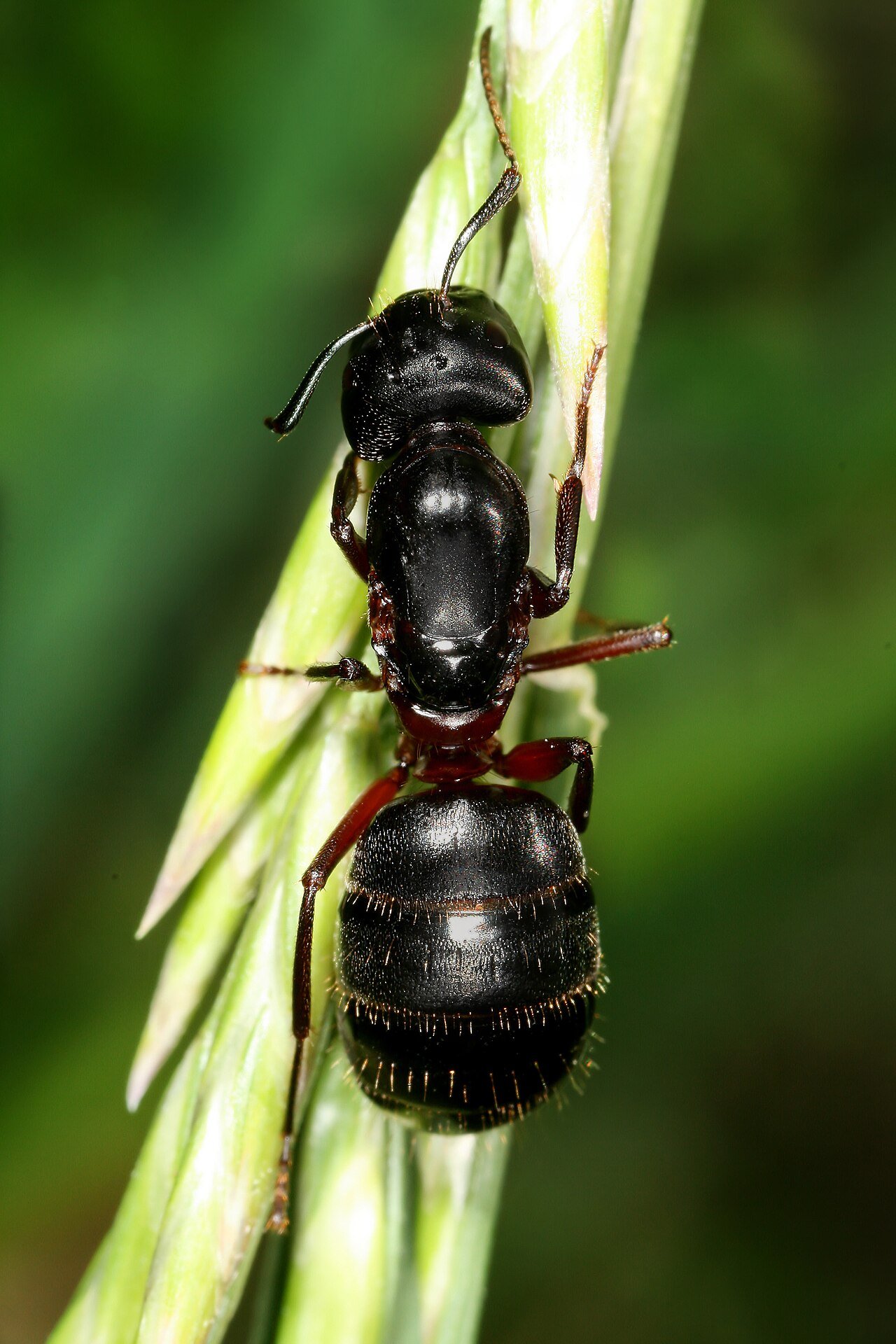
Brookville keeps more dead wood per parcel than any town its size on our route — and its biggest ants know it. The working properties that ring this town stockpile lumber as a way of life: the firewood rick behind the garage, the fence-post pile that’s been “going to get used” since 2015, the offcut stack in the pole barn, the retired pallets behind the shop. Every one of those piles is carpenter ant housing, and ant control in Brookville is carpenter-forward for exactly that reason — not because of street trees or house timber, but because of the stored-wood economy the town’s parcels run. We call it the woodpile economy, and its central transaction is the one nobody watches: a parent colony in the wood pile sending its satellites toward the house.
How the Economy Trades
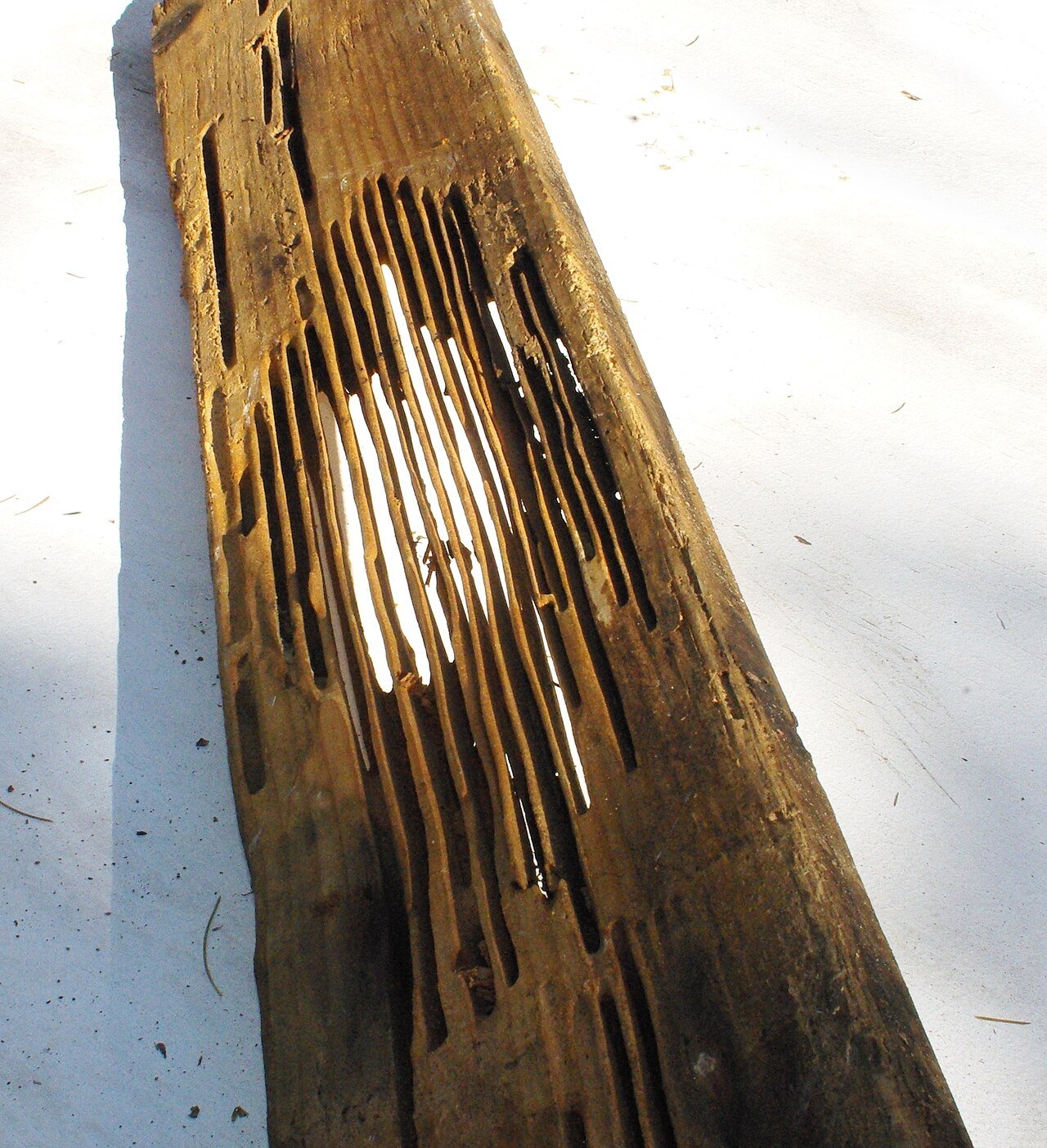
Carpenter ants nest in wood that moisture has softened, and a ground-contact wood pile is a purpose-built development: the bottom courses wick soil moisture year-round, the stack’s interior holds humidity, and nobody disturbs the middle of a pile for years at a stretch. A mature parent colony established there runs foraging trails along the fence lines and outbuilding walls — and when it’s ready to expand, it plants satellite nests in the nearest suitable wood, which is wherever your buildings have let moisture in: the shed’s grade board, the porch post’s base, the window sill whose glazing failed two summers ago. The big black ants crossing a Brookville kitchen in May are usually commuters from that network — and the difference between commuters and residents is the whole diagnosis, same as everywhere, run with the night test: where the 10 p.m. traffic emerges from tells you whether the colony pays rent in your walls or just shops there.
Pile Management, the Free Treatment
The counsel that outperforms chemistry on these parcels costs a Saturday: firewood up on rails or pallets, off the soil, and the whole rick moved to least fifteen feet from any structure — a pile against the garage wall is a satellite colony with a commute of zero. Retire the retired wood: the post pile and pallet stack that will honestly never be used are standing colony stock, and a spring burn pile or a dump run removes more carpenter ant capacity than any treatment we sell. What remains — the working stores a parcel legitimately keeps — gets checked once a year with a screwdriver probe at the bottom courses: soft wood and coarse sawdust-like frass mean the development is occupied, and occupied piles get treated before the satellites ship.
The Brookville Program
- Parcel-wide inspection: the wood inventory walked — piles, stacks, outbuilding lumber, fence lines — and the trail network read before any treatment is aimed
- Satellite location: moisture-mapped interior work when the night test says resident — the void found and treated directly, not sprayed at from the baseboard
- Non-repellent perimeter and trail baiting: chemistry the colony carries home, timed to the spring foraging surge
- The moisture list: the honest carpentry-and-grade items — grade boards, post bases, failed glazing — that decide where satellites can establish, handed over plainly
The rest of the town’s ant file runs the village standard: pavement ants working the older core’s sidewalk joints and the creek-side blocks’ moisture pulses sending odorous house ant trails indoors after wet weeks — both handled with the usual bait-first protocol and both secondary, honestly, to the carpenter file the parcels carry. One boundary note familiar from our rodent work out here: the same ground-contact piles that house the ants stage the mice, so the Saturday that lifts the firewood onto rails pays two files at once. The town’s full pest picture lives on our Brookville service page.
Audit the Wood Inventory
One walk reads every pile, stack, and post on the parcel, runs the trail network, and hands you the split: what to lift, what to retire, what to treat, and what the night test says about your kitchen’s commuters. Free photo ID on any ant big enough to worry about.
Frequently asked questions
Why does Brookville get so many carpenter ants?
The stored-wood economy: ground-contact firewood ricks, post piles, pallet stacks, and offcut stores are purpose-built carpenter ant housing — moist bottom courses, humid interiors, years undisturbed. The parcels’ wood inventory, not the street trees, drives this town’s file.
Are the big black ants in my kitchen nesting in my house?
The night test answers it: at 10 p.m. with the lights off, watch where traffic emerges. Ants entering from outside are commuters off the pile network — exterior bait and trail work. Traffic emerging from a window frame or wall void means a resident satellite, found by moisture logic and treated in the void.
Does moving the woodpile really matter?
It’s the single best treatment on the parcel and it’s free: up on rails or pallets, fifteen feet from any structure. A pile against the garage wall is a satellite colony with a zero-minute commute — and the same lift stages fewer mice, paying two files in one Saturday.
How do I check if my pile is occupied?
Screwdriver probe at the bottom courses once a year: wood that gives softly, coarse sawdust-like frass, or ants boiling out of a split log mean the development is tenanted. Occupied piles get treated — or retired — before spring ships the satellites.
Do carpenter ants mean structural damage like termites?
Different mechanism, slower clock: they excavate rather than eat, following moisture-softened wood, and a resident satellite in a sill or post is a localized repair plus a moisture fix — not a whole-structure event. The frass pile is the receipt; the wet wood is the cause.
Why not just spray the trail across the patio?
Repellent sprays scatter and split colonies — and on a networked parcel that means more satellites, not fewer. Non-repellent baits and trail treatments ride the commute home and end the network at the parent.
What about the regular little ants after it rains?
The creek-side moisture pulse: odorous house ants trailing indoors after wet weeks, handled bait-first like everywhere — plus the village core’s pavement ants at the sidewalk joints in high summer. Both real, both secondary to the carpenter file out here.
What does ant control cost in Brookville?
Parcel-priced honestly: the inspection walk, non-repellent perimeter-and-trail program, and satellite work quoted by access — with the standing note that the free Saturday of pile management sometimes outperforms the paid visit, and we’ll say so when it does.
Brookville’s other pest files run on the same local logic: termite control in Brookville and cockroach control in Brookville.