
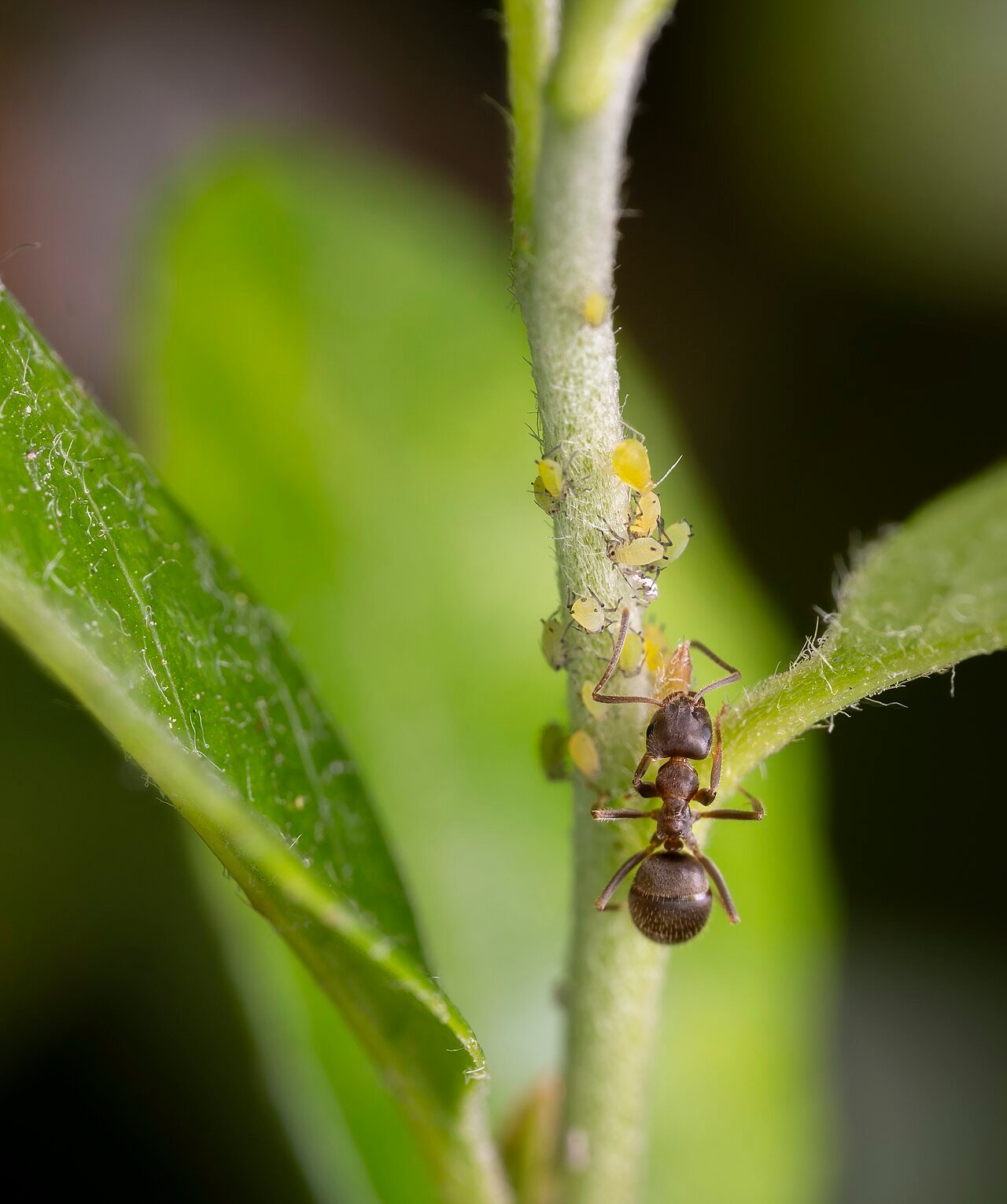
There is a dairy industry operating over every wooded Bellbrook lot, and its workforce is the reason your kitchen gets visitors. High in the oak, maple, and tulip canopy, aphid colonies by the million tap the leaves’ sugar pipeline — and ant colonies farm them for it, tending, protecting, and milking the herds for honeydew, the sweet secretion that funds most of Ohio’s ant biomass. Ant control on a wooded lot starts with that economy overhead: the trails running your tree trunks like fence lines are commuters to the dairy, the colonies they feed live in the root zones and deadfall below it, and the house at the middle of the lot is — from the ants’ accounting — a weather refuge and backup pantry beside the main operation. We call it the canopy dairy, and understanding it explains the two facts every wooded-lot household eventually learns: why the ants are permanent, and why the house can stay clear anyway.
How the Dairy Funds the Pressure
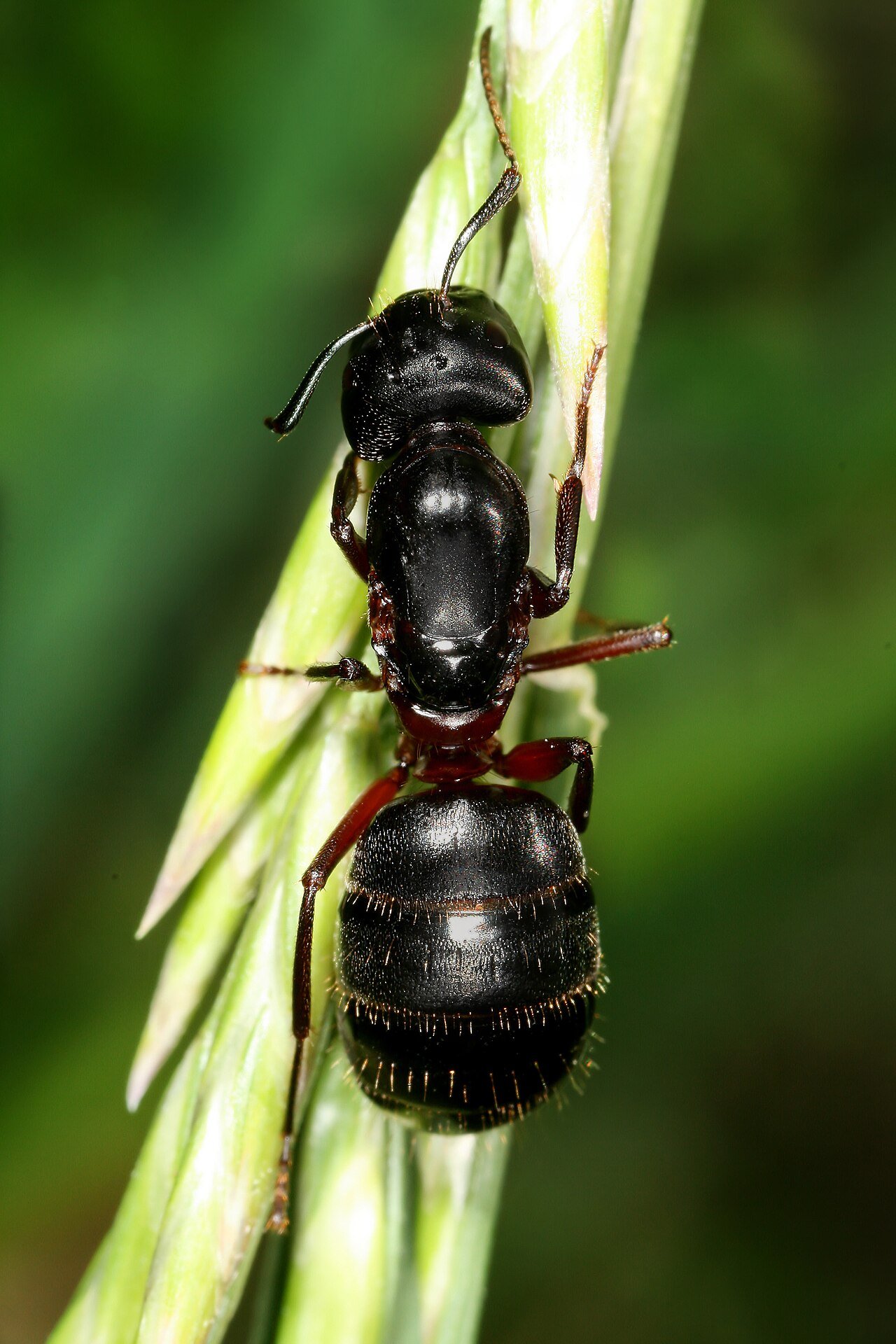
Honeydew is the base income; the house is the supplement. Through the growing season, a wooded lot’s ant colonies run their calories off the canopy — which is why sprays at the foundation barely dent populations funded forty feet up — and the kitchen visits track the dairy’s interruptions: rain washes honeydew off the leaves and sends foragers indoors within a day; late summer’s aphid decline shifts colonies toward protein-and-sugar scavenging at exactly the season porches host it; and fall’s shutdown drives the pre-winter indoor probing every October kitchen knows. The species roster follows the economy too: odorous house ants dominate the dairy trade and the rain-response file, while the deadfall and mast economy’s moisture keeps the stump ledger’s carpenter ants in the same woods — big, black, and running their own nocturnal trunk highways, sorted from the dairy commuters by the night test and the free photo ID.
Working With an Economy You Can’t Close
The honest premise: the dairy is untouchable — nobody treats a canopy, and nobody should want to; the aphid-ant economy is the food web that feeds the woodpeckers and songbirds the lot was bought for. The workable strategy is the interface, same as every Bellbrook file: non-repellent baiting on the trunk-line and foundation trails during the rain-response and fall-probing windows (the two seasons the colonies actually want what the bait offers), moisture and gap discipline at the house (door sweeps, weep-hole screens, the mulch line pulled back), and the carpenter-ant residency check whenever big black ants appear indoors — because a satellite in moist house timber is the one dairy-adjacent event that costs real money, and the night test catches it early.
The Bellbrook Ledger, Complete
This page closes the town’s five-file set, and every file read the same landscape: Bellbrook’s pests are its woods doing business — the mast calendar financing the mouse booms, the football season hanging in the canopy, the June visitors off the litter layer, the stump ledger banking below grade, and the canopy dairy overhead. Five files, one forest, one honest strategy: the woods stay wild, the thirty feet stay held, and the house stays clear. The whole set lives on our Bellbrook service page.
- Seasonal-window baiting: non-repellent programs timed to the rain-response and fall-probing windows, when colonies actually recruit to bait
- The interface kit: door sweeps, weep screens, mulch discipline, and trunk-trail treatment at the house end of the commute
- Carpenter residency checks: the night test on every big-black-ant appearance, with the structural conversation only when it’s earned
- The standing acquittal: trails on trees are the forest working — free photo IDs, and honest “that’s fine” verdicts by the dozen
Hold the House, Keep the Forest
One visit maps your lot’s trunk highways and house-end trails, sets the seasonal-window baiting, and runs the residency check on anything big and black. The dairy overhead isn’t going anywhere — and with the interface held, neither are you.
Frequently asked questions
Why does my wooded Bellbrook lot always have ant trails on the trees?
That’s the canopy dairy: colonies farming aphid herds for honeydew forty feet up, commuting the trunks like fence lines. It’s the forest’s base economy — permanent, harmless on the trees, and the reason foundation sprays barely dent populations funded overhead.
Why do ants rush indoors right after rain?
Rain washes the honeydew off the leaves — the dairy closes for a day or two, and foragers seek backup calories at the nearest pantry. That rain-response window is also when non-repellent baiting works best: the colonies genuinely want what the bait offers.
Can you treat the ants in the canopy?
Nobody can, and nobody should — the aphid-ant economy feeds the woodpeckers and songbirds the lot was bought for. The workable strategy is the interface: trunk-line and foundation trails baited in season, the house’s gaps and moisture disciplined, the forest left to its business.
Are the big black ants on my trunks dangerous to the house?
They’re carpenter ants running the deadfall economy’s night shift — dangerous only if a satellite establishes in moist house timber. The night test (where does 10 p.m. traffic emerge?) and frass evidence sort commuters from residents, and the photo ID is free.
Why do ant problems spike every October?
The dairy’s shutdown: canopy calories end with the season and colonies probe indoor options before winter. The fall window is the year’s second baiting opportunity — and the door-sweep-and-gap kit does the rest.
Do the aphids hurt my trees?
A healthy mature hardwood carries its herds without harm — honeydew drip on cars and patios is the main nuisance. Heavy infestations on ornamentals are an arborist conversation; the ants are symptoms there, not causes.
What’s the sticky film on my deck and car every summer?
Honeydew fall — the dairy’s overflow drifting down from the canopy. It’s a parking-spot problem, not a pest-control one, and it maps exactly to which limbs hang overhead.
What does ant control cost in Bellbrook?
Seasonal-window programs priced flat — two baiting windows, the interface kit, and residency checks included — with the standing free verdicts on everything the forest sends through. The honest quote often starts with “that trail is fine.”