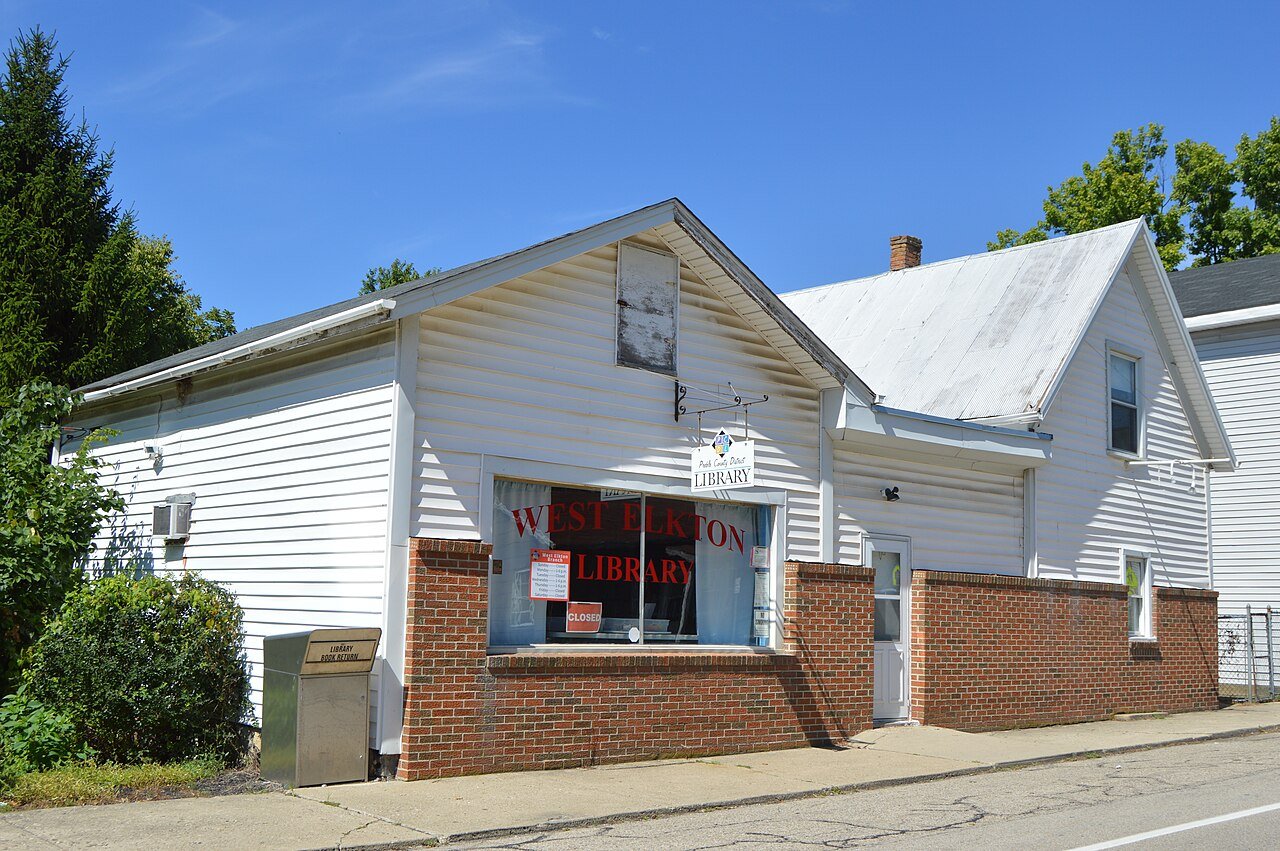
West Elkton is one of Preble County’s oldest settlements — founded by Quaker families in the early 1800s and still carrying that heritage in its meetinghouse history and its unhurried lanes — and at a few hundred residents it is exactly the kind of place regional pest vendors serve theoretically and visit rarely. We do it the other way: West Elkton and the southeastern lanes ride the same southern Preble route days as Camden and Gratis, with the full service list, no mileage lines, and the written guarantee that anchors this site.
The old-settlement file
Two centuries of continuous habitation write a particular pest ledger. The village’s oldest homes — and the southeast corner keeps some of the county’s earliest surviving frame stock — run the full historic playbook: hand-laid foundations whose lime mortar has fed the fall mouse push for generations, sill timbers whose moisture history deserves the termite respect our Category 12 inspections bring to every old-house transaction, porch and outbuilding structures hosting their annual wasp colonies, and cellars running the basement guild wherever the humidity wins. Around the village, Gratis Township’s sections and wooded draws deliver the county calendar — the harvest push, the invader flights, the edge-habitat pressure of the creek and woodland seams — concentrated onto a small cluster of structures exactly as the grid-village paradox predicts. The September visit and the exclusion craftsmanship carry the strategy, here as everywhere in the county.
The West Elkton playbook
- September first — the pre-harvest, pre-flight barrier visit
- Heritage-grade exclusion — reversible, mortar-matched work on the settlement-era foundations
- Old-timber termite vigilance — annual checks on the earliest stock; WDI reports for every transfer
- Campus scoping — the lots’ outbuildings read with the houses
- Southern route days — shared scheduling with Camden and Gratis; neighbors coordinate, everyone wins
A West Elkton seasonal calendar
- March–May: ants wake in the old kitchens; termite swarm season demands its same-day photos in stock this age; cluster flies exit the attics
- June–August: porch and outbuilding wasps scale; the wooded draws keep the mosquito and spider economies fed; carpenter bees work the oldest boards
- September–October: the harvest push and invader flights land together on the village’s small cluster of sunny walls; the September visit is the year’s anchor
- November–February: interior mouse season in the settlement-era cellars; exclusion and inspection weather
West Elkton questions we hear
Our house predates the Civil War. Can it honestly be sealed?
Honestly and permanently — with the craftsmanship standard the age demands. Settlement-era construction is finite: hand-laid foundations have countable gaps, sill lines have walkable lengths, and the materials that close them (lime-compatible mortar, copper mesh, fitted steel at the working entries) respect the fabric while ending the traffic. What these houses cannot honestly be promised is spray-based rodent control — the architecture defeats it — which is why our old-stock work leads with the trowel and the mesh, treats chemistry as the supporting cast, and guarantees the outcome in writing. The county’s oldest houses have outlasted every shortcut ever tried on them; they respond beautifully to the real thing.
Does anyone actually drive out here for one wasp nest?
On route days, gladly — a single-nest call in West Elkton rides the southern loop like any Camden or Gratis job, priced as the work rather than the geography, and the removal guide’s triage applies unchanged: the reachable paper-wasp umbrella may honestly be your own dusk project, and the void or ground colony is exactly what the route truck carries equipment for. The free photo sorts which — and no, there is no small-village minimum. Villages this size built the county; they get its full service.
Preble coverage: county hub · Camden · Gratis · Eaton · full service area.
The plain-maintenance tradition, honored
There is a fittingness worth naming on this page: the Quaker families who founded West Elkton practiced a building stewardship — plain, thorough, unhurried, done right the first time — that reads today like the founding document of good structural pest control. No theatrical treatments, no annual repurchase of the same problem; find the fault, mend it soundly, keep the calendar of small attentions that prevents the large repairs. Every principle this site argues — exclusion before chemistry, moisture before infestation, the September visit before the October push, honest triage over upsold programs — is that tradition with an ODA license number attached, and delivering it in the village that practiced it first feels less like expansion than like returning a borrowed philosophy with interest. The meetinghouse builders would recognize the work; we aim to keep it recognizable.
The bottom line for West Elkton
Two hundred years of settlement, a few hundred residents, and the county’s full service anyway: scheduled southern route days, heritage-grade exclusion, old-timber vigilance, September defense, and the written guarantee that never checks the population sign. Free quotes, free photo identification, Saturdays by appointment: (937) 569-3330. The southeast corner’s oldest village is on the newest map — plainly, permanently, and by name.
What does the harvest fortnight look like for a village this small?
Concentrated — the Eaton page’s hour-by-hour anatomy applies with the grid-village multiplier: when the sections around West Elkton open, the displaced field population chooses among a few dozen structures instead of a few thousand, and the difference between the sealed houses and the open ones becomes visible within the week — quiet kitchens on one side of the lane, scratching cellars on the other, same fields, same fortnight. The strategic reading never changes: the village’s entire rodent year is decided by whether the September exclusion happened, and a settlement small enough to coordinate can effectively seal itself — a street’s worth of houses on one route day, the whole cluster hardened before the combines run. We have watched villages do exactly that, and the following winter’s call log is the quietest testimonial in the county. Organize the lane; we will bring the steel.
Who actually turns up in West Elkton: Greater Dayton Pest & Rodent is owned and operated by Bryan Camden, licensed by the Ohio Department of Agriculture — firm #115079, commercial applicator #170858, categories 10A, 10B and 12. When you call, you talk to the person who does the work. No call center, no rotating crews, and the same technician on every visit.
Frequently asked questions
Do you provide pest control in West Elkton?
Yes — the tiny southeastern Preble village rides the western rotation; smallest places, same full program.
What pests are most common in West Elkton?
Preble belt standards: harvest surges, older-home foundation mice, farmstead wasps, fencerow globes, stored-grain files, and the certain September flights.
How much is pest control in West Elkton?
County formula, village scale irrelevant: most homes $39–$55/month quarterly; campuses walked; free: (937) 569-3330.
Does a village this small really get route service?
Weekly — the route-day model prices Elkton like Eaton, and this dedicated page is the receipt: every community on the map, known by name.
Do you treat the surrounding farms?
Campus model — systems quotes, harvest calendars, grain protocols, deer-mouse defaults.
How fast can you reach West Elkton?
Weekly rotation — days typically, no travel charges.
What is the fall calendar here?
The belt sequence: September sealing, October surge, flights on the sunny walls; the exclusion visit is the year’s best hour.
What about the Quaker-era older homes?
Masonry-appropriate exclusion and moisture-first basements — the preservation craft at village scale.
Is the Protection Plan right here?
Farm-adjacent majority, yes; honest triage for the rest, as everywhere.
How do I start service in West Elkton?
Instant quote, free photo ID, or (937) 569-3330 — free estimates, route days weekly.