
Ohio has termites. That surprises a lot of people who moved here from farther north, and it reassures a lot of people who moved here from Georgia or Texas, and both reactions are half right. Ohio does not have the termite pressure of the Gulf states, and it does not have their worst species either. What it has is one native subterranean termite, present in every county, working slowly and quietly in soil contact with wood, and doing several hundred million dollars of cumulative damage a year across the state without ever once announcing itself.
This page is about the Ohio-specific part of the termite question: which species you actually have, how common they really are here, when they swarm in this climate, and why the way houses are built in the Miami Valley makes some of them far more vulnerable than others. If you are trying to tell a termite from a flying ant right now, go to the side-by-side comparison first, because that is a thirty-second question and this is a longer one.
If you have heard them called white ants, that is the same insect under an older and much more comfortable-sounding name.
One species matters here, and it swarms on a schedule you can plan around. Treating it is termite control in Dayton.
The only termite that matters in Ohio
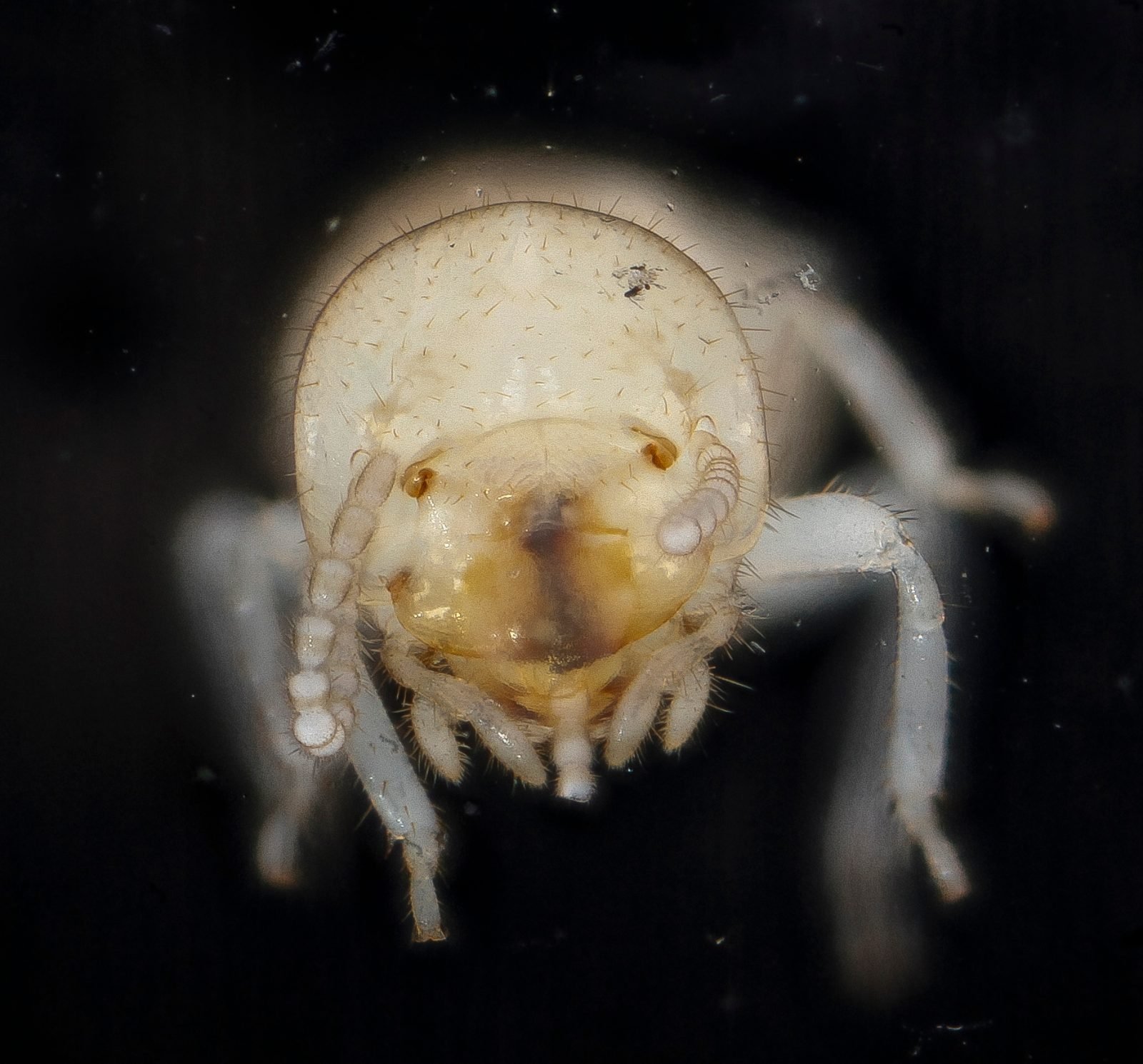
There is exactly one termite of economic significance in this state: Reticulitermes flavipes, the eastern subterranean termite. It is native, it is everywhere, and it accounts for essentially all termite damage recorded in Ohio. When a Dayton homeowner has termites, this is what they have, and a treatment plan that handles this species handles the problem.
It is worth knowing what Ohio does not have, because a great deal of termite content on the internet is written for the South and does not apply here. Drywood termites, which infest furniture and structural wood with no soil contact and are the reason Florida homes get tented, are not established in Ohio. Formosan subterranean termites, the aggressive introduced species that does catastrophic damage along the Gulf Coast, are not established here either; our winters are the reason. Occasionally a piece of infested furniture arrives from elsewhere, and that is a genuinely different problem, but it is rare enough that it is not what you should assume.
The practical consequence is that in Ohio, termites come from the ground. Every established colony is connected to soil, because subterranean termites need the moisture that soil contact provides and will die of desiccation without it. That single fact governs everything else on this page: where they enter, what makes a house vulnerable, why mud tubes exist, and why treatment works the way it does.
Are termites common in Ohio? More than people expect
Yes, and the honest answer has a geography to it. The building codes classify regions by termite infestation probability, and southern Ohio, including the Dayton area, sits in the moderate-to-heavy band, while the northern tier of the state is lighter. Southwest Ohio is on the higher-pressure side of that line. This is not a place where termites are exotic; it is a place where they are ordinary and slow.
What that means in practice is that a substantial share of older homes in the Miami Valley have had termite activity at some point, and many have had it without the owner knowing, because the damage accumulates over years rather than announcing itself in a season. Termites are found in every Ohio county. The variable is not whether they are present in your area but whether your particular structure gives them a way in.
It also means termite inspections here are not theater. Ohio does not mandate a termite inspection for a residential sale the way some southern states effectively do through lender requirements, which has the perverse effect that plenty of Miami Valley houses change hands with nobody ever looking. If you are buying, the inspection is cheap relative to what it rules out.
When Ohio termites swarm, and why it is the one time you will see them
A mature colony produces winged reproductives, called alates or swarmers, whose job is to leave, pair off, and found new colonies. In Ohio this happens in spring, most often from late March through May, and the trigger is weather rather than date: a warm, still, sunny morning a day or two after rain. Swarms are typically brief, often over within an hour, and they happen in daylight, which distinguishes them from the nighttime swarms of some other insects.
This matters enormously because a spring swarm is, for most Ohio households, the only time termites become visible at all. Workers never surface; they travel inside mud tubes and inside wood. The swarmers are the colony advertising itself exactly once a year. If you see a swarm indoors, or find a pile of discarded wings on a windowsill, near a sliding door, or around a basement light fixture, that is not a warning that termites might arrive. It is evidence that a mature colony already exists in or against the structure, because colonies do not produce swarmers until they have been established for several years.
Discarded wings are the single most useful piece of evidence a homeowner ever finds, because they persist after the swarm is over. All four wings on a termite are the same length and considerably longer than the body, and they detach cleanly, so what you find is a scattering of identical translucent wings rather than whole insects. Save a few in a bag or photograph them next to a coin. See what a swarm actually means for the full week-by-week of what follows one.
Why Miami Valley houses are vulnerable in specific ways
Termites do not chew through concrete. They exploit the gaps that construction leaves, and Ohio construction leaves a fairly predictable set of them. Poured slab foundations crack as they cure and settle, and an expansion joint or a settlement crack a fraction of an inch wide is an open door. Concrete block foundations are hollow, and once termites are inside the cores they can travel vertically inside the wall, entirely hidden, until they reach the sill plate at the top.
Crawl spaces are the other classic Miami Valley vulnerability. A crawl space with bare soil, poor ventilation, and floor joists sitting low over damp ground is close to ideal habitat: moisture, darkness, and wood within easy reach. A great many older homes in Dayton, Kettering, and the surrounding townships were built exactly that way. Our crawl space guide covers the moisture side of that problem in detail.
Then there is everything we add after the house is built. Mulch beds piled against the siding, raising soil above the foundation line. Firewood stacked against the garage. Wooden deck posts set directly into the ground. Porch steps in soil contact. Downspouts that discharge at the foundation instead of away from it. Landscape timbers. Each one is either a bridge over the foundation or a permanently damp spot beside it, and together they are the reason two identical houses on the same street can have completely different termite histories.
Finally, and least intuitively: a finished basement hides everything. The sill plate, the rim joist, and the lower foundation wall are exactly where evidence would appear, and drywall over the top of them means an infestation can run for years unobserved. That is not an argument against finishing a basement; it is an argument for knowing where your access points are and for having someone look at the unfinished parts periodically.
How fast Ohio termite damage actually happens
This is where we part company with a lot of pest control marketing. Eastern subterranean termites are slow. A colony works continuously, but the rate at which it consumes structural wood is measured in years, not weeks, and in the great majority of Ohio homes the discovery of termites is not an emergency in the sense of needing something done tonight. It is a problem that needs handling this season rather than next year.
That framing matters because fear sells treatments that panic buys. The honest version: a colony that has been working undetected for five or ten years in a sill plate or a floor joist can absolutely cause damage requiring real carpentry, and we see it. A colony discovered in its second or third year, which is what a spring swarm usually indicates, has typically caused damage measured in hundreds rather than tens of thousands. The difference between those two outcomes is almost entirely how long it went unnoticed, which is an argument for inspection rather than for urgency.
Ohio termites also slow down in winter. They do not die off; they move deeper, following the frost line down and continuing to work below it, and colonies inside a heated structure may not slow at all. What this means practically is that a January discovery is still a real discovery, and that the absence of activity in a cold month tells you nothing reassuring. See what termite damage repair involves if you have already found structural damage.
The Miami Valley picture, county by county
Across the eight counties we serve, the pattern is driven less by county line than by housing stock and soil. Montgomery County carries the largest share of the older housing in the region, and older housing with block foundations and crawl spaces is where we find the most established colonies. Dayton, Kettering, Oakwood, and the older sections of Riverside and Trotwood all produce steady termite work.
Greene County splits. The older cores of Xenia and Yellow Springs behave like Montgomery County housing stock. Newer Beavercreek and Sugarcreek Township construction on slab is less prone to hidden colonies but not immune, because a slab crack is a slab crack. Warren and Butler counties, with a great deal of newer construction around Springboro, Mason, West Chester, and Liberty Township, tend to produce conducive-condition findings such as mulch and grade issues more often than established infestations.
Miami, Clark, Preble, and Darke counties bring the rural variable: outbuildings, older farmhouses, wooden fence posts, and firewood storage. A barn or detached garage in soil contact is frequently the reservoir, with the house infested secondarily. When we inspect a rural property we look at the outbuildings, and it changes the answer often enough to be worth the extra half hour.
None of this means anyone is safe or doomed based on address. It means the inspection is looking for different things in Eaton than in Oakwood, and that is exactly why a walk-around by someone who works this region is worth more than a regional statistic.
What to do if you think you have them
First, do not disturb what you found. If there are mud tubes on a foundation wall, leave them; a technician reads the condition of a tube to judge whether the infestation is active. If you found swarmers or wings, collect a few and photograph the location. If you broke open a piece of wood and saw insects, take a picture rather than continuing to open it, because scattering a colony makes the mapping harder.
Second, do not spray it. Over-the-counter products applied to visible tubes kill the few hundred termites in that tube and leave the colony of tens or hundreds of thousands intact underground, with the added disadvantage that you have now removed the evidence a professional would have used and possibly caused the colony to reroute somewhere less visible. This is the single most common way an easy termite job becomes a hard one.
Third, get it identified before you buy anything. Termite treatment is a significant expense and it should follow a diagnosis, not precede one. What you want first is someone to confirm the species, confirm the infestation is active, and map the extent, and then a plan and a number. Our termite control page explains what treatment involves and what it costs in Ohio.
Frequently asked questions about termites in Ohio
Are there termites in Ohio?
Yes. The eastern subterranean termite, Reticulitermes flavipes, is native and present in every Ohio county. Southern Ohio including the Dayton region sits in the moderate-to-heavy termite probability band used by the building codes, with the northern tier of the state lighter. Termites here are ordinary, not exotic.
What kind of termites are in Ohio?
Only one of consequence: the eastern subterranean termite. Drywood termites and Formosan subterranean termites, which drive much of the termite advice written for the South, are not established in Ohio. Our winters are the reason. That means every established Ohio colony is connected to soil, which is what makes treatment and prevention work the way they do.
When do termites swarm in Ohio?
Spring, most often from late March through May. The trigger is weather rather than calendar: a warm, still, sunny morning a day or two after rain. Swarms are brief and happen in daylight. A swarm indoors means a mature colony is already established in or against the structure, because colonies do not produce swarmers for several years after founding.
What do termites look like in Ohio?
Workers are pale, soft-bodied, and about an eighth of an inch, and you will almost never see one because they stay inside wood and mud tubes. What you actually see is the spring swarmer: dark bodied, roughly a quarter to three-eighths of an inch including wings, with four equal-length wings much longer than the body, straight antennae, and a broad waist with no pinch. The wings detach, so a scatter of identical translucent wings on a sill is the classic find.
How do I tell a termite swarmer from a flying ant?
Three things: waist, wings, and antennae. Termites have a straight, broad waist, four wings all the same length, and straight beaded antennae. Flying ants have a sharply pinched waist, front wings noticeably longer than the back pair, and elbowed antennae. The comparison guide walks through it with pictures.
How fast do termites damage a house in Ohio?
Slowly. Eastern subterranean termites work continuously but consume structural wood at a rate measured in years. A colony caught in its second or third year, which is what a spring swarm usually signals, has typically caused damage in the hundreds of dollars. One that ran undetected for a decade can require real carpentry. The difference is detection time, not termite speed, which is why inspection beats urgency.
Do termites stop in the Ohio winter?
No. They move deeper, following the frost line down, and keep working below it. A colony inside a heated structure may not slow at all. The practical consequence is that finding no activity during a cold month tells you nothing reassuring, and a winter discovery is still a real one.
Does Ohio require a termite inspection when you buy a house?
No. Ohio has no statewide requirement, and unlike parts of the South there is generally no lender mandate forcing one, which means a lot of Miami Valley homes change hands with nobody ever looking at the sill plate. For a buyer the inspection is inexpensive relative to what it rules out, and it is the one chance to find a problem before it is legally yours.
Should I spray termite tubes I find on my foundation?
No, and this is the most common way an easy job becomes a hard one. A retail spray kills the few hundred termites inside that tube while the colony of tens or hundreds of thousands continues underground, and you have destroyed the evidence a technician would have used to judge whether the infestation is active. Leave the tubes, photograph them, and call.
Are termites common in Dayton specifically?
Yes. Montgomery County carries a large share of the region’s older housing, and older homes with block foundations and crawl spaces are where established colonies turn up most often. Dayton, Kettering, Oakwood, and the older sections of Riverside and Trotwood all produce steady termite work for us every spring.