
German cockroaches move between apartments, and Oxford is built out of apartments. Converted houses with three and four units, purpose-built blocks with shared walls, and Uptown buildings with commercial kitchens on the ground floor and residential above — all of it gives cockroaches wall voids, plumbing chases, and common utility runs to travel. That is why treating one unit here so often appears to work and then fails eight weeks later, and it is the single most important thing for a tenant or an owner to understand before spending money.
Why One Unit Is Never the Whole Job
German cockroaches travel along the routes a building provides: pipe chases running floor to floor, the cavity behind a shared stairwell, gaps around plumbing penetrations under sinks, and the space above a dropped ceiling. They move toward warmth, water, and food, and when a unit is treated they move away from the disturbance — frequently into the unit next door.
So the pattern repeats predictably. A tenant reports roaches, the unit is treated, it looks resolved, and two months later the apartment above or beside it reports the same thing. Nothing failed. The population relocated and then came back. In a shared-wall building the only approach that holds is treating the affected unit together with everything sharing a wall, floor, or ceiling with it, on the same day.
That makes this a coordination problem as much as a pest problem. It requires an owner or manager to authorize the block of units rather than the one that complained, and it requires access on a single day. When we quote a multi-unit building in Oxford we quote it that way, because quoting one unit while knowing it will fail is not a service worth selling to anybody.
How They Arrive in Student Housing
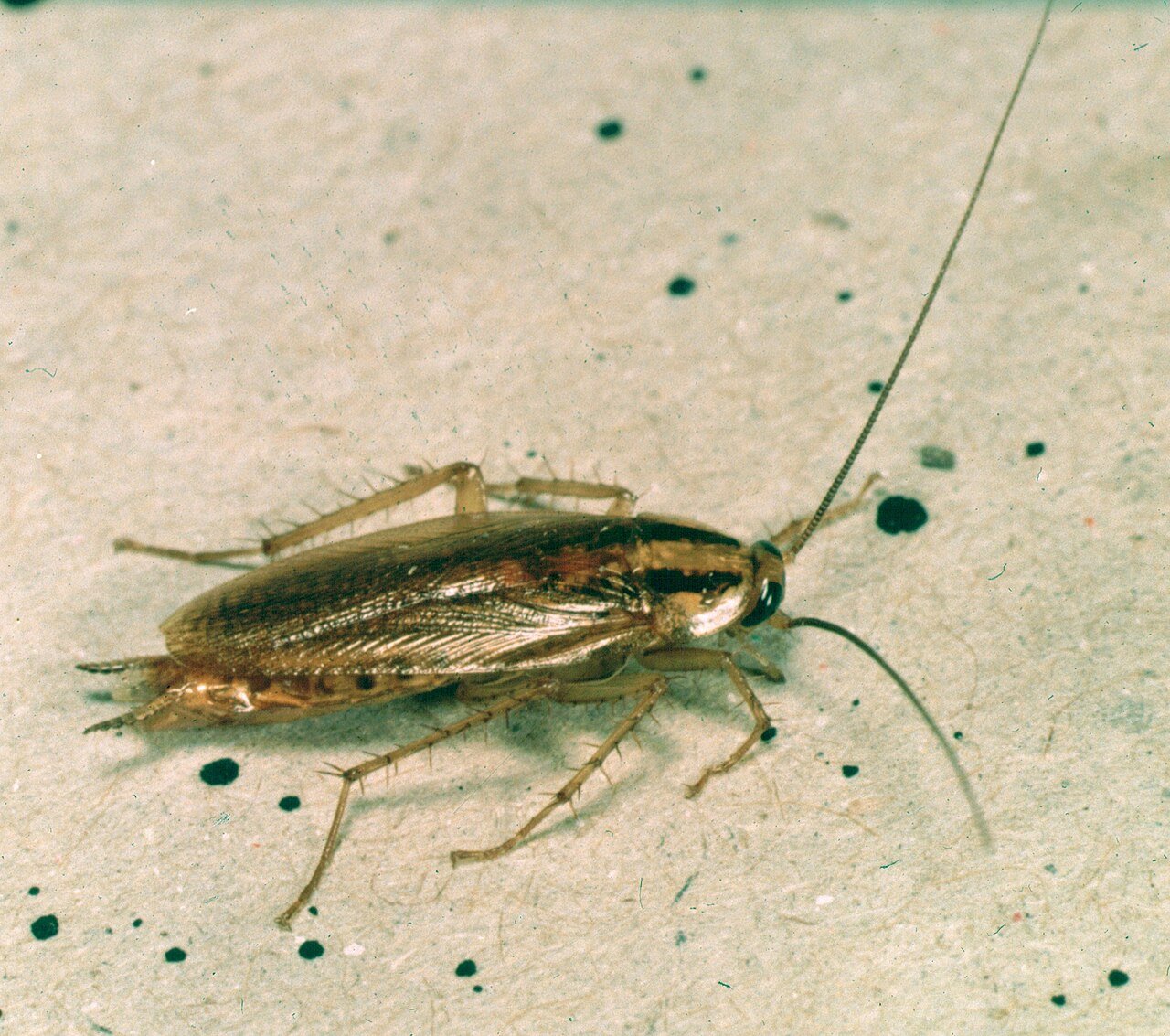
They are carried in, and there are three dominant routes in this town. Used appliances — a microwave, a mini fridge, a toaster oven passed down between tenants or bought secondhand — are the most common, because a warm motor housing or an insulated cabinet is close to perfect harborage and nothing about the outside of the appliance reveals it. Corrugated cardboard is the second: move-in boxes, delivery boxes, and takeout packaging all travel warm, dark, tight channels that hold humidity.
The third is simply the building. If a unit down the hall has a population, yours is a plumbing chase away regardless of anything you do inside your own apartment. That is not a reason to be fatalistic; it is a reason to report early rather than assume it is your fault or your problem alone.
It is worth saying plainly, because the embarrassment costs weeks: German cockroaches do not arrive because a place is dirty. Spotless apartments get them. Sanitation affects how fast a population grows and how well bait competes during treatment, but it has nothing to do with whether they show up in the first place.
- Small, tan, two dark stripes — German cockroach. A real infestation needing a bait program.
- Check used mini fridges and microwaves at the back and underside before they come in.
- Break down cardboard immediately rather than stacking it in a corner.
- Never fog or bomb — in a shared building it drives the population into neighboring units.
- Report early and in writing, with a date, to the landlord or manager.
The Turnover Window Is the Opportunity
The months between the end of the spring semester and the start of the fall one are the best time to resolve a known cockroach problem in this town, and by a wide margin. Units are empty, so access is unrestricted and preparation is trivial. Kitchens can be pulled apart properly. Adjacent units can be treated on the same day without negotiating five people’s schedules. And follow-up visits timed against the hatch cycle can run without anybody living around them.
For an owner, a building treated in June starts the academic year clean, and the alternative is worth thinking about honestly: a population that survives the summer in an empty building has had three undisturbed months to grow, and it meets a full house in August.
For tenants moving in, it is reasonable to ask whether a unit has been treated and when. It is also reasonable to report anything you see in the first weeks rather than waiting, because early in a tenancy the question of who introduced it is much less fraught and the population is much smaller.
The Big Ones Are a Different Problem
Not everything reported as a roach in Oxford is a German cockroach, and the distinction changes the response completely. The large roach — an inch and a half or more, reddish-brown or nearly black, turning up in a basement, a utility room, or near a floor drain after heavy rain — is an American or oriental cockroach. In the South these get called palmetto bugs, and the name travels north with students from other states, which causes real confusion on the phone.
These species live primarily outdoors and in sewers, storm drains, and crawl spaces, and they come inside as individuals rather than as an established population. In an old converted house with a shared basement, the usual door is a floor drain whose P-trap has dried out, which leaves an open pipe between the sewer and the building. Heavy rain floods the low damp spaces they occupy and they move to the nearest dry void.
The fix is mostly free and it belongs on any landlord’s summer list. Pour a cup of water down every seldom-used floor drain once a month, make sure any cleanout is capped, and seal gaps around plumbing penetrations at the basement wall. That is exclusion and moisture work rather than an infestation, and it does not need the bait program the small ones require.
What Actually Works
Gel bait placed precisely into harborage is the core of it. German cockroaches spend the overwhelming majority of their time hidden in tight warm cracks — dishwasher motor housings, the underside of a counter overhang, cabinet hinge recesses, behind and beneath a refrigerator, inside a range frame, and around plumbing penetrations under a sink. Treatment has to reach those places rather than the surfaces you can see.
That is exactly why over-the-counter foggers make things worse, and worse faster in a shared building. They do not penetrate harborage, they kill a visible fraction, and the repellent effect drives survivors deeper into wall voids and outward — which in a converted house means into a neighbor’s kitchen. Spraying baseboards with a repellent product does the same thing more slowly.
Because the egg cases are protected, no single visit finishes it. A female carries her case until shortly before hatching, so surface treatment does not reach the eggs, and a hatch a few weeks later restarts the population. Follow-ups timed against that cycle are what resolve it, and sealing gaps around pipe penetrations and at baseboards is worth doing as part of the job, because those are the highways that let a population relocate instead of dying.
Across Butler County
Hamilton southeast has comparable converted multi-family stock, College Corner is west, and Eaton is north in Preble County.
General service is on the Oxford pest control page.
Frequently asked questions
Does having cockroaches mean my apartment is dirty?
No. German cockroaches are carried in on used appliances, cardboard, and takeout packaging, or they travel through wall voids from another unit in the building. Spotless apartments get them. Sanitation affects growth rate and how well bait competes, not whether they arrive.
Why did they come back after my unit was treated?
Almost certainly because only your unit was treated. In shared-wall buildings they move through pipe chases and wall voids away from disturbance, then return. The affected unit plus everything sharing a wall, floor, or ceiling has to be treated as one job on the same day.
I am a landlord. Do I really have to treat several units?
To get a result that holds, yes. Treating one unit in a shared-wall building is the most common wasted expenditure we see here. The affected unit plus everything adjacent, above, and below, on the same day, with every unit prepared, is what actually ends it.
When is the best time to treat a building?
The summer turnover window. Units are empty, access is unrestricted, preparation is trivial, kitchens can be pulled apart properly, and follow-ups run without anybody living around them. A building treated in June starts the academic year clean.
Why did fogging make it worse?
Foggers do not reach the tight harborage where German cockroaches actually live, and the repellent effect pushes survivors deeper into wall voids and outward. In a converted house that frequently means straight into a neighboring unit, turning one apartment’s problem into the building’s.
Could the secondhand mini fridge be the source?
Very possibly — it is one of the most common routes in student housing. A warm motor housing and an insulated cabinet are close to perfect harborage, and nothing about the outside reveals it. Check the back and underside of any used appliance before it comes into a unit.
Why do they keep coming back after treatment?
Usually the protected egg cases. A female carries her case until just before hatching, so surface treatment does not reach the eggs, and a hatch a few weeks later restarts the population. Follow-up visits timed against that cycle are what finish it.
I only see them at night.
That is normal, and daytime sightings are the concerning version. They are nocturnal and prefer tight enclosed spaces, so open activity in daylight generally means the harborage is crowded enough to push insects out. That is a reason to report it sooner rather than later.
We are seeing big dark roaches in the basement, not small tan ones.
Those are American or oriental cockroaches, and it is a different problem entirely. They live outdoors and in sewers and come in as individuals, usually through a floor drain whose trap has dried out or a gap at a plumbing penetration, and usually after heavy rain. Pouring water down unused drains monthly and sealing penetrations handles most of it — no bait program needed.