
Two entirely different cockroach problems get reported with the same word in Hamilton, and they need opposite responses. One is a large dark roach coming up from a floor drain or a basement after heavy rain, which in a city with this much older sewer infrastructure is a plumbing and exclusion issue. The other is a small tan roach in a kitchen, which is a genuine indoor infestation — and in a converted multi-family building, one that will not stay in a single unit. Separating the two is the first thing that has to happen.
The Small Tan One Is the Serious One
German cockroaches are about half an inch long, light tan to brown, with two dark parallel stripes running lengthwise behind the head. They are the species that establishes true indoor populations, and the only common roach in Ohio that completes its entire life cycle inside a kitchen without ever going outdoors. Everything genuinely difficult about cockroach control concerns this species.
They reproduce faster than almost anything else you will encounter. A female carries an egg case holding roughly thirty to forty eggs and carries it until shortly before hatching, which shields the eggs from most surface treatment. Under kitchen conditions a nymph reaches breeding maturity in about two months. A handful of insects becomes a serious problem within a single season, and what you can see is a small fraction of what exists.
They also do not arrive because a home is dirty. They are carried in — on grocery bags, corrugated boxes, secondhand or delivered appliances, takeout packaging, and moving boxes. In a rental market with as much turnover as Hamilton has, a used refrigerator or a stack of moving boxes from a previous tenant is a common origin, and none of that reflects on the household that ends up dealing with it.
Why Converted Buildings Change Everything
A great many of Hamilton’s older houses were split into two, three, or four units at some point, and those conversions left shared walls, plumbing chases running floor to floor, common stairwells, and unsealed gaps around every pipe penetration. German cockroaches use all of it. They travel along pipe runs and wall voids toward warmth, water, and food, and when a unit is treated they move away from the disturbance — frequently into the unit next door.
The result is a pattern we see constantly: one apartment is treated, the problem appears to resolve, and two months later the unit above or beside it reports the same thing. Nothing failed. The population relocated and came back. In a shared-wall building the only approach that holds is treating the affected unit together with everything sharing a wall, floor, or ceiling with it, on the same day.
That makes this as much a coordination problem as a pest problem. It requires an owner or manager to authorize the block of units rather than the one that complained, and it requires access on a single day. When we quote a multi-unit building we quote it that way, because quoting one unit while knowing it will fail is not a service worth selling.
The Big One From the Drain Is Different
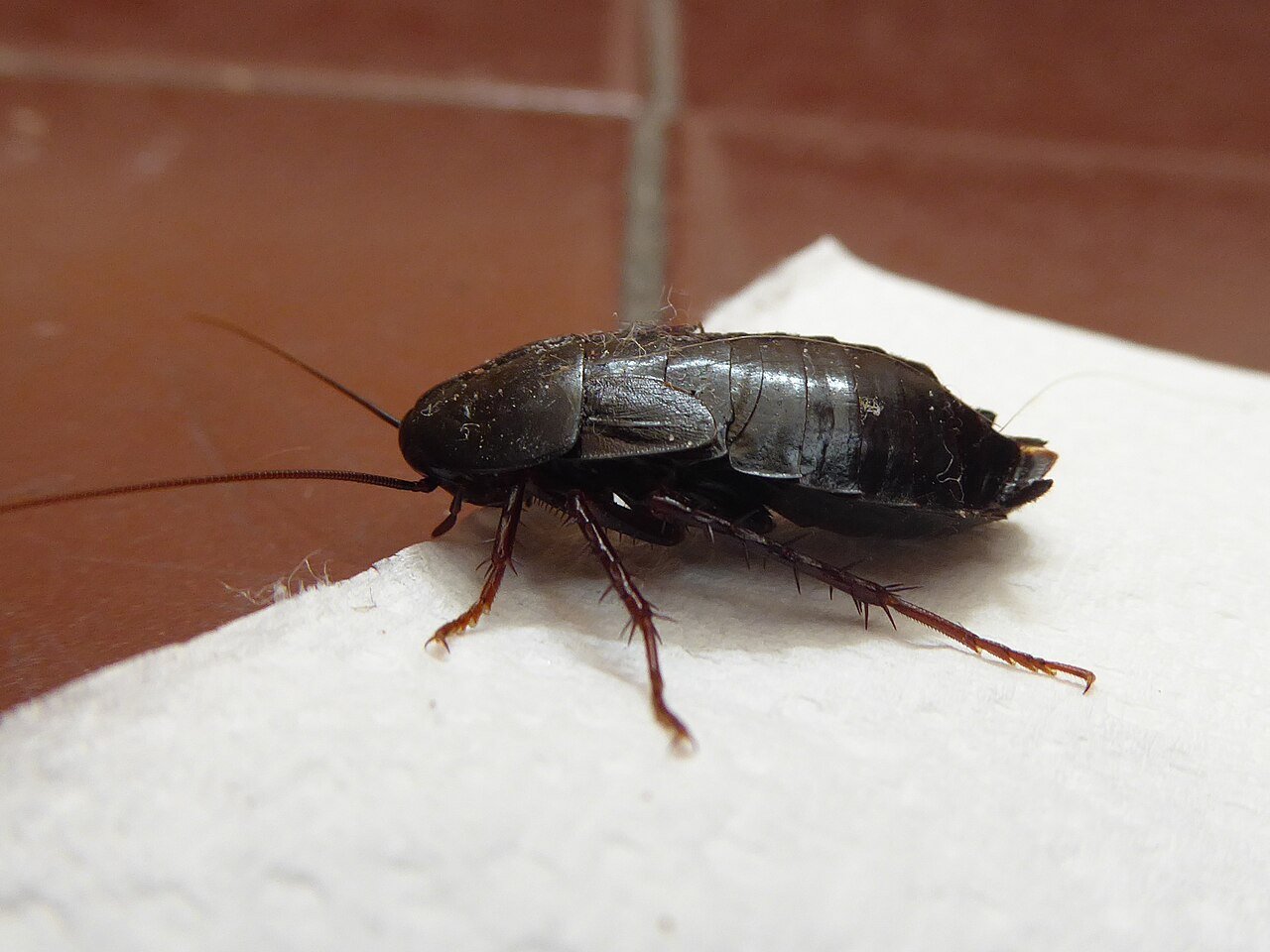
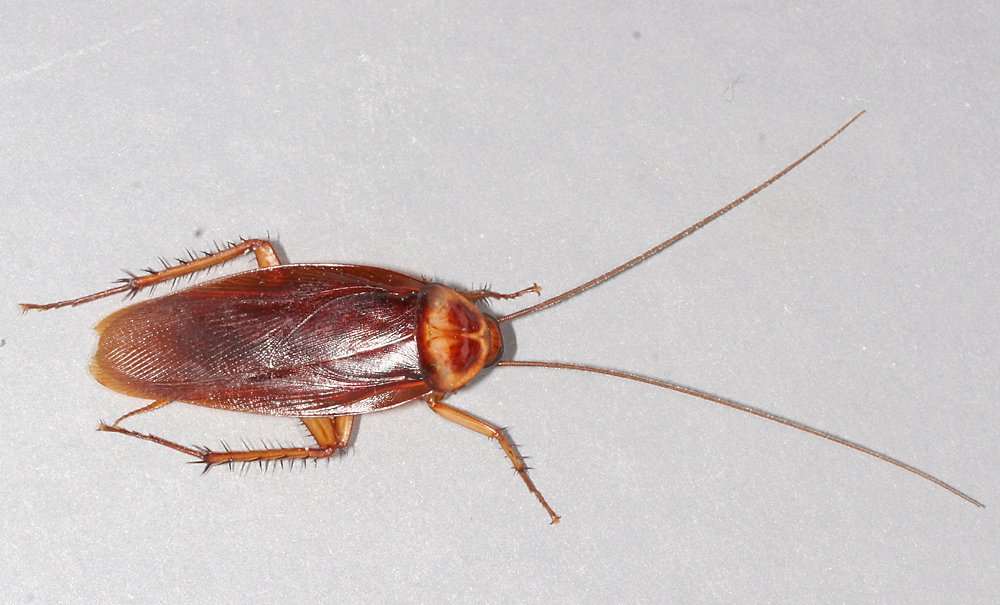
The large roach — an inch and a half or more, reddish-brown or nearly black, appearing in a basement, a floor drain, a utility room, or near a sump after heavy rain — is an American or oriental cockroach. In the South these get called palmetto bugs, and the name travels north with people, which causes real confusion on the phone.
These species live primarily outdoors and in sewers, storm drains, and crawl spaces, and they come inside as individuals rather than as an established indoor population. Hamilton’s older sewer system makes this more common here than in newer parts of the county. Heavy rain floods the system and the damp low spaces they occupy, and they move to the nearest dry void.
That points straight at the fix, and most of it is free. A floor drain whose P-trap has dried out is an open pipe between the sewer and your basement — pouring a cup of water down every seldom-used drain once a month closes it. Beyond that: a sump lid that seats properly, sealed gaps around the sump discharge and other utility penetrations, and repair of any cracked or open cleanout. This is exclusion and moisture work, not an infestation, and it does not need the program the small ones require.
- Small, tan, two dark stripes — German cockroach. A real infestation needing a bait program.
- Large, reddish-brown or black, after rain — American or oriental, usually from a drain or sewer.
- Pour water down unused floor drains monthly to keep the trap sealed.
- Never fog or bomb — in a converted building it drives the population into neighboring units.
- In a multi-unit, treat adjacent units together or expect it back in two months.
What Actually Works
Gel bait placed precisely into harborage is the core of it. German cockroaches spend the overwhelming majority of their time hidden in tight warm cracks — dishwasher motor housings, the underside of a counter overhang, cabinet hinge recesses, behind and beneath a refrigerator, inside a range frame, and in older buildings the gaps behind loose baseboard and around pipe penetrations. Treatment has to reach those rather than the surfaces you can see.
That is exactly why over-the-counter foggers make things worse, and worse faster in a shared-wall building. They do not penetrate harborage, they kill a visible fraction, and the repellent effect drives survivors deeper into wall voids and outward — which in a converted house means into your neighbor’s kitchen. Spraying baseboards with a repellent product does the same thing more slowly.
Because the egg cases are protected, no single visit finishes it. Follow-ups timed against the hatch cycle are what resolve it, and monitoring placements tell us whether the population is genuinely declining rather than relying on sightings. Sealing gaps around pipe penetrations and at baseboards is worth doing as part of the job, because in this housing stock those are the highways that let a population relocate instead of dying.
Across Butler County
Fairfield to the south is mostly single-family and behaves differently. Oxford northwest has the heaviest turnover market in the county, and Middletown northeast has comparable converted multi-family stock.
General service is on the Hamilton pest control page.
Frequently asked questions
Does having cockroaches mean my home is dirty?
No, and in a converted building it may have nothing to do with your unit. German cockroaches are carried in on grocery bags, cardboard, secondhand appliances, and moving boxes, or they travel through wall voids from a neighboring apartment. Sanitation affects how fast a population grows, not whether it arrives.
Why did they come back after my apartment was treated?
Almost certainly because only your unit was treated. In converted multi-family buildings they move through pipe chases and wall voids away from disturbance, then return. The affected unit plus everything sharing a wall, floor, or ceiling has to be treated as one job on the same day.
What is the difference between the small tan ones and the big dark ones?
Everything. The small tan roach with two dark stripes is a German cockroach, a real indoor infestation needing a bait program with follow-ups. The large dark one appearing after rain is an American or oriental cockroach that came in from a drain or sewer, and that is usually a moisture and exclusion fix.
Big roaches keep coming out of my basement drain.
That is a dried-out P-trap, which leaves an open pipe between the sewer and your basement. Pour a cup of water down every seldom-used floor drain once a month. Also check that the sump lid seats properly and that gaps around the discharge line and other penetrations are sealed.
Why did fogging make it worse?
Foggers do not reach the tight harborage where German cockroaches actually live, and the repellent effect pushes survivors deeper into wall voids and outward. In a converted house that frequently means straight into a neighboring unit, which turns one apartment’s problem into the building’s.
I am a landlord. Do I have to treat more than the unit that complained?
To get a result that holds, yes — the affected unit plus everything sharing a wall, floor, or ceiling with it, on the same day. Treating one unit in a converted house is money spent on an outcome that will not last, and the same population two months later costs considerably more.
Why do they keep coming back after treatment?
Usually the protected egg cases. A female carries the case until just before hatching, so surface treatment does not reach the eggs, and a hatch a few weeks later restarts the population. Follow-up visits timed against that cycle are what finish it.
I only see them at night. Is that normal?
Yes, and daytime sightings are the concerning version. They are nocturnal and prefer tight enclosed spaces, so open activity in daylight generally means the harborage is crowded enough to push insects out. That is a reason to call sooner rather than later.