
The most common reaction we get on a Fairfield cockroach call is disbelief, and it is worth addressing directly: German cockroaches do not arrive because a house is dirty. They are carried in, usually in packaging, and the households that get them are frequently the ones doing everything right. In a suburban market built around bulk grocery runs, warehouse-club shopping, and steady delivery volume, corrugated cardboard is the vehicle — and a stack of boxes staged in a garage corner for a fortnight is a staging area rather than a tidy solution.
Cardboard, Bulk Shopping, and the Garage
Corrugated cardboard is one of the most effective cockroach transport mediums that exists. The flutes are warm, dark, tight enclosed channels that hold exactly the humidity a German cockroach wants, and boxes travel from a warehouse to a truck to a store to your garage without anybody opening them. Bulk packaging compounds it, because a case of anything is a larger cardboard structure with more flutes and it sits in a pantry or garage longer.
The garage is the specific risk point in this housing stock. Boxes get staged there rather than broken down immediately, often against a warm wall shared with the house, and there is usually a second refrigerator or a chest freezer nearby providing warmth and condensate. That combination will support a population quietly, and the connecting door into the house is right there.
The habit that prevents most of it is unglamorous: break boxes down and get them out the day they arrive rather than stacking them for a monthly recycling run, and decant bulk dry goods into sealed hard containers rather than leaving them in the case. It takes minutes and it removes both the vehicle and the harborage.
Why the Small Tan One Is the Serious One
German cockroaches are about half an inch long, light tan to brown, with two dark parallel stripes running lengthwise behind the head. They are the species that establishes true indoor populations, and the only common roach in Ohio that will complete its entire life cycle inside a kitchen without ever going outdoors. Everything genuinely difficult about cockroach control concerns this species specifically.
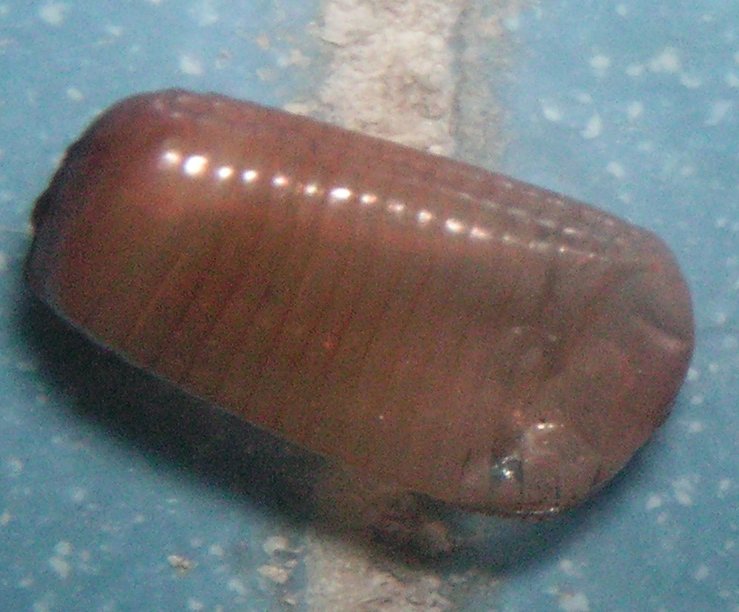
They reproduce faster than nearly anything else you will encounter. A female carries an egg case holding roughly thirty to forty eggs and carries it until shortly before hatching, which shields the eggs from most surface treatment. Under kitchen conditions a nymph reaches breeding maturity in about two months. A handful of insects becomes a serious problem within a single season, and what you can see is a small fraction of what exists.
Seeing them in daylight is meaningful. They are nocturnal and want contact with surfaces on several sides at once, so they occupy every tight seam available before they appear in the open. Daytime activity generally means the harborage is crowded enough that insects are being pushed out of it — a reason to stop waiting rather than a reason to panic.
The Big One in the Basement Is Different
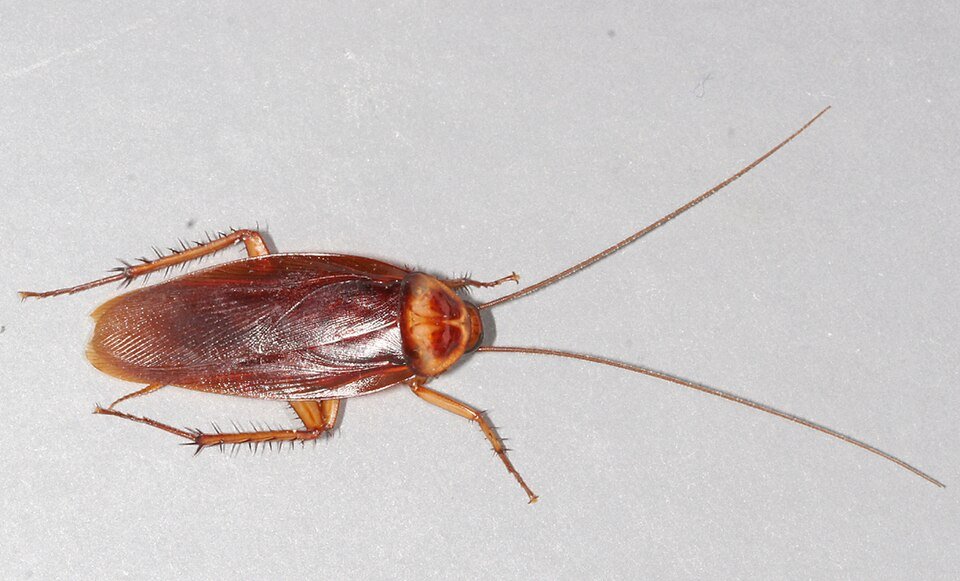
Not everything reported as a roach here is a German cockroach, and the distinction changes the response completely. The large roach — an inch and a half or more, reddish-brown or nearly black, appearing in a basement, a utility room, or near a floor drain after heavy rain — is an American or oriental cockroach. In the South these get called palmetto bugs, and the name travels north with people who move here.
These species live primarily outdoors and in sewers, storm drains, and crawl spaces, and they come inside as individuals rather than as an established population. They are pushed in by water: heavy rain floods the storm system and the damp low spaces they occupy, and they move to the nearest dry void. On these houses the usual doors are a floor drain whose P-trap has dried out, a sump lid that does not seat, and unsealed gaps around plumbing at the slab edge or in a crawl.
The fix is mostly free. Pour a cup of water down every seldom-used floor drain once a month to keep the trap sealed, make sure the sump lid seats and the discharge penetration is sealed, and check that any cleanout is capped. This is exclusion and moisture work rather than an infestation, and it does not need the bait program the small ones require.
- Break down delivery and bulk cardboard the day it arrives — do not stage it in the garage.
- Small, tan, two dark stripes — German cockroach. A real infestation needing a bait program.
- Large, reddish-brown or black, after rain — American or oriental, usually from a drain.
- Pour water down unused floor drains monthly to keep the trap sealed.
- Never fog or bomb — it scatters the population into rooms that were previously clear.
What Actually Works
Gel bait placed precisely into harborage is the core of it. German cockroaches spend the overwhelming majority of their time hidden in tight warm cracks — dishwasher motor housings, the underside of a counter overhang, cabinet hinge recesses, behind and beneath a refrigerator, inside a range frame, and around plumbing penetrations under a sink. Treatment has to reach those places rather than the surfaces you can see.
That is exactly why over-the-counter foggers make the situation worse. They do not penetrate harborage, they kill a visible fraction of the population, and the repellent effect drives survivors deeper into wall voids and outward into adjoining rooms. Households that fog before calling routinely turn a kitchen problem into a kitchen-and-two-bathrooms problem, and spraying baseboards with a repellent product does the same thing more slowly.
Because the egg cases are protected, no single visit finishes the job. Follow-up visits timed against the hatch cycle are what resolve it, and monitoring placements tell us whether the population is genuinely declining rather than relying on sightings. On these houses we also check the garage refrigerator, the chest freezer, and any basement wet bar as a matter of routine, because those are reservoirs that will quietly repopulate a treated kitchen.
Across Butler County
Hamilton to the north has converted multi-family stock where the work has to be coordinated across units. West Chester is east, and Middletown is north where used appliances are the leading route.
General service is on the Fairfield pest control page.
Frequently asked questions
Does having cockroaches mean my house is dirty?
No, and this is the reaction we hear most often here. German cockroaches are carried in — most often in corrugated cardboard from bulk shopping and deliveries, and also in used appliances and takeout packaging. Sanitation affects how fast a population grows and how well bait competes, not whether they arrive.
Do delivery boxes really bring cockroaches?
Corrugated cardboard is one of the most effective transport mediums there is — the flutes are warm, dark, tight channels that hold humidity, and boxes travel from warehouse to truck to garage unopened. Breaking them down the day they arrive rather than staging them for a monthly recycling run genuinely helps.
What is the difference between the small tan ones and the big dark ones?
Everything. The small tan roach with two dark stripes is a German cockroach, a genuine indoor infestation needing a bait program with follow-ups. The large dark one appearing after rain is an American or oriental cockroach that came in through a drain, which is a moisture and exclusion fix.
Big roaches keep coming up in the basement after storms.
That is a dried-out P-trap in a floor drain, leaving an open pipe between the sewer and the house. Pour a cup of water down every seldom-used drain once a month, check that the sump lid seats and its discharge penetration is sealed, and make sure any cleanout is capped.
Why did fogging make it worse?
Foggers do not reach the tight harborage where German cockroaches actually live, and the repellent effect pushes survivors deeper into wall voids and outward into adjoining rooms. It is one of the most reliable ways to turn a one-room problem into a three-room problem.
Why do they keep coming back after treatment?
Usually the protected egg cases. A female carries her case until just before hatching, so surface treatment does not reach the eggs, and a hatch a few weeks later restarts the population. Follow-up visits timed against that cycle are what finish it.
Could the garage refrigerator be involved?
Quite possibly, and it is checked as a matter of routine. A second refrigerator or chest freezer in a garage offers warmth and condensate in a space nobody inspects, often beside staged cardboard. It will quietly repopulate a treated kitchen if it is missed.
I only see them at night.
That is normal, and daytime sightings are the concerning version. They are nocturnal and prefer tight enclosed spaces, so open activity in daylight generally means the harborage is crowded enough to push insects out. That is a reason to call sooner rather than later.