Ants are the most common call we take in Liberty Township, and they are also the pest most often made worse before we arrive. The conditions here are close to ideal for them: irrigated landscape on almost every lot, golf-course turf management in Four Bridges and Wetherington keeping ground consistently moist, mulch beds renewed every spring and never dug back out, and thousands of homes sitting on soil that was stripped, regraded, and recompacted within the last twenty-five years. The two species behind nearly all of it are well understood. Unfortunately, they respond very badly to the instinctive response.
Odorous House Ants and Why Spraying Backfires
The small dark ant trailing along a kitchen counter in April is almost certainly the odorous house ant. Crush one and it smells faintly of coconut or spoiled citrus, which is where the name comes from. It does no structural damage and carries no disease risk worth worrying about, but it is genuinely difficult to eliminate, and the reason matters before anyone reaches for a spray can.
Odorous house ant colonies are polygyne — many queens rather than one — and they exist as networks of interconnected nests rather than a single central colony. Attacked with a contact insecticide, they bud: queens split off with groups of workers and establish new satellite nests away from the perceived threat. What was one trail behind the dishwasher becomes four trails in four rooms, and the household has spent money to make the problem substantially harder to solve.
This is the most common self-inflicted wound in ant work anywhere in Butler County. The instinct to spray a visible trail is completely natural and it is precisely backwards. The trail is the useful thing — it is a map to the nest. Ants on a trail are carrying food home, and the correct response is to give them something worth carrying.
Why Baiting Works
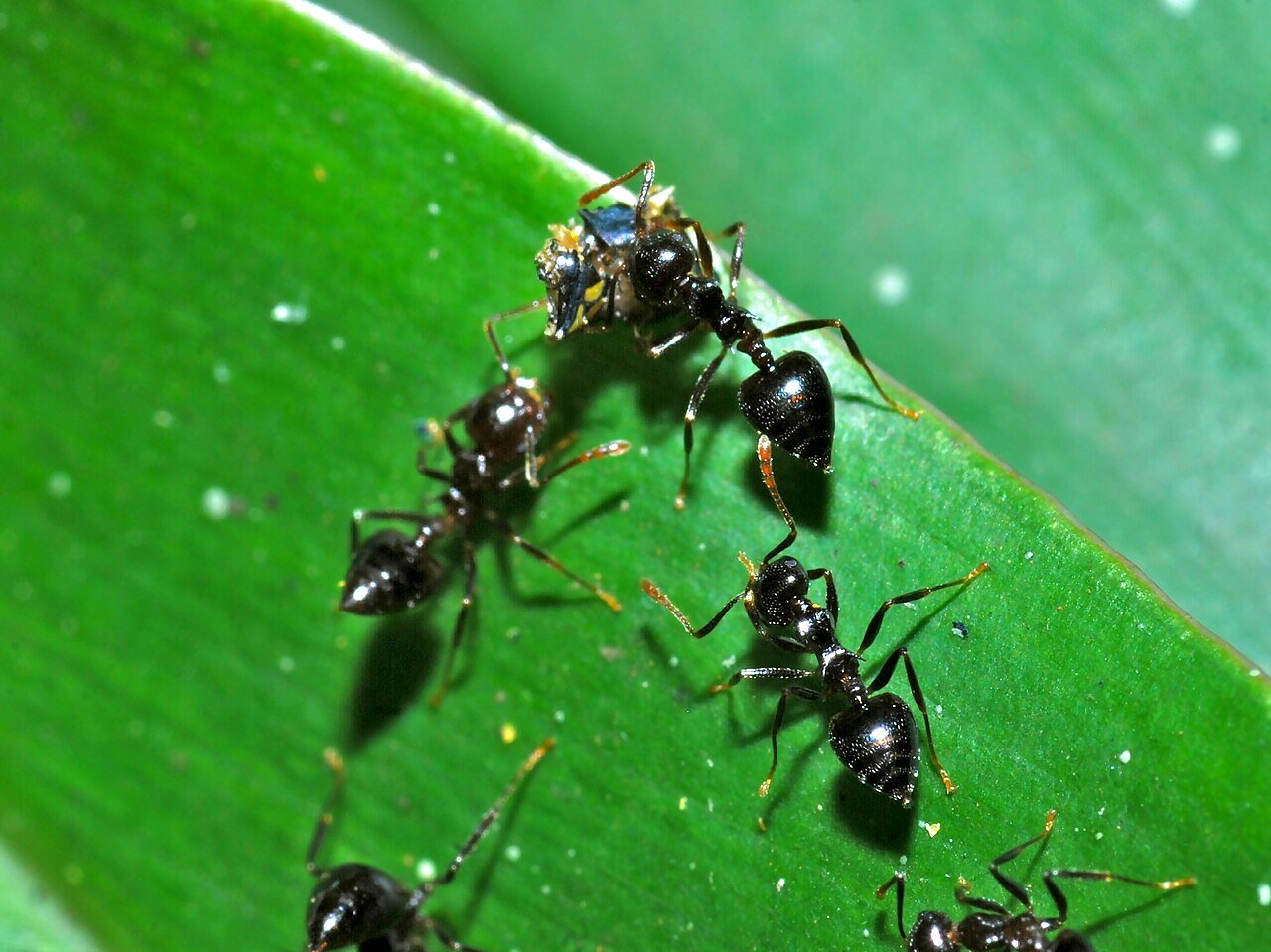
A properly matched bait is a slow-acting material suspended in food. Foragers carry it back and distribute it through the colony by trophallaxis — the mouth-to-mouth food sharing ants use to move resources around — and it reaches queens and brood that no surface spray will ever contact. The delay is deliberate. A bait that killed on contact would kill the forager on the counter and never reach the nest at all.
That means the first forty-eight hours after baiting can look like failure. Activity frequently increases, because a food source has just been placed and recruitment does exactly what recruitment does. Homeowners who are not warned about this often panic, spray the newly enlarged trail, and destroy the process at the precise moment it was working. If we bait your house, we tell you this in advance and we mean it.
Bait selection also has to match what the colony currently wants, and that shifts through the season. Colonies move between carbohydrate-seeking and protein-seeking behavior depending on brood demands and time of year. A sugar bait offered during a protein cycle gets ignored entirely, which reads to a homeowner as a defective product when it is actually a matching failure. Getting that right is most of the craft in this work.
Pavement Ants and the Hardscape Problem
The other very common ant here is the pavement ant, and this township gives them an unusual amount of habitat. Paver patios, stamped concrete, pool decks, walkways, and long driveways all sit on a sand and gravel base, and that base is close to perfect nesting material — well drained, easy to excavate, warmed by the surface above, and completely protected from disturbance.
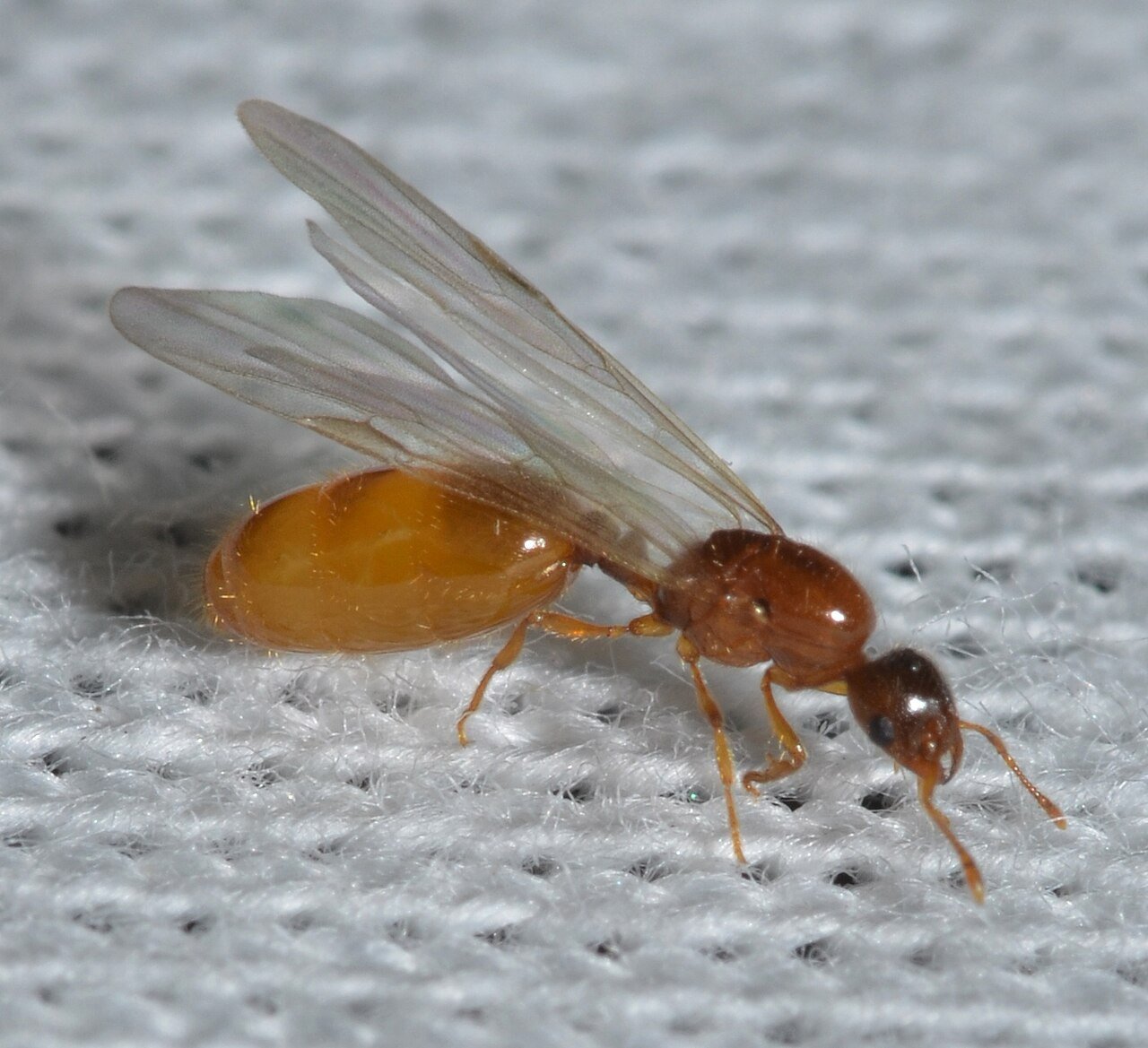
The visible sign is small piles of excavated sand appearing between pavers or along expansion joints, and in spring, swarms of winged ants emerging from a patio seam or a garage floor crack. Those swarmers alarm people who reasonably wonder whether they are looking at termites. The distinction is straightforward: ants have elbowed antennae, a pinched waist, and forewings noticeably longer than hind wings. Termites have straight antennae, no waist, and four wings of equal length.
Pavement ants get into houses along the same routes they nest in — expansion joints, the slab-to-foundation seam, and utility penetrations through a garage floor. Treatment targets the nest under the hardscape rather than the trail inside, which is why a perimeter spray on the kitchen baseboard accomplishes so little.
- Small dark ants trailing indoors — odorous house ant. Bait it. Do not spray it.
- Sand piles between pavers or along joints — pavement ants nesting in the hardscape base.
- Large black ants, especially after dark — carpenter ants. Find the water source first.
- Coarse frass below a small hole — an active carpenter ant gallery.
- Winged ants in spring — check antennae and wing length before assuming termites.
Carpenter Ants and the Wooded Lots
The large black ants, a quarter to a half inch long, are carpenter ants, and they matter for a different reason. They do not eat wood — a persistent misconception — but they excavate galleries in it to nest, and they strongly prefer wood already softened by moisture. Consistently finding them indoors is not primarily an ant problem. It is a water problem that has recruited ants.
Liberty Township has more wooded lot edges than the subdivisions to the south, particularly along Dutchman’s Creek and on estate lots where builders retained mature tree lines. That means more parent colonies operating in stumps, dead limbs, and buried construction lumber within easy foraging distance, and more satellite nests looking for damp wood inside a structure. The usual indoor sources are a deck ledger that was never properly flashed, a window sill under failed exterior caulk, framing behind a shower surround, or a chimney chase taking water at the flashing.
The distinguishing evidence is frass: coarse, sawdust-like shavings, often mixed with insect fragments, piling up below a small opening. Carpenter ant galleries are clean and smooth inside, almost sanded, where termite galleries are packed with soil. If we find them, we look for the water first, because treating ants without correcting moisture simply schedules a return visit.
The Lakota Corridor
West Chester to the south has the same landscape-driven pressure and species mix. Monroe is north, and Mason is east across the Warren County line.
General service is on the Liberty Township pest control page, and if large ants turn out to be doing structural damage, the WDI inspection covers carpenter ants alongside termites.
Frequently asked questions
Why did spraying make my ant problem worse?
Because odorous house ants respond to contact insecticide by budding — queens split off with workers and establish new satellite nests away from the threat. One trail behind the dishwasher becomes several trails in several rooms. It is the most reliable way to turn a manageable ant problem into a difficult one.
There are more ants since you baited. Is it working?
That is normal in the first forty-eight hours. Bait is a food source, so recruitment rises before the colony declines. The material is slow-acting on purpose, so foragers survive long enough to share it with queens and brood. Do not spray the trail during that window.
There is sand coming up between my pavers.
Pavement ants nesting in the base under the hardscape. Paver patios, pool decks, and driveways sit on well-drained sand and gravel that is close to ideal nesting material. Treatment has to target the nest under the slab rather than the trail inside the house.
Are the winged ants in my garage termites?
Check three things. Ants have elbowed antennae, a pinched waist, and forewings clearly longer than the hind wings. Termites have straight antennae, no waist, and four wings of equal length that they shed in piles. Spring swarms from a patio seam or garage crack are usually pavement ants.
What is the difference between carpenter ants and termites?
Carpenter ants excavate wood to nest but do not eat it, and their galleries are clean and smooth with coarse frass pushed out below. Termites consume wood and pack their galleries with soil. Both appear on a WDI report, and both are worth identifying correctly before anyone quotes treatment.
I keep finding big black ants upstairs.
That usually points at moisture in a plumbing wall, a roof leak, or a window leak rather than anything in the kitchen. Carpenter ants nest in wood already softened by water, so the ants are the symptom. We look for the water source first, because treating the ants alone books a return visit.
Does the golf course make it worse?
Indirectly. Consistently irrigated turf and heavily managed landscape keep soil moisture high across a wide area, which supports larger ant populations generally. It is less about the course itself than about how much of this township is watered on a schedule.
Can I just use store-bought bait?
Sometimes, and it often fails for one specific reason: the bait has to match what the colony currently wants. Colonies shift between carbohydrate and protein preference through the season, and a sugar bait offered during a protein cycle is ignored entirely. That reads as a bad product when it is really a mismatch.