Ants are the most common call we take in West Chester, and they are also the pest most often made worse by the homeowner before we arrive. The township is close to ideal ant habitat: heavily irrigated landscape beds, mulch renewed every spring, mature plantings against foundations, and thousands of homes built on soil that was disturbed and regraded within the last thirty years. The good news is that the two species responsible for almost all of it are well understood, and both respond to the right approach. The bad news is that they respond very badly to the wrong one.
Odorous House Ants and the Budding Problem
The small dark ant trailing along your kitchen counter in April is almost certainly the odorous house ant. Crush one and it smells faintly of coconut or rotten citrus, which is where the name comes from. It is a nuisance rather than a structural threat — it does not damage wood and it does not transmit disease — but it is genuinely difficult to get rid of, and the reason is worth understanding before you reach for a spray can.
Odorous house ant colonies are polygyne, meaning they have many queens rather than one, and they exist as networks of connected nests rather than a single central colony. When those ants are attacked with a contact insecticide, the colony responds by budding: queens split off with groups of workers and establish new satellite nests away from the perceived threat. What was one trail behind the dishwasher becomes four trails in four rooms, and the household has now spent money to make the problem substantially harder.
This is the single most common self-inflicted wound in West Chester ant work. The instinct to spray a visible trail is completely natural and it is exactly backwards. Trails are useful — they are the map. Ants following a trail are carrying food back to the nest, and the correct response is to give them something worth carrying.
Why Baiting Works and Spraying Does Not
A properly matched bait is a slow-acting material carried in food. Foragers take it back, share it through the colony by trophallaxis — the mouth-to-mouth food exchange ants use to distribute resources — and it reaches the queens and brood that a surface spray will never touch. The delay is intentional. A bait that killed on contact would kill the forager on the counter and never reach the nest at all.
That means the first forty-eight hours after baiting can look like failure. Ant activity frequently increases, because you have essentially just placed a food source, and recruitment does what recruitment does. Homeowners who do not know this is coming often panic, spray the newly enlarged trail, and destroy the process at exactly the moment it was working. If we bait your house, we will tell you this in advance, and we mean it.
Bait selection also has to match what the colony currently wants, and that changes seasonally. Ant colonies shift between carbohydrate-seeking and protein-seeking behavior depending on brood demands and time of year. A sugar bait offered during a protein cycle gets ignored, which reads as product failure but is actually a matching failure. Getting that right is most of the skill in this work.
Carpenter Ants Are a Different Conversation
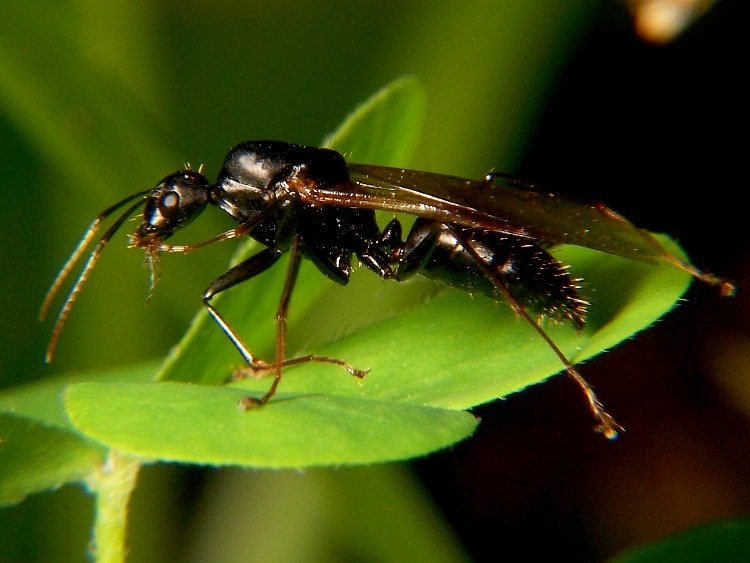
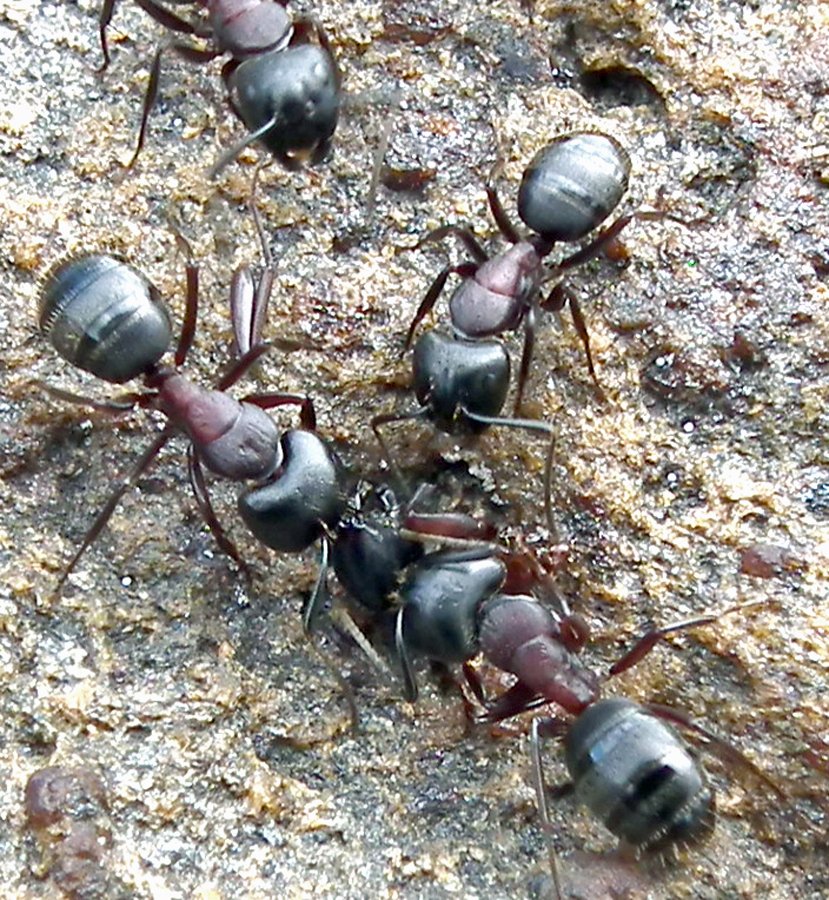
The large black ants, sometimes a quarter to a half inch long, are carpenter ants, and they matter for a different reason. They do not eat wood — that is a persistent misconception — but they excavate galleries in it to nest, and they strongly prefer wood that has already been softened by moisture. Finding them indoors consistently is not primarily an ant problem. It is a water problem that has attracted ants.
On West Chester homes the moisture sources are predictable. A deck ledger board that was never properly flashed and has been wicking water into the rim joist for a decade. A window sill under a failed exterior caulk joint. The framing behind a shower surround with a slow leak. A chimney chase taking water at the flashing. Roof valleys and gutter overflow points that keep one section of fascia and soffit damp.
The tell that separates carpenter ants from a random wanderer is frass: coarse sawdust-like shavings, often mixed with insect fragments, accumulating below a small opening. Unlike termite damage, carpenter ant galleries are clean and smooth inside, almost sanded. If we find them, we will find the water first, because treating the ants without correcting the moisture just books a return visit.
- Small dark ants trailing indoors — odorous house ant. Bait it. Do not spray it.
- Large black ants, especially at night — carpenter ants. Look for the water source.
- Coarse frass below a small hole — active carpenter ant gallery.
- Ants in a second-floor bathroom — usually a plumbing wall or a roof leak, not the kitchen.
- Sudden spring surge — normal emergence, not an invasion; the colony was there all winter.
The Landscape Is Doing Half the Work
Ant pressure in this township is largely manufactured by the landscaping, and it is fixable. Mulch beds renewed annually and never dug back out raise grade against the foundation and hold moisture exactly where ants want to nest. Irrigation on a timer supplies that moisture daily whether the plants need it or not. Shrubs and ornamental grasses touching the siding form bridges that let ants bypass any perimeter treatment entirely, walking from foliage directly onto the wall well above the treated band.
The practical corrections are unglamorous and effective: pull mulch back several inches from the foundation so the soil line is visible, trim vegetation so nothing touches the house, redirect irrigation heads away from the wall, and extend downspouts. Firewood, decorative stone piles, and landscape timbers stacked against the house are all conducive and all easy to relocate.
None of this eliminates ants from a yard, and it should not try to. Ants in the landscape are ordinary and largely beneficial. The goal is to remove the specific conditions that turn a yard population into an indoor problem, so that treatment has less working against it.
The Lakota Corridor
Liberty Township has the same landscape-driven pressure and the same species mix. Fairfield to the west runs older, more mature plantings, and Mason is east across the county line.
General service in the township is on the West Chester pest control page, and if the large ants turn out to be doing structural damage, the WDI inspection covers carpenter ants alongside termites.
Frequently asked questions
Why did spraying make my ant problem worse?
Because odorous house ants respond to contact insecticide by budding — queens split off with workers and start new satellite nests away from the threat. One trail behind the dishwasher becomes several trails in several rooms. It is the most common way a manageable ant problem becomes a difficult one.
There are more ants since you baited. Is it not working?
That is normal and expected in the first forty-eight hours. Bait is a food source, so recruitment increases before the colony declines. The material is slow-acting on purpose so foragers survive long enough to share it with the queens and brood. Do not spray the trail during this window.
What is the difference between carpenter ants and termites?
Carpenter ants excavate wood to nest but do not eat it, and their galleries are clean and smooth with coarse frass pushed out below. Termites consume wood and pack their galleries with soil and mud. Both appear on a WDI report, and both are worth identifying correctly before anyone quotes treatment.
I keep finding big black ants in my upstairs bathroom.
That usually points at moisture in a plumbing wall or a roof or window leak rather than anything in the kitchen. Carpenter ants nest in wood that has already been softened by water, so the ants are a symptom. We look for the water source first, because treating the ants alone just schedules a return visit.
Are ants worse in West Chester because of new construction?
Partly. Disturbed and regraded soil, heavy irrigation, annually renewed mulch beds, and mature foundation plantings all favor ants. It is less about the age of the house than about how the landscape around it is built and watered.
Can I just use store-bought bait?
Sometimes, and it fails often for one specific reason: bait has to match what the colony currently wants. Colonies shift between carbohydrate and protein preference through the season, and a sugar bait offered during a protein cycle gets ignored entirely. That reads as a bad product when it is really a mismatch.
How long does it take to clear an ant problem?
A well-matched bait program usually shows a clear decline within one to two weeks and resolves over several. Carpenter ants tied to a moisture problem take longer, because the real fix involves correcting the water intrusion, which is a repair rather than a treatment.
Will pulling mulch back really help?
Meaningfully, yes. Mulch against the foundation raises grade, traps moisture, and hides the soil line, and shrubs touching siding let ants walk over any perimeter treatment entirely. Pulling beds back a few inches and trimming vegetation off the house removes a large part of what treatment is fighting.