
Xenia’s housing tells its history in two chapters — the pre-tornado stock that survived 1974 and the post-tornado rebuild that followed it — and its market adds a third element most metro suburbs don’t have: rural parcels with barns, detached garages, and outbuildings riding along on the deed. All three change how a WDI inspection should be scoped and read. Ours is $99 flat for the primary structure, on the lender-ready NPMA-33, next business day, PDF the day we inspect, pay at booking or on the settlement statement.
What Inspections Actually Find in Xenia
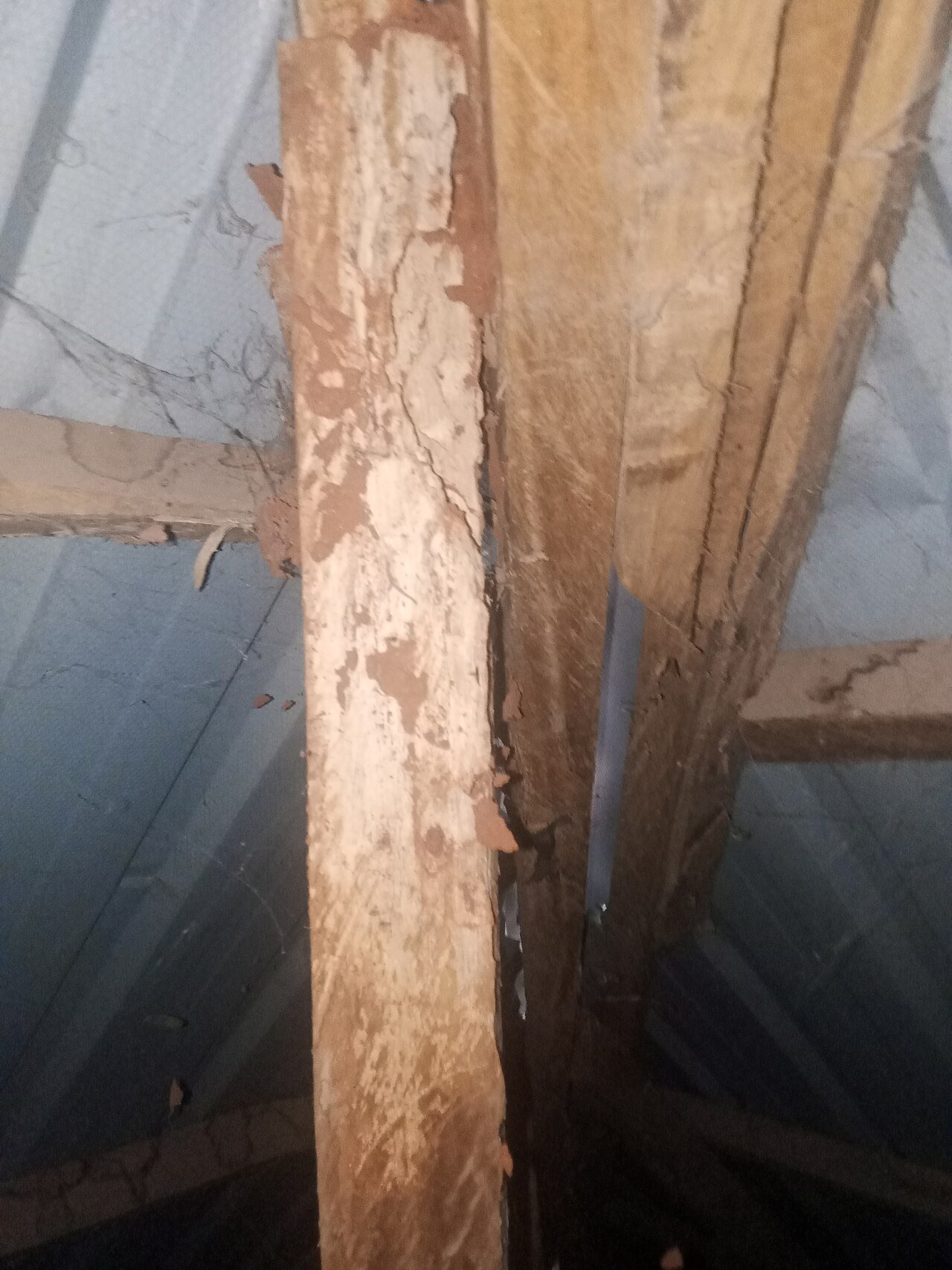
The two eras produce two files. Pre-1974 survivors carry the deep histories — old treatments, dry galleries, layered repairs — that need dating more than discovering. The post-tornado rebuild is now fifty years old itself: 1970s slab-and-crawl construction whose builder-era soil treatments expired decades ago, with the garage-frame and utility-penetration findings that vintage produces everywhere. Between them, our Xenia termite work sees the metro’s full range, and the report’s job is the same in both chapters: say what’s active, what’s history, and what’s merely conducive, in language a lender acts on without drama.
The Outbuilding Question
Here’s the scope detail that matters on Greene County’s rural listings: the NPMA-33 covers the structures actually inspected, and it lists them. A barn or detached shop on the parcel isn’t automatically included — and a lender financing the whole property sometimes wants it to be. Tell us at booking what’s on the parcel and what the lender expects; we’ll scope the inspection to match and the form will say precisely which structures it covers. The expensive version of this detail is discovering it at the closing table.

Built for the Transaction Timeline
- $99 flat for the primary structure — VA, FHA, conventional-accepted NPMA-33
- Outbuildings scoped at booking so the form matches what the lender expects
- Next business day across Xenia, Xenia Township, and rural Greene County
- Same-day PDF to every party you name
- Pay now or at closing on the settlement statement
For Agents on Both Sides of the County
Whether it’s a four-square near Shawnee Park or five acres with a pole barn off US-35, the booking works the same: one minute at the realtor link, with a notes field for parcel details. VA files — common in Xenia with Wright-Patterson traffic — get the WDI Ohio requires, and every file gets the same-day PDF. The full agent rundown is on the realtor page.
Who Pays for the Termite Inspection?
Xenia’s mix of loan types makes this question come up constantly, so here’s the landscape. On VA files — a large share here — longstanding rules put the WDI cost on the seller in many scenarios, though recent policy changes allow buyer payment in Ohio; agents negotiate it in the purchase contract either way. On FHA and conventional files it’s purely a negotiation item, usually riding with the rest of the inspection costs on the buyer’s side. At $99, frankly, it has stopped being worth negotiating hard — we’ve watched agents spend more time arguing the line than it costs — and pay-at-closing lets either side absorb it on the settlement statement without anyone reaching for a card.
The practical advice we give both sides: decide who pays at contract, book immediately, and let the $99 be the least interesting line in the deal.
From Shawnee Park to the Township Lines
Inside the city, the inspection geography follows the two eras: the surviving pre-1974 neighborhoods around Shawnee Park and the older grid carry the deep files, while the rebuild-era streets run their fifty-year-old story. But Xenia’s market doesn’t stop at the corporation line — it runs out the pikes to Wilberforce and Cedarville’s university edges, through townships where parcels carry the barns and outbuildings our scoping section covers, and into the rural Greene County listings where a WDI order sometimes includes the phrase “and whatever else is out there.” We scope those honestly at booking: the form will list every structure inspected, and the price for anything beyond the house gets quoted before we drive out, not discovered after.
That structure-by-structure honesty is the difference between a rural WDI that satisfies a lender and one that quietly covered the house alone while everyone assumed otherwise. On acreage, assumptions are the expensive part.
Swarm Season in the Older Stock
A Greene County calendar note: Xenia’s pre-1974 neighborhoods show the metro’s classic spring pattern, when warm rain in April and May sends winged swarmers out of mature colonies — sometimes across a basement window well in mid-showing. Discarded wings are the calling card; straight antennae and equal wings distinguish them from flying ants. What wings mean mid-transaction is a question, not a verdict: a mature colony lives somewhere nearby, and the $99 inspection determines whether “nearby” includes the structure. On the rural parcels, the same logic extends to the outbuildings — a swarm from a pole barn’s soil-set posts is a barn finding, not a house finding, and the form keeps the two straight.
Wings plus a documented clean structure closes fine. Wings plus assumptions is how rural deals grow legends. Get the verdict in writing.
Buying closer to the city? We also schedule termite inspections in Dayton, Ohio — same $99 NPMA-33 report, same next-business-day turnaround for realtors, from our office at 733 Salem Ave.
Frequently Asked Questions
How much is a termite inspection in Xenia?
$99 flat for the primary structure — lender-ready NPMA-33, next business day, PDF the day we inspect, pay at booking or on the settlement statement. Outbuildings are scoped and quoted at booking.
Does the NPMA-33 cover the barn and outbuildings?
Only if they’re inspected — the form lists exactly which structures it covers. On rural parcels, tell us at booking what’s on the property and what the lender expects; we scope to match. Discovering this mismatch at the closing table is the expensive version.
What do you find in pre-1974 Xenia homes?
Deep histories: old treatments, dry galleries, layered repairs across a century. Most of it is archaeology — evidence of long-resolved activity — and the report’s dating and plain language is what keeps it from derailing a deal.
What about the post-tornado rebuild homes?
They’re fifty years old now, and their builder-era soil treatments expired decades ago. They produce the classic 1970s findings — garage frames, utility penetrations, crawl moisture — caught best at exactly this moment: a sale.
Is a WDI required for VA loans?
VA purchases in Ohio require it outright — and Wright-Patterson traffic makes VA files common in Xenia. FHA and conventional order case-by-case. The NPMA-33 satisfies all three.
Can you inspect with the buyer absent?
Yes — lockbox or agent access, same-day PDF, findings call wherever the buyer is. Standard for PCS and relocation files.
What happens if you find active termites?
A written verdict with location and extent, treatment quoted only when warranted, re-inspection on the same file after the work — booked early, it rarely moves the date.
How do agents book?
greaterdaytonpest.com/realtor — one minute on a phone, with a notes field for rural-parcel details.