Piqua’s mill-era buildings carry thousands of window panes, and every cracked or missing one is a doorway with wings waiting behind it. The industrial stock that defines this town — high-bay factory floors, warehouse lofts, the tall-windowed commercial blocks around them — presents wasps with something suburban architecture never offers: sheltered interior volume at height, reachable through the glazing gaps a century of hail, ball games, and deferred maintenance has opened. Wasp and hornet removal in Piqua runs through that architecture: the signature local case isn’t the nest under a porch eave — though the alley-garage residential file runs steady — it’s the colony inside the building, hung from a truss or tucked into a high sill, discovered by whoever works, stores, or renovates below it. We call it the broken-pane file, and it’s the reason our Piqua commercial calls come with a ladder rated for mill ceilings.
Inside the High Bays
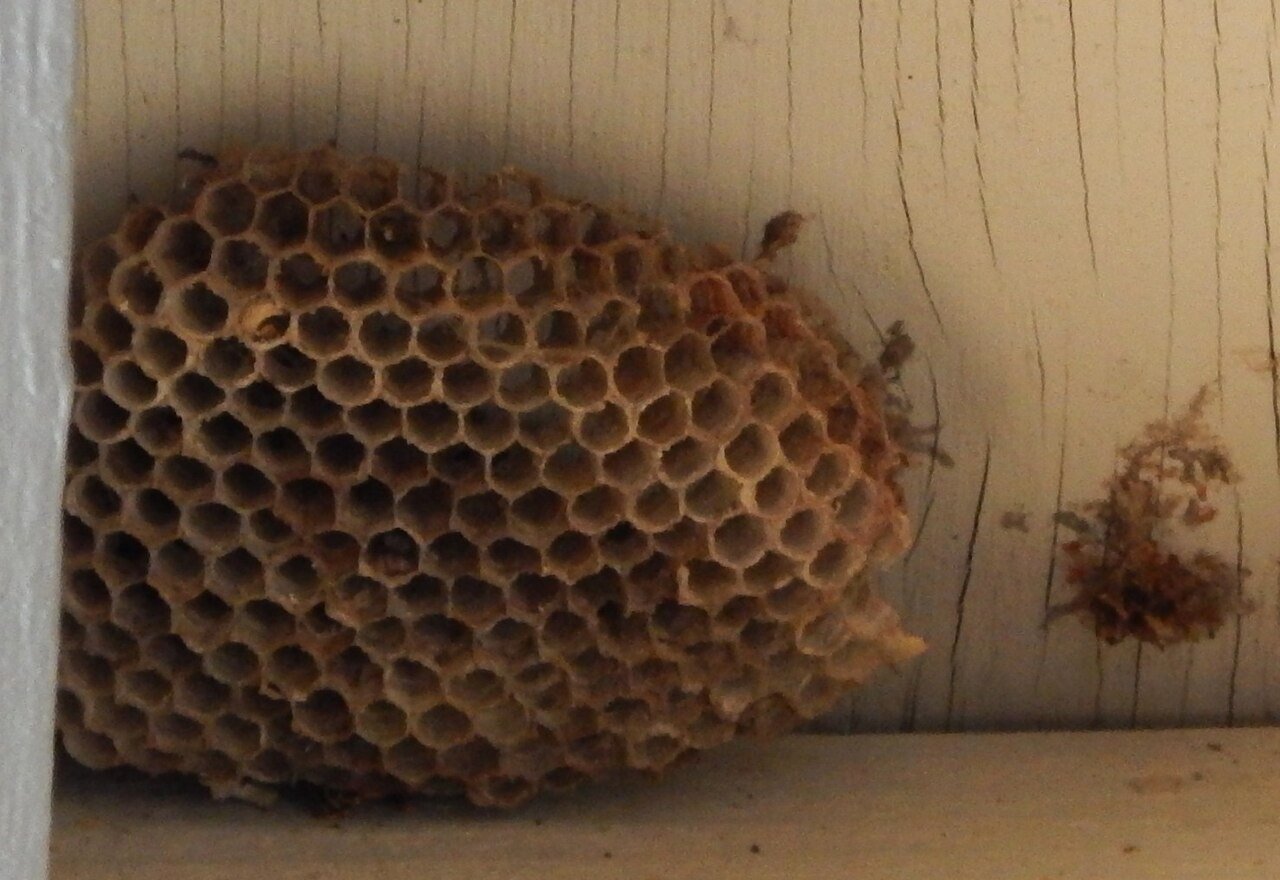
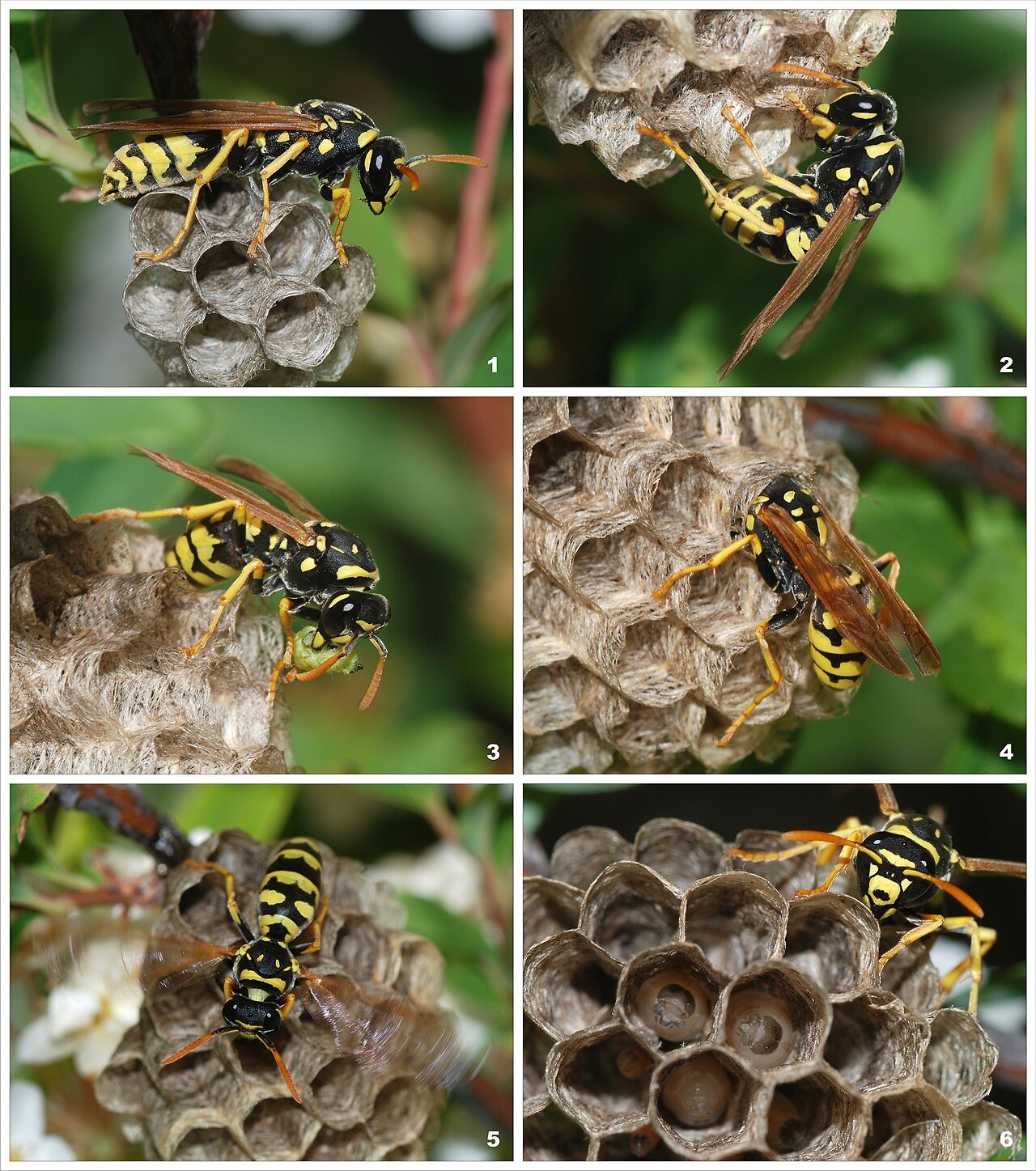
An interior nest changes every rule of thumb. Outside, colonies weather, predators probe, and frost ends everything on schedule; inside a mill bay, a paper wasp or yellowjacket colony enjoys still air, stable warmth, zero rain, and near-zero disturbance — conditions that grow outsized colonies and extend activity weeks past the outdoor season’s end. The discovery patterns repeat: the forklift operator who notices traffic streaming through a third-story pane gap; the renovation crew that opens a boarded stairwell and finds the winter’s paper hanging like a lantern; the storage tenant whose pallet aisle turns defended in September. The response protocol is access-first — lift or ladder work at truss height, full protective kit, and timing chosen for colony-quiet hours — and the closure protocol is the half that actually ends the file: the pane gets fixed. Glazing repair, screening on the operable sashes, and the annual walk of the window walls turn a building’s hundred doorways back into windows.
The Renovation Wrinkle
Piqua’s conversion wave — mill floors becoming apartments, shops, and studios — runs through exactly the spaces the broken-pane file colonizes, and demolition season is discovery season. The counsel for every contractor and owner opening long-closed industrial space: assume occupancy. Walk the volume before work starts, at height, with lights — scanning trusses, sills, and boxed corners for paper and for the traffic lines at the glazing gaps — and schedule treatment before the crew’s first day rather than after their first incident. It’s the same assume-occupancy logic the heavy-timber termite file applies to the same buildings at the same moment: the conversion’s demolition phase is the cheapest hour for every inspection the structure will ever need.
The Whole Piqua File
- Commercial high-bay work: interior colony removal at truss height with proper access equipment, plus the glazing-and-screening closure that ends repeat business
- Pre-renovation sweeps: the assume-occupancy walk before crews open long-closed space — scheduled with the project, priced as the incident it prevents
- The residential alley file: garage eaves, fence-line posts, and porch ceilings along the alley grid — swept at founding stage each spring, treated full-protocol when established
- Void and ground standards: wall-void colonies killed before sealing, always; ground nests flagged, mowed around, and treated at the burrow
The honest note that fits a working town: most of Piqua’s wasp season is ordinary — porch nests, garage eaves, the August sugar shift at trash cans — and ordinary gets ordinary prices. The broken-pane file is the local specialty because the buildings are, and the through-line is the same one the town’s other files teach: the architecture writes the pest story, and fixing the architecture — the pane, the screen, the gap — is the half of the work that lasts. The full local picture lives on our Piqua service page.
Count Your Panes Honestly
One walk of the window walls reads every doorway your building has opened — then the program closes them: removal at height, glazing counsel, and the pre-renovation sweep that keeps discovery season off your incident log.
Frequently asked questions
Why do Piqua’s old industrial buildings get interior wasp nests?
Broken and missing panes open doorways into sheltered volume at height — still air, stable warmth, no rain, no disturbance. Interior colonies grow outsized and stay active weeks past the outdoor season, which is why the glazing walk matters as much as the removal.
We’re renovating a mill space — what should happen before the crew starts?
The assume-occupancy sweep: a walk of the full volume at height with lights, scanning trusses, sills, and boxed corners for paper and for traffic at the pane gaps — scheduled before day one, not after the first incident. Long-closed space defaults to occupied until proven otherwise.
There’s wasp traffic through a third-story window gap — is that our problem or the wasps’?
Yours eventually: an interior colony above a working floor turns defended aisles into incident reports by September. The fix is two-part — removal at truss height with proper access, then the pane repaired and sashes screened so the doorway closes for good.
Do interior nests die off in winter like outdoor ones?
The colony still dies — frost reaches indoor air eventually and the biology runs its course — but weeks later than outside, and the abandoned paper remains as beetle habitat and next-year appeal. Winter is the cheap season for removal and glazing work both.
What’s the residential wasp situation along the alleys?
Steady and ordinary: garage eaves, fence-post voids, and porch ceilings along the alley grid, swept cheapest at April’s founding stage. The same alley walk that reads the ant highways covers the wasp real estate.
Can I seal the wall void where wasps are entering my house?
Only after the colony is dead — sealed live colonies dig inward through old plaster. Entrance dusting first, traffic confirmed stopped, then the seal, with the elevation’s other gaps closed while the ladder’s up.
Who handles the wasps at height — do we need a lift?
We do, with access equipment rated for mill ceilings and timing chosen for colony-quiet hours. High-bay work is exactly the job class homeowner ladders and spray cans exist to make worse.
What does wasp removal cost in Piqua?
Ordinary calls at ordinary flat rates — porch, garage, ground nests. High-bay and pre-renovation work quotes by access and volume, priced against the incident and the stop-work day it prevents.