
Brookville sits on wet ground and knows it — Wolf Creek through the middle of town, a water table the older basements report on every March, and the flat, slow-draining till of the surrounding grain country. What fewer people know is that the same wet ground runs the town’s termite clock. Termite control is soil chemistry as much as biology: subterranean colonies need moist workable earth, and Brookville’s supplies it generously — but the flip side matters just as much, because the liquid barriers that protect houses degrade on a schedule set by that same moisture. Wet, biologically active soil breaks treatment chemistry down faster than the dry compacted fill under a hilltop subdivision, which means a barrier’s “years, not decades” lifespan runs toward the short end of the range here. We call it the wet-ground clock, and it ticks on both sides of the equation: better habitat for the colonies, shorter life for the defenses.
What Wet Ground Gives and Takes
The giving side: soil that holds moisture through summer keeps colonies working — foraging, tunneling, probing foundations — during the months when drier towns’ termites throttle back. The village core’s older housing compounds it with the classic inventory: stone and early-block foundations, timber sills near grade after a century of soil creep, and the skirted porches and additions whose seams the species reads as doors. The taking side is the one owners never hear about: a liquid soil treatment’s active life depends on soil type, moisture, and microbial activity, and Brookville’s wet biologically-rich ground sits at the fast-degradation end of every variable. A barrier that might hold ten years in dry clay can fade meaningfully sooner here — which changes the honest maintenance math: re-inspection cadence matters more than anywhere, bait systems (whose stations get checked and recharged on schedule rather than trusted invisibly) earn their keep faster, and any “lifetime treatment” pitch should be walked out the door it came in through.
The Working-Parcel Walk
The town’s edges run the same parcel-wide logic as the rest of the grain country: outbuildings, barns, and the woodpile economy’s ground-contact stores all put cellulose on wet soil, and colonies establish in the unwatched wood before the house ever sees a swarmer. The annual walk covers all of it — barn sills, shed grade-boards, the pile behind the garage — and the firewood rule pays double here: wood up on rails and away from foundations denies staging habitat to termites and carpenter ants alike, on ground moist enough to please both.
The Brookville Program
- Wet-ground inspection cadence: annual perimeter and cellar checks weighted to the village core’s older stock — because on this soil, the gap between inspections is the risk
- Honest treatment matching: liquid barriers where soil and access favor them, with the degradation math stated plainly; monitored bait systems where the wet-ground clock argues for scheduled, verifiable protection
- Parcel-wide walks: every wooden building and ground-contact pile read annually on the working properties
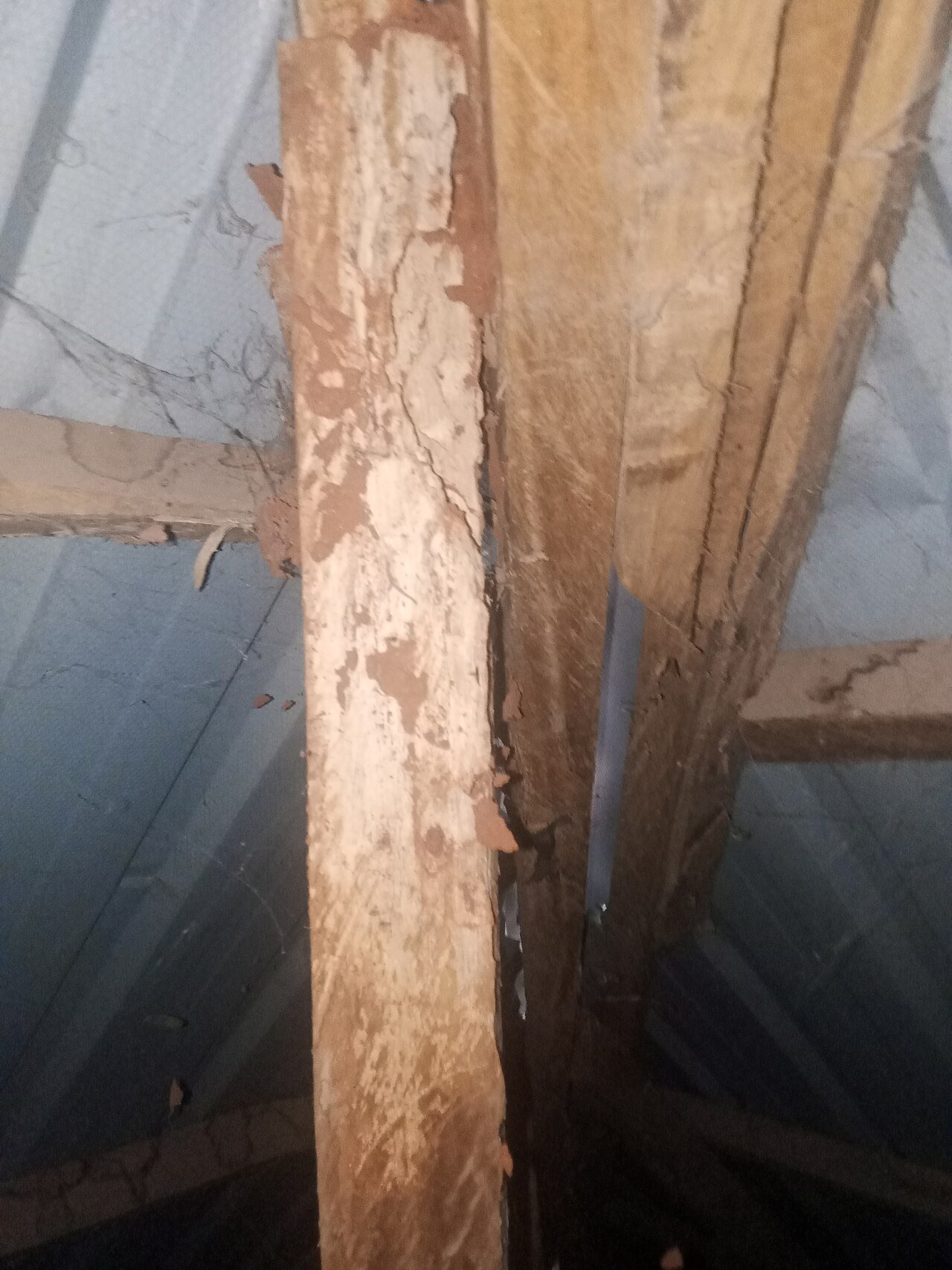
- Swarm triage: April–May emergences ID’d free — straight antennae and equal wings is the file going active, and on wet ground, same-week response is the whole game
The honest close: Brookville’s termite risk isn’t dramatic — it’s persistent, which is worse when ignored and easier when managed. Persistent pressure rewards persistent, verifiable protection: the annual walk, the station check, the re-inspection that actually happens. That’s the maintenance culture this town already applies to its equipment and its buildings, pointed at the one threat that works underground. The full local file lives on our Brookville service page.
Read Your Ground Honestly
One inspection reads your soil, your foundation era, and your parcel’s wood map — then the program matches the wet-ground clock: verifiable protection, real cadence, and no lifetime-treatment fairy tales. The swarm ID stays free, and same-week means same-week.
Buying or selling in Brookville? What a lender, a VA file, or a listing agent asks for is not a treatment — it is a written report. That is a termite and WDI inspection in Brookville: $99 flat on the lender-ready NPMA-33, next business day, PDF the day we inspect. Treatment only enters the conversation if the report actually finds something.
Frequently asked questions
Does wet ground really increase termite risk?
Both directions at once: moist workable soil keeps colonies foraging through months when drier towns’ termites throttle back, and the same wet, biologically active ground degrades liquid treatment chemistry faster. Brookville’s clock runs quick on both hands — which makes cadence the strategy.
How long will a liquid barrier last at my house?
Years, not decades — and on this soil, toward the short end of the range: moisture and microbial activity are the two biggest degradation variables and Brookville has both. Anyone quoting a “lifetime treatment” is describing a product that doesn’t exist.
Are bait stations better than liquid treatment here?
Often, honestly — not because the chemistry is stronger but because it’s verifiable: stations get physically checked and recharged on schedule instead of trusted invisibly in ground that eats barriers. The wet-ground clock rewards protection you can audit.
Why does my basement’s spring dampness matter for termites?
It reports the water table — and soil that wets your basement keeps the earth against your sills workable for colonies. Downspout and grade corrections that dry the foundation line serve the termite file and the basement both.
Where do colonies actually start on a working parcel?
In the unwatched wood: barn sills, shed grade-boards, and the ground-contact firewood and post piles — staging habitat on moist soil, colonized years before the house sees a swarmer. The annual walk reads every building and pile for exactly that reason.
What are the signs to watch between inspections?
April–May swarmers (straight antennae, equal wings — the free photo ID confirms), pencil-wide mud tubes on stone or block, mud in sill joints, and wood that probes soft at grade. On wet ground, any of them is a same-week call.
Does the firewood rule really matter that much?
Double here: ground-contact wood on moist soil stages termites and carpenter ants alike. Up on rails, away from every foundation — the cheapest structural protection a Brookville parcel can buy, and it’s free.
What does termite control cost in Brookville?
Inspection quotes it by foundation and access: annual-cadence programs, bait systems with scheduled station service, and barrier work priced with its honest lifespan stated — all small against a sill repair no insurance covers.