Every November, when the leaves come down along Bellbrook’s wooded streets and the Sugarcreek ravines, the town discovers where its hornets spent the summer. The gray footballs hang suddenly obvious in the bare canopy — basketball-sized paper fortresses twenty feet up a maple that shaded a swing set all season — and the annual round of “that was THERE?” begins. Wasp and hornet removal in Bellbrook is shaped by that reveal: this is the most hornet-forward town on our route, because bald-faced hornets build in exactly what Bellbrook has most of — mature hardwood canopy near water — and their nests run invisible at full strength through the entire season they matter. We call it football season, and playing it well is mostly a matter of knowing when the schedule actually runs.
The Invisible Season
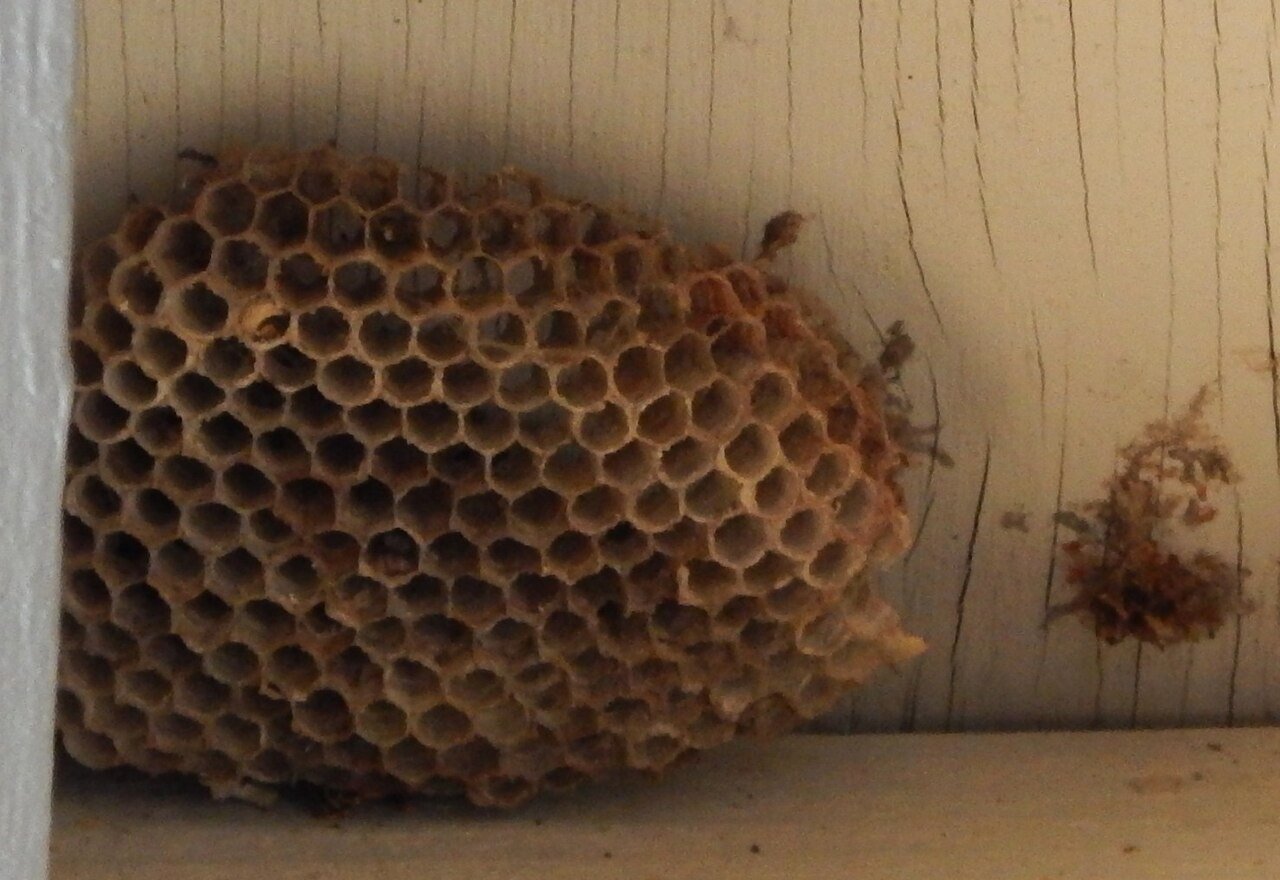
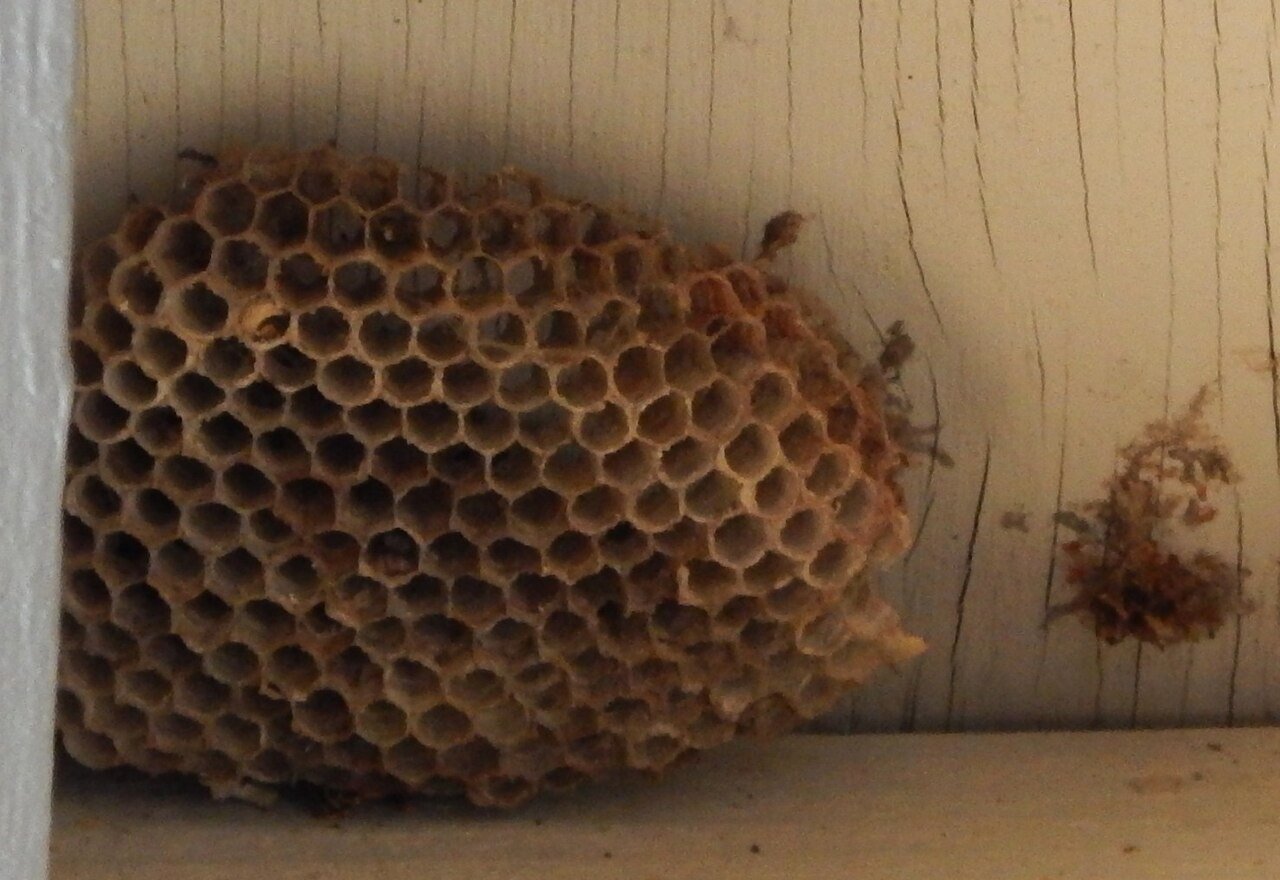
A bald-faced hornet colony’s year is a magic trick. The queen founds in April at golf-ball size; by July the nest is a lunchbox wrapped in leaves; by September it’s a football housing several hundred of the most committed defenders in Ohio’s stinging-insect roster — and through all of it, the leaf canopy keeps the structure effectively invisible from the ground. Most Bellbrook discoveries therefore happen one of three ways: the landscaper’s pole saw meets it, a football or frisbee flushes the colony, or leaf-drop reveals it after frost has already ended the story. That third outcome is the good one — a bare-branch football in December is empty, harmless, and never reused, and it needs a photograph, not a treatment. The first two are the emergencies this page exists to prevent.
The Pre-Work Scan
The practical Bellbrook habit runs before yard work, not after: any serious canopy interaction — tree trimming, pole-saw work, treehouse projects, retrieving anything from height — earns two minutes of watching first. Stand back and scan the work zone for steady insect traffic converging on one point in the foliage; a live hornet nest generates a visible flight lane at its entrance hole all day long, and spotting the lane is spotting the nest. The same scan covers the lower-altitude file: shrub-line and eave checks before hedge trimming, because hornets occasionally build low in dense ornamentals, and a hedge trimmer into an unseen nest is the single worst discovery mechanism the species offers.
The Whole Bellbrook File
- Hornet-nest removal at height: the football jobs — full protective protocol, proper equipment, and timing chosen for colony-off-guard hours; never a homeowner ladder project at any price
- The season-verdict call: honest triage on every discovery — an active September nest over a play area gets removed; a high nest over an unused ravine edge can sometimes wait for frost, and we’ll say which
- Deck-and-eave service: the paper wasp file the town’s cedar pergolas, deck rails, and soffit lines carry every summer, swept at founding stage in spring
- Ground-nest response: yellowjackets in the wooded-lot margins and mulch beds — flagged, mowed around, and treated at the burrow
The ecological footnote Bellbrook’s character deserves: bald-faced hornets are native, spectacular pollinator-adjacent predators that clear flies and caterpillars all season, and a colony posing no traffic conflict is genuinely fine to leave for frost — we say so routinely, and the no-treatment verdict is free. The removals we do run are the conflicts: the nest over the deck, the flight lane crossing the pool, the colony at pole-saw height in a tree that needs work this month. That triage — remove the conflicts, leave the neighbors — is how a wooded town keeps both its safety and its ecosystem, and it’s the standard we work to on every call. The town’s full file lives on our Bellbrook service page.
Get the Season Verdict
Found a football — or a flight lane — or about to run a pole saw into the unknown? One call gets the honest triage: active or empty, conflict or neighbor, remove now or let frost finish it. The scan advice is free forever.
Frequently asked questions
I just found a huge gray nest in my bare tree — is it dangerous?
If the leaves are down and frost has run, it’s almost certainly empty — colonies die at frost, queens overwinter elsewhere, and old nests are never reused. A December football is a photograph, not an emergency. The same nest in September was a different story.
Why didn’t I see the nest all summer?
The colony’s whole architecture is camouflage: founded at golf-ball size in April, grown inside the leaf canopy, gray against bark and shadow. Bald-faced hornet nests run invisible at full strength precisely through the months they’re dangerous — which is why the pre-work scan matters more than sharp eyes.
What’s the right way to check before tree work or hedge trimming?
Two minutes of standing back and watching the work zone for a flight lane — steady insect traffic converging on one point in the foliage. A live nest generates that lane all day. Hedge trimmers and pole saws into unseen nests are the two worst discovery mechanisms this species offers.
Are bald-faced hornets aggressive?
Fiercely — but only in defense: they’re committed defenders of a large no-go radius around the nest and largely indifferent away from it. That’s why the triage is location, not species: a ravine-edge nest is a neighbor; the same nest over your deck is a conflict.
Can you leave a hornet nest alone on purpose?
Routinely — and we’ll recommend it when there’s no traffic conflict: they’re native predators clearing flies and caterpillars all season, and frost ends every colony regardless. The no-treatment verdict is free; the removals we run are the genuine conflicts.
Why can’t I spray a hornet nest myself?
Height, colony size, and defense commitment — a September football holds hundreds of defenders, a can’s spray guarantees survivors, and a homeowner on a ladder at twenty feet with an alarmed colony is the incident report. Full protocol and proper equipment exist for exactly this job.
What about the regular wasps on my deck and pergola?
The paper wasp file — cedar rails, pergola joints, and soffit lines get founding nests every spring, and the April sweep at broom stage prevents the August removals. Same calendar logic as the hornets, at reachable height.
What does hornet removal cost in Bellbrook?
Flat-priced by job class: founding-stage sweeps cheapest, established at-height removals quoted by access and protocol — and the season-verdict call that says “leave it for frost” costs nothing at all.
Bellbrook’s full service picture continues with ant control in Bellbrook and termite control in Bellbrook.