
No pest generates more lawn-owner fury per ounce of animal than the mole. A creature the size of a bratwurst, blind, working alone, can convert a flawless Kettering lawn into a relief map of ridges and dirt volcanoes in a single October week — and then defeat every remedy the hardware store sells, because nearly everything sold against moles addresses an animal that doesn’t exist: the mythical grub-eating, poison-peanut-nibbling, vibration-fearing mole of folklore. The real Ohio mole is stranger and more consistent than the myth, and once you understand its actual biology, both the damage pattern and the short list of things that genuinely work make complete sense. This is the full guide — the animal, the tunnels, the vole confusion, the remedy graveyard, and the trapping-first approach behind our mole control service — from Greater Dayton Pest & Rodent, with the usual promise attached: free evaluation, honest scope, and no grub-treatment upsell dressed up as mole control.
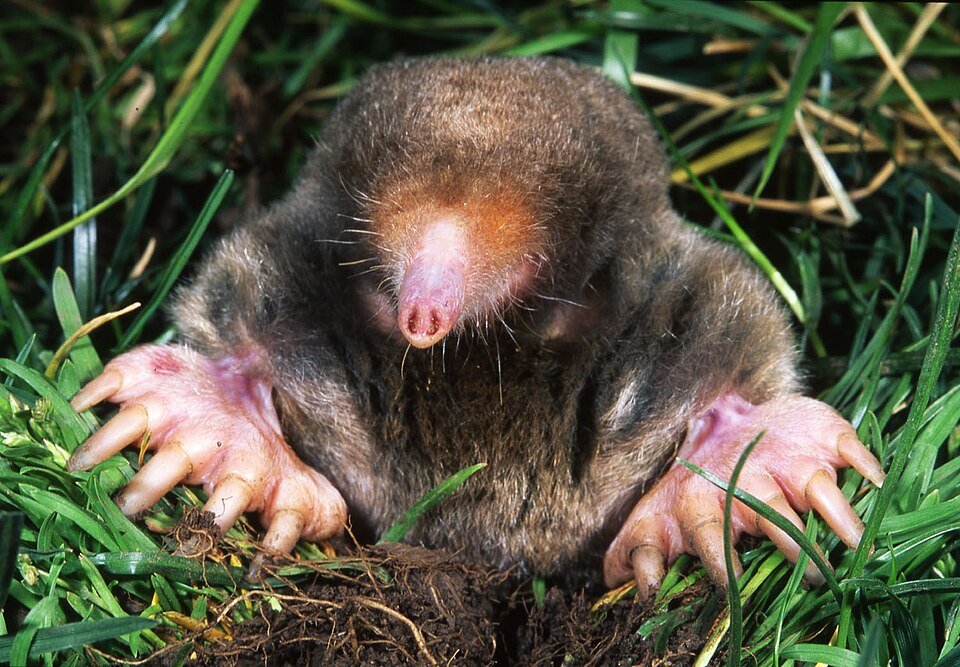
Meet the eastern mole: Ohio’s underground earthworm specialist
Ohio’s lawn mole is the eastern mole (Scalopus aquaticus) — six to eight inches of velvet-furred digging machine with paddle forefeet turned permanently palms-out, pinhole eyes sealed beneath skin, and a metabolism that runs like a furnace. That metabolism is the key to everything: a mole must eat roughly its own body weight every day or two, and its diet is earthworms first — 70 to 90 percent by most studies — with grubs, beetle larvae, and other soil invertebrates as the supporting cast. It does not eat plants, bulbs, roots, or seeds at all; the tomato-bulb accusations belong entirely to the voles and mice that borrow mole tunnels (a confusion this page untangles below). Moles are also fiercely solitary: that devastated half-acre is almost always the work of one to three animals, not the colony owners imagine — a fact that transforms the control math, because removing two or three individuals genuinely empties a territory for a season. They’re active year-round (no hibernation — winter work just moves deeper), and they dig two distinct tunnel systems: shallow surface runs — the raised ridges you can press flat with a foot — used for feeding as soil moisture brings worms up, and deep permanent highways eight to twenty inches down, marked by the molehills: volcano-shaped piles of excavated subsoil pushed up through vertical shafts. Reading which system is active is the entire art of mole control, and it’s where our service starts.
Moles are after grubs and earthworms, not your lawn, which is why repellents disappoint and trapping does not. See mole control and trapping.
Mole, vole, or something else? The five-minute lawn diagnosis
Half the “mole problems” we evaluate are voles, and the treatments don’t overlap, so the diagnosis pays for itself. Raised ridges you can feel underfoot, plus volcano-shaped dirt mounds with no visible hole: mole — the ridge is a roof over a tunnel, the volcano caps a vertical shaft. Surface runways worn INTO the grass like tiny paths, open burrow holes the size of a golf ball, gnawed bark at shrub bases, plants clipped at soil level: vole (meadow mouse) — a plant-eating rodent that runs surface trails, breeds in multiples, and often exploits mole tunnels as protected transit, which is how moles get blamed for eaten tulip bulbs. A few coin-sized holes with no ridges, appearing overnight near trees each fall: squirrels caching, or chipmunks — cosmetic. Torn-up patches of turf peeled back in sheets: raccoons and skunks grubbing after a genuine grub bloom — ironically the one lawn-damage pattern where grubs ARE the story. Each diagnosis routes differently: moles to trapping, voles to rodent-style baiting and habitat work, grub-diggers to the lawn conversation. Send lawn photos to (937) 569-3330 and we’ll read yours free — it’s a thirty-second call that has saved plenty of Miami Valley homeowners a season of treating the wrong animal.

The remedy graveyard: what doesn’t work and why
Mole folklore is a genre unto itself, so let’s clear the shelf honestly, mechanism by mechanism. Grub treatments as mole control — the most commercially successful myth in the lawn industry: since moles eat earthworms first, killing the grubs removes a garnish from a menu whose main course your irrigated lawn serves daily; university trials repeatedly find grub control fails to move moles, and you’ve spent lawn-insecticide money on a mammal problem. (Treat grubs when grubs are damaging the lawn — brown patches that lift like carpet — not as mole strategy.) Poison peanuts and pelleted baits: moles are strict insectivores that identify prey by smell and touch — they don’t recognize grain baits as food, and the pellets sit in tunnels untouched, worrying dog owners for nothing. Vibration stakes, ultrasonic spikes, windmills: moles routinely tunnel within feet of running mowers and interstate highways; controlled tests show no displacement. Castor oil sprays: the one folk remedy with a sliver of evidence — moles dislike the taste in soil invertebrates — but Ohio field results are inconsistent, effects fade with rain, and at best it pushes the mole to your neighbor’s lawn for a few weeks. Juicy Fruit gum, glass shards, human hair, mothballs, exhaust piped into tunnels: no, no, no, no, and the last one’s illegal besides being useless. The pattern behind every failure is the same: these products sell an easy answer to an animal whose biology only yields to two things — a trap in the right tunnel, or a bait that convincingly imitates its actual prey.
What actually works: the trapping-first program
Modern mole control rests on two tools with real evidence behind them, both dependent entirely on placement. Trapping is the gold standard — scissor-jaw and harpoon-style traps set into active tunnels kill instantly and verifiably, and “active” is the operative word: the professional edge isn’t the trap, it’s the tunnel-reading that finds the two or three runs a mole actually re-uses among the dozens it abandons. Our technicians flag suspect runs, collapse a section, and set only where the animal re-excavates within a day — the difference between a trap that produces in 48 hours and the homeowner trap that sits empty for a month in a dead tunnel. Earthworm-mimic baits (bromethalin gel worms placed by hand into active deep runs) are the evidence-based second tool, useful in trap-shy situations and complex tunnel systems, and their placement discipline matters doubly because of pets — which is why ours go exclusively into sealed deep tunnels, never surface runs. A typical Miami Valley mole job runs two to four weeks: evaluation and activity-mapping, trap line set and adjusted across visits, verified catches (we show you), and a monitoring window to confirm the territory is empty. Then the honest epilogue: mole territory vacancies eventually refill from surrounding habitat — creek corridors, field edges, the neighbor’s untreated acre — so edge-of-green properties in Bellbrook, Washington Township, and rural Greene County often choose a seasonal maintenance arrangement, while mid-block lawns in Kettering may stay clear for years after one clean-out. We’ll tell you which property you own before you spend a dollar.
The mole calendar, and why October lawns explode
- March–May: spring surge one — warming soil pulls worms up, moles follow into shallow runs, and winter’s hidden deep work erupts as a molehill field; breeding season (one litter of 3–5 pups, born in the deep system)
- June–August: dry-summer lull — worms go deep, moles follow, surface evidence fades and owners declare premature victory; irrigated lawns stay active (your sprinklers run a worm buffet)
- September–November: the big season — fall rains bring worms and moles back up with juveniles now dispersing to claim territories; the classic “my lawn was fine last week” call, and the best trapping window of the year
- December–February: deep-system work under frost; occasional mild-spell surface runs; damage accumulates invisibly for spring’s reveal
In the mole’s defense (briefly, before we trap it)
Fairness requires one paragraph the lawn-care industry rarely writes: moles are, ecologically, magnificent. A working mole aerates compacted soil more effectively than any machine you can rent, cycles nutrients through the profile, and eats quantities of root-feeding larvae alongside its worms. Farmland and woodlot moles are unambiguous assets, and even a lawn mole is doing free soil work under the cosmetic damage. Our honest counsel runs accordingly: a mole working the back acre of a rural property, away from the finished turf, is often best left employed — we’ve talked more than one Lebanon and Xenia landowner out of paying us, and consider those calls well spent. The trapping program exists for the properties where the math genuinely runs the other way: finished lawns absorbing real damage, ridge networks undermining mower wheels and twisting ankles, tunnel systems flooding mulch beds, and the vole traffic that mole highways invite into ornamental plantings. Control where it’s warranted, tolerance where it isn’t, and a straight answer about which is which — the same triage that runs every page on this site, applied to the one pest that’s arguably doing your soil a favor while it wrecks your weekend.
Mole questions we answer every fall
How many moles do I actually have?
Almost certainly fewer than the damage suggests — one mole digs up to a hundred feet of tunnel a day, and a single energetic animal can look like an invasion. Two to three per residential acre is a heavy load; most Miami Valley lawns host exactly one. It’s why trapping works: this is an eviction of individuals, not a war on a colony.
Are mole baits safe with my dog?
Handled professionally, yes — worm-mimic baits go into sealed deep tunnels a dog can’t casually access, and we skip baiting entirely on properties where digging dogs make the calculus uncomfortable, running trap-only programs instead. Tell us about your animals at the evaluation; the plan bends around them, as it does on every service we run.
My neighbor’s yard is a mole farm. Am I wasting money treating mine?
No — but you’re buying maintenance, not permanence, and we’ll say so upfront. A cleared territory beside an untreated reservoir refills in months rather than years; the seasonal arrangement (fall and spring trap lines) holds the line affordably, and the fence-line conversation that’s saved money on this site’s other services works here too — adjacent lawns trapped the same week split travel and close the refill corridor together.
Is DIY trapping worth attempting?
Genuinely, sometimes — a patient homeowner with a quality scissor trap, a good tunnel-reading tutorial, and realistic expectations can absolutely catch their mole, and we respect the win. The service exists for everyone else: the trap-shy mole, the twelfth empty morning, the lawn worth more than the learning curve, and the properties where distinguishing active runs defeats casual observation. Either way, skip the remedy graveyard — the money you don’t spend on vibration stakes buys a very good trap: (937) 569-3330, free lawn evaluation, photos welcome.
Repairing the battlefield: lawn recovery after moles
Once the trapping program empties the territory, the lawn repair is straightforward and satisfying. Surface ridges get walked flat or rolled while soil is moist — pressed promptly, the turf roots re-knit and most ridges vanish within weeks. Molehill soil is actually a gift in disguise: it’s screened subsoil, perfect for topdressing — rake the volcanoes level, overseed the scars in the September or April windows, and water them in. Sunken runs that collapse underfoot get topdressed with a soil-compost mix rather than pure sand. The one repair mistake worth naming: don’t till or aggressively renovate while activity continues — fresh, loose, irrigated soil is mole heaven, and mid-program renovation invites the next animal to your best digging. Sequence it trap-first, repair-second, and the fall lawn you overseed lands on a vacancy. For properties running our seasonal maintenance line, the spring visit doubles as a repair audit — we flag what needs seed against what will self-heal, which most of it will. Grass forgives quickly; it’s the remedy-graveyard receipts that take longer to get over.
The Ohio mole story in one paragraph
One species, working alone, eating earthworms your healthy lawn cannot help but produce, immune to everything sold in the repellent aisle, and reliably removable by a well-placed trap read from active tunnels — that’s the entire Ohio mole file, and it explains both why the folklore fails and why the fix feels almost anticlimactic when it’s done right. The ridges flatten, the volcanoes rake out, the overseed knits, and the lawn forgets by Thanksgiving what it looked like in October. Our mole control service runs the whole arc — diagnosis (mole versus vole versus grub-diggers), the trap line, verified catches, the monitoring window, and the honest talk about refill pressure on edge properties — under the same guarantee and free-evaluation standard as everything else this company does. The mole, blind and blameless, is just being excellent at its job; ours is making sure it practices that excellence somewhere other than your front yard.
Quick reference: the mole file on one screen
- The animal: eastern mole — solitary insectivore, eats earthworms (not plants, not mainly grubs), 1–3 per damaged acre, active year-round
- The evidence: raised pressable ridges = shallow feeding runs; volcano mounds with no hole = deep system shafts; grass-path runways and open holes = voles, a different program entirely
- Doesn’t work: grub treatments, poison peanuts, vibration/sonic devices, castor oil (marginal at best), and the entire folk-remedy shelf
- Works: traps set in verified-active tunnels; earthworm-mimic baits hand-placed in sealed deep runs; both placement-dependent, both verifiable
- Timeline: 2–4 weeks to empty a territory; refill risk depends on adjacent habitat — edge properties maintain seasonally, mid-block lawns often stay clear for years
- Repair: press ridges moist, rake mounds as topdressing, overseed in fall or spring — after trapping, never during
- Free evaluation: (937) 569-3330 — lawn photos welcome; we’ll tell you mole, vole, or leave-it-alone before anything is invoiced
Screenshot it, share it with the neighbor whose lawn feeds yours, and retire the vibration stakes with a clear conscience — the mole never heard them anyway.
Why Miami Valley soil makes such good mole country
If it seems like southwest Ohio grows moles the way it grows soybeans, the soil map agrees with you. The region’s glacial till and river-valley silt loams — the same deep, worm-rich profiles that made the Miami Valley farm country — hold moisture at exactly the depths earthworms and their predators prefer, and every irrigated suburban lawn recreates that habitat in concentrate: consistent moisture, thatch-fed worm populations, and loose topsoil that a mole can tunnel at walking speed. Add the region’s creek-and-greenway network — the wooded corridors along the Great Miami, Stillwater, and Sugarcreek that thread between subdivisions — and you have permanent mole reservoirs bordering thousands of lawns, which is why the edge-property pattern repeats from Englewood’s river blocks to Springboro’s retention-pond backyards. None of this is fixable, and none of it needs to be: it just explains the refill math honestly and puts mole pressure in the same category as the rest of this region’s geography-driven pests — predictable, manageable, and best handled by someone who reads the local ground for a living. Your lawn sits on some of the best mole habitat in the Midwest; the trap line is how it stays your lawn anyway.
Frequently asked questions
What kind of moles are in Ohio?
The eastern mole dominates — the velvet gray tunneler behind virtually every Dayton lawn complaint — with star-nosed moles in wet lowlands and hairy-tailed moles at the margins. One animal per tunnel network: the “mole army” underfoot is usually one to three energetic individuals.
How many moles are actually in my lawn?
Fewer than the damage suggests — moles are fiercely territorial, and a typical infested lawn hosts one to three, each digging up to a hundred feet of tunnel daily. The excavation-to-population ratio is the most reassuring math in lawn care.
What attracts moles to my yard?
Earthworms first — the moist, organic, well-irrigated soil of a cared-for lawn is a worm farm, and moles follow the food. Grubs are a secondary course, which is why grub treatments so reliably fail to evict them: the worms remain.
Do moles damage my foundation, pipes, or garden plants?
None of the above — tunnels are shallow, structural risk is zero, and plant damage is collateral (root disturbance from tunneling) rather than appetite; the plant-EATER in the yard is the vole. Mole damage is cosmetic turf disruption, honestly priced as annoyance.
When are moles most active in Ohio?
Spring and fall — moist upper soil brings worms and moles to trappable depth; summer drought and winter freeze drive both deep. Dawn and dusk within those seasons; the fresh mound at morning coffee was excavated overnight.
Do mole poisons and repellents work?
The graded verdict from our mole page: castor-oil repellents (C−, brief), sonic spikes (F), poison worms and pellets (D in Ohio conditions — placement rarely meets a feeding mole), grub treatments (D as mole control). Trapping the active runs remains the only A-grade method, which is why it is the entire professional program.
How do I find the active tunnels for trapping?
The collapse test: stomp flat a section of each ridge, mark them, and recheck in 24–48 hours — re-raised tunnels are active highways worth trapping; flat ones are abandoned spurs. Main runs typically follow structures, walks, and lawn edges.
Will moles just go away on their own?
Rarely — a good worm economy holds its mole, and vacated territory refills from the fencerow. The exceptions: drought summers push them to irrigated neighbors (sprinkler diplomacy), and hard winters pause but do not end them.
Are moles good for anything?
Genuinely: they aerate deeper than any core machine, eat grubs by the pound, and their tunnels channel water — a mole at the back fence is free soil service. The calculation is placement: the meadow mole is staff; the putting-green mole is a customer of ours.
What does professional mole trapping cost in Dayton?
Flat season pricing per typical lawn — the whole trapping program, unlimited pulls, with the add-on rate for extra acreage and the returning-customer fall re-run discount, all on our mole control page: (937) 569-3330. No per-mole surprises; the flat price IS the product.