
Every October, on the first warm, sunny afternoon after the first real cold snap, the same scene plays out across the Miami Valley: the south and west walls of thousands of homes come alive with insects. Orange-and-black lady beetles by the hundred, shield-shaped stink bugs trundling up the siding, red-striped boxelder bugs massing at the sunny corners — all staging for the same objective, which is spending the winter inside your walls. We call them the fall invaders, and they’re a category unto themselves: they don’t breed indoors, they don’t eat your house, they don’t bite in any meaningful way — and they still generate more late-September phone calls than any pest except mice, because a living wall is unnerving no matter how harmless the biology. This page covers all three invaders — who they are, why your house, and the one-week window when treatment actually works — plus the honest news about what to do if you’re reading this after they’re already inside.
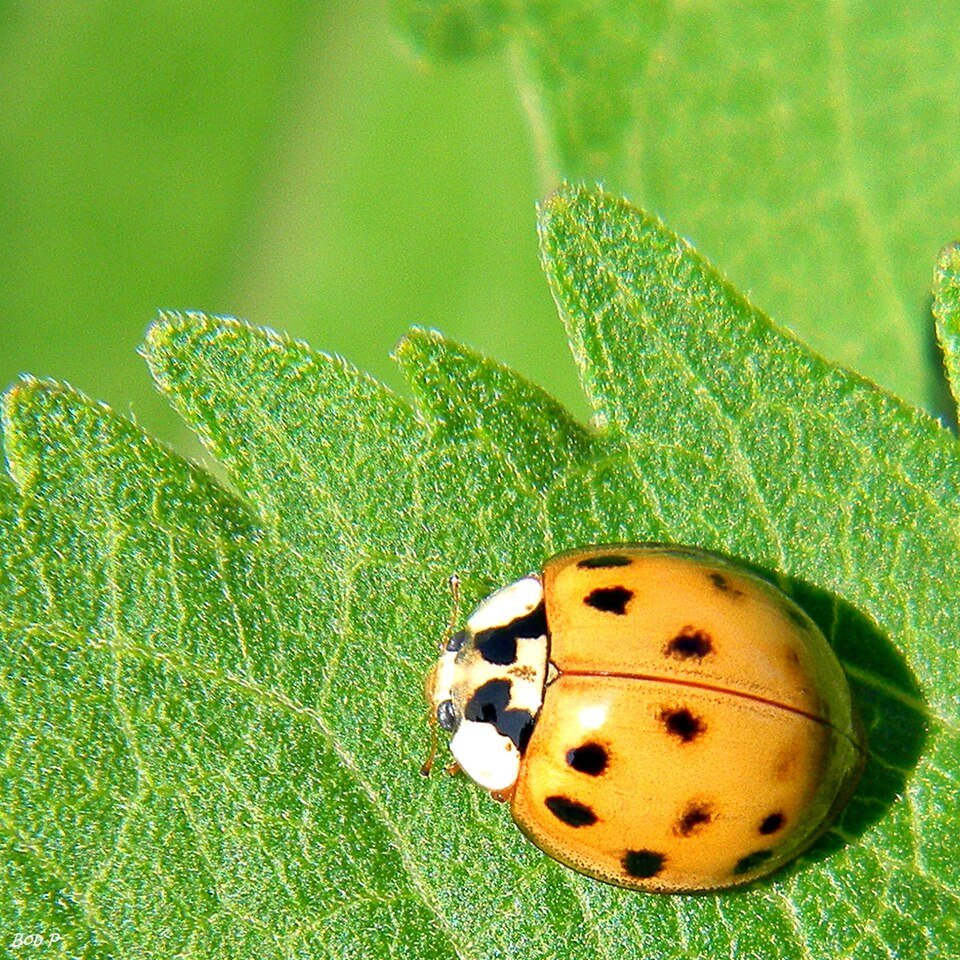
Invader one: the multicolored Asian lady beetle (the “ladybug” with a catch)
The beetles blanketing your siding in October are almost never our native ladybugs — they’re multicolored Asian lady beetles (Harmonia axyridis), introduced decades ago for agricultural aphid control and now the dominant lady beetle across Ohio. All summer they’re genuinely beneficial, clearing aphids from soybeans and gardens; the trouble is their homing instinct. In their native range they overwinter in cliff faces; in Ohio, the sunlit southwest wall of your house is the best cliff available, and after harvest strips the fields — a timing that matters enormously in the farm-adjacent suburbs from Huber Heights to Xenia — they converge on structures by the thousand. Identification is easy at close range: highly variable color (yellow-orange to deep red, spots or none — hence “multicolored”) and the distinctive black “M” marking on the white plate behind the head. Two habits distinguish them from the ladybugs of nursery rhymes: they reflex-bleed when disturbed, exuding a yellow fluid that stains walls, curtains, and carpet — the reason you vacuum rather than swat — and they can deliver a tiny nip (a pinch, not a bite that matters, but startling from a “ladybug”). Indoors over winter they collect at ceiling corners and window frames on warm days, dying by the cupful in light fixtures, and heavy infestations are a documented allergen source. They neither feed nor reproduce indoors; everything you see in January entered during that one October week.
Fall invaders are an exclusion problem with a deadline, and the deadline is the first cold snap. See pest control in Dayton.
Invader two: the brown marmorated stink bug
The shield-shaped brown bug on your curtains is the brown marmorated stink bug — a fairly recent arrival that spread through Ohio over the past two decades and made itself a serious orchard and row-crop pest along the way. “Marmorated” means marbled: mottled brown above, with the white-banded antennae and alternating light-dark edge pattern that separate it from Ohio’s native (and better-behaved) stink bugs. Yes, they fly — noisily and badly, which is why one careening around a lamp can hold a living room hostage — and yes, the smell is real: disturbed or crushed, scent glands release the signature cilantro-gone-wrong odor that also functions, unhelpfully, as an aggregation cue telling other stink bugs a good overwintering site has been found. Like the lady beetles they’re solar-triggered, massing on sun-warmed walls after harvest and working through gaps into attics and wall voids, where they wait out winter in dormancy and blunder into living space on warm days. They don’t bite, sting, breed indoors, or damage the structure; they’re an odor-and-annoyance problem with a farm-field supply line — which, in a region ringed by soybeans and orchards, is a substantial supply line indeed.
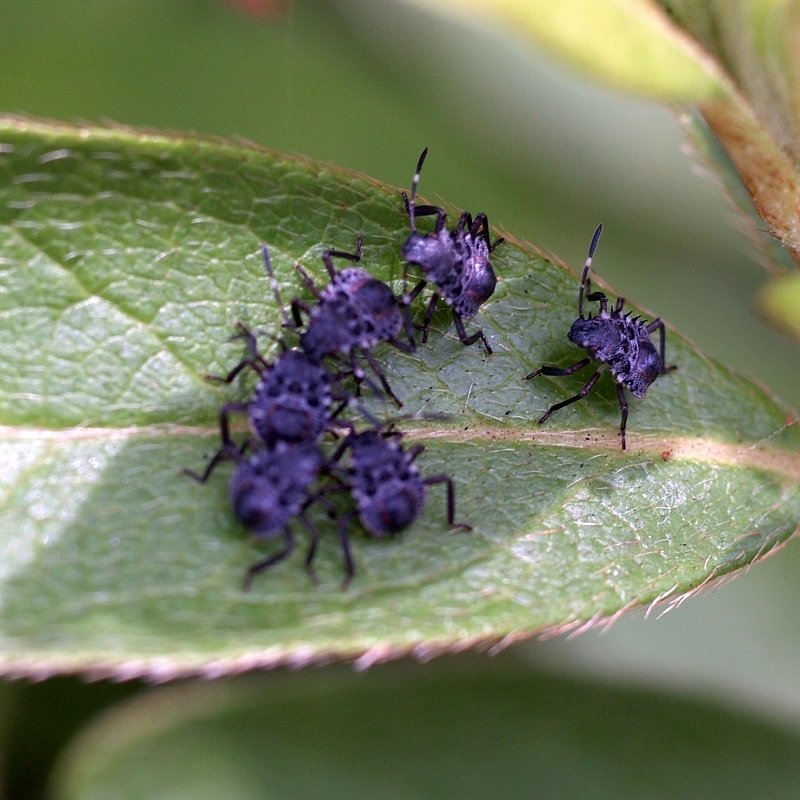
Invader three: the boxelder bug
The elegant black bug with red racing stripes massing on sunny brick is the boxelder bug, the most tradition-bound of the three: it summers on boxelder and maple trees (seed-bearing female boxelders especially), and in fall the whole population relocates to the nearest warm south-facing surface — often the same house, generation after generation, which is why some addresses are “boxelder houses” and their neighbors aren’t. If your lot or your neighbor’s holds a mature boxelder or silver maple, you’re on the flight path; the canopy streets of Kettering, Oakwood, and Englewood supply our steadiest calls. Indoors they’re the most polite of the three invaders — no odor to speak of unless crushed, no reflex bleeding, no allergen load — just numbers, sun-tracking clusters at windows, and occasional curiosity about houseplants. The tree connection also gives them the one unique long-term lever: removing or replacing a seed-bearing boxelder ends a house’s boxelder era permanently, a landscaping decision we’ll honestly flag when one tree is demonstrably running the whole show.
The one-week window: how fall invader treatment actually works
Fall invaders are unusual among pests in having a single decisive intervention point: the staging window, that stretch of warm afternoons in late September and early October when the insects are massed on the walls but not yet in them. Our fall invader service is built entirely around it. The exterior treatment applies a residual product to the surfaces where the insects actually stage and enter — south and west walls, rooflines and soffit junctions, window and door frames, vents, and the sun-warmed corners — so arrivals contact treatment during the days or weeks of accumulation rather than after. Timing beats strength: the same application made in August has weathered thin by staging season, and made in November it’s addressing an empty wall while the insects nap in your attic. We watch the forecast — the trigger is the first stretch of nights in the 40s followed by sunny 70-degree days — and run the fall-invader route hard for those two to three weeks. Book by Labor Day and you’re on the list; call during the event itself and we’ll do honest triage on what treatment can still intercept. Paired with the exclusion work below, two or three consecutive years of well-timed treatment usually breaks a house’s invader tradition outright, because these species aggregate by scent-marking successful sites — a house that stops working stops getting marked.
Exclusion: the caulk-gun half of the program
- Rooflines first: the gap where soffit meets fascia, ridge and gable vents without screens, and flashing junctions are the top entries for all three species — attic invaders came through the roofline, not the front door
- Window frames and utility penetrations: caulk gaps around frames on the sunny faces, seal AC and cable penetrations, and repair torn screens before September
- Weep holes on brick veneer: the same stainless guards that stop Huber Heights mice stop stink bugs — drainage stays, doorway closes
- Door sweeps and garage seals: the ground-level entries that catch the overflow once walls are treated
- Chimney caps and vent screens: cheap hardware that closes the big obvious holes
- Timing note: do exclusion in summer or after hard frost — sealing during the event itself traps insects in the walls, where the same die-off and odor problems happen out of vacuum’s reach
Already inside? The winter protocol
If it’s January and lady beetles keep appearing at the ceiling, the honest news first: the insects overwintering in your wall voids and attic cannot be meaningfully treated where they are — no accessible product reaches deep voids, and killing hundreds of insects inside a wall creates a carcass problem (and, with lady beetles, a dermestid-beetle problem) worse than the original. The winter protocol is management, and it works: vacuum, don’t swat (a shop vac with a stocking over the hose end makes a removable catch-bag; swatting means stains and stink), empty the vacuum outside promptly, chill rooms where practical on warm afternoons (activity is heat-triggered), and log where they emerge — the ceiling corner or window head where they keep appearing maps the void they’re using, which becomes priority exclusion in spring. Then break the cycle at the next staging season with the treatment-plus-exclusion program above. Houses that run the full sequence — winter mapping, summer sealing, September treatment — routinely go from thousands of invaders to a handful in a single year, and that’s the arc we’ll quote you honestly: not an instant winter fix, but a permanent end to the October wall.
Fall invader questions, answered
Are they dangerous to my family or pets at all?
Functionally no — no stings, no disease, no structural damage, no indoor breeding. The caveats are quality-of-life: lady beetle reflex-blood stains fabric and can trigger allergies in heavy loads, stink bug odor is genuinely unpleasant, and dogs that snack on either learn a drooling, foamy lesson they rarely repeat. It’s the rare pest category where “harmless” is nearly the whole truth — which is why our program sells timing and exclusion rather than fear.
Why my house and not my neighbor’s?
Sun and gaps. Invaders select for warm western/southern exposure, light-colored walls that radiate heat, and accessible entry gaps — then scent-mark success, building a tradition. A dark, shaded, tightly sealed house across from a sunny, gappy one might see one percent of the traffic. The good news: two of those three factors (gaps, scent tradition) are exactly what treatment and exclusion change.
Do the indoor lady beetle traps and stink bug traps work?
As monitors, mildly; as control, no. Light-based traps catch the insects already active in a room — useful in a heavily-loaded attic as cleanup assistance — but they don’t touch the voids where the population waits. The staging-season exterior program is where the numbers actually move.
The harvest connection: why farm-adjacent suburbs get it worst
Fall invader intensity across the Miami Valley maps almost perfectly onto distance-from-agriculture, because two of the three species spend their summers in crop country. Lady beetles work the soybean aphid cycle — a heavy aphid year in the beans means a spectacular beetle flight in October — and stink bugs feed across soybeans, corn, and orchard fruit all season. When the combines run, both populations lose their habitat in a single week and ride the prevailing southwest winds to the nearest structures, which is why the farm-seam communities — Huber Heights’ northern edge, Fairborn’s Bath Township line, Xenia, Springboro’s newer rings, and rural Lebanon — book our fall-invader route soonest and hardest each September. Boxelder pressure follows the tree map instead, peaking in the mature-canopy towns. Wherever your address falls, the harvest calendar is your early-warning system: when you see the first field come down nearby, the staging flights are one warm afternoon away, and the treatment window is open. It’s the most predictable pest event of the Ohio year — and predictable is the best thing a pest problem can be, because predictable is preventable.
What fall invader service costs
The standard fall invader treatment — full exterior application on the staging faces and entry zones of a typical single-family home — is a single seasonal visit priced in the lower-middle of the residential range, guaranteed as quoted — and for Protection Plan members, if the wall reloads while the window’s still open, the re-treat is free. Exclusion work quotes separately by the linear reality of your roofline and gaps, and pays back across every pest on this site, not just October’s. Multi-year houses with heavy traditions get the package framing — treatment now, exclusion punch list prioritized by the winter mapping, treatment again next fall — with the honest goal of firing us from the fall-invader job within three seasons. And if your situation is one tree funding one boxelder dynasty, we’ll say so and let a landscaper solve what a sprayer shouldn’t: (937) 569-3330, free quotes, and September slots that genuinely do run out — the forecast decides our calendar on this one, so beat it.
One more fall visitor worth naming: cluster flies
The sluggish, slightly-oversized flies bumping at winter windows are cluster flies — earthworm parasites all summer, wall-void overwinterers by October, and honorary members of this page’s cast. They follow the same sun-warmed-wall staging behavior, enter the same roofline gaps, and respond to the same treatment-plus-exclusion program, so they ride along on the fall-invader service at no extra scope. If your winter problem is flies rather than beetles or shield bugs, everything above still applies — same walls, same window, same fix.
Telling the three apart at a glance (and what each one means)
A quick field guide for the October wall, since the response differs slightly by species. Round, domed, orange-to-red with variable spots and a black “M” behind the head: Asian lady beetle — vacuum indoors, never swat (stains), expect allergy load only at heavy density, and note aphid-heavy garden years predict heavy flights. Shield-shaped, marbled brown, banded antennae, flies loudly: brown marmorated stink bug — handle by cup-and-card or vacuum, never crush indoors, and check window AC units and attic gaps first, their two favorite doors. Slim, charcoal-black with three red stripes behind the head and red wing edges: boxelder bug — the most cosmetic of the three, traceable to a specific tree, and the one where a landscaping decision can end the story. All three appear on the same wall on the same afternoon at plenty of Miami Valley addresses, and the treatment program doesn’t distinguish — the staging-window exterior application and the exclusion list cover the whole cast, cluster flies included. What the identification changes is your indoor tactics and your long-game options, and now you have both. Photograph your wall when it happens, text it over with your address, and we’ll tell you which mix you’re hosting and whether this season’s window is still open — free, as always, and fast in October because we’re already out there somewhere on a sunny southwest wall.
A closing calendar note for the planners: put two dates in your phone right now. The first is mid-August — “book fall invader treatment” — because the September route fills by the forecast, not the calendar, and the best window some years is only ten days wide. The second is the first week of June — “seal the roofline” — when ladders are pleasant, wasps aren’t yet defending the soffits, and every gap you close works double duty against October’s invaders and the winter’s mice. Two reminders, one afternoon of exclusion, one well-timed treatment: that’s the entire formula that turns the most dramatic pest event of the Ohio year into something you watch happen to other people’s walls.
Do fall invaders mean my house has other pest problems?
Not directly — but they’re a free diagnostic. Every lady beetle in your January kitchen is proof of a gap big enough for an insect to walk through, and the gaps invaders use are the same roofline seams, vent screens, and frame cracks that admit overwintering wasp queens, cluster flies, and — at the larger sizes — the mice whose season runs on the identical October schedule. Houses with dramatic invader years and no other issues are common; houses with invader years that also hear attic scratching by Thanksgiving are commoner than they should be. Treat the invader map your winter gives you as a punch list with the sealing priorities pre-sorted, and you’ll have extracted the one genuinely useful thing this nuisance has to offer.
Frequently asked questions
What are the bugs that invade houses every fall in Ohio?
The overwintering four: brown marmorated stink bugs, boxelder bugs, multicolored Asian lady beetles, and cluster flies — plus supporting cast (western conifer seed bugs, occasional crickets). All run the same play: warm-wall landings in September–October, wall-void winters, warm-day indoor stragglers until spring.
Why does my house get fall bugs worse than my neighbors?
The audition criteria: sun-soaked south and west exposure, light siding, height and edge lines, adjacency to the food source (bean fields for stink bugs, boxelder trees, wooded lots for beetles) — plus the compounding factor, scent-marked success from previous winters. Same houses, every year, for readable reasons.
Do fall invaders damage the house or breed inside?
None of the four: no indoor breeding, no feeding, no structural damage — the files are staining (stink bugs, lady beetles), odor, and sheer nuisance volume. The one real chain: heavy die-offs in voids feed carpet beetle larvae, which is why interior spraying is the wrong tool.
What is the single best defense against all of them?
The August sealing sweep — one pass covers the whole roster: window and door perimeters, screens, soffit and gable vents, AC penetrations, garage thresholds, chimney gaps. Finished by Labor Day, before the flights; caulking in October seals bugs in.
Does exterior barrier treatment work for fall invaders?
Timed to early-to-mid September, genuinely — a residual on the landing walls and rooflines intercepts the audition itself, and it covers stink bugs, boxelders, and beetles in one application. Timed to November, it is theater; the calendar is the whole product.
How do I deal with the ones already inside this winter?
The gentle toolkit, all species: jar-and-card, bottle-drop, stocking-filtered vacuum, lamp-over-soap traps — and tolerance where volume is low, since every straggler dies or leaves by May without help. No swatting on fabric, no interior sprays, no fogging voids.
What are cluster flies and why are they in my attic?
The fourth horseman — sluggish, large-ish flies that breed in earthworms outdoors all summer and overwinter in attics and wall voids, emerging at windows on warm days. No filth association despite appearances; the response is the same sealing program plus window-side vacuum patrol.
When does fall invader season start and end?
Flights begin with the first cool snaps after mid-September and finish by early November; indoor straggler season runs through April’s wake-up-and-leave. Mark the calendar backward: sealing in August, barrier in early September, patience thereafter.
Do ultrasonic repellers or traps stop fall invaders?
Ultrasonics, no — the standing F applies. Light traps indoors catch modestly in bad rooms; outdoor pheromone traps for stink bugs can recruit more than they catch. The graded answers stay boring: seals, timing, and gentle removal.
Can one service visit really cover all the fall bugs?
That is precisely the design of our September visit: one barrier application plus one sealing audit covers the entire roster at once — the highest-leverage single appointment on the residential calendar, and the plan schedules it automatically every year: (937) 569-3330.