
By the time most households ask “do we have fleas?”, the fleas have been in residence for a month or more. That’s not carelessness — it’s design. Adult fleas are the size of a sesame seed, spend their lives at carpet-base level or buried in fur, and represent barely five percent of an infestation at any moment; the rest is eggs, larvae, and cocooned pupae that no casual glance will ever find. So flea detection is a reading-the-evidence game, and the households that catch infestations early aren’t the observant ones — they’re the ones who know which seven signs to check and how to run the three two-minute tests that convert suspicion into a verdict. This page is the complete inspection: every sign in the order they usually appear, the pet evidence, the environmental evidence, the human evidence, the tests that settle it, and the severity read that tells you whether you’re at the “weekend program” stage or the “call us” stage. Fleas compound weekly; the whole value of this page is moving your discovery date earlier.

Sign one: the pet’s behavior changes (the earliest alarm you’ll get)
Weeks before any human evidence, the animal knows. The signature isn’t ordinary scratching — every dog scratches — it’s a change in pattern and intensity: sudden bouts of urgent scratching, biting and chewing at the base of the tail and the hindquarters (the cat flea’s favorite precinct), restlessness at rest, and in cats, obsessive overgrooming that owners routinely misread as fastidiousness. Escalation signs: hair thinning at the tail base and inner thighs, scabby “flea allergy dermatitis” bumps along the back (many pets are allergic to flea saliva — one bite keeps them itching for days), and red, irritated skin under the fur. And the sign nobody connects: pale gums in kittens, puppies, or elderly pets — heavy infestations literally drain small animals into anemia, which converts a pest problem into a same-week veterinary problem. A pet that suddenly hates a room it used to love — refusing the carpeted den, sleeping on hard floors instead of the dog bed — is offering testimony too: animals dodge rooms where they get ambushed.
By the time the signs are obvious the eggs are already down in the carpet, and that stage needs flea treatment in Dayton rather than a bath and a vacuum.
Sign two: flea dirt — the evidence that ends arguments
“Flea dirt” is the polite term for flea droppings: digested blood excreted as pepper-grain black specks that accumulate wherever fleas feed and wherever the pet sleeps. It looks exactly like ground black pepper scattered at the fur base — part the coat at the tail base and look at the skin, or comb and tap onto white paper. The confirmation test takes ten seconds and is definitive: put the specks on a wet white paper towel. Flea dirt blooms rust-red as the dried blood rehydrates; ordinary dirt stays black. That crimson halo is the single most reliable flea sign in existence — better than seeing a flea, frankly, since one flea might be a visitor but flea dirt means sustained feeding. Check the pet’s bedding seams and favorite couch cushion for the same pepper-fall; a white towel laid where the pet sleeps for two days makes a perfect collection tray.
Sign three: bites on human ankles (the overflow alarm)
When fleas start biting the humans, the infestation has crossed a threshold: the pet can no longer absorb the population, and newly-hatched adults are ambushing whatever warm thing walks past. The signature — itchy red papules with dark centers, clustered in twos and threes around ankles and lower shins, appearing after time in a particular room — gets its full workup (including the bed bug and chigger look-alike lineup) on our do fleas bite humans page. For detection purposes, remember its strategic meaning: human bites are a mid-to-late sign, not an early one. If ankles are the first evidence anyone noticed, assume the environmental population is already established and act accordingly — and note which rooms produce bites, because you’ve just been handed a free infestation map.
Signs four and five: seeing them — adults and the stages nobody recognizes
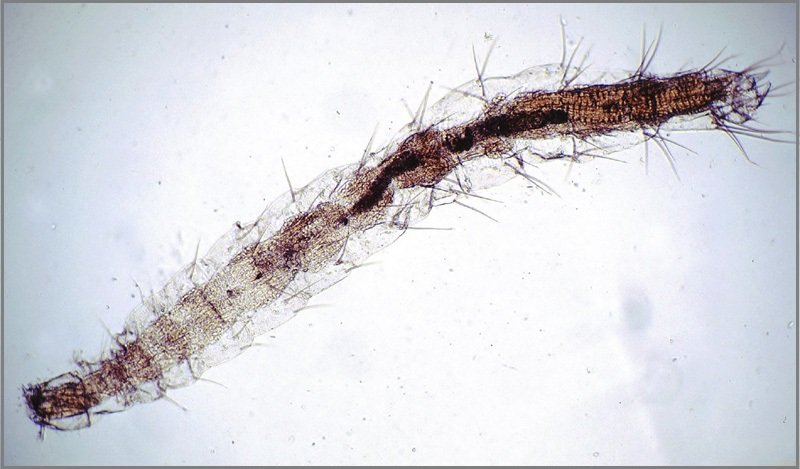
Adults: sesame-sized, mahogany-dark, and identifiable less by anatomy than by physics — the vertical leap. A speck that vanishes with a “tick” when you reach for it is a flea; nothing else in an Ohio living room jumps like that. Prime viewing: on white pet bellies, in the bathtub (fleas that fall in can’t climb the slick walls — a tub with stranded fleas is a classic tell), and on white socks near pet zones. The stages: flea eggs are pinhead white ovals laid in fur but built to fall off — they salt the pet’s sleeping spots like fine dandruff that rolls rather than flakes. Larvae are the stage in the photo below: bristled, blind, quarter-inch maggot-like threads that flee light and live at carpet base, in floor cracks, and under cushions, eating — this is the detail people never forget — the flea dirt raining down from above. Spotting larvae means parting carpet fibers at the base in the pet’s favorite rooms or lifting the couch cushions to the seams; finding even one confirms a breeding population, not visitors. Pupae you will simply never see — the silk cocoons are dust-camouflaged and glued into fibers — which is why their existence has to be inferred from the calendar (more below) rather than the flashlight.
Signs six and seven: the sock test and the water-lamp trap
Two active tests convert “maybe” into a verdict, and both cost nothing. The white-sock shuffle: tall white athletic socks, ten minutes of slow walking and standing in the suspect room, especially across the pet’s routes. Your warmth, vibration, and CO₂ are the exact triggers pupae wait for; emerged adults leap to ankle height and stand out against white cotton like ink spots. Two or more specks in ten minutes is a positive room. The overnight lamp trap: shallow dish of water with a squirt of dish soap on the floor, desk lamp angled a foot above it, room lights off, leave overnight. Fleas navigate toward warmth and light, jump, and the soap breaks the surface tension. It’s a detector, not a cure — but a dish with five drowned fleas settles the question, and running one dish per suspect room turns the trap into a severity map. Run both tests before any treatment campaign and again two weeks after: the before-and-after count is the honest progress meter.
Reading severity: which stage is your house in?
- Stage 1 — pet-only evidence: scratching change plus flea dirt, no human bites, sock test negative. Population mostly on-host and small. A same-week vet treatment plus hot-wash of bedding and daily vacuuming often contains it entirely.
- Stage 2 — environmental spillover: flea dirt in bedding, occasional adult sightings, tub strandings, sock test positive in one room. The carpet layer is live. Run the full program from the elimination guide — pet, laundry, vacuum campaign, growth regulator — and expect the two-week pupal tail.
- Stage 3 — human targeting: ankle bites daily, multiple positive rooms, larvae findable under cushions. The population has outgrown consumer tools’ reach; this is where the professional treatment earns its fee — and where every week of delay adds a week to the fix.
- Stage 4 — no-pet paradox: any flea evidence in a petless house. Skip the staging entirely and call — the source is structural (wildlife, strays, rodents, or inherited pupae) and finding it is the actual job.
The false-positive file: things mistaken for flea signs
Half of good detection is not convicting the innocent. Springtails are the great flea impostor: tiny, dark, and they jump — but they jump via a tail-spring rather than legs (a tumbling pop rather than the flea’s clean vertical), they cluster around moisture (sinks, potted plants, damp basements), and they never bite. A “flea problem” in a damp basement with no pets and no bites is springtails until proven otherwise. Carpet beetle larvae get blamed for flea larvae — but they’re fuzzy and slow where flea larvae are bristled and writhing, and their calling card is fabric damage, not blood dots. Pepper-like debris that stays black on the wet-towel test is dirt, not flea dirt — the bloom is mandatory for conviction. “Bites” with no other flea evidence anywhere deserve the full differential — bed bugs, chiggers, dermatitis, even stress hives — before a flea verdict; treating a house for fleas it doesn’t have is expensive theater. And a single flea on a person after a park visit is a hitchhiker, not a household — one flea is an anecdote; flea dirt is a database.
The seasonal detection calendar (and the warm-house asterisk)
Outdoor flea pressure in the Miami Valley peaks August through October — humid heat is flea weather — making early fall the high season for new infestations and the season to run this checklist monthly if pets go outdoors. But the asterisk matters: indoors, there is no flea winter. A heated Ohio house is a year-round flea climate, and the classic January infestation is September’s small problem plus four months of compound interest — often billed to the “fleas die in winter” myth. The other calendar trap is the vacation surprise: the house goes quiet for two weeks, pupae accumulate unhatched with no footsteps to trigger them, and the returning family walks into a synchronized mass emergence that looks like spontaneous generation. It isn’t — it’s the trap door opening all at once. Returning from vacation to ankle bites in the first hour is practically diagnostic of a pre-existing Stage 2 infestation that was quietly banking pupae before you left.
The bottom line
Fleas announce themselves seven ways, in roughly this order: the pet’s behavior turns urgent; flea dirt salts the tail base and bedding (wet-towel test: rust-red bloom = guilty); human ankles join the menu; adults flash on white socks and strand in the tub; larvae thread the carpet base; the sock test and the lamp trap return their counts. Read them as a sequence and you get the thing this page is actually selling: an earlier discovery date, which is the difference between a vet appointment plus a weekend of laundry and a month-long, multi-room campaign. Confirm with the tests, stage the severity honestly, watch for the impostors, and remember the two calendar traps — heated houses have no winter, and quiet houses bank pupae. Stage 1 and 2, run the program with our elimination guide behind you. Stage 3 and 4 — or any verdict you’d just rather have professionally confirmed — the inspection is a phone call away: (937) 569-3330. Bring the wet paper towel; we love a client who shows up with evidence.
The room-by-room inspection route (fifteen minutes, once a month in season)
Detection works best as a route rather than a mood, so here’s ours — the same circuit our technicians walk, sized for a homeowner. Start at the pet’s primary sleeping spot: strip the bedding onto white sheet or towel, look for pepper-fall and rolling white eggs, run the wet-towel test on anything suspicious, and check the floor beneath at fiber-base level. The pet itself: flea comb through the tail base and hindquarters over white paper — three passes tell the truth. The couch: cushions up, seams inspected, a hand run along the crevices (larvae and flea dirt accumulate at the stitching); black light, if you own one, makes dried flea dirt fluoresce faintly. Carpeted rooms on the pet’s daily route: part fibers at the base in a sunny patch — larvae flee the light, which is itself the sighting. The bathroom: glance at the tub every morning during flea season; stranded jumpers are free surveillance. Finish with the sock shuffle in whichever room the evidence points at. Fifteen minutes, zero products, and an infestation caught at Stage 1 instead of Stage 3 — which, given that a single female lays forty eggs a day, is the cheapest quarter-hour in home ownership.
What finding each sign should trigger
- Flea dirt only: vet-grade prevention on the pet this week, bedding hot-washed, vacuum campaign started, re-inspect in seven days.
- Dirt + adults seen: the full elimination program, whole-house, this weekend — plus the growth regulator layer.
- Larvae found or multiple sock-positive rooms: professional treatment call; consumer tools don’t reach a population this established.
- Any sign, no pets: source inspection first (wildlife, strays, rodents, prior tenants) — treating without finding the tap is renting relief.
- Nothing found but bites persist: run the look-alike differential before spending a dollar on flea products.
Every alarm wired to an action, every action sized to the evidence — that’s the entire discipline of flea detection, and it’s the discipline that keeps a forty-eggs-a-day insect from ever getting its month of compound interest in your carpet. The checklist is yours now; the phone number’s at the top for the day the checklist wins an argument you’d rather have lost.
Why early detection is worth this much ink: the arithmetic
A quick close on the math that makes the fifteen-minute route worthwhile. One female cat flea lays roughly forty eggs a day and lives on the pet for weeks — call it a thousand-plus eggs per founding female. At Stage 1, a household is typically hosting a handful of adults and their first egg generation: the entire problem fits inside one vet treatment and one laundry day, total cost maybe forty dollars. Six weeks later, those eggs have cycled into breeding adults whose own eggs are cycling — the population hasn’t added, it has multiplied, and the fix now spans every carpeted room, three product categories, two weeks of pupal-window patience, and possibly our invoice. Same insect, same house, same forty-dollar problem — the only variable that moved was the discovery date. That’s the entire case for running the route monthly from August through October, for wet-toweling every pepper-grain, and for treating the dog’s sudden tail-chewing as data instead of drama. In flea control, vigilance isn’t a virtue; it’s a discount.
The fridge-magnet version
- Pet suddenly urgent at the tail base — comb it over white paper today.
- Black pepper in the fur or bedding — wet white towel; rust-red bloom = fleas, no appeal.
- Ankle bites in clusters — mid-stage alarm; map which rooms produce them.
- Specks that vanish with a tick — only fleas jump like that; check the tub for strays.
- Sock test + lamp trap — free, definitive, and your before/after treatment meter.
- No pets but flea signs — the source is structural; that one starts with our inspection, not a fogger.
Six lines on the fridge, fifteen minutes a month in season, and the sesame-seed-sized insect with the forty-egg workday loses its favorite advantage — the head start.
And with that, the flea wing of this library stands three pages strong — detection here, the bite file next door, and the full elimination campaign one link away — because the fastest cure in pest control has always been a household that knew what it was looking at a month before it had to.
Related: What a flea looks like to the naked eye.
Frequently asked questions
What are the first signs of fleas in a house?
In discovery order: the pet’s scratching turns sudden and urgent (tail base especially), flea dirt salts the fur and bedding, ankle bites join in, adults flash on white socks and strand in the tub, and larvae thread the carpet base. The pet knows weeks before the humans do.
What does flea dirt look like?
Ground black pepper at the fur base and in bedding seams — digested blood excreted by feeding fleas. The ten-second verdict: wet white paper towel; flea dirt blooms rust-red as the blood rehydrates, ordinary dirt stays black. That crimson halo is the most reliable flea sign there is.
How do I check my house for fleas?
The white-sock shuffle: tall white socks, ten minutes of slow walking in the suspect room — emerging fleas print as moving black specks. Add the overnight lamp-over-soapy-water dish per room and you have a severity map for free.
How do I check my pet for fleas?
Flea comb through the tail base and hindquarters over white paper: live fleas, or pepper grains that bloom red on a wet towel, settle it in three passes. Also watch for scabby bumps along the back — flea-allergy dermatitis — and hair thinning at the tail base.
Can you have fleas without seeing any fleas?
Routinely — adults are sesame-sized, carpet-base dwellers, and five percent of the real population. Light infestations produce daily bites on sensitive people while staying invisible to casual observation; the tests above out-perform eyes every time.
What do flea eggs look like on a pet or bed?
Pinhead white ovals that fall off the pet and salt sleeping spots — like fine dandruff that rolls rather than flakes. Eggs in bedding mean the breeding cycle is running on-site, which upgrades the response from pet-treatment to full program.
Are there bugs that look like fleas but aren’t?
Springtails are the great impostor — tiny, dark, jumping, but moisture-clustered (sinks, plants, damp basements) and non-biting; their tumbling pop differs from the flea’s clean vertical leap. Carpet beetle larvae get mistaken for flea larvae; fuzzy-and-slow versus bristled-and-writhing sorts them.
Why do I suddenly have fleas after vacation?
The pupae banked while the house sat quiet — no footsteps, no hatch triggers — then your return delivered warmth, vibration, and CO₂ all at once: a synchronized mass emergence. First-hour ankle bites after a trip practically diagnose a pre-existing infestation.
Do fleas go away in winter?
Not indoors — heated houses run flea biology year-round, and January infestations are September problems plus compound interest. Outdoor pressure crashes with frost; the indoor cycle only crashes with treatment.
How bad is my flea problem — how do I stage it?
Pet-only evidence = Stage 1 (vet treatment plus laundry may contain it). Environmental spillover — dirt in bedding, tub strandings, one sock-positive room = Stage 2 (full program). Daily human bites, multiple positive rooms, findable larvae = Stage 3 (professional grade). Any evidence with no pets = Stage 4 (source hunt first).
How fast do fleas multiply in a house?
A single female lays around forty eggs a day; six weeks converts a handful of adults into a multi-room population. Detection speed is the whole cost curve — the monthly fifteen-minute check in season is a genuine discount program.
Who should I call to confirm fleas?
Us, with your evidence — the wet paper towel, the sock-test result, a photo of the comb catch: (937) 569-3330. Inspection confirms stage and source, the quote is free, and Stage 1 callers routinely get talked into a $30 DIY win instead of a service call.