
Ants in the house arrive the way most Ohio pest problems do: quietly, then all at once. One scout on the counter Tuesday, a thin thread of traffic along the backsplash by Friday, and by the weekend there’s a two-lane highway running from the window frame to a drip of pancake syrup, and somebody in the household has been issued a spray bottle and a grudge. This page is the complete version of the answer — not the “spray vinegar and hope” version, but the one built on how ant colonies actually work: why the spray bottle is the single most counterproductive tool in the fight, what baiting actually does and why it looks like failure for the first three days, which of Ohio’s house ants you’re dealing with and why the answer changes the protocol, and where the honest line sits between a weekend fix and a phone call. It’s the two hundredth page of this library, and fittingly it covers the most common pest call in America.
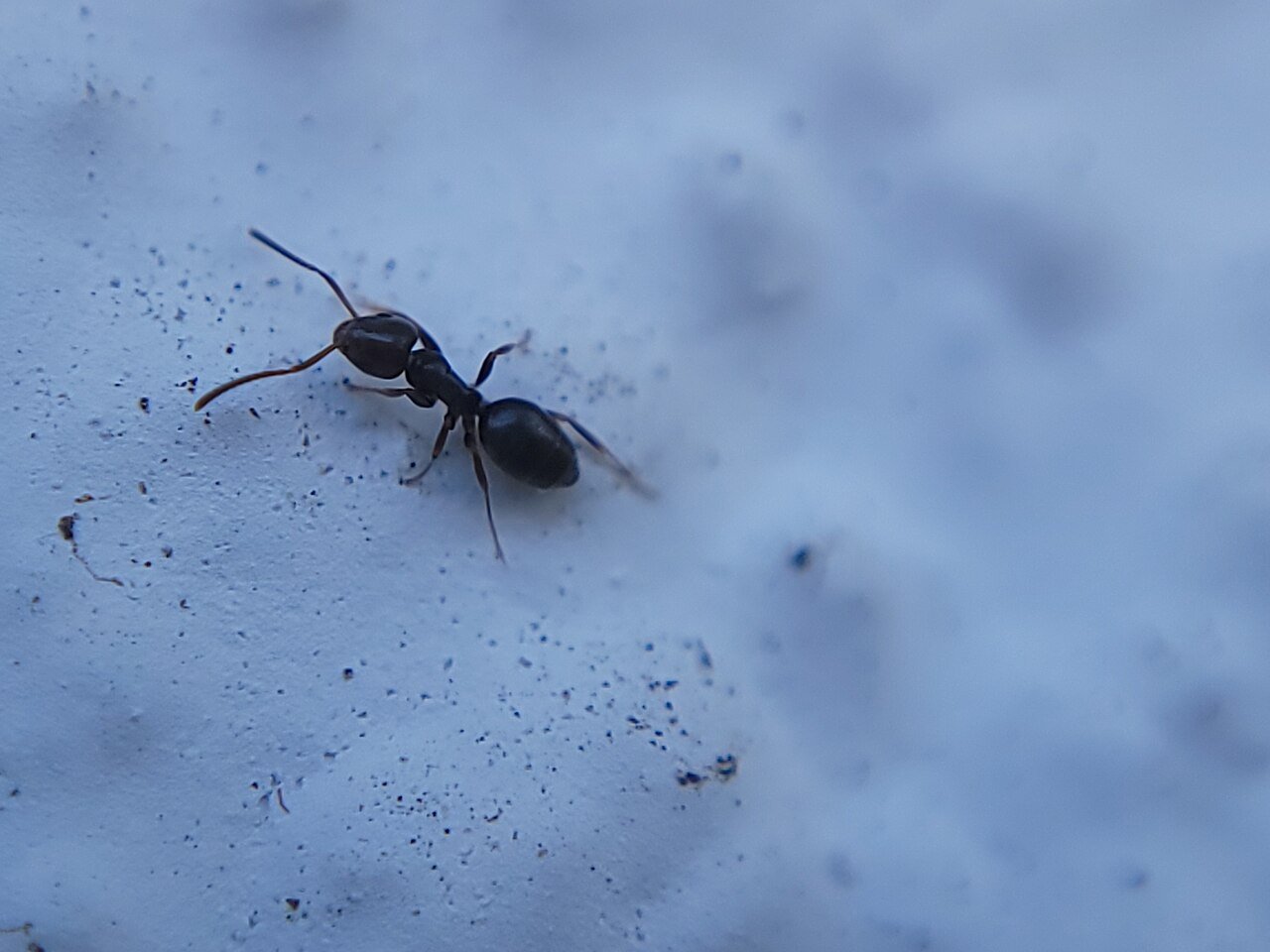
Meet the roster — Ohio’s four house ants, and why the ID matters
Four species cover the overwhelming majority of Miami Valley kitchen calls, and they don’t all get the same treatment. Odorous house ants — small, dark brown, and named for the rotten-coconut smell they release when crushed (go ahead, verify; everyone does) — are the region’s dominant kitchen invader and the reason this page keeps repeating the word “bait.” Their defining trait is colony structure: multiple queens, multiple satellite nests, and a party trick called budding, where a stressed colony splits into several new ones. Stress, in this context, includes being sprayed — which is how a can of raid converts one manageable colony into three angry franchises behind three different walls. Pavement ants — the stocky brown ants that throw up little soil volcanoes in driveway seams and stage sidewalk turf wars each spring — enter along slab edges and plumbing penetrations, especially in slab-built homes. Carpenter ants — the big black quarter-inch-plus ones — are a structural flag, not a crumb problem; they excavate moisture-damaged wood, and finding them indoors in winter means a nest inside the structure. They have their own page, and everything there overrides the general advice here. Pharaoh ants — tiny, honey-yellow, and mercifully uncommon in single-family homes — are the one species where even baiting has special rules, and multi-unit buildings that meet them should skip straight to the phone. The working shortcut for the other ninety percent of cases: small and dark with a coconut smell = odorous house ant; small and brown coming from floor level = pavement ant. Both are bait cases, and the protocol below is written for them.
A clean kitchen slows them down; it does not touch the colony outdoors feeding into it. That part is ant control in Dayton.
Why the spray bottle is the enemy — the section that saves this page’s readers the most money
Everything about the way ants present themselves invites the wrong response. You see a trail; you want it gone; the spray kills it on contact; the counter is clear by lunch. Here is what actually happened: you removed a few dozen expendable workers from a colony of eight or ten thousand, destroyed the scent trail (which feels productive), and — if the spray was a repellent formulation, which almost everything in the grocery aisle is — laid down a chemical fence the colony can detect and route around. The traffic reappears in a day or two, one cabinet over. Worse, for odorous house ants specifically, heavy repellent pressure is exactly the stress signal that triggers budding: the colony fractures, queens disperse into new voids, and your one-trail problem becomes a three-trail problem with better real estate. The spray bottle turns a solvable kitchen case into a chronic one, and it does it while feeling like a win. This is the single most important paragraph on the page: when you see an ant trail, your move is to feed it, not kill it. Which brings us to baiting.
The baiting protocol — how to use the colony’s own logistics against it
Baiting works because it exploits the one behavior that makes ants formidable: they share food. Workers carry liquid bait back to the nest and distribute it by mouth-to-mouth exchange — trophallaxis, if you want the term — feeding the queens and brood that no spray will ever reach. A slow-acting toxicant riding on an irresistible sugar means the workers make dozens of successful deliveries before anything seems wrong, and the colony poisons itself from the inside. The protocol: Step one, stop cleaning the trail. The scent highway your ants have built is now your delivery infrastructure — wipe it away and the bait placement loses its traffic. Clean everything else in the kitchen so the bait is the best offer on the table, but leave the active trail alone. Step two, place liquid or gel bait directly beside the trail — drops on the provided cards or bits of foil, every couple of feet along the route, plus one at the point where the trail enters the room. Sweet baits (borate-based liquids are the classic) are right for odorous house and pavement ants nearly year-round; if the ants ignore sugar, offer a protein/grease bait — colonies shift appetites with the brood cycle, and matching the current craving is half the game. Step three, let the horrifying part happen. Good bait placement gets busier — a boiling scrum of ants on the bait card within hours. Every instinct says spray it. Don’t. Every ant at that card is a courier working for you now. Step four, refresh and wait. Keep bait wet/fresh daily; expect declining traffic by day three and an empty highway somewhere between day five and day ten for a typical single-colony case. Step five, only after the traffic is gone, clean the trail routes with soapy water and move to the sealing phase below. Baiting’s only real failure modes are impatience (spraying mid-program), stinginess (two drops for a ten-thousand-ant colony), and staleness (dried-out bait is a pebble, not a meal).
Finding the source — the trail-tracing hour
While the bait works, do the detective pass, because “where are they coming from” determines the sealing list. Follow the trail backward from the food end. Indoors, the classic entry points are the window frame over the sink, the gap where the dishwasher supply line passes through the cabinet floor, outlet plates on exterior walls, and the seam where the slab meets the sill. Outdoors — and most kitchen trails do originate outdoors in summer — walk the foundation on the kitchen side and look for the trail continuing along the siding’s bottom edge, up from mulch, or out of a driveway seam. Common true sources: nests under landscape stones and pavers, in mulch against the foundation, under the deck, in the wall void behind an exterior faucet, and — the sleeper — potted plants, which ship whole colonies indoors every October when the plants come in for winter. Two force multipliers while you’re out there: trim vegetation off the house, because every branch touching the siding is an ant skybridge that bypasses your foundation entirely, and check for aphids on any shrub the trail visits — odorous house ants farm aphids for honeydew, and a rose bush full of livestock will keep re-supplying scouts all season.
The sealing phase — closing the doors after the colony collapses
- Caulk the entry you traced plus its neighbors: window frames, the sink-window seam, cable and pipe penetrations, the slab-sill gap. Silicone or acrylic-latex; a $6 tube retires a dozen highways.
- Re-grade the mulch: pull it back to leave bare inches against the foundation — mulch bermed against siding is ant housing with utilities included.
- Fix the moisture: drippy exterior faucets, clogged gutter corners, and damp crawlspace corners all recruit ants (and, at the carpenter-ant end, damage wood). Dry properties get fewer of every pest on this site.
- Store the sugar like it matters: honey jar on a saucer, syrup bottle wiped and lidded, pet food picked up between meals, fruit bowl rotated. The kitchen’s standing offer is what turned a scout into a highway in the first place.
- Bring potted plants in clean: before the October migration indoors, water each pot heavily — a colony in the soil will evacuate up and out where you can see it — and quarantine any pot with traffic.
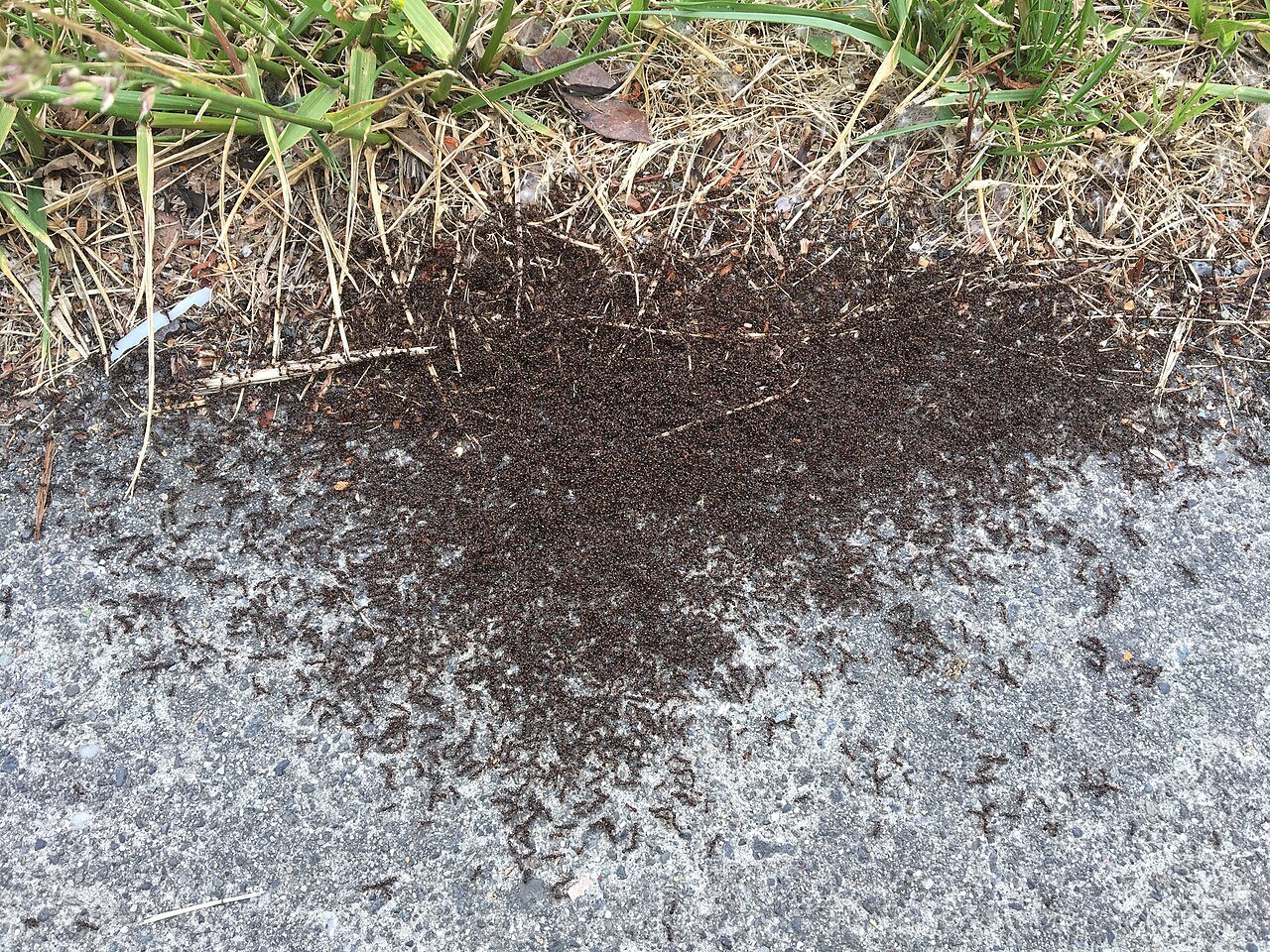
The home-remedy aisle, graded — vinegar, cinnamon, chalk, and the rest
The ant-remedy folklore file is thick, and the grading rubric is the same one we’ve used across this library: does it kill colonies, or does it just rearrange them? Vinegar (grade: C): genuinely erases scent trails — it’s a fine cleaner for the post-victory wipe-down — but it kills nothing, repels only while wet, and mid-campaign it destroys the very highways your bait depends on. Right tool, wrong week. Cinnamon, chalk lines, coffee grounds, pepper (D): ants dislike crossing them for a day or two, then trail around. Ten thousand ants do not lose to a spice rack. Essential-oil sprays (C−): peppermint and clove genuinely repel — which, as the spray-bottle section explained, is precisely the problem: repellency without mortality reroutes and, in odorous house ants, risks budding. Diatomaceous earth (C+): real mortality on contact in dry cracks, useless wet, and a repellent barrier when visible — a supporting actor at best. Boiling water on outdoor mounds (C+ outdoors only): can kill shallow pavement-ant nests if you flood the gallery, though it usually takes repeat pours and cooks a patch of lawn as a service fee. Borax-and-sugar homemade bait (B−): this one’s directionally correct — it is baiting — but concentration is everything: too hot and you kill couriers at the card, too weak and nothing happens. Commercial baits have the dose dialed; at $6, precision is cheap. The pattern, one more time: everything that repels gets a C or worse, everything that recruits the colony’s own logistics gets a B or better, and the aisle’s only honest bargain is the thing that looks most boring on the shelf.
The seasonal calendar — the Miami Valley ant year
- March–April: pavement ants stage their sidewalk wars and the year’s first scouts test kitchens; winged swarmers indoors now are a flag worth photographing — pavement-ant swarmers are a nuisance, but see the flying ant vs termite guide before you shrug, because this is exactly the window termite swarmers fly too.
- May–June: colony growth and peak sweet-tooth — the best baiting window of the year; campaigns run fast because appetite is high.
- July–August: drought pushes ants indoors for water as much as food — trails to the sink, the dishwasher, the pet bowl. Fix the moisture draw and the bait finishes the rest.
- September–October: the fall surge, as cooling nights send colonies looking for winter quarters — plus the potted-plant migration. The year’s second-biggest call volume.
- November–February: outdoor colonies go dormant; any active indoor trail in January means the nest is inside the envelope — a wall void, the slab, a bath trap — and if the ants are large and black, the carpenter-ant page takes over. Winter trails are a call-us flag regardless of species.
When it’s a phone call — the honest lines
Most single-trail kitchen cases end with a $6 bait card and a caulk gun, and this page just walked you through it. The cases that don’t: trails that survive two properly-run baiting cycles — persistent re-supply means multiple colonies or an appetite you haven’t matched, and our formulations and placement come with a trained eye; winter trails, per the calendar — an in-structure nest deserves an inspection, not a longer campaign; carpenter ants, always — big black ants indoors are a structural question wearing an insect costume; pharaoh ants in any multi-unit building, where amateur baiting fragments colonies across unit lines; and the “every year, every spring” house, where the real fix is a perimeter program plus the sealing audit — which is exactly what our Protection Plan’s quarterly service is built to be. Ant coverage is included in the plan; one-time ant jobs are flat-priced; and either way the visit starts with the same trail-tracing you just learned, done by someone who does it daily.
The eight-county ant report
Every corner of our service map runs the same species roster with different emphasis. Montgomery County’s older neighborhoods — Dayton proper, Kettering, Oakwood — lead with odorous house ants working ninety-year-old foundations, plus carpenter-ant flags wherever original box gutters have been leaking into fascia for a decade. Greene County’s newer slab construction in Beavercreek and Fairborn is pavement-ant country: slab seams, garage-floor cracks, and the classic trail from the driveway expansion joint to the kitchen kick plate. Warren County’s Springboro and Franklin subdivisions add fresh-landscaping pressure — new sod and stacked-stone beds ship ant colonies in like housewarming gifts. Miami County’s farm-adjacent properties see the biggest outdoor colonies and the heaviest fall surges, and Preble County’s rural houses give us the county’s best winter carpenter-ant stories, courtesy of firewood stacked against the siding. Different housing stock, same playbook: bait, trace, seal, and know which species changes the rules.
Common questions, quick answers
“How long until the bait works?” Traffic should build for one to two days (good sign), fade noticeably by day three or four, and end within a week to ten days. “Are the ants in my bathroom the same problem?” Usually yes — moisture trails; same protocol, and check the bath trap. “Will ants damage my house?” The kitchen roster, no — carpenter ants, yes, slowly, and only where moisture already softened the wood; the ant found the damage, it didn’t start it. “Why are there suddenly hundreds with wings?” A mature colony’s annual reproductive flight — count it as a census result, and verify against the termite comparison guide if it’s spring. “Is the bait safe around kids and pets?” Placed cards use tiny quantities of low-toxicity actives, but placement behind appliances and inside cabinet corners — on the trail, out of reach — is both safer and more effective. “Do I have to find the nest?” No — that’s baiting’s whole advantage. The couriers know the way; you just have to fund the shipment.
The bottom line — and page two hundred’s closing word
Feed the trail, never spray it. Give the bait its ugly three days. Trace the highway to its door while the colony collapses, then close the door with a caulk gun, a mulch rake, and a fixed faucet. Grade every remedy by whether it reaches the queen, and route the special files — winter trails, big black ants, anything that beats two honest baiting cycles — to (937) 569-3330. That’s the ant playbook, and with it this library closes its two hundredth page: two hundred guides, every one of them built on the same premise — that a Dayton homeowner given the honest version of the problem will know exactly when a six-dollar fix is enough and exactly when it’s time to call the people who do this every day. Whichever page brought you here, that phone number is the door, and the estimate on the other side of it is free.
Frequently asked questions
How do I get rid of ants in my house fast?
Counterintuitively: feed them. Place liquid ant bait directly beside the active trail tonight, leave the trail itself intact as your delivery route, and clean everything else so the bait is the best offer in the kitchen. Traffic spikes for a day or two (couriers working for you), then collapses within a week.
Why do ants come back after I kill them?
Because the visible workers are two percent of the colony — wiping the trail removes the couriers, not the queens, and destroys the scent map you needed for bait placement. Killing what you see is the treadmill; poisoning what you cannot see is the exit.
What is the best ant killer for indoors?
Borate-based liquid or gel baits beside active trails — slow by design so workers survive long enough to share the dose with queens and brood. Everything that kills fast (sprays, dusts on counters) warns the colony and makes things worse.
Why does spraying ants make it worse?
Repellent sprays chemically fence the colony into rerouting — and for odorous house ants, spray stress triggers “budding”: one colony splits into several, each with queens. The most common DIY move is the one that multiplies the problem.
What are the tiny black ants in my kitchen?
Almost certainly odorous house ants — crush one and smell rotten coconut to confirm. Multi-queen, satellite-nesting, spray-reactive, and completely bait-solvable if you resist the spray can. Stocky brown ants from floor level are pavement ants; same bait strategy.
How long does ant bait take to work?
Traffic builds for one to two days (a good sign — do not spray the scrum), fades by day three or four, and the highway empties in five to ten days for typical single-colony cases. Impatience mid-program is the number-one cause of “bait didn’t work.”
Where are the ants coming from?
Follow the trail backward: window frames over sinks, dishwasher supply-line gaps, outlet plates on exterior walls, and slab seams indoors — then mulch beds, paver nests, and aphid-farmed shrubs outside. The trace is worth ten minutes; the entry point becomes your caulk list.
Do ants in the house mean it’s dirty?
No — scouts probe every kitchen. Open sugar and crumbs decide whether a scout files a good report; the standing offer is what turns visits into highways. Clean shortens campaigns; it never prevented a scout.
Why are ants in my bathroom?
Water — summer trails to sinks, tubs, and toilets are moisture runs, not food runs. Fix drips, wipe standing water overnight, and check the bath trap; the trail usually shares a wall with the kitchen colony anyway.
Does vinegar get rid of ants?
It erases scent trails and nothing else — useful for the post-victory wipe-down, sabotage during a bait campaign (it deletes your delivery routes). Cinnamon, chalk, and coffee grounds grade even lower: brief detours, zero colony impact.
What about ants with wings in my house?
Photograph before you panic: pinched waist and unequal wings = ant swarmers (a mature colony’s annual flight, mostly a census event); straight body and equal wings = possible termites, worth sending us immediately. Spring indoor swarmers of either kind deserve the free photo ID.
How do I get rid of ants in the walls?
Bait at every point the wall traffic emerges — the couriers carry it into void nests you could never reach with a wand. Persistent wall colonies that outlast two bait cycles are our cue: non-repellent treatments track through voids the way baits do, with professional reach.
Are the big black ants worse than the little ones?
Different file entirely: big black carpenter ants flag moisture-damaged wood and warrant prompt attention (and their own guide); the little ones are a patience-and-bait project. Size the response to the species, always.
How do I keep ants out permanently?
Caulk the traced entries, keep mulch inches off the foundation, fix the drips, store sugar sealed, bring potted plants in clean each fall — and for standing outdoor pressure, a non-repellent perimeter renewed seasonally. Permanent is a maintenance schedule, not a product.
Why do I get ants every spring no matter what?
Because the yard’s colonies wake every spring and re-probe the same seams — annual recurrence means unsealed entries plus standing exterior pressure, the exact combination the Protection Plan’s spring visit exists to meet. One good sealing year usually breaks the tradition.
Is ant bait safe around kids and pets?
Placed correctly, yes — tiny quantities of low-toxicity actives, positioned in cabinet corners, behind appliances, and along walls rather than open floor. The placement discipline that makes bait effective is the same discipline that keeps it out of reach.
Do ants carry disease?
They can mechanically track bacteria across surfaces — a sanitation nuisance rather than a health emergency. The kitchen file is contamination-grade, not danger-grade; pharaoh ants in healthcare settings are the one genuinely serious exception.
What do professionals do differently for ants?
Species ID first, non-repellent products consumer stores cannot sell, bait matched to the colony’s current appetite, satellite-nest mapping, and the exterior source work — aphid farms, mulch nests, perimeter — that ends the resupply. Plus the patience of someone paid to come back and check.
How much does professional ant treatment cost?
Flat-priced one-time for typical homes, fully covered with free re-service on the Protection Plan, and honestly triaged before either: describe the trail on the phone and we will tell you if a $6 bait bottle finishes it without us. (937) 569-3330.
When should I give up on DIY and call?
After two properly-run bait cycles fail, when winter trails appear (an in-structure nest), when the ants are carpenter-sized, or when trails keep relocating room to room (multi-queen satellite behavior). Those four patterns need the professional toolkit — everything else, our guide just taught you.