
“What do termites look like?” is a strange question to have to ask about an insect that may share your address — and that strangeness is the answer’s first lesson: most people with termites have never seen one, because the insect doing the damage spends its entire life sealed inside soil, mud tubes, and the wood itself. The termites people DO see are the wrong caste at the right moment (spring swarmers), the look-alike (winged ants, white “wood maggots” that are actually larvae of something else), or the aftermath (wings on a sill). This page is the full visual file for Ohio’s one termite that matters — the eastern subterranean — caste by caste: the cream-white workers you will only meet by opening wood, the orange-headed soldiers, the black-bodied swarmers that fly into living rooms each spring, eggs and larvae for completeness, the ant-versus-termite call that decides real money, and the damage signatures that identify termites when no termite shows itself at all.
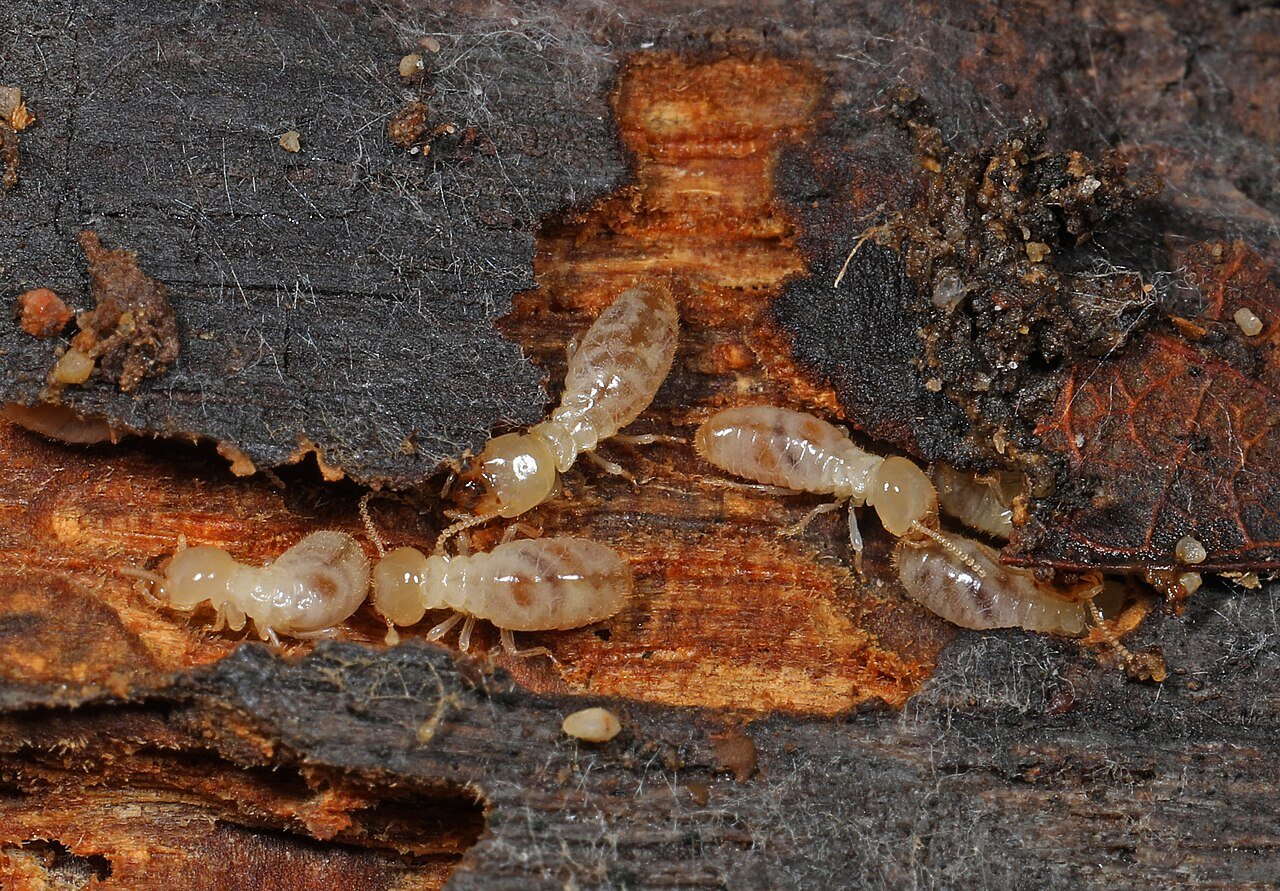
The worker: the one doing all the damage (and the one you never see)
Nine-tenths of any colony is workers, and every bite of wood ever eaten was eaten by one: cream-to-translucent white, soft-bodied, wingless, eyeless, about an eighth of an inch — a pale grain of rice with legs and a slightly darker head. The look people expect from “termite” — hard, brown, beetle-like — is wrong in every particular; the reality reads closer to a tiny maggot with legs, which is why opened infested wood produces the startled “white ants!” call our phone log knows by heart. Their bodies explain their invisibility: soft cuticle desiccates in minutes of open air, so workers exist exclusively inside humidity-sealed spaces — soil, the mud tubes they build, and wood galleries — and an exposed worker wriggling in daylight means you have just broken into active infrastructure. Field note for that moment: photograph before they retreat (they will, fast), leave the opening undisturbed, and treat it as the inspection trigger it is; the acquittal alternative — pale springtails or fungus-gnat larvae in wet wood — sorts out under the free photo review.
Pale, soft and waistless is also why they get called white ants — a name worth knowing, because it is what half of Ohio types into a search bar.
Most people only ever see the swarmers, and by then the colony is years old. Dealing with it is termite control in Dayton.
The soldier: the orange-headed doorman
A few percent of the colony wears armor: same pale body as the worker, but with an enlarged, hardened, orange-brown head carrying black scissor jaws — comically front-loaded, like a grain of rice wearing a helmet. Soldiers exist to plug breaches against ants (the termite’s eternal enemy), so they are what rushes to the hole when you break a mud tube: heads-out, jaws working, the colony’s living caulk. Diagnostically they are gold — soldiers at a breached tube confirm ACTIVE infestation on the spot (abandoned tubes muster no defense), and the orange-head-on-white-body combination is unmistakable against every look-alike. The break-and-watch test from our signs guide runs on exactly this: snap a pencil-width of tube, return in a day or two — repaired mud plus soldier response equals live colony; dusty silence equals history.
The swarmer: the only termite most people ever see
Once a year the colony goes public: dark brown-to-black, straight-sided body about three-eighths of an inch WITH wings, carrying four equal milky-translucent wings nearly twice the body length — the springtime flier of every “termites or flying ants?” panic. The flight is brief and clumsy (swarmers are couriers, not athletes), the wings shed almost immediately on landing, and the aftermath — piles of identical shed wings on sills, in spiderwebs, by door light — often outlasts every live swarmer as evidence. Ohio timing: March through May, classically the first warm humid day after rain, sometimes earlier indoors where heating fools the calendar. The stakes ride entirely on emergence point: swarmers OUTSIDE over the lawn are the neighborhood breathing; swarmers INSIDE — from baseboards, window frames, the garage slab seam — mean a mature colony in or under the structure, since swarm-capable colonies run three-to-five-plus years old. Full triage on our termites-with-wings page; the sixty-second version: photograph, collect on tape, note the exact spot, book the free inspection this week.
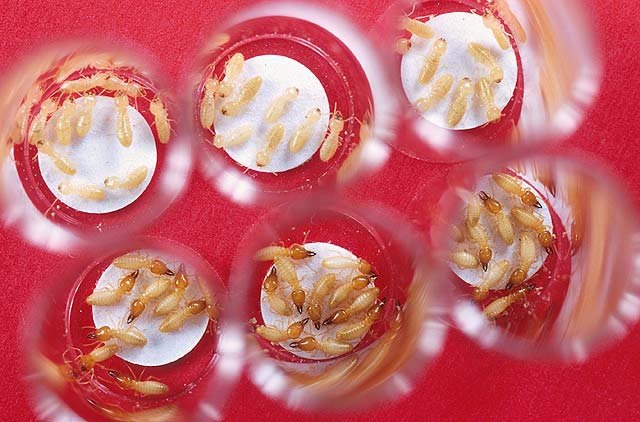
Termite vs. ant: the three-check call that decides real money
Every spring the same lineup, so here is the tribunal: Waist — termites are straight-sided tubes, no waist at all; ants pinch dramatically at the middle. Antennae — termite antennae are straight strings of beads; ant antennae bend at an elbow. Wings (swarmers only) — termite wings come in four equal oversized panes that shed at a touch; ant forewings run visibly longer than the hindwings and hold on. One check settles most cases, three settle all of them — and the stakes justify the ritual: winged-ant swarms are mostly census events (or carpenter-ant flags worth their own page), while indoor termite swarms are structural news. The white-insect version of the same call: termite workers versus “white ants” — no ant is ever white; pale soft insects in wood are termites until proven otherwise. Photo to (937) 569-3330 ends every argument free of charge, usually same-day.
Eggs, larvae, and the nursery you will never visit
For completeness — and because image searches surface them — the hidden stages: termite eggs are pinhead white ovals laid deep in the soil nest, tended constantly, and functionally never encountered by homeowners (anything egg-like you found in wood is more plausibly ant brood or beetle work). Larvae — the just-hatched termites — are miniature, paler workers that mature into whichever caste the colony’s chemistry assigns; again, soil-nest residents only. The practical takeaway is negative but useful: subterranean termites keep their nursery underground, OFF the property’s visible surfaces — so “termite eggs in the windowsill” and similar finds acquit themselves by location alone, and the real evidence trail stays the one this page and our signs guide keep pointing to: tubes, wings, hollow wood, and the pale castes inside it.
What termite DAMAGE looks like (the ID when no insect shows)
Most confirmations happen without a single live termite, because the damage carries its own signatures. Mud tubes — pencil-width dried-soil tunnels climbing foundation walls, piers, and plumbing penetrations: the covered highways between soil and wood, and the single most diagnostic structure in the file (fresh ones are damp and repair overnight when broken). Galleried wood — termite-eaten wood hollows along the soft spring-grain in layered sheets, always LINED WITH DRIED MUD and never with sawdust: the mud-versus-sawdust distinction is the whole carpenter-ant differential, and it never lies. The probe test — a screwdriver pressed into suspect sills and rims sinks through paper-thin surfaces over honeycombed interior; termite wood crumbles in sheets rather than splinters. Surface tells — blistered or rippled paint over hollowed wood, pinholes with soil traces, and floors gone spongy near foundations. And the negative space matters too: no frass piles (that is carpenter ants), no round exit holes with powder (that is powderpost beetles) — each look-alike damage file routes to its own page, and the mud is always termite country’s flag.
The eight-county field notes
What the visual file looks like on our routes: Dayton, Oakwood, and Kettering’s stone-foundation stock shows tubes climbing interior basement walls and sill-plate galleries behind century paint; the slab suburbs — Huber Heights, Beavercreek, Vandalia — produce the expansion-joint emergence and garage-seam swarms that slab construction funnels; the river towns add moisture-accelerated files along the valleys; and Miami and Preble farm country contributes the outbuilding-and-woodpile discoveries where infested stored lumber meets the probe test. Spring swarm season runs our photo line hardest — March-to-May tape samples from every county — and the year-round constant is the one this page opened with: the county’s most destructive insect is its least seen, which is why the annual free inspection exists and why the visual file’s real job is teaching you to recognize the evidence that stands in for the insect.
The bottom line
Termites look like almost nothing you would guess: rice-grain white workers sealed in wood, orange-helmeted soldiers guarding breaches, and one springtime flight of black, straight-bodied, equal-winged couriers that provides the year’s only public appearance. Learn the three-check ant call, the mud-versus-sawdust rule, and the tube-and-probe evidence kit, and you hold the entire identification — insect present or not. Then act on what the ID means: the free inspection for any confirmed sign, the cost page’s honest numbers for what treatment runs, and the monitoring conversation for the properties that would rather never meet the pale caste at all: (937) 569-3330.
Size, color, and scale: the reference card
- Worker: 1/8”, cream-white, soft, eyeless, wingless — a pale grain of rice with legs; found only inside wood, tubes, or soil.
- Soldier: 1/8–1/4”, white body + enlarged orange-brown armored head with dark jaws; rushes breaches, confirms active colonies.
- Swarmer (alate): 3/8” with wings, dark brown-black, straight-sided, four equal milky wings twice body length; the March–May flier and wing-pile source.
- Queen and king: soil-nest residents (Ohio’s subterranean queens run larger and physogastric with age) that no homeowner encounters — every “giant termite queen” found indoors is something else, usually a beetle.
- Egg/larva: pinhead-white, underground nursery only — surface finds acquit by location.
- The whole colony’s color story: pale castes stay hidden, the dark caste flies once a year — if it is brown, hard-bodied, and walking around in daylight, it is not an Ohio termite.
One card, six castes, and the visual question answered at every scale — from the poppy-seed egg you will never see to the wing pile on the sill you very well might.
For the regional version of this question, termites in Ohio covers the one species found here, the spring swarm window, and what termite pressure actually looks like county by county across the Miami Valley.
Frequently asked questions
What do termites look like to the human eye?
Depends entirely on caste: workers are 1/8-inch cream-white soft grains (hidden in wood and soil), soldiers add an orange armored head, and the springtime swarmers — the only ones people typically see — are dark, straight-bodied fliers with four equal milky wings. Nothing in the colony matches the hard brown “bug” people expect.
What do termites look like compared to ants?
Three checks: waist (termite = straight tube, ant = pinched), antennae (termite = straight beads, ant = elbowed), wings on swarmers (termite = four equal oversized panes that shed, ant = unequal pairs that hold). Any single check usually settles it; all three always do.
Are termites visible to homeowners?
Rarely by design — workers desiccate in open air and live sealed in soil, tubes, and galleries. Homeowners see swarmers (one spring flight), shed wings, mud tubes, and damage; the eating caste appears only when infested wood is opened.
What are the tiny white bugs in my wood?
Pale soft-bodied insects inside structural wood are termite workers until proven otherwise — no ant is white. Photograph before they retreat and treat it as an inspection trigger; the acquittal alternatives (springtails, fungus gnat larvae in wet wood) sort out from the photo, free.
What do flying termites look like?
Dark brown-to-black, 3/8-inch straight-sided bodies under four equal translucent wings nearly twice body length, flying weakly in spring — then shedding wings almost immediately, leaving the diagnostic piles of identical wings on sills and in webs.
What does termite damage look like?
Mud-lined galleries following the soft grain in layered sheets, paper-thin surfaces over honeycombed interiors (the screwdriver probe test), blistered paint, spongy floors — and mud tubes climbing foundations. The constant is mud, never sawdust; sawdust piles mean carpenter ants.
What color are termites?
The hidden castes are cream-to-translucent white (workers) with orange-headed soldiers; the once-a-year public caste (swarmers) is dark brown to black. Ohio has no brown, hard-bodied, daylight-walking termite — that insect is a beetle or an ant.
How big are termites?
Small: workers 1/8 inch, soldiers to 1/4, swarmers 3/8 with wings — the “giant termite” of nightmares does not exist in Ohio. Colony scale is where the size lives: tens of thousands to hundreds of thousands per mature colony.
What is the difference between termite larvae and maggots?
Termite larvae are miniature pale termites (six legs, termite shape) confined to underground nests homeowners never open; maggots are legless fly larvae found in decay. Legged-and-in-wood points to termite castes; legless-and-in-garbage points to flies.
Who can identify termites from a photo near Dayton?
We can, free and usually same-day: (937) 569-3330 — tape-mounted swarmers, opened-wood shots, and tube photos all work. Confirmed IDs route to the free inspection; acquittals (ants, beetles, springtails) come with their own pages and zero invoice.