Every termite problem you will ever have is, at bottom, one insect: a queen you will never see, buried in soil you may not own, laying eggs around the clock for — in extreme cases — decades. Understanding her is understanding termite control, because the entire modern industry divides on a single question: does your treatment reach the queen, or does it just annoy her workforce? This page is the queen’s complete file — how she’s made, where she actually lives (spoiler: not in your walls), the staggering reproductive math, why she’s untouchable by anything in a spray can, and how the treatments that do end colonies are engineered specifically as regicide.
How a Queen Is Made: From Swarmer to Sovereign
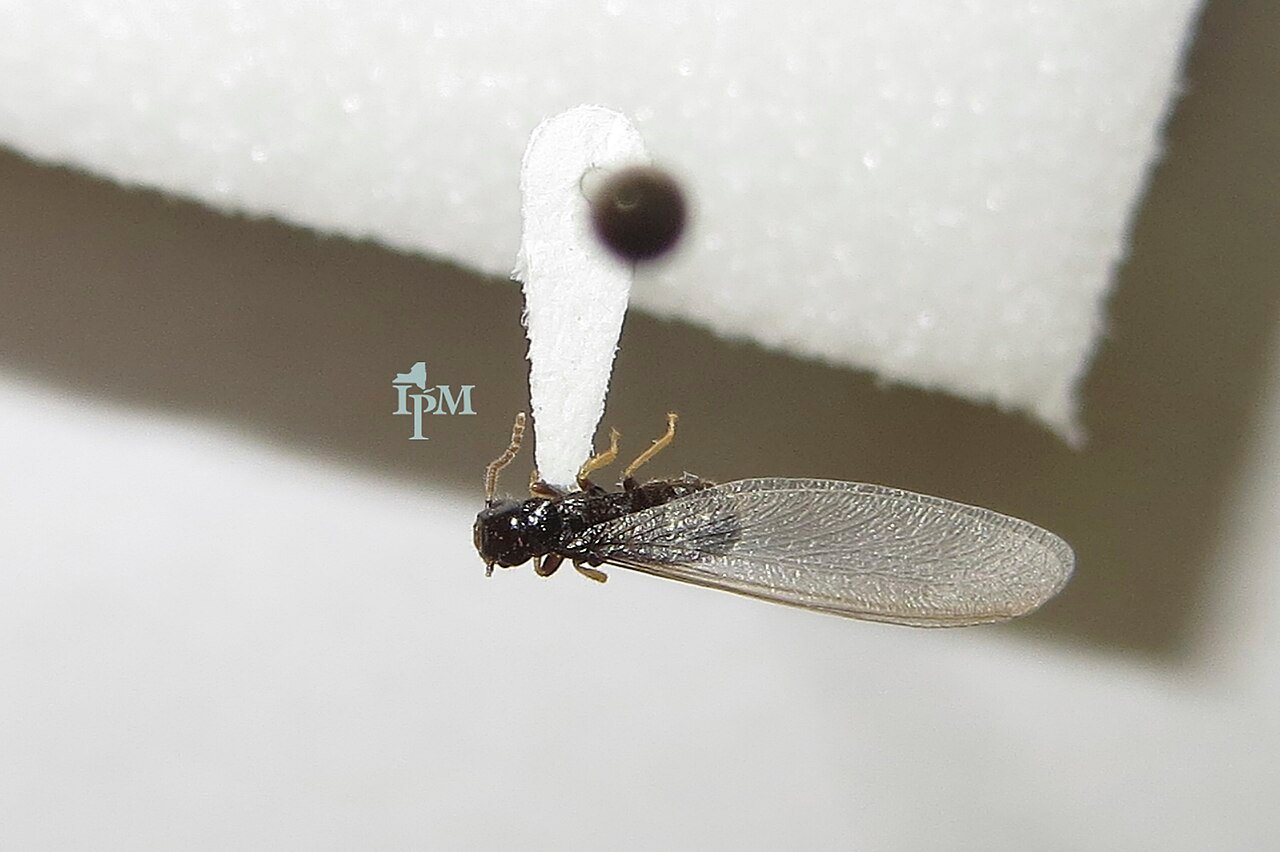
Every queen begins as an alate — one of the winged reproductives that erupt from mature colonies on warm, humid spring days (the swarms and shed wings our swarmer page decodes). The flight is brief and brutal: birds, spiders, dry pavement, and window sills claim over 99% of them. A surviving female pairs with a male, both snap off their wings, and the couple — king and queen, and unlike ants the king stays and mates for life — seals themselves into a soil chamber. The first year is humble: a few dozen eggs, workers raised by hand, a colony the size of a teacup. But growth compounds: by year three to five an eastern subterranean colony runs tens of thousands of workers; mature networks reach the hundreds of thousands, working an area up to half an acre — which can span several suburban properties at once. That last fact rewrites the usual blame arithmetic: the colony hitting your sill plate may be headquartered under your neighbor’s stump, and “whose termites are these” is genuinely unanswerable. The pipeline is what’s yours.
A colony’s queen is the reason spot-treating a single gallery never ends anything. Reaching her is the point of termite control in Dayton.
The Reproductive Math (Sit Down)
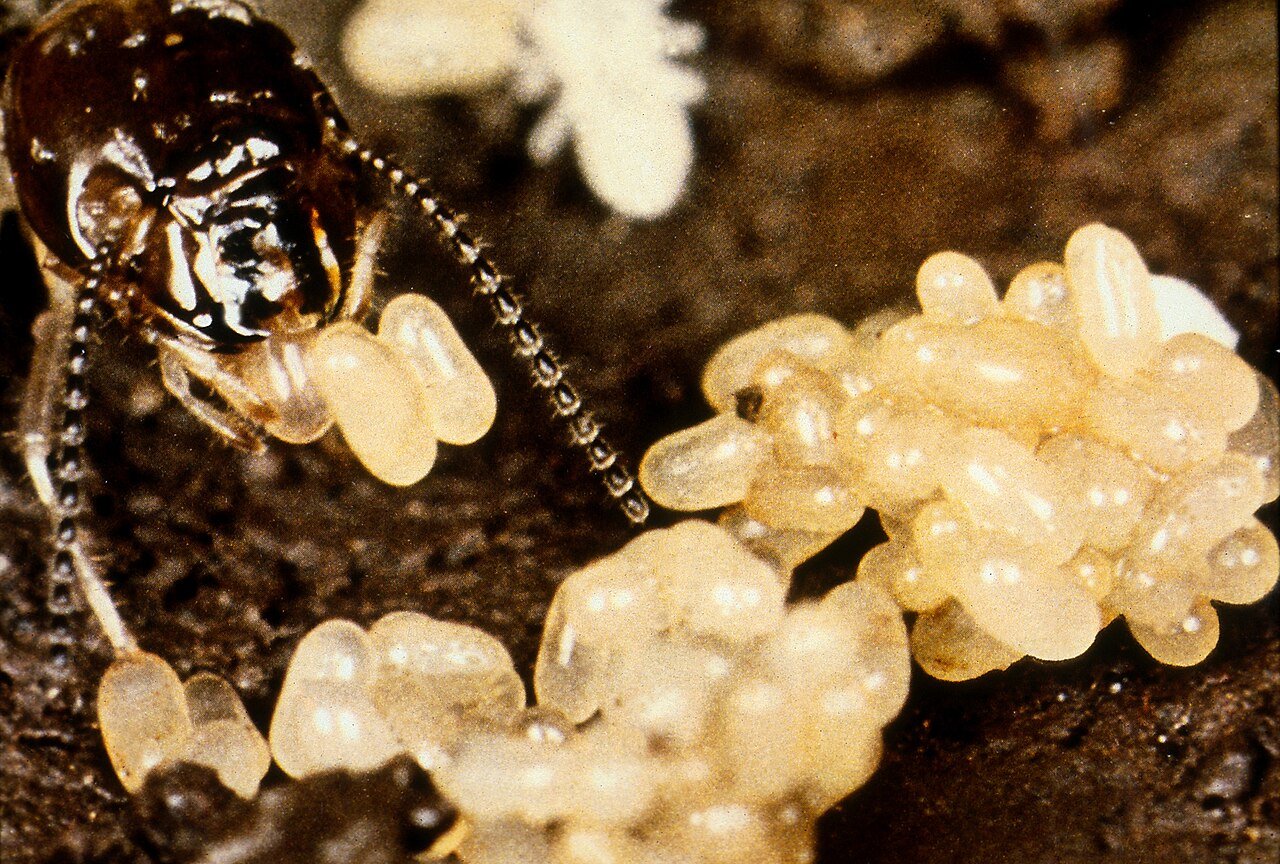
A mature eastern subterranean queen lays an egg every few minutes at peak — hundreds to a couple thousand a day, season and species depending, sustained for a reign that runs a decade or more (tropical species have documented queens estimated at 25–50 years old; our local species’ queens are shorter-lived but still measure their careers in decades against your house’s). Her abdomen distends into a pale egg engine several times her original size — too swollen to walk — while workers feed her, groom her, and ferry each egg to nurseries. She also rules chemically: queen pheromones suppress the development of rival reproductives throughout the colony, a birth-control broadcast that keeps hundreds of thousands of sterile workers on task. And here’s the succession detail that matters for treatment: if she weakens or dies naturally, the colony can promote replacement reproductives (“neotenics”) from within — secondary queens that keep the enterprise alive. Colonies don’t die of grief; they die of chemistry that reaches everyone, which is exactly the design brief of the treatments below.
Where the Queen Actually Lives (Manage Your Expectations)
Not in your wall. Not in the mud tubes. Not anywhere you’ll find with a crowbar. The royal chamber sits in soil — below frost line in winter, often beneath or beside old stumps, buried wood, or the moisture feature that founded the colony — connected to your house only by the foraging network. The wood damage in your sill plate is a job site; headquarters is a fortified bunker that may be thirty feet away and four feet down, position unknown and unknowable without excavation nobody performs. This is the single most important expectation to set about termite control: no one kills a subterranean queen directly. Not you with a spray can, not us with anything in the truck. Every honest treatment is a supply-chain attack — and the queen’s own biology, it turns out, is the vulnerability.
Regicide by Supply Chain: How Modern Treatments Reach Her
The queen never leaves, never forages, and eats only what workers feed her mouth-to-mouth (the same trophallaxis that runs ant baits). So modern treatment weaponizes the food chain. Bait systems — the in-ground stations our bait station page covers — load a slow-acting growth inhibitor into cellulose that foragers carry home and distribute colony-wide; molting fails generation by generation, the workforce collapses, and the queen starves in a bunker full of eggs nobody feeds. Non-repellent liquid barriers (fipronil-class) work the same logic from the other end: undetectable in treated soil, picked up by workers passing through, spread by contact and grooming deep into the colony. Both are engineered around her one vulnerability — total dependence on the workforce — and both explain the counterintuitive professional rule: never spray hardware-store repellent insecticide at visible termites or tubes. Repellents warn the colony; foragers reroute around the treated zone, the queen keeps laying, and the network quietly finds the gap in your slab you didn’t treat. Killing the termites you can see is the one move guaranteed not to reach the one that matters.
What the Queen’s Biology Means for Your House, Practically
- Speed matters less than people fear: colonies grow on multi-year clocks, and damage accumulates slowly — but silently (see the invisible-evidence problem). The risk isn’t overnight collapse; it’s the fifth silent year.
- Swarms are her press releases: alates in or near the house mean a mature, reproducing colony within flight distance — inside the structure if they emerged indoors. That’s an inspection trigger, always.
- Neighbor logic fails: a half-acre foraging network makes “my lot is clean” unknowable from your side of the fence. Monitoring stations answer what property lines can’t.
- “The termites went away” isn’t a thing: foraging shifts with moisture and season; the queen’s output never pauses. Quiet years are logistics, not surrender.
- Her decades vs. your treatment’s decade: liquid barriers age; bait stations need servicing. A queen’s career outlasts any single treatment’s warranty — the reason termite protection is a monitoring relationship, not an event.
The $99 Question
You can’t see the queen, can’t reach the queen, and can’t know from the lawn whether her workforce has found your foundation. What you can do costs $99: our WDI inspection reads the evidence her operation can’t help leaving — tubes, galleries, wings, moisture signatures — and answers the only question that matters: is the pipeline connected to your house? If yes, the supply-chain attack starts immediately, queen included. If no, monitoring keeps it that way for less than a streaming subscription. Either way, the insect this page profiled stops being your problem — because now the workforce that feeds her reports to us.
Swarmers this spring? Tubes on the block wall? A neighbor’s treatment sign making you wonder? Book the $99 inspection and get the queen’s answer in writing. Serving Dayton and all of Montgomery, Greene, Miami, Clark, Warren, Butler, Preble, and Darke counties.
The Court Around Her: How the Rest of the Colony Serves the Throne
The queen’s biology only works because everyone else’s is organized around it. The king — termite monarchy’s underappreciated half — remains beside her for life, re-mating periodically; unlike an ant queen’s one-flight sperm bank, termite royalty is a standing partnership, and treatments that reach one reach both. Workers — blind, sterile, and the only caste that can digest wood — feed every other member of the colony, royalty included, which is precisely the dependency that bait chemistry exploits. Soldiers, with their oversized amber heads, defend the tunnels (mostly against ants, termite civilization’s eternal enemy) but cannot feed themselves either. And the nymphs and alate candidates are the throne’s succession pipeline, groomed or suppressed by her pheromones as colony needs dictate. Our termite-vs-ant guide covers the caste ID; the strategic takeaway here is simpler — a termite colony is a single feeding network with one metabolic center, which is why the industry stopped trying to poison termites individually and started poisoning the network itself. Every member’s dependence on shared food is the colony’s greatest strength and its one engineered weakness.
Queen Math vs. House Math: the Timeline That Should Set Your Calendar
Put her clock against yours. Year one after a successful founding flight near your lot: a teacup colony, zero house risk, undetectable. Years two to four: thousands of workers, foraging radius expanding, first contact with structures possible — this is when monitoring stations earn their keep, catching traffic before wood does. Years five to ten: a mature six-figure workforce and the peak damage era, where the “silent fifth year” costs more than the loud first one ever could. Meanwhile the housing math runs parallel: Ohio homes change hands roughly every eight to twelve years, which means a colony founded the summer you moved in can be hitting peak production right as you list — surfacing at the worst possible moment, as a surprise on a buyer’s WDI report. The couples who commission the $99 inspection at year five of ownership, or the moment a neighbor’s yard sprouts treatment flags, are simply playing her timeline instead of discovering it. She plans in decades. The winning move is to monitor in years.
One closing image, because it reframes the whole subject: the termite queen is arguably the most successful insect in your county — a decades-reigning monarch running a hundred-thousand-worker logistics network from a sealed bunker, defeated by nothing in three hundred million years except one recent invention: chemistry disguised as groceries. Termite control didn’t beat her by hitting harder; it beat her by understanding her. That’s the standard the rest of this site holds every treatment to — and the reason “know the insect first” opens every page we write.
Frequently Asked Questions
How long does a termite queen live?
Decades — eastern subterranean queens measure careers in ten-plus years, and some tropical species’ queens are estimated at 25–50. She outlasts every consumer product and most professional warranties, which is why termite protection is monitoring, not a one-time event.
How many eggs does a termite queen lay?
Hundreds to a couple thousand per day at maturity — an egg every few minutes at peak — sustained for years. Workers ferry each one to nurseries while she rules a colony of tens to hundreds of thousands.
Where does the termite queen live — is she in my walls?
No. The royal chamber sits in soil, often feet deep near stumps or buried wood, up to dozens of yards from your house. The damage in your framing is a job site; she’s at headquarters, position unknowable. No one — homeowner or professional — kills a subterranean queen directly.
If you can’t reach the queen, how does treatment kill her?
Through her own supply chain: she eats only what workers feed her mouth-to-mouth. Bait systems and non-repellent soil treatments load the workforce with slow-acting chemistry that spreads colony-wide by feeding and grooming — the workforce collapses, and the queen starves in the bunker. It’s regicide by logistics.
What happens to a colony when the queen dies?
From natural death, colonies can promote replacement reproductives (neotenics) and carry on. From modern treatment, no — the chemistry that reached her reached the candidates and the workforce too, which is why bait and non-repellent programs end colonies rather than pausing them.
Does spraying termites I can see help?
It actively hurts: repellent sprays warn the colony, foragers reroute around the treated spot, and the queen’s output continues down a path you can’t see. Visible termites are intelligence — spend them on an inspection, not a spray can.
What does a termite queen look like?
A pale, hugely distended egg engine — her abdomen swells to several times original size, far too heavy to walk, tended constantly by workers. You will only ever see one in photos: excavating a living queen from feet of soil isn’t something anyone does outside documentaries.
Are the flying termites in spring future queens?
Every one of them is a candidate — alates are the colony’s reproductive export, and over 99% die within hours. Swarmers emerging inside your house mean a mature colony in the structure; even outdoor swarms nearby mean an established colony within flight range. Both earn the $99 inspection.
Can a termite colony span more than one property?
Routinely — mature networks forage across up to half an acre, crossing lot lines underground. “Whose termites are these” has no answer; whether the pipeline reaches your foundation does, and that’s the question monitoring stations exist to answer.