
West Chester has a rodent pattern that catches new residents off guard, because it is driven by geography rather than housekeeping. This township was farmland within living memory, and the parts that are not subdivision yet — the open ground around the Voice of America MetroPark, the fields still waiting on the next phase of development, the creek corridors and stormwater detention basins threaded between neighborhoods — are house mouse and field mouse habitat year round. Every October, when night temperatures drop, that population moves toward the nearest heated structure. In a four-thousand-square-foot house with a three-car garage and a complex roofline, there are a great many ways in.
The First Cold Night Is the Whole Story
Mouse calls in this township are not evenly distributed across the year. They spike hard in a two-week window, usually mid-October into early November, and they spike a second time during the first sustained January cold snap. What is happening is not that mice suddenly appeared out of nowhere; it is that a population which has been living perfectly happily outdoors all summer got a temperature signal and began systematically testing the building envelope for openings. The house did not change. The weather did.
A house mouse needs a gap about the width of a pencil — roughly a quarter inch. A juvenile needs meaningfully less than that. They do not chew their way in through masonry or poured concrete, and they are not gnawing holes in your foundation. They find the gap that is already there, and if it is slightly too small, they work the soft edge of it until it is not. On newer construction the gaps are almost never in the walls themselves. They are at the penetrations, which is a much more specific and much more fixable problem.
The practical consequence is that October is the wrong month to start thinking about this and August is the right one. Sealing a house in early September is prevention, and it is cheap. Sealing it in November is cleanup after the fact, because by then whatever came in is already inside, already sheltered in a wall cavity or a soffit return, and already reproducing on a roughly three-week cycle. The same job costs more and takes longer purely because of when it was scheduled.
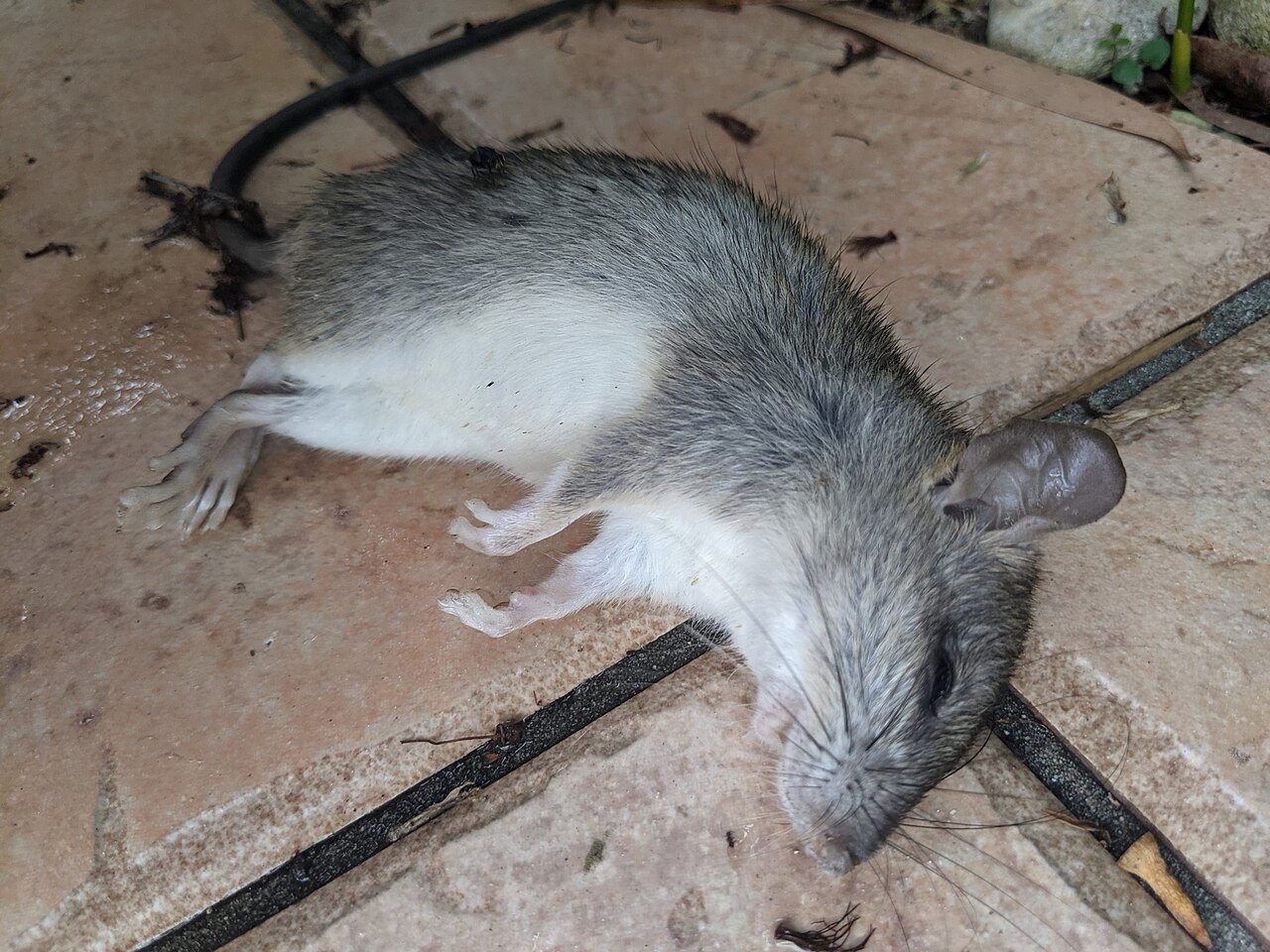
Where They Get In on a Newer Township House
The single most common entry point on a West Chester home is the garage door. Not the middle of it — the bottom corners, where the rubber sweep meets the jamb and the concrete slab is never quite level. A worn, curled, or hardened sweep leaves a small triangular gap at each corner that is more than adequate for a mouse, and the garage is a heated-adjacent space that usually contains pet food, birdseed, grass seed, and a door into the house that gets propped open while groceries come in.
Second is the utility penetration set, and every house has the same list: the air conditioning line set where it passes through the rim joist, the dryer vent, the gas line, the electrical service entrance, the exterior hose bibs, and on newer builds the radon discharge or sump line. Builders foam these openings to satisfy an energy inspection, and expanding foam on its own is simply not a rodent barrier — mice chew through cured foam without much effort at all. What actually stops them is a physical barrier: copper mesh or hardware cloth packed tightly into the void first, and then sealed over.
Third is the roofline, which is badly underappreciated on two-story homes with the complex rooflines this township favors. Where a gable end meets a lower roof, where a soffit returns at an outside corner, and where the gutter apron leaves a gap behind the fascia board, there is frequently a direct path into the attic. Mice climb brick and lap siding without any difficulty whatsoever. An attic infestation in a house with a tight, sealed basement almost always came in from above rather than below.
- Garage door corners — worn sweeps over an uneven slab, the number one entry point in this township by a wide margin.
- Line-set and utility penetrations at the rim joist, foamed by the builder but never screened.
- Soffit returns and gable-to-roof junctions on complex two-story rooflines.
- Deck ledger gaps where flashing was skipped and the joint has since opened up.
- Detention basins and field edges within a hundred yards of the house — the source population that makes the whole cycle repeat.
What We Actually Do About It
A rodent job that consists of setting bait stations outside and driving away is not a solution; it is a subscription. Exterior bait reduces pressure on the perimeter, and there is a place for it, but if the entry points remain open the house simply keeps receiving new arrivals and you keep paying for the privilege of intercepting them. The work that actually ends the problem is exclusion, and exclusion is physical rather than chemical.
The sequence matters. First we find the entries, which means walking the full perimeter at grade, the garage, the roofline, and the accessible portions of the attic and rim joist. Then we seal them with material a mouse cannot chew through. Then we remove the population already inside using traps rather than interior bait. That last choice is deliberate and worth explaining: a mouse that eats bait and dies inside a wall cavity or a soffit return becomes a significant odor problem in a finished house for two to three weeks, and in a home this size those cavities are large, insulated, and effectively inaccessible without cutting drywall.
Then we verify, because the honest measure of a rodent job is not what gets caught on day one. It is whether anything is still being caught on day fourteen. A follow-up visit confirms whether activity actually stopped, and if it has not, that is information — it means an entry point was missed, and we go back to the building envelope rather than adding more traps and hoping.
Mice, Rats, and What We Do Not Do
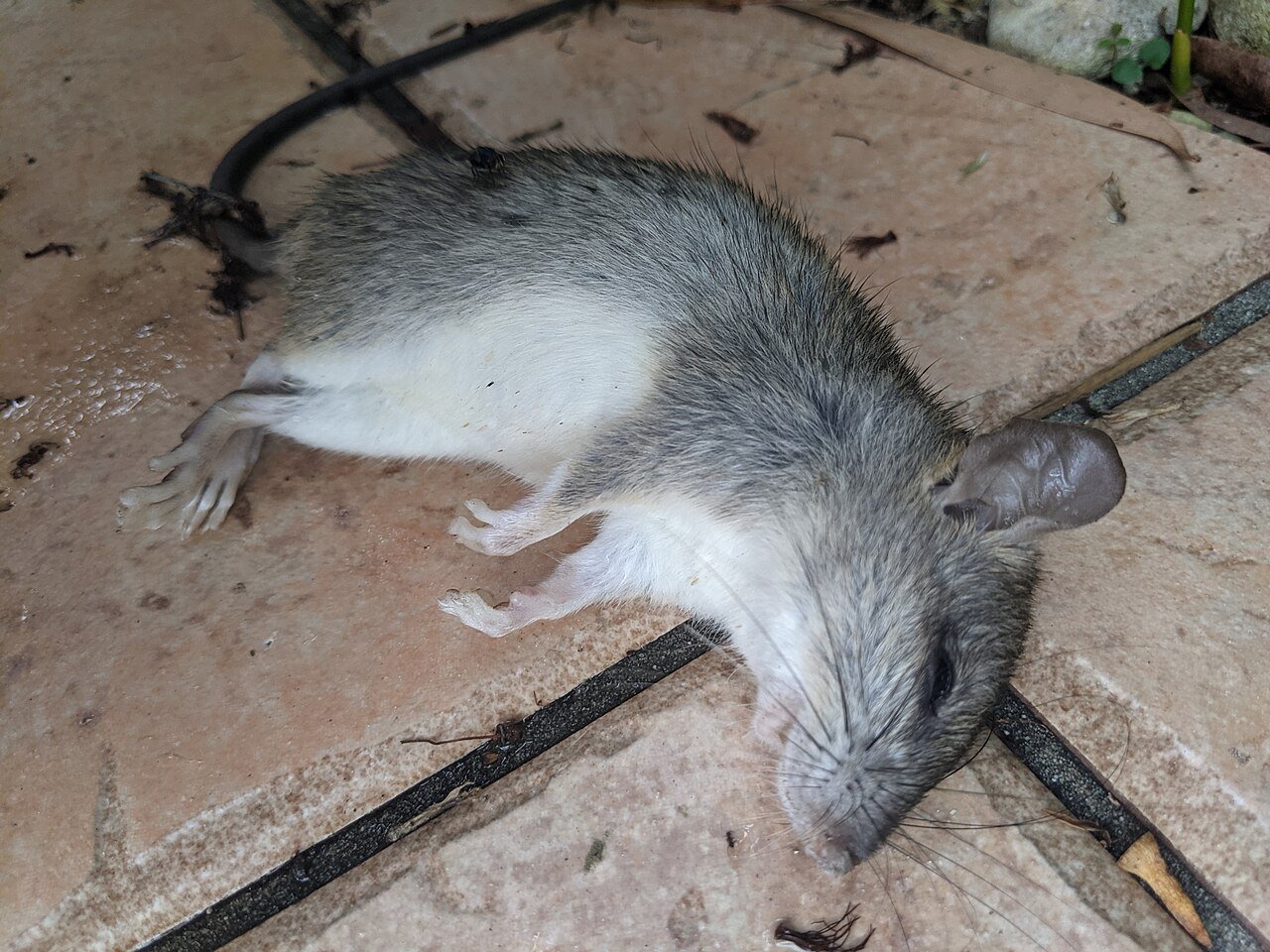
Almost everything we handle in West Chester is house mouse. Norway rats do occur in the township, generally tied to construction disturbance that displaces an existing burrow system, a compromised sewer lateral, or a sustained outdoor food source such as an unsecured commercial dumpster nearby. Rats are a genuinely different job — larger entry points, burrow systems running along foundations and under slabs and sheds, and a much heavier emphasis on sanitation and grade correction. If what you have is rats, we will tell you plainly that it is rats, because the two problems do not respond to the same work and treating one as the other wastes everybody’s time.
We should also be direct about scope. We handle rodents, and nothing larger than rats and mice. If what is in your attic turns out to be a raccoon, a groundhog denning under the shed, an opossum, or a bat in the chimney chase, that is wildlife control, and we will tell you so and point you toward someone who does that work properly rather than taking the job and improvising our way through it. It is genuinely worth ruling out early, because homeowners very frequently describe heavy overhead scratching as mice when the sound pattern — slow, heavy, dragging, concentrated at dusk or dawn — is telling a different story entirely.
The Seasonal Habits That Actually Help
Most of what keeps mice out of a house in this township is not treatment at all; it is a short list of maintenance items that nobody thinks of as pest control. Pet food and birdseed in sealed hard containers rather than paper bags on a garage shelf. Grass seed and fertilizer the same way. The garage door sweep replaced when it hardens and curls, which on a south-facing door is roughly every five to seven years.
Outside, the useful moves are keeping mulch and ground cover pulled back from the foundation so the soil line stays visible, trimming shrubs and ornamental grasses so they are not touching the siding, and extending downspouts away from the wall. None of that is glamorous, and all of it reduces the number of mice that ever reach the building in the first place. In a subdivision backing onto open ground, that reduction is the difference between an annual problem and an occasional one.
The Lakota Corridor
Liberty Township shares the same field edges, the same construction era, and therefore the same seasonal timing almost exactly. Fairfield to the west has older housing stock with a different entry profile, and Mason sits east across the Warren County line.
General service in the township is on the West Chester pest control page.
Frequently asked questions
Why do I only get mice in October?
Because that is when night temperatures drop and an outdoor population starts systematically testing your building envelope for a way into heated space. The mice were there all summer, living in the fields, detention basins, and creek corridors around the subdivision. October is simply when they come looking for somewhere warmer.
My house is only twelve years old. How are mice getting in?
Age has very little to do with it. The openings on newer construction are at the penetrations rather than in the walls — garage door corners, the air conditioning line set at the rim joist, dryer and radon vents, and soffit returns at the roofline. Builders foam those, and mice chew through cured foam without much difficulty.
Can you just put out bait?
We can, but on its own it is a subscription rather than a fix. If the entry points stay open the house keeps receiving new mice indefinitely. Exclusion is what actually ends it, and inside a finished house we strongly prefer traps to bait so that a dead mouse does not end up decomposing inside a wall cavity for three weeks.
How small a gap do mice need?
About a quarter inch, roughly the width of a pencil, and juveniles need less. They do not chew through masonry; they find an existing gap and work its soft edges until it is big enough. That is exactly why sealing has to be done with copper mesh or hardware cloth rather than foam or caulk on their own.
I hear scratching in the attic. Is that mice?
It might be, particularly on a two-story with a complex roofline where soffit returns provide access from above. But heavy, slow, or dragging sounds usually are not mice. We handle rodents only — nothing larger than rats and mice — so if it turns out to be wildlife we will tell you and point you toward someone who does that work.
Do I have rats or mice?
In West Chester it is almost always house mouse. Norway rats do occur, usually tied to construction disturbance, a broken sewer lateral, or steady outdoor food, and they need a different approach with larger exclusion work and attention to burrows along the foundation. We identify which one you have before quoting anything.
How long until it stops?
Most of the population inside comes out in the first week to ten days once exclusion is complete and traps are set. The real test is the follow-up visit around two weeks in — if anything is still being caught, an entry point was missed, and we go back to the envelope rather than simply adding more traps.
What is the best month to have this done?
Late summer into early September. Sealing the house before the first cold night is prevention and it is inexpensive. Doing it in November is cleanup, because by then whatever got in is already established, sheltered, and breeding on a three-week cycle.