
Finding larvae — small crawling worm-like things — in or around your bed ranks among the most alarming discoveries in household pest control, and among the most misdiagnosed: the reflex verdict is always “bed bug babies,” and the actual verdict, most of the time, is something far more manageable wearing a scarier bed. This page runs the complete bed-larvae tribunal: the four candidates (carpet beetle larvae lead by a wide margin, with case files for the rest), the crucial fact that bed bug young are NOT worm-like at all — the single sentence that acquits most discoveries on sight — the evidence sweep that names your specimen tonight, and the response program for each verdict, from the laundry-and-vacuum fix to the one that warrants the professional call.
The acquittal that opens every case: bed bug young are not larvae
The tribunal’s first ruling settles most discoveries in one sentence: bed bugs have no worm-like stage — they hatch as nymphs, miniature versions of the adult (six legs, oval, translucent-amber, walking), and nothing in their biology ever crawls like a caterpillar or wriggles like a grub. A WORM-SHAPED find in the bed therefore acquits bed bugs by anatomy alone, before any seam inspection — the panic’s premier suspect eliminated by the very shape that caused the panic. The corollary cuts the other way with equal force: a tiny amber WALKING oval near the mattress is the bed bug file after all (nymph-grade evidence — run the seam inspection per the bed bug wing immediately), and the shape-sort — wormlike versus walking-oval — is the whole first gate. Larva means moth or beetle; nymph means bug; and the bed’s scariest discovery splits into two completely different investigations at a glance.
Four suspects, and only one of them means what people fear. Settling which is what pest control in Dayton does before anything gets treated.
Suspect one, and usually the verdict: carpet beetle larvae
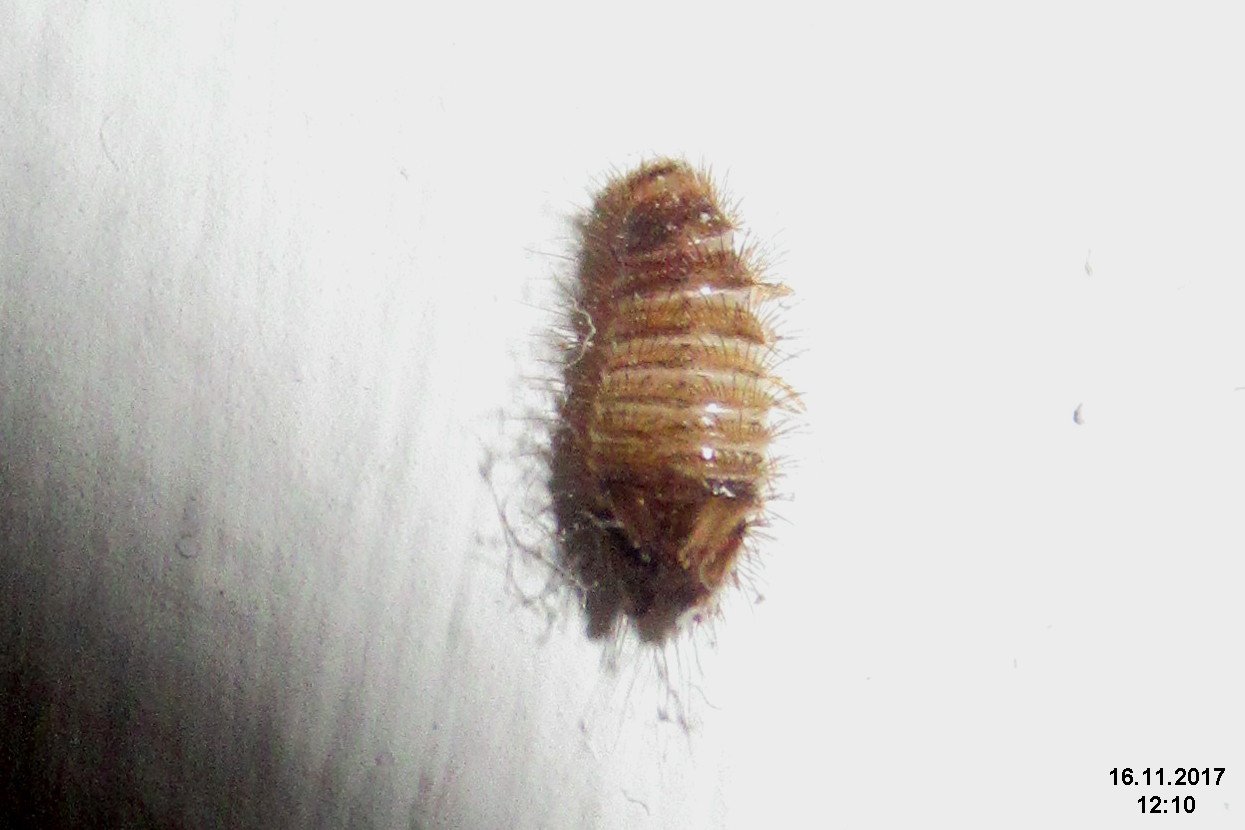
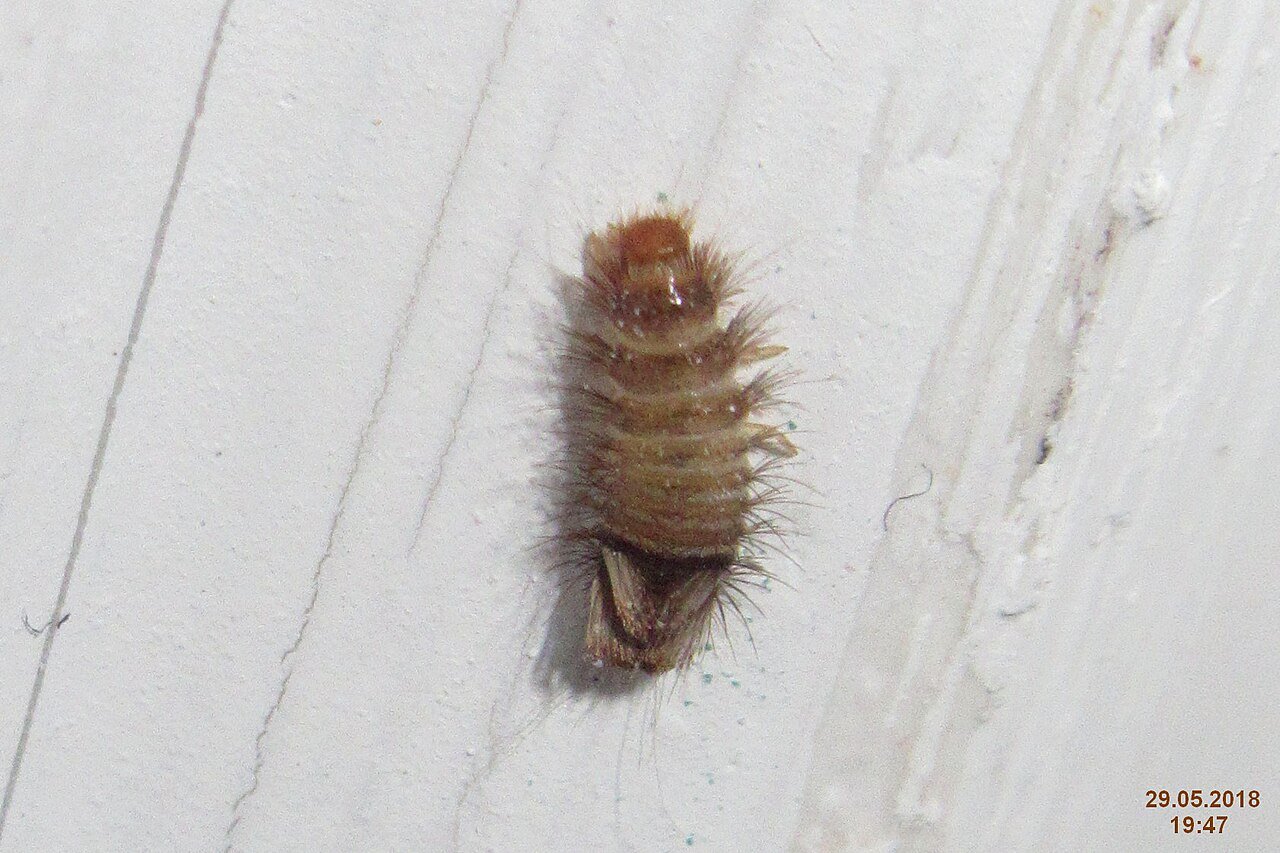
The overwhelming majority of bed-larvae finds resolve here: carpet beetle larvae — the bristled quarter-inch “woolly bears” of the photos, banded tan-and-brown, fuzzy-tailed, and slow-trundling (never fast, never wriggling). They arrive at beds for the keratin economy — shed hair, skin flakes, wool blankets, feather pillows, felt and down — grazing fabric fibers along seams and under the frame, and their calling cards double as the ID: shed bristle-skins (molted casings people mistake for more larvae), irregular surface grazing on natural fibers, and the adults at nearby windowsills each spring. The health footnote worth knowing: those bristles trigger genuine dermatitis in sensitive sleepers — “carpet beetle rash” mimics bite lines and sends households down the bed bug road weekly; bites-without-bugs plus larvae-in-bed plus a clean seam inspection is the classic carpet-beetle triangle. The response is the fabric-pest program, not the bed bug protocol: hot-wash everything washable, vacuum the frame, seams, and under-bed zone relentlessly, clear the keratin economy (the under-bed sweater box is usually the nursery), and the full file — sources, reservoirs, prevention — runs on our carpet beetle page.
The remaining suspects: moths, fleas, and the walking-oval file
Suspect two, clothes moth larvae: pale cream caterpillars, webbing-spinners, found where wool meets stillness — the blanket chest, the wool throw at the bed’s foot, the under-bed sweater storage; their tells are the SILK (webbing tubes and patches carpet beetles never make) and hole-grade fabric damage concentrated in hidden folds. The response is the clothes-moth protocol: launder-or-freeze, vacuum the reservoirs, seal the wool. Suspect three, flea larvae: bristled translucent threads with a dark gut line, light-fleeing, found at BED-ADJACENT floor level and in pet bedding rather than on mattresses — the bed connection is the pet who sleeps there; their presence convicts a breeding flea population per the flea wing’s staging system, and the full program (pet treatment, IGR, vacuum campaign) takes the case. Suspect four, the walking ovals: the non-larvae — bed bug nymphs (amber, seam-adjacent, the immediate seam-inspection trigger) and the occasional booklouse or spider beetle acquitting per their own files. And the wildcard worth naming: nothing at all — lint, thread bits, and rice grains star in a meaningful share of submitted photos, and the white-paper macro settles those in seconds, usually to relieved laughter.
The tonight protocol: from discovery to named verdict
- Capture and macro: specimen to white paper, phone camera two inches out — bristled-and-banded = carpet beetle; pale-and-silky = clothes moth; thread-thin with dark gut = flea larva; walking amber oval = the bed bug file, escalated immediately.
- The seam inspection either way: flashlight along mattress piping, box-spring corners, and frame joints — pepper-fleck spotting, skins, or eggs run the bed bug wing regardless of what the larva turned out to be; clean seams plus a wormy specimen is the acquittal completed.
- The reservoir sweep: under-bed storage opened and audited — wool, feathers, and forgotten textiles are the carpet-beetle-and-moth nursery in most cases; the specimen’s source is almost always within arm’s reach of where it was found.
- The response by verdict: carpet beetle = hot-wash, vacuum, keratin cleanup (their page); moth = the wool protocol (their page); flea larva = the full flea program (that wing); bed bug evidence = the protocol call; lint = the good night’s sleep.
- The persistence rule: repeat finds after an honest sweep mean a hidden reservoir — wall-void accumulations, bird-nest leftovers in eaves, the vent-duct lint economy — and that hunt is professional territory worth one call: (937) 569-3330.
The bottom line
Larvae in the bed run a four-suspect tribunal that opens with its own best news: bed bugs have no larval stage, so the worm-shaped discovery acquits the premier fear by anatomy before the flashlight comes out. The usual verdict — carpet beetle larvae grazing the bed’s keratin economy — yields to laundry, vacuum, and storage hygiene; the moth and flea alternates route to their wings; the walking amber oval escalates properly; and the lint acquits with a laugh. Macro first, seams always, reservoirs next, and the scariest find in the bedroom resolves the way this library’s tribunals usually do — named, filed, and smaller than it looked at 2 a.m.
Frequently asked questions
What are the tiny larvae in my bed?
Most often carpet beetle larvae — bristled, banded, quarter-inch “woolly bears” grazing the bed’s shed hair and natural fibers — with clothes moth caterpillars (pale, silk-spinning, wool-adjacent) and flea larvae (thread-thin, floor-level, pet households) as the alternates. The white-paper macro photo names yours in one frame.
Are the larvae in my bed baby bed bugs?
No — bed bugs have no worm-like stage; they hatch as walking amber nymphs shaped like tiny adults. A wormlike find acquits bed bugs by anatomy alone. A tiny WALKING oval near seams is the opposite verdict: run the seam inspection immediately.
What do bed bug babies actually look like?
Miniature adults: oval, six-legged, translucent-amber darkening after feeding, found at mattress seams and frame joints alongside pepper-fleck spotting and shed skins. Walking, never wriggling — the shape-sort separates them from every larva on this page.
Why are carpet beetle larvae in my bed?
The keratin economy — shed hair, skin flakes, wool blankets, feather pillows, and under-bed textile storage feed them; beds are buffets by their standards. The fix is the fabric-pest program: hot-wash, relentless vacuuming of frame and seams, and the storage audit that closes the nursery.
Can carpet beetle larvae cause bites or rashes?
Their bristles trigger genuine dermatitis in sensitive sleepers — welt-lines mimicking bites, the “carpet beetle rash” behind many false bed bug alarms. Bites-without-bugs plus larvae plus clean seams is the classic triangle; the rash resolves as the larvae go.
What are the white worms in my mattress seams?
Pale silk-adjacent caterpillars point to clothes moths (check for webbing and wool damage); translucent bristle-threads with a dark gut line are flea larvae (pet households, floor-level). Both route to their own wing’s program — and either way the seam flashlight-pass runs for bed bug evidence while you are there.
How do I get rid of larvae in my bed?
By verdict: carpet beetles take hot-wash-plus-vacuum-plus-keratin-cleanup; moths the wool protocol; fleas the full flea program; and confirmed bed bug evidence the professional protocol. The universal first steps: launder everything washable hot, vacuum the frame and under-bed zone, and audit the storage.
Do larvae in the bed mean my house is dirty?
No — keratin accumulates in every slept-in bed, and wool storage exists in tidy homes; the larvae follow biology, not housekeeping verdicts. What the find audits is under-bed storage practice and laundering cadence — both fixable in an afternoon.
What if I keep finding larvae after cleaning?
A hidden reservoir feeds repeats — wall-void accumulations, old bird nests in eaves, vent-duct lint, the forgotten wool box — and reservoir-hunting is genuinely professional work: (937) 569-3330. Persistent finds also warrant one more seam inspection; verdicts occasionally stack.
Who identifies bed larvae from a photo near Dayton?
The free line — (937) 569-3330 — where white-paper macros of bed finds are daily traffic and the verdicts run heavily toward relief: carpet beetle, moth, lint, and the occasional genuine escalation, each named same-day with its program attached.
Why beds collect larvae at all: the keratin economy, explained
The discovery’s underlying logic deserves its paragraph, because it converts alarm into maintenance. A slept-in bed sheds continuously — hair, skin flakes, fabric fibers — and accumulates the animal-fiber goods (wool, down, felt, silk) that keratin-and-protein feeders evolved to recycle; by a carpet beetle’s accounting, the average bed frame’s underside is a woodland floor with better weather. The under-bed storage habit compounds it: boxed sweaters, spare blankets, and the heirloom quilt create undisturbed larders exactly where the vacuum never visits, and most bed-larvae cases trace to precisely that box within arm’s reach of the discovery. The maintenance program that ends the economy is genuinely modest — quarterly under-bed vacuuming, washable storage containers over cardboard, wool and down laundered or bagged seasonally, and the frame’s crevices included in the deep-clean rotation — the same subtraction logic the whole library runs, applied to the one room where discoveries feel most personal. The larvae were never a verdict on the household; they were an audit of the one square yard nobody cleans — and now it is on the rotation, the economy closes, and the bed goes back to hosting nothing but sleep.
The eight-county bed-tribunal report
The photo line’s bedroom traffic, localized: carpet-beetle verdicts dominate everywhere, with the wool-storage variants weighted to the older housing and heirloom-rich households of Oakwood, the county seats, and the farm counties (the cedar-chest belt); flea-larvae findings track pet density through the suburbs; clothes-moth cases follow the vintage-and-antique economy (Waynesville’s dealers supply a steady trickle); and the genuine bed bug escalations concentrate where the multifamily and turnover corridors run — downtown, Fairborn, the rental belts — per the bed bug wing’s standing geography. Every county shares the tribunal’s happy statistics: the wormlike majority acquits the big fear on anatomy, the macros resolve same-day, and the 2 a.m. discovery almost always files smaller by breakfast. The bed remains the house’s most-feared venue and its most-acquitted — a ratio this page exists to keep.
Tribunal closed, then: shape sorts the suspects, the macro names them, the seams answer the fear, and the reservoir sweep ends the story — four verdicts, three of them laundry, and the bed restored to its one job. Sleep, as the whole library keeps concluding, was never actually under threat; it just needed the flashlight run once, properly, with the field guide in hand. Consider it run — and consider the guide permanently yours.
The companion files — the carpet beetle wing, the moth and flea programs, the bed bug protocols for the rare escalation — wait one link away; the bedroom’s whole caseload, cross-referenced and closed.
Macro taken, seams cleared, storage boxed in plastic, rotation updated — the bed’s tribunal adjourns with its usual mercy, and the flashlight goes back in the nightstand where the best pest tools live: close at hand, rarely needed, and never again a source of dread.