
Somewhere in your cart right now: fly paper, a UV plug-in, a vinegar-trap recipe screenshot, and possibly one of those outdoor bag traps with the reviews that say “disgusting but incredible.” Some of that gear genuinely earns its shelf space; some of it makes your problem worse in a way the packaging will never mention. This is the honest buyer’s guide to fly traps and repellents: what each product actually does, which fly each one works on (the single most-skipped question in the aisle), the placement mistakes that turn good traps into decorations, and the two-sentence truth about “fly repellent” that saves you the whole second half of the shopping trip.
First Law of Fly Gear: Match the Trap to the Fly
Every trap on the shelf is species-specific, and most disappointment is a species mismatch. Vinegar and cone traps catch fruit flies (they hunt fermentation) and do nothing for house flies. Protein-baited bag traps catch house flies and blow flies (they hunt rot) and are ignored by fruit flies. UV light traps pull house flies, cluster flies, and assorted daytime fliers, weakly pull fruit flies, and barely register with drain flies, whose problem lives in the pipe. Sticky paper is a general skimmer — it samples whatever flies past, which makes it better as a monitor than a solution. Thirty seconds of ID (size, color, what it hovers over — fruit bowl, garbage, window, drain?) before buying beats every five-star review ever written. Our master fly guide runs the full ID; this page assumes you know your target and want the right gear for it.
A trap measures the problem rather than solving it. Solving it means finding the source, which is pest control in Dayton.
The Trap Report Card
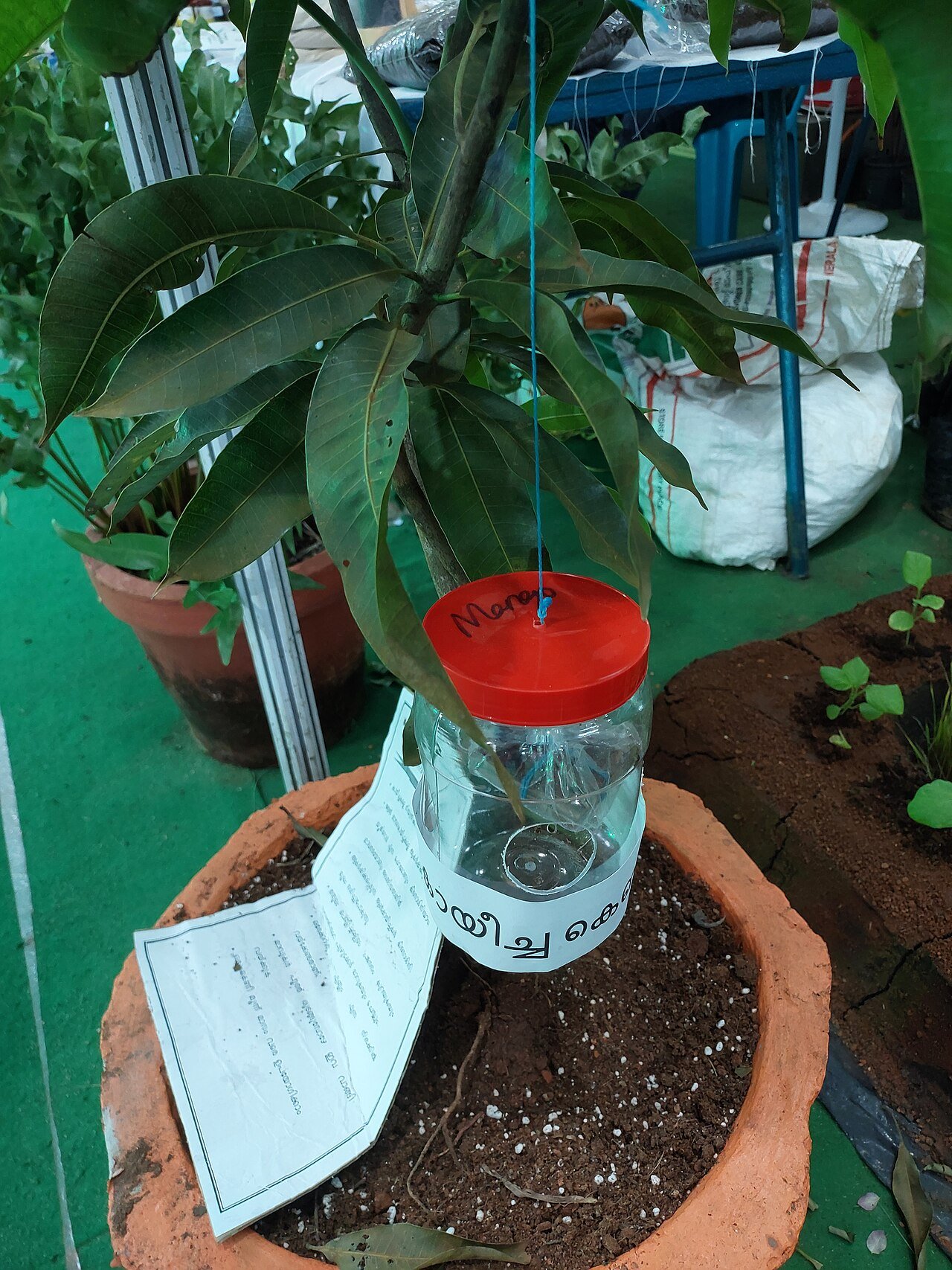
DIY vinegar trap: A for fruit flies, F for everything else
Apple cider vinegar, a drop of dish soap (it breaks surface tension so landers sink), plastic wrap with pencil holes, done. It genuinely harvests adult fruit flies by the dozen — and it is cleanup, not strategy: with 50–100 eggs laid daily into any fermenting material within range, the trap loses to the banana bowl every time. Trap plus source-removal ends fruit flies in a week; trap alone runs forever. That distinction — harvester versus solution — is the grading rubric for this whole page.
Fly paper and sticky ribbons: B-minus, with placement rules
Old, cheap, nontoxic, and honestly useful in the right role: hung near (not over) the fly traffic lanes — the sunny window they bounce against, the garbage-can corner, the barn doorway. The failure modes are placement (center-of-room ribbons catch air), squeamishness (a full ribbon is doing its job; a clean one after a week is telling you the traffic is elsewhere — move it), and the one genuine hazard almost nobody warns about: outdoors, sticky paper catches songbirds and bats. Keep it indoors, garages included, full stop. Used as a monitor — which corner fills fastest? — it’s also the cheapest fly-detective tool made.
UV light traps: B indoors, D as commonly used
The physics is sound — flies orient to UV — and commercial kitchens run wall-mounted glue-board UV units to real effect. The buyer’s catches: zapper versus glue board matters (the satisfying electric zap pops fly fragments into the surrounding air, which is why health codes push food businesses to glue-board units — buy glue for any room where people eat); placement is everything (mounted low-ish, away from competing windows and door sightlines — a unit fighting a sunny window loses); and the famous bug-zapper porch lantern is a D for its stated purpose: studies keep finding they execute thousands of harmless and beneficial night insects while barely denting biting flies and mosquitoes, and drawing more insects to your patio than it removes. Indoors, targeted: fine tool. Outdoors, indiscriminate: expensive theater.
Outdoor baited bag traps: B-plus — fifty feet away
The “disgusting but incredible” bags earn both adjectives. The rot-scented lure genuinely pulls house flies and blow flies by the thousand — which is exactly why the single placement rule decides everything: the trap is an attractant, and it belongs at the property line, downwind, fifty-plus feet from the patio — never on the deck rail beside the grill, where it books more flies into your barbecue than it removes. Placed right, it’s legitimate relief for yards with unavoidable pressure (livestock nearby, a neighbor’s cans, event weekends). Placed wrong, it’s a fly festival you paid to host.

The “Fly Repellent” Aisle: Two Honest Sentences
Here they are: skin repellents (DEET, picaridin) work on skin — they protect a person from biting flies and belong in the picnic bag; and almost nothing sold to repel flies from a space works — citronella candles test barely above placebo, ultrasonic plug-ins are the same F they earn everywhere else, penny-in-a-water-bag folklore is folklore, and essential-oil room sprays fade in hours. The two space-level measures with real evidence cost almost nothing: moving air (a box fan across the picnic table defeats flies’ weak flight the same way it defeats midges — the single best outdoor-eating trick there is) and denied access (intact screens, closed lids, covered dishes). Spend the repellent budget on a fan and better screens; that’s the whole aisle, honestly reviewed.
The Verdict Table, and When Traps Are the Wrong Conversation
Fruit flies: vinegar trap plus source removal. House flies indoors: swatter, sticky paper at the traffic lanes, source removal, screen repair. House flies outdoors: bag trap at distance, fan at the table, garbage discipline. Cluster flies: vacuum and fall exclusion — no trap needed. Drain flies: no trap works; scrub the pipe. And the escalation line: when flies persist for weeks with no findable source, when the species is blow flies appearing in bursts (something died in a void), or when it’s a business with a health inspection on the calendar — the trap conversation is over and the find-the-source conversation begins. Traps harvest adults; only sources make flies. Every product above is graded on remembering that distinction — and so are we.
Buying your third fly gadget this month? Describe the fly instead — we’ll name it, find the nursery, and tell you which $6 tool actually fits. Serving Dayton and all of Montgomery, Greene, Miami, Clark, Warren, Butler, Preble, and Darke counties.
Building the $25 Fly Defense Kit
If you outfitted a Dayton household against the full fly year for the cost of one gadget, here’s the kit: a fly swatter ($3 — each swing on a female removes weeks of future eggs), a roll of sticky ribbon ($4 — deploy as monitors in garage and kitchen corners and read them like gauges), vinegar, dish soap, and a jar (already own — the fruit fly harvester, deployed only alongside source removal), window screen patch tape ($5 — the torn screen is the front door), and a box fan ($15 if you don’t own one — the patio’s honest force field). What’s deliberately absent: anything that plugs in and glows for under $30 (toy-grade UV — the working commercial units start much higher and earn it), anything ultrasonic, and any spray promising a “fly-free zone.” The kit plus the source-hunting habit from our fly guides handles the ordinary year; what it can’t handle — burst appearances, weeks-long mysteries, inspection-critical kitchens — was never a retail problem to begin with.
For Businesses: Where This Page Stops
A restaurant, bar, grocery, or food-processing floor reads the same product truths and lands somewhere different: fly control there is a compliance system, not a shopping trip — commercial UV glue units on a maintenance schedule, drain programs on a calendar, receiving-door air curtains and screening audits, monitoring logs an inspector can read, and a service partner accountable for all of it. That’s the shape of our restaurant program, and the reason the fly section of a health inspection stops being a coin flip. If flies threaten a license instead of a picnic, skip the aisle entirely and start with the walkthrough.
Trap Reviews Decoded: Reading Five Stars Like a Pro
The fly-gear aisle’s review sections follow patterns worth knowing before you trust them. “Caught hundreds in a day!” — believable and beside the point: catch volume measures attraction, not resolution, and a bag trap catching hundreds beside the patio may be importing them. The review that matters says “and we could eat outside again” — an outcome, not a body count. “Worked instantly” on any repellent product is the 48-hour novelty window talking; check whether the reviewer reported back in week three (they almost never do). “Didn’t catch a single fly” on a legitimate trap is usually a species mismatch or placement error wearing a one-star costume — the vinegar jar reviewed by someone with drain flies was never going to work. And the sleeper signal worth searching for in any UV unit’s reviews: photos of the glue board pattern over time, the one data source that shows whether the unit intercepts traffic or just glows attractively. Reviews measure enthusiasm; species, placement, and source-removal measure results — this page exists because the aisle can’t tell you that.
A note on the newest shelf arrivals, since the category refreshes yearly: salt-shot fly guns are swatters with better marketing and worse cleanup (fine as sport, slow as control); indoor CO2-lure mosquito gadgets rebranded for flies inherit the mosquito version’s weak evidence; and “smart” app-connected traps report their catch in push notifications without catching more for the privilege. The physics of fly control hasn’t changed underneath any of it: attraction, interception, exclusion, and source removal. Gear that does one of those four things honestly earns its price; gear that does none of them earns a notification. When in doubt, reread the verdict table above — it will outlive every product cycle this aisle ships.
One placement cheat sheet to carry out of this page: sticky ribbon near the sunny window, never over food prep; UV glue unit on the wall opposite (not beside) the brightest window, three to six feet up; vinegar jar touching the fruit bowl it’s defending; bag trap at the fence line downwind; fan aimed across the table, not at the food. Five products, five positions, and the geometry does half the killing.
Frequently Asked Questions
What is the best fly trap?
There’s no best trap — there’s a right trap per species. Fruit flies: vinegar/cone traps. House and blow flies: protein-baited bag traps (far from the patio) and indoor UV glue units. General indoor traffic: sticky paper at the flight lanes. Drain flies: no trap — clean the drain. Species ID first, purchase second.
Do UV light fly traps work?
Indoors with glue boards, placed away from competing windows: yes, genuinely — it’s what commercial kitchens run. Outdoor zapper lanterns: mostly no — they kill thousands of harmless night insects, barely touch biters, and attract more bugs to the patio than they remove.
Why is my outdoor fly trap full but the flies are worse?
Placement — baited bag traps are powerful attractants, and on the deck rail they book flies into your barbecue. They belong at the property line, downwind, fifty-plus feet from where people sit. Full trap + calmer patio is the win condition; full trap + busier patio means move it.
Do vinegar traps work on house flies?
No — vinegar traps hunt fermentation-seeking fruit flies. House flies want rot and protein, which is what bag traps and UV units offer. The jar that cleared your fruit flies will sit ignored through an entire house fly problem.
What actually repels flies?
On skin: DEET or picaridin, genuinely. In a space: moving air — a box fan across the table defeats their weak flight — and denied access via screens and covered food. Citronella, ultrasonic devices, and water-bag folklore test at or near placebo. The fan is the whole secret.
Are fly zappers safe in the kitchen?
Electric-grid zappers pop fly fragments into the air around them, which is why food-service codes favor glue-board UV units instead. Same physics for your kitchen: choose glue boards anywhere food is prepped or eaten.
Is fly paper safe to use outside?
Keep it indoors — outdoor sticky paper catches songbirds and bats, a genuinely grim and well-documented hazard. Indoors (garages included) it’s nontoxic, cheap, and doubles as the best fly-traffic monitor made.
Why do traps never end my fly problem?
Because traps harvest adults while the breeding source — wet garbage, drain biofilm, potting soil, fruit, something dead in a wall — keeps producing replacements on a 1–2 week cycle. Trap plus source removal ends flies; trap alone runs forever. If no source is findable, that’s the moment for a professional eye, not a fourth gadget.