
Do bed bugs jump? No. Do they fly? Also no — and both answers are load-bearing, because half of practical bed bug defense is built on the fact that this insect travels exclusively at walking speed. The bug on your ceiling, the one that “jumped” off the mattress, the fear that they leap bed-to-bed like fleas — all of it resolves under the same movement biology, and once you own it, the famous countermeasures (interceptor cups, pulled-back beds, luggage racks) stop being folk rituals and become the obvious physics they are. This page runs the full locomotion file: the anatomy that rules out jumping and flying, what bed bugs DO instead (walk, climb, and hitchhike — formidably well), the jumping look-alikes that cause the confusion, and the defense stack that a walking-only pest cannot beat.
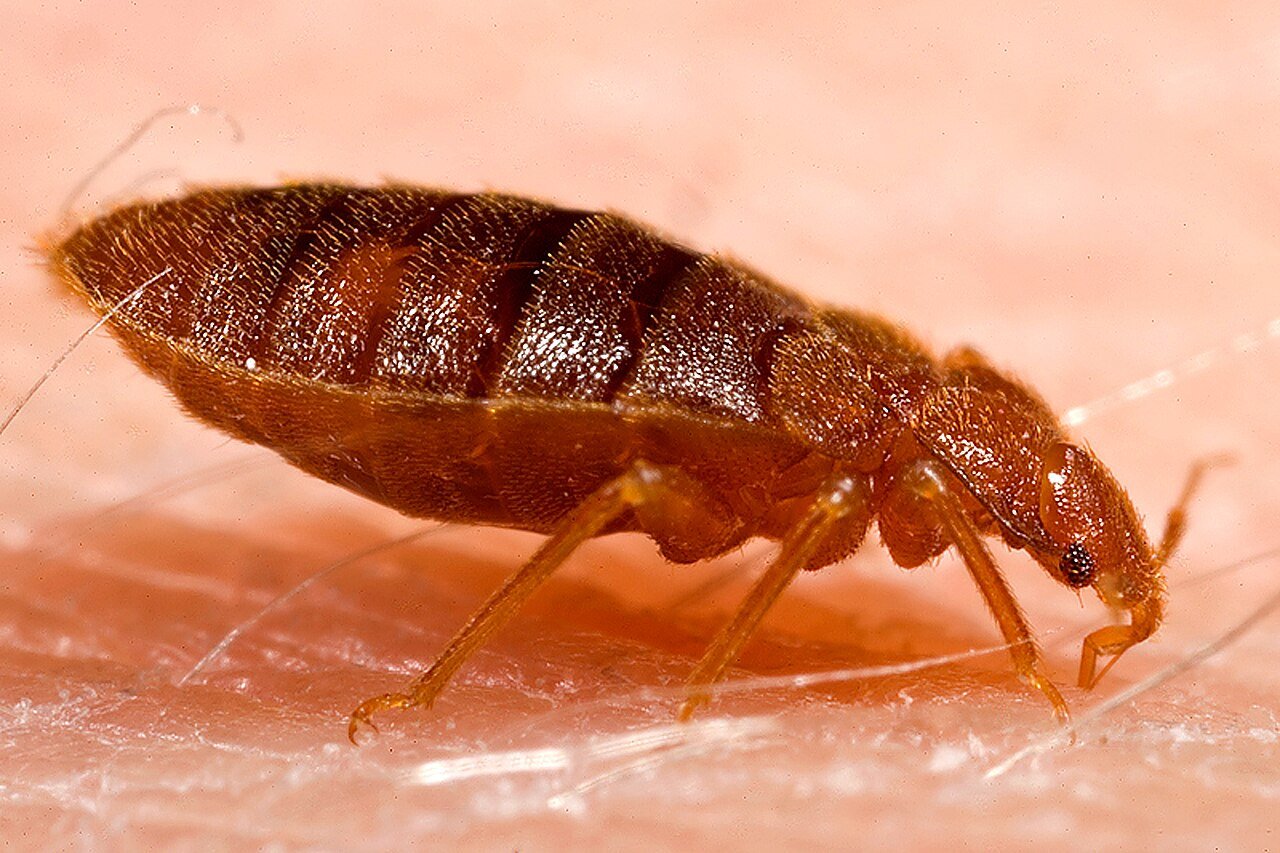
The anatomy verdict: why jumping and flying are off the table
No flight: bed bugs carry only vestigial wing pads — evolutionary leftovers with no flight surface; the lineage traded wings for the flattened profile that fits mattress seams, and no bed bug at any life stage can become airborne under its own power. No jumping: the legs are unspecialized walking hardware — no flea-style resilin springs, no grasshopper extensors; a bed bug’s vertical ambition tops out at climbing. What the anatomy DOES provide: six efficient legs good for a meter-per-minute cruise (three-to-four feet across open sheet in sixty seconds), hooked tarsi that climb fabric, wood, and rough surfaces expertly — while failing on clean smooth plastic and metal, THE exploitable weakness — and the pancake-flat body that slides into credit-card gaps. The whole defense doctrine falls out of two sentences: they must WALK to reach you, and they cannot climb polished surfaces. Every good tool on the market is one of those two sentences wearing a product name.
Walking-only is the weakness the entire treatment exploits, and it is why bed bug treatment in Dayton works outward from the bed.
“But I SAW it jump”: the falling-bug file and the impostor lineup
The eyewitness reports have honest explanations. Falls read as jumps: a disturbed bed bug on a vertical surface releases its grip and drops — ceiling-to-bed, headboard-to-pillow — and a fast fall from a startled insect is visually indistinguishable from a leap; bed bugs do exploit gravity (the ceiling-drop route around bed isolation is real, if uncommon), but it is ballistics, not athletics. The impostors jump for them: fleas (the ankle-height verticals — coin-on-edge flat, per the flea ID page), springtails (damp-venue tumblers), and bat bugs’ co-resident fleas in wildlife-adjacent homes all get credited to bed bugs nightly. The sorting rule: a jumping speck is NEVER a bed bug — the observation acquits the species instantly and routes the investigation to the flea and springtail files. Amber, flat, WALKING, and seam-adjacent is the bed bug profile; anything ballistic has a different name and, usually, a cheaper solution.
What they do instead: the three real transports
Transport one, the nightly commute: harborage-to-host walking runs on CO₂ navigation — bed bugs track the exhaled plume to its sleeping source, feed five-to-ten minutes, and walk home; commute range is typically within twenty feet of the bed, which is why harborage maps stay bedroom-centered for months. Transport two, the building crawl: the same walking scales to structures — along baseboards, through wall voids, down plumbing and electrical chases — the multifamily spread mechanism our how-do-bed-bugs-spread page documents; slow (rooms per month, not per night) but relentless where adjacent units go untreated. Transport three, the one that matters most: hitchhiking. Every long-distance bed bug journey in history was a ride — luggage, bags, coats, secondhand furniture, laundry hampers — because a walking-speed insect crosses cities only in cargo. The strategic summary: they walk to you at night, walk between units over weeks, and ride between buildings always — three transports, three defenses, all of them mechanical.
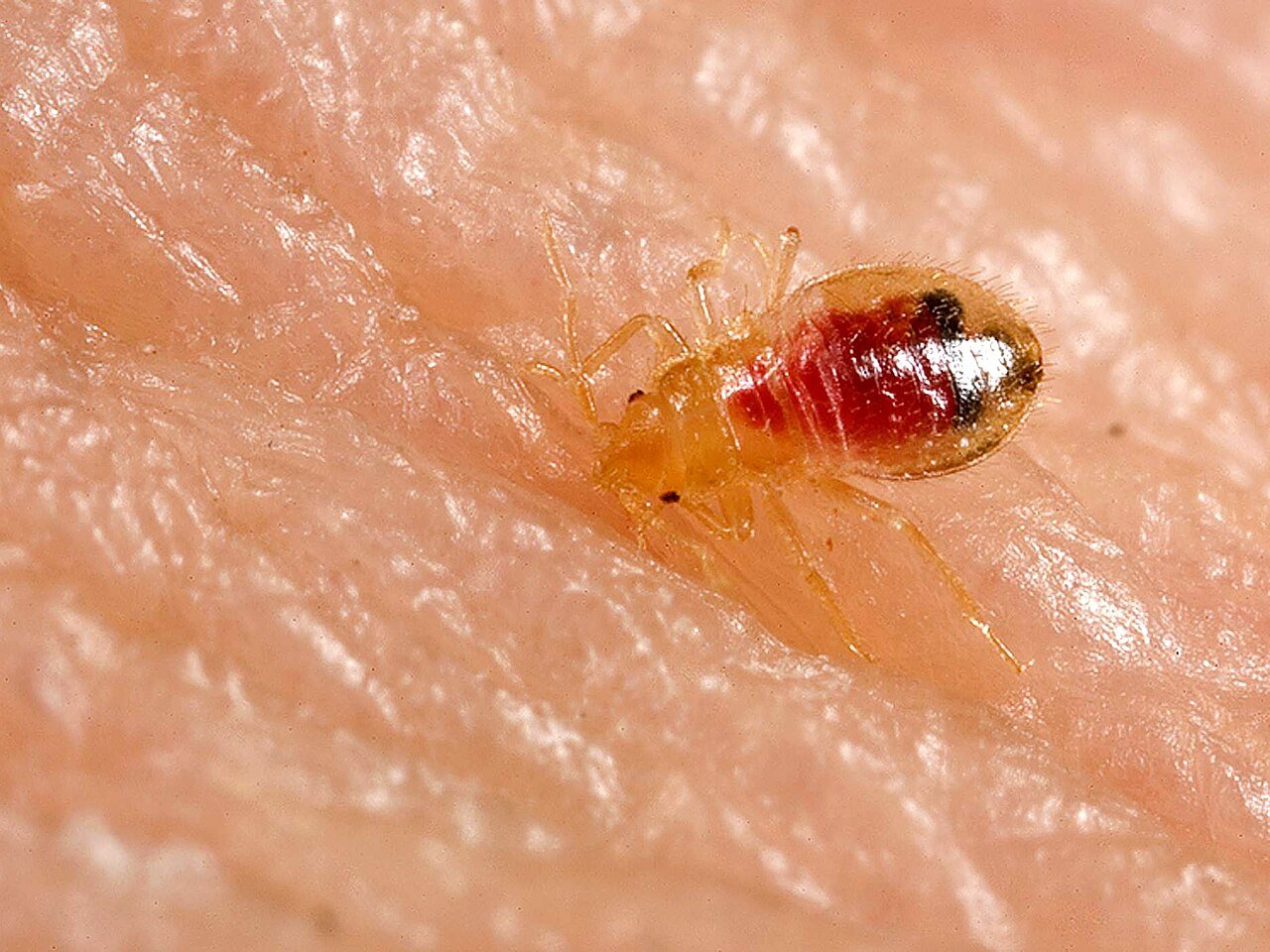
Weaponizing the walking rule: the defense stack
- Interceptor cups (the star): smooth-walled moats under each bed leg — commuters climb the rough exterior, fall into the polished pitfall, and cannot climb out. Detection and defense in one $15 set, entirely because the species cannot jump the gap.
- Bed isolation: frame pulled inches off the wall, bedding never touching floor — with interceptors, the mattress becomes an island a walking insect cannot reach except up the cupped legs. (The ceiling-drop exception is rare enough to note and monitor, not redesign around.)
- Encasements: deny the seam harborage so survivors travel exposed across surfaces where they are seen and caught — the walking rule means more exposure equals more interception.
- Luggage discipline: racks and bathtubs in hotels (smooth, elevated — unwalkable approaches), hot-dryer cycles on return — the anti-hitchhiking half, since the ride is the only transport you cannot moat.
- Clutter clearance: every floor-touching pile is a bridge and a rest stop on the walking network; bare floors turn the commute into an exposed march past your monitors.
- What the rule retires: fear of bed-to-bed leaps, “they flew in the window” theories, and any product promising to stop aerial invasion — the species’ entire strategic weakness is that nothing about it is airborne.
The bottom line
Bed bugs are pedestrians: no wings, no springs, no leaps — just a meter-a-minute walk, a talent for climbing everything except smooth surfaces, and a career built on riding your belongings. That locomotion writes the whole defense: moat the bed legs, isolate the island, encase the seams, rack the luggage, dry the returns — physics the insect cannot argue with. The complete files wait one link away — spread routes, egg biology, treatment temperatures, the prevention stack — and the inspection line handles the cases where the walking has already gone too far: (937) 569-3330.
The movement biology, one level deeper
For readers who want the mechanism: bed bug locomotion is optimized for CREVICE life, not open travel. The dorsoventrally flattened body (pancake-flat, opposite of the flea’s coin-on-edge) buys access to seams at the cost of speed and leverage; the legs mount laterally for low-profile scuttling rather than beneath for running or jumping; and the tarsal claws grip texture — fabric weave, wood grain, paper — while finding nothing to hold on polished plastic, glass, or metal (watch one attempt an interceptor wall: the scramble-and-slide is the whole product demo). Navigation is chemical and thermal — CO₂ plumes at range, body heat close-in, aggregation pheromones back home — with no meaningful vision to speak of, which is why they travel by edge-following: baseboards, seams, cords, and frame rails are their highways, and why monitors and treatments concentrate exactly there. Speed peaks around a meter per minute on favorable surface — quick for a crevice bug, glacial by pest standards, and the entire reason early detection converts bed bug problems from building-scale to bedroom-scale. Every fact in the paragraph is a tactic in disguise; the species’ engineering is its own instruction manual for defeat.
The eight-county movement report
How the walking rule plays locally: the multifamily cores — downtown Dayton, Fairborn’s turnover belt — supply the building-crawl files, where untreated adjacent units feed months-long baseboard migrations (the written-notification-and-building-protocol answer lives on the spread page); the travel-heavy suburbs contribute the hitchhiker cases — luggage from every airport, dorm moves each May and August, the secondhand-furniture economy running year-round; and the county seats’ older hotels and rentals round out the mix. No county reports flying or jumping bed bugs, ever — but every county’s call log includes the flea-mistaken-for-bed-bug acquittal weekly, resolved by the jump test this page just installed. The interceptor-cup recommendation is universal; the physics do not vary by zip code.
Frequently asked questions
Can bed bugs jump like fleas?
No — bed bug legs are plain walking hardware with none of the flea’s spring-loaded catapult anatomy. A jumping speck is never a bed bug: that observation alone re-routes the investigation to the flea and springtail files.
Can bed bugs fly?
No — adults carry only vestigial wing pads with no flight surface, and no life stage is airborne under its own power. The lineage traded wings for the crevice-flat body; “they flew in” has never once been the origin story.
How do bed bugs move around then?
Three transports: the nightly CO₂-guided walk from harborage to sleeper (meters), the weeks-long baseboard-and-chase crawl between rooms and units, and the hitchhike — luggage, furniture, bags — that accounts for every long-distance journey the species has ever made.
How fast do bed bugs crawl?
About a meter per minute on favorable surfaces — three to four feet across a sheet in sixty seconds. Quick enough to commute, far too slow to escape detection tools, which is the entire premise of interceptors and early inspection.
Can bed bugs climb walls and ceilings?
Yes — textured surfaces (paint, wood, fabric, paper) climb easily via hooked tarsi; polished plastic, glass, and metal defeat them completely. That split is the interceptor cup’s whole mechanism and the reason metal-frame beds inspect easier.
I saw one jump off my bed — what happened?
A drop, not a jump: disturbed bed bugs release and fall, and a startled drop reads as a leap. Ceiling-and-headboard drops onto bedding are the one gravity-assisted route worth knowing — rare, real, and monitored by the same encasement-and-inspection stack.
Do bed bugs travel on people during the day?
Rarely on bodies (they feed and leave — no clinging anatomy for skin or hair) but readily in BELONGINGS: bags, coats, laundry, cushioned seats. The person is poor transit; the backpack on an infested floor is first class.
How far can a bed bug travel in a night?
Commute-scale — typically within twenty feet of harborage, out and back on the CO₂ plume. Building-scale spread runs weeks-to-months by crawl; anything faster than that arrived as cargo.
Do interceptor cups really work if bed bugs can climb?
Precisely because of WHAT they can climb: the cup’s rough exterior invites the ascent, the polished inner pitfall ends it — no jump means no escape over the smooth wall. Field studies validate them as both defense and the best cheap detection instrument in the file.
What kills bed bugs since I can’t just block them?
Blocking IS half the program — the other half is the treatment file: professional protocols with the egg-timed follow-up, the dryer-and-laundry home arsenal, all covered across our bed bug wing: (937) 569-3330 for the inspection that scopes which.
The three hitchhikers, ranked by locomotion (the household cheat sheet)
The comparison that organizes the whole bite-and-speck universe: fleas JUMP — ballistic ankle-boarders defeated by growth-regulator carpet treatment and the vacuum campaign; ticks CLIMB — slow ambush boarders defeated by permethrin toll-booths at the boots and the two-hour check; bed bugs WALK — patient commuters defeated by moats, isolation, and luggage discipline. Three locomotion strategies, three defense stacks, zero overlap — and the fastest diagnosis in the house is simply watching the suspect move: the vertical leap, the questing climb, or the seam-hugging trundle each name their owner before any magnifier arrives. This library keeps the three files one link apart because households keep meeting all three; the movement test keeps them from ever being confused again. A walking-only pest in a world of jumpers and climbers turns out to be the easiest of the trio to fence out — provided you know it walks, which, as of this page, you permanently do.
Moats filled, luggage racked, physics enforced — the pedestrian stays on the far side of the smooth wall, exactly where a walking-only pest belongs. Some problems yield to chemistry; this one yields to a $15 set of cups and the fact that evolution never gave it a ladder.
And when the walking has already reached somewhere it should not have — the seams, the second bedroom, the unit next door — the treatment wing takes the case from here: protocols, heat, and the egg-timed follow-up, one honest inspection away.
Until then: sleep tight, and let the cups do the worrying — the bugs, whatever else they manage, will have to walk to disappoint you.
Grounded, in every sense of the word.
Case closed at walking pace.
Onward, pedestrians.