
Assassin bugs carry the most cinematic name in Ohio entomology and one of its most misunderstood files: a family of slow, armored, beak-wielding predators that includes the yard’s most medieval-looking insect (the wheel bug), the house’s strangest resident (the masked hunter, a nymph that disguises itself as walking lint), and — the reason this page handles the topic with care — a distant infamous cousin, the kissing bug, whose reputation shadows the whole family unfairly. Here is the complete Ohio assassin file: who the local species actually are and what they hunt (spoiler: pests, on your behalf), the one genuinely memorable defensive bite and how to never receive it, the kissing-bug distinction settled properly, and the management verdict — which, for the second-most-alarming-looking insect on this site, is mostly a thank-you and a respectful distance.
Meet the family: Ohio’s assassin roster
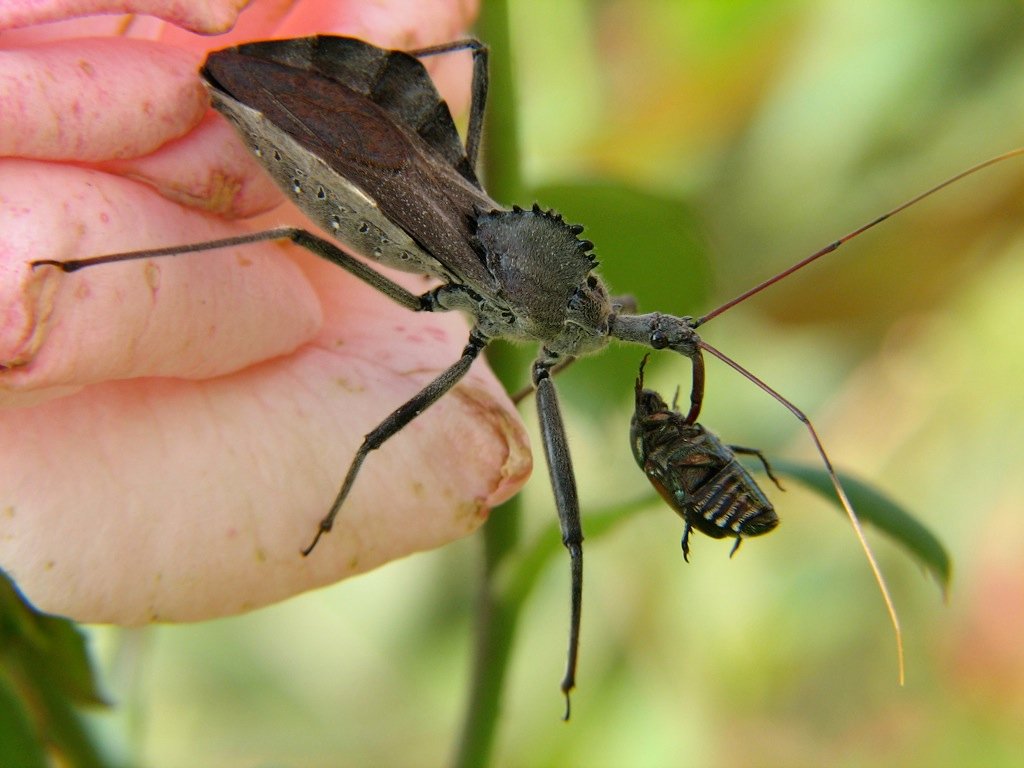
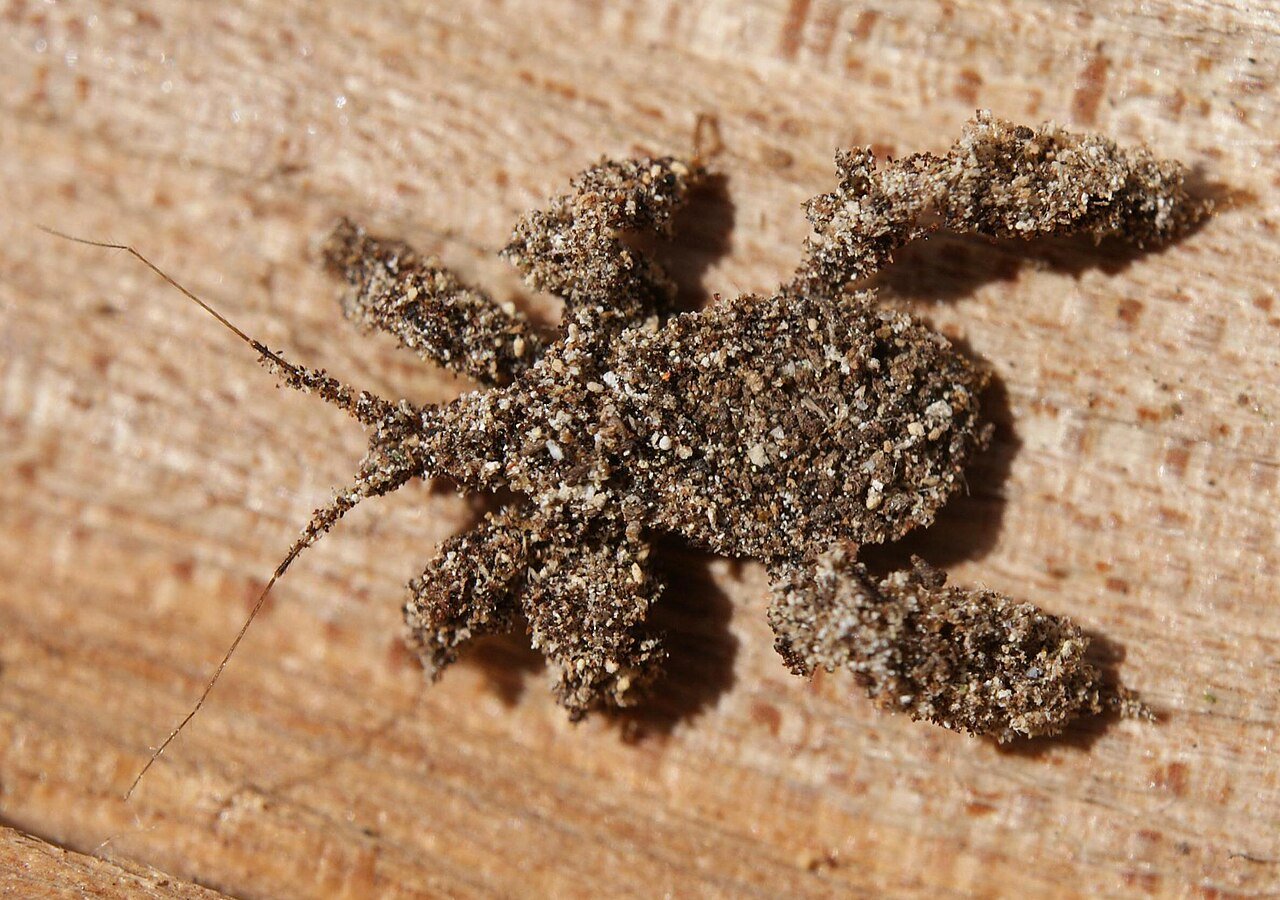
Assassin bugs (family Reduviidae) share the toolkit: a stout curved “beak” (rostrum) folded under the head, raptorial front legs, slow deliberate movement, and a hunting method — grab, pierce, inject digestive saliva, drink — that clears pest insects by the hundred per bug per season. The wheel bug is the flagship: inch-plus, armored gray, wearing the unmistakable cog-shaped crest that makes it Ohio’s most photographed “what IS this” insect; it patrols trees and gardens taking Japanese beetles, caterpillars (fall webworms a specialty), stink bugs, and aphid clusters — a resume that reads like this library’s most-wanted list, worked free of charge. The masked hunter is the indoor specialist: a dark half-inch adult whose nymphs coat themselves in dust and lint as camouflage (the “walking dust bunny” of basement folklore), hunting silverfish, carpet beetle larvae, and — documented and delightful — bed bugs. The supporting cast — orange-and-black milkweed assassins, slender damsel bugs, ambush bugs in the flowers — rounds out a family whose entire Ohio membership works your property’s pest economy from the predator side.
Assassin bugs are on your side in the garden. For the pests they cannot keep up with, there is pest control in Dayton.
The bite file: one memorable defense, entirely optional
The honest warning that keeps this page trustworthy: a handled assassin bug can deliver one of Ohio’s most painful defensive bites — the wheel bug’s rates worse than most stings, a deep burning puncture that aches for hours and can stay tender for days (the masked hunter’s earns second place and its German nickname, “the biting dust bug”). The complete context: every such bite is a HANDLED bug’s last resort — grabbed barehanded, pressed in clothing, trapped against skin; no assassin bug hunts, stalks, or approaches humans, and unhandled encounters end with the bug trundling slowly away. Treatment is standard puncture care — wash, cold compress, watch for the rare secondary infection — with no venom file beyond the pain and no disease transmission from any Ohio resident species. The prevention protocol is one sentence: look, admire, photograph — and pick it up with a cup or a leaf if it must move, never fingers. The garden’s best mercenary simply requires the professional courtesy of not being grabbed.
The kissing bug question, separated cleanly
The family’s reputation problem: kissing bugs (triatomines) ARE assassin bugs taxonomically — the one blood-feeding branch of an otherwise insect-hunting family — and every wheel bug photo posted to a neighborhood group collects a Chagas-disease comment within the hour. The Ohio reality, fully documented on our kissing bugs page: one native triatomine species barely reaches southern Ohio in tiny numbers, no locally-acquired human Chagas case has ever been recorded here, and the “kissing bug” reports our line receives resolve overwhelmingly as wheel bugs, masked hunters, and western conifer seed bugs — the predators and the harmless, wearing the villain’s family name. The one-glance separations: kissing bugs carry a cone-shaped head, slender straight beak, and orange-striped abdomen flange; wheel bugs carry the cog (nothing else does); masked hunters are uniform glossy dark with the stouter curved beak of the hunting branch. The stout curved beak IS the reassurance — it marks the insect-eater; the blood-feeding cousins’ needle runs slim and straight. Family guilt travels fast on the internet; the anatomy acquits in seconds.
The masked hunter: the strangest housemate you are not managing
The indoor assassin deserves its own portrait, because no first encounter goes unreported: a lump of dust that WALKS — the nymph’s sticky cuticle collects lint, sand, and debris into full-body camouflage, producing the basement apparition behind a steady stream of our strangest photo-line submissions. The biography: masked hunters live where prey lives — humid basements and cluttered storage feeding silverfish and carpet beetle larvae, and (their claim to modern fame) bedrooms with bed bug problems, where they hunt the seams with genuine effect. The household calculus: a masked hunter sighting is a PREY census like every predator sighting in this library — one or two mean your basement’s insect economy supports a hunter (worth noting, not treating); several, or any in bedrooms, justify asking what they are eating, and the answer occasionally breaks a bed bug case before the humans noticed. The bite caution applies at handling only — the dust bunny that walks also stabs when grabbed — and the management verdict matches the wheel bug’s: the vacuum for the unwanted individual, the prey-base program for the population, and zero product ever aimed at the species itself.
Management: the thank-you tier
The formal verdict for the whole Ohio family: no treatment, ever, for assassin bugs as such — they are net-positive predators whose presence indexes prey, and every “assassin bug problem” on our books has resolved into either a look-alike (the seed bug and boxelder files), a prey problem (the silverfish and bed bug economies masked hunters follow), or a handling incident (the bite file, prevented by the cup rule). The supporting program is the library’s standard ecology: gardens keep their wheel bugs by skipping broadcast insecticide (the Japanese-beetle-and-webworm control is worth more than any spray it would replace); basements manage masked hunters by managing moisture and prey per the dehumidifier doctrine; and the September seal-up incidentally ends the occasional adult’s indoor wandering along with everything else’s. Respect the beak, employ the hunter, and route the one real question — “is this a kissing bug?” — to the photo line where the anatomy answers free: (937) 569-3330.
A season with a wheel bug: the resume, itemized
The case for the cog-backed mercenary, in numbers worth printing: a single wheel bug works one season — egg cluster to frost — and field observations put its take in the hundreds of prey items, drawn overwhelmingly from this library’s enemies list: Japanese beetles (the skeletonizers of our garden-pest page, taken adult and grub-green alike), fall webworms and tent caterpillars (nest raiders — wheel bugs walk INTO the silk and work through the colony), stink bugs (one of few predators that handles the shield-bug chemistry — a genuine assist to the September defense), aphid clusters (nymph wheel bugs graze them wholesale), and the general caterpillar economy that funds every paper wasp and songbird too. The arithmetic mirrors the mantis and dragonfly files: no single predator solves a pest problem, but a property that keeps its predator guild — wheel bugs included — runs measurably lighter pressure across the whole roster, which is why the no-broadcast-spray doctrine keeps appearing on these pages. The garden’s most alarming silhouette is its most valuable employee; the cog is a company badge.
The eight-county assassin report
Family distribution across the routes: wheel bugs run strongest in the mature-canopy corridors — Oakwood, Kettering, Centerville, the county-seat tree streets — and the orchard-and-fencerow country of Miami and Preble, where the caterpillar economy feeds them; masked hunter reports track old-basement housing (Dayton’s stone foundations, the river towns) and — the modern pattern — multifamily corridors with bed bug pressure, where the walking lint ball occasionally files the building’s first honest report; and the look-alike traffic (seed bugs, boxelders promoted to “kissing bugs” by group-chat panic) arrives from every zip code equally, September through November, resolving at the photo line daily. No county has an assassin problem; every county has an assassin workforce — and the distinction, as usual, is the whole page.
Frequently asked questions
Are assassin bugs dangerous to humans?
Only when handled — the defensive bite (wheel bugs especially) genuinely hurts, worse than most stings, aching for hours. Unhandled, no Ohio assassin bug approaches, stalks, or threatens people; the entire injury file is barehanded grabs, prevented by the cup rule.
What happens if an assassin bug bites you?
A deep burning puncture with hours of ache and days of tenderness — standard care applies: wash, cold compress, watch for secondary infection. No venom complications and no disease from Ohio’s resident species; the pain IS the whole event.
Is a wheel bug the same as a kissing bug?
Same family, different branch, different everything else: wheel bugs hunt insects with a stout curved beak and wear the unmistakable cog crest; kissing bugs feed on blood via a slim straight beak with a cone head and orange-flanged abdomen. The cog alone acquits — and Ohio kissing bugs are edge-range rarities per their own page.
What is the bug that looks like walking dust or lint?
A masked hunter nymph — the indoor assassin whose sticky cuticle wears a full-body debris disguise while it hunts silverfish, carpet beetle larvae, and bed bugs. Harmless unhandled, memorable when grabbed, and often the basement’s most honest prey report.
Should I kill assassin bugs in my garden?
No — the wheel bug’s season takes hundreds of Japanese beetles, webworms, stink bugs, and caterpillars off your property’s books. Relocate collision-zone individuals with a cup and leaf; broadcast sprays that kill them cost more pest control than they deliver.
Why is there an assassin bug in my house?
Following prey or light: masked hunters live where basement insects live (a prey census worth reading), and outdoor adults occasionally wander in at lights during fall. The vacuum handles the individual; the prey-base and sealing programs handle the pattern.
What do assassin bug eggs look like?
Upright clusters of small brown cylinders — tiny bottles packed in rows on bark, stems, and occasionally siding, most visibly the wheel bug’s hexagonal-mouthed batches. Leave them: each cluster is next season’s pest-control cohort.
Do assassin bugs fly?
Adults fly capably if reluctantly — slow, buzzing, short-range flights, usually toward lights in fall (the occasional porch-light wheel bug startles everyone involved). Nymphs, including the dust-coated masked hunters, are strictly pedestrians.
What attracts assassin bugs to a yard?
Prey abundance and habitat: caterpillar-rich trees, unsprayed gardens, and the insect economies of healthy landscapes. Their presence flags a functioning food web — the same census logic as the spider, mantis, and dragonfly files across this library.
Who identifies a suspected kissing bug near Dayton?
Photo to (937) 569-3330 — free, same-day, and anatomy-based (beak shape, head shape, the cog check). Genuine triatomine finds get documented and routed to health authorities; the weekly verdict, delivered happily, is “wheel bug — congratulations on your garden’s new security contractor.”
The predator guild ledger, updated
This page completes a roster the library has been assembling all along — the property’s unpaid security staff, formally credentialed: assassin bugs (beetles, caterpillars, stink bugs — this page), wolf and cellar spiders (the floor and corner patrols), house centipedes (the night shift’s sprinter), dragonflies (air defense), mud daubers (spider control), mantises, lacewings, and ladybug larvae (the garden division), and the paper wasps whose caterpillar work earns back-fence tolerance. The doctrine they share: every member gets misidentified as a threat, every member indexes the prey you actually want gone, and every broadcast-spray decision fires the entire staff at once. Managed properties keep the guild and treat the collision zones; panicked ones treat the guild and keep the pests. Two hundred and some pages in, it remains this library’s most reliable rule — and the wheel bug, cog and all, its most decorated officer.
Salute the cog, mind the beak, and leave the dust bunny to its rounds — the assassins were on your side the whole time.
The full acquittal wing — kissing bugs, scariest-bugs, and the rest of the misjudged — waits one link away for the next alarming silhouette.