
Dogs are creatures of habit, and that habit is genuinely useful for solving a flea problem. A dog in a fenced Fairfield backyard uses the same route out the door, the same patch of shade in the afternoon, and the same spot beside the deck steps every single day. Flea eggs fall off wherever the animal goes, so they are not distributed evenly across a yard — they are concentrated along that route and in those resting spots. Which means the outdoor half of this problem has a small, predictable, treatable footprint rather than requiring the whole lawn.
The Yard Population Is Smaller Than You Think
Fleas need humidity and they die quickly in dry open sun, so an open mown lawn is genuinely hostile ground for them. What survives is what sits in shade and moisture: under the deck, under the shed, along the north foundation, in the crawl access, beneath the low branches of a mature shrub, and wherever the dog lies down. That is a handful of small areas, not an acre.
This matters commercially as well as practically. Broadcast treatment of an entire lawn is a large charge for work that is mostly wasted, because the majority of that lawn was never supporting fleas. Targeted treatment of the shaded, humid harborage and the dog’s actual routine does the job, and we would rather you keep the difference.
Under the deck deserves a specific mention on this housing stock, because nearly every house here has one and the space beneath it is dry, shaded, protected, and undisturbed. If the dog goes under there, or if wildlife rests there, it is very often the single densest concentration of flea larvae on the property.
The Life Cycle Explains Every Failure
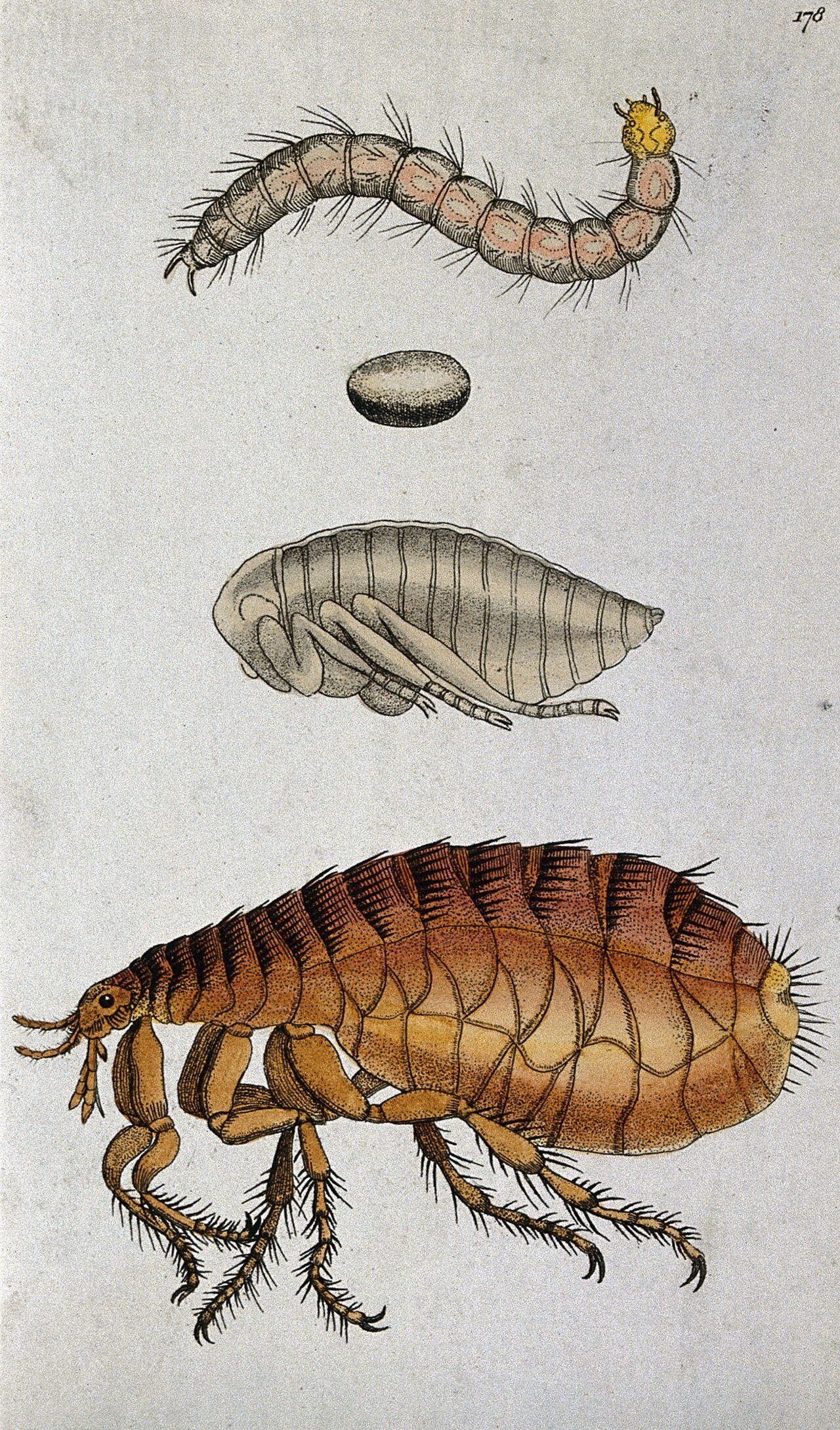
Nearly every flea in Ohio homes is the cat flea, which despite the name is the species found on dogs, cats, and most backyard mammals alike. An adult female begins laying within a day or two of her first blood meal and produces on the order of forty to fifty eggs a day. Those eggs are smooth and fall off the animal wherever it goes, concentrating them exactly where the pet sleeps, rests, and travels — indoors as well as out.
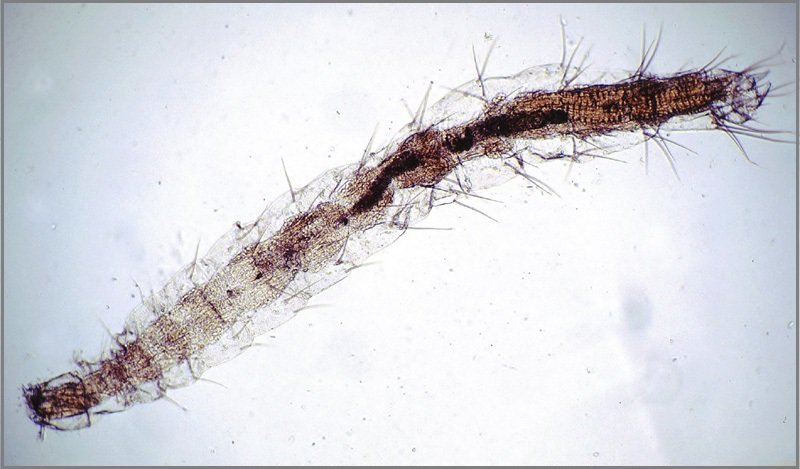
Eggs hatch into larvae that avoid light and burrow into carpet pile, upholstery seams, and floor cracks, feeding on organic debris including the dried blood in adult flea droppings. After a week or two they spin cocoons and become pupae, and that is the stage that defeats treatment. The cocoon is sticky, collects debris, and genuinely resists insecticide. A pupa can wait for weeks, sometimes months, until it detects the vibration, warmth, and carbon dioxide that mean a host has arrived.
That waiting explains the two complaints we hear most. A family returns from a week away to a house full of fleas that were not there when they left — a cohort of pupae detected footsteps and emerged at once. And a treatment appears to fail on day ten when it is working exactly as designed, because newly emerged adults have to reach treated surfaces before they die.
- Treat where the dog actually goes — the route, the shade, the deck steps, not the whole lawn.
- Vacuum daily for two weeks after treatment; the vibration triggers pupae onto treated surfaces.
- Empty the vacuum outside immediately, every single time.
- Wash pet bedding hot on the day of service, not the week before.
- Every animal on current veterinary prevention, not only the one scratching.
Why Treated Pets Still Get Fleas
Plenty of Fairfield households keep veterinary prevention current and still end up with an infestation, and the explanation is almost always the yard rather than the product. Prevention protects the animal — it kills fleas that get on the dog. It does nothing to stop an outdoor population from producing new fleas, and in these mature subdivisions there is a steady supply.
The supply comes from wildlife moving through at night. Forty-year-old landscaping provides continuous cover from the property line to the house, and the animals that use it rest under decks, under sheds, and along foundations, dropping eggs and adults into exactly the shaded, humid spots larvae need. A household with no wildlife problem at all can still be hosting a flea reservoir under the deck.
That is also why treating only the animal and only the indoors leaves you fighting a resupply. The three parts have to happen together: veterinary prevention on every animal in the house, targeted indoor treatment where larvae concentrate, and targeted outdoor treatment of the shaded harborage and the dog’s routine.
What Fleas Mean for the Dog
The health side is worth stating plainly, because it is usually the thing that decides how urgently a household acts. The most common genuine problem is flea allergy dermatitis — a hypersensitivity to flea saliva in which a single bite triggers intense itching, hair loss, and raw, broken skin, most often across the lower back and the base of the tail. A dog with this condition is genuinely miserable at flea levels a person would barely notice.
The second is tapeworm. Dogs and cats contract it by swallowing an infected flea while grooming, which is why a veterinarian who sees tapeworm segments will ask about fleas even when the household has not noticed any. The third, in very young, very small, or elderly animals carrying a heavy burden, is anemia — uncommon but serious when it occurs.
None of that is cause for alarm in a typical household infestation, and none of it is a reason to panic-buy products. It is a reason to resolve it in weeks rather than living with it through a summer, and it is why the veterinary side of this genuinely has to run alongside the treatment rather than after it.
What Treatment Involves
Indoors, treatment targets where eggs and larvae actually concentrate rather than the whole floor indiscriminately — pet resting areas, carpeted rooms, area rugs, upholstery the animal uses, and the perimeter where flooring meets baseboard. Materials including an insect growth regulator matter a great deal, because a growth regulator interrupts development so eggs and larvae never mature into biting adults, which shortens the entire cycle rather than only killing what is currently active.
Vacuuming is the part the household controls and it genuinely changes the timeline. It removes eggs and larvae, pulls larvae up out of carpet pile where sprays penetrate poorly, and the vibration triggers pupae to emerge onto treated surfaces where residual can reach them. Daily vacuuming for two weeks after service resolves this dramatically faster than identical treatment without it, and the canister goes outside every time — a vacuum holding flea eggs is an incubator in a closet.
Veterinary prevention on every animal has to run alongside it, and that part comes from your veterinarian rather than from us. Treating the house while an untreated pet keeps reintroducing adults is a cycle that never closes, and it is the single most common reason a flea job needs a third visit.
Across Butler County
Hamilton to the north has a heavier under-porch reservoir on older properties. West Chester is east where field edges drive it, and Middletown is north with more carpet-over-slab.
General service is on the Fairfield pest control page.
Frequently asked questions
My dog is on flea prevention. How do we still have fleas?
Prevention protects the animal by killing fleas that get on it. It does nothing to stop the outdoor population from producing new ones, and in these mature subdivisions wildlife moving through at night maintains a reservoir under decks, sheds, and along foundations. The yard is almost always the answer.
Do I need the whole yard treated?
No, and we would rather you keep the money. Fleas die quickly in dry open sun, so the population sits in a few shaded humid spots — under the deck and shed, the north foundation, crawl access, and wherever the dog rests. Targeted treatment of those and the dog’s daily route does the job.
Why does under the deck matter so much?
Because it is dry, shaded, protected, and undisturbed, which is close to ideal for larval development. Nearly every house here has a deck, and if the dog goes under it or wildlife rests there, it is very often the single densest concentration of flea larvae on the property.
Why are there still fleas a week after treatment?
Pupae resist insecticide and emerge on their own schedule. Adults hatching over the following one to two weeks have to contact treated surfaces before they die. Continued activity in that window is the process working, not a failed treatment.
We came back from vacation and the house was full of fleas.
Classic pupal emergence. A cohort had been waiting for a host, and the vibration and carbon dioxide of people returning triggered all of them at once. Nothing new came into the house while you were gone.
Do I really need to vacuum every day?
It genuinely matters. Vacuuming removes eggs and larvae, pulls larvae out of carpet pile where sprays penetrate poorly, and the vibration triggers pupae to emerge onto treated surfaces. Daily vacuuming for two weeks shortens the whole thing substantially, and the canister goes outside every time.
Do fleas bite people?
They will, usually around the ankles and lower legs, though people are not their preferred host. Heavy biting of humans generally indicates a large population or an absent animal host, which is worth mentioning when you call because it changes where we look first.
What is an insect growth regulator?
A material that interrupts flea development so eggs and larvae never mature into biting adults. Including one stops the next generation rather than only killing the current one, and it is a large part of why professional treatment resolves faster than store-bought products.
Is my dog actually at risk, or is this just a nuisance?
Mostly a nuisance, with three real exceptions. Flea allergy dermatitis is a hypersensitivity to flea saliva where a single bite causes intense itching and raw skin across the lower back and tail base — genuinely miserable at levels you would barely notice. Tapeworm is contracted by swallowing a flea while grooming. Anemia is uncommon but serious in very young, very small, or elderly animals. All three argue for resolving it in weeks rather than living with it.