
Middletown was built in waves, and each wave termites treat differently. The South Main historic district holds substantial homes from the early 1900s on masonry foundations. Around them sit the neighborhoods that went up between 1940 and 1965 during the steel boom — one of the largest sustained company-town buildouts in Ohio — block after block of modest ranches and Cape Cods on shallow crawls and early slabs. Then the later additions toward the east side. The Great Miami runs through all of it, and a subterranean termite colony cares about exactly two things: moisture in the soil, and a way to reach wood.
The Postwar Slab Problem
The mid-century building wave here produced an enormous number of houses on slab-on-grade or shallow crawl foundations, and those are genuinely harder to inspect and protect than either an older basement or a modern subdivision home. A slab house has no basement from which to view the underside of the framing. There is no rim joist to check, no sill plate visible from below, and no crawl to enter. The first line of framing sits directly on concrete, and everything below it is inaccessible by design.
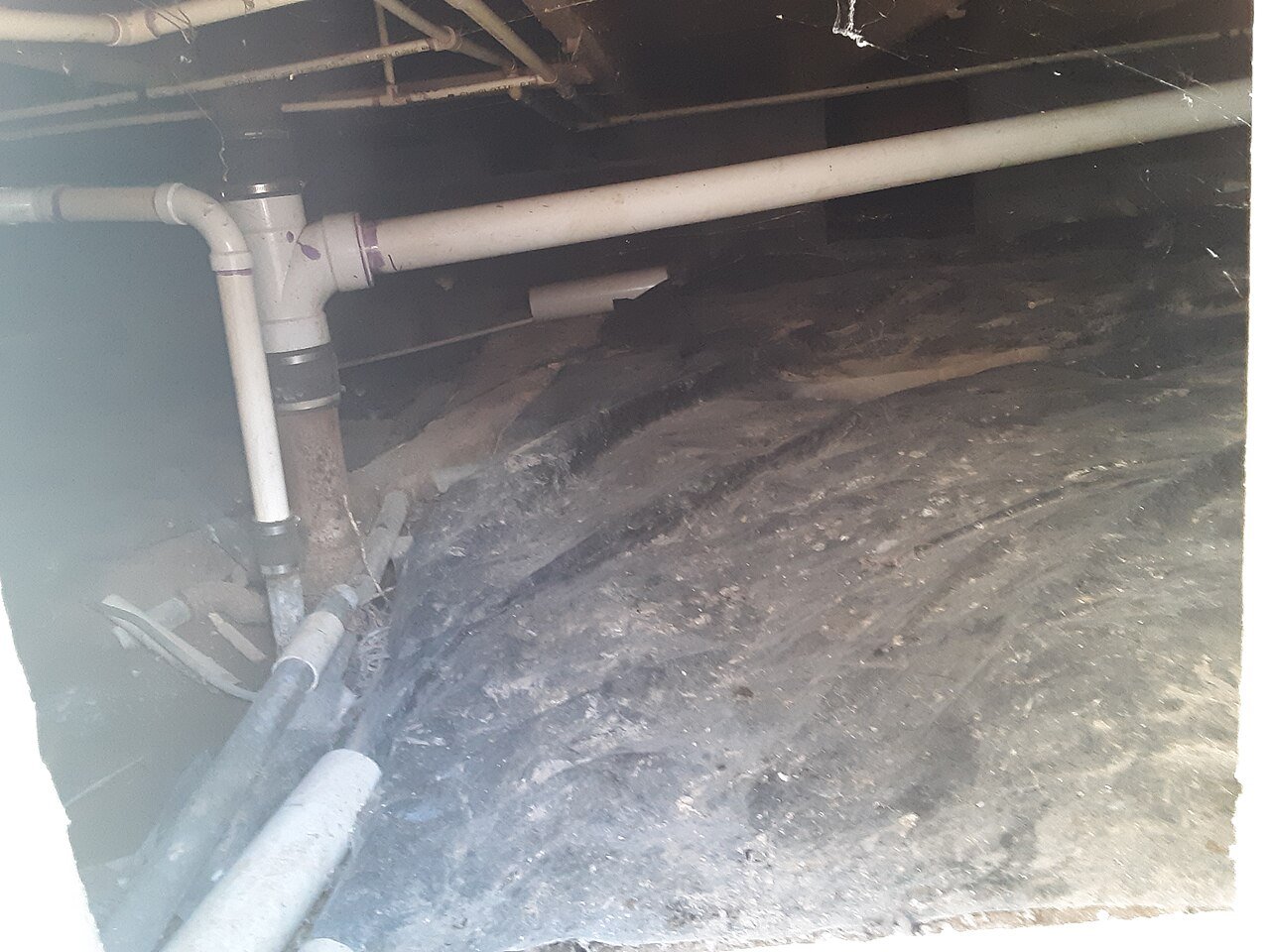
Termites reach that framing through the slab rather than around it. The routes are the expansion joint where the slab meets a foundation wall, the joints where a garage or porch slab was poured against the house, plumbing penetrations where a supply or drain line comes up through the concrete, and cracks that have opened as the slab settled over seventy years. A colony working up through a plumbing penetration into a wall cavity can operate for years with nothing visible in the living space.
That is why on a Middletown slab house the inspection concentrates on the perimeter, the garage, and any place a pipe comes through concrete — and why evidence, when it appears, tends to show up as blistered baseboard, a soft spot in a door frame, or mud tubing on the exterior foundation rather than as something obvious inside.
The Historic District Is a Different Job
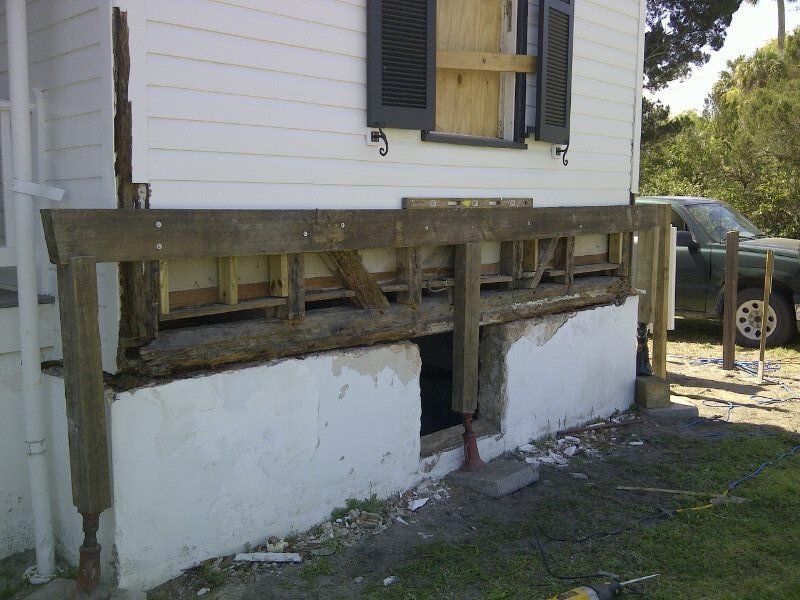
South Main and the surrounding older streets carry a completely different profile. Those houses sit on stone and early brick foundations with mortar joints that have opened, been repointed, and in many basements been parged over. Floor joists frequently bear on pockets cut into the masonry, which surrounds the bearing end of the joist on three sides and hides it from every angle. That joist pocket is the classic finding in older housing anywhere in Butler County, and it takes deliberate looking.
Many of these homes also have a dirt-floor section in the basement or a crawl beneath a rear addition, which puts soil in direct contact with the structure. And nearly all of them have layers — a porch enclosed in the fifties, a kitchen extended in the seventies, a deck added in the nineties — each creating a seam where new framing meets old masonry and each rarely receiving its own soil treatment.
Neither profile is worse than the other. They simply fail in different places, and a quote written without knowing which one your house is, is a quote written blind.
The River, the Clay, and the Water Table
Middletown sits on the Great Miami, and the neighborhoods nearest it carry a higher water table and heavier clay than ground further out. Subterranean termites require moisture, and consistently damp soil against a foundation is what makes a colony viable close to a structure rather than out in a yard somewhere.
On slab houses that shows up as persistent dampness at the slab edge, efflorescence on a garage wall, and landscape beds that never fully dry. On basement houses it is the familiar set — damp stone, a musty smell that does not clear, a sump running more than it used to. None of that proves termites, and plenty of houses have all of it with no activity at all. But it is the environment in which a colony that finds the house thrives.
The corrections are the same ones that benefit the building generally: downspouts discharging well away from the wall, grade sloping away rather than toward, gutters actually clear, and any failing sump addressed. On a slab house especially, controlling water at the perimeter is the highest-value preventive work available, because there is no basement in which to notice a problem developing.
- Slab expansion joints at garage, porch, and patio — the primary route on postwar houses.
- Plumbing penetrations through concrete — a concealed path into wall cavities.
- Joist pockets in stone or brick — the classic finding in the historic district.
- Settlement cracks in seventy-year-old slabs, often hidden under flooring.
- Damp landscape beds against the foundation where grade has crept above the original line.
Swarm Season and What It Means
The visible event is the swarm. On a warm, still afternoon in March, April, or May — often the day after rain — a mature colony releases winged reproductives, and they emerge indoors as readily as out. On slab houses they characteristically come up at the base of a wall, along a door threshold, or through a crack near a plumbing chase. Four equal-length shed wings in a small pile is the diagnostic detail, and no other insect around here leaves that behind.
The instinct is relief, because the swarmers die within hours indoors and the pile vacuums up. That instinct is wrong. Swarmers emerging inside a structure indicate a colony established in or under it long enough to mature, which generally takes three to five years. The swarm is not the start of the problem. It is the announcement of one that has been running quietly beneath the slab.
Foraging itself is year-round, because soil below the frost line stays workable. A colony feeding on a wall plate in January is doing the same damage it does in July. Seasonality controls when you notice termites in Middletown. It has nothing to do with when they eat.
What Treatment Actually Involves
On a slab house the standard approach is a continuous treated zone in the soil around the entire foundation, trenched where there is soil and drilled and injected where a garage slab, walk, porch, or driveway abuts the wall. On these lots that frequently means drilling through the garage slab along the common wall and treating the expansion joint directly, because that joint is the most likely route and it cannot be reached from outside.
On a basement or crawl house, interior work is more often part of it — treating at a dirt-floor section, at joist pockets, or in a crawl beneath an addition rather than relying on an exterior band alone. That is a judgment made after looking at the specific building.
Where hardscape or construction history makes a full liquid perimeter impractical, a monitored bait system is frequently the better answer: stations in the soil around the structure, inspected on a schedule, with active ones carrying material back to the colony. And the honest baseline either way — treatment is warranted when there is evidence. No live activity, no mud tubes, no damaged wood, no swarmers from the structure means the house is clear, and we will say so. If you are buying, what you want is the $99 WDI inspection, not a preemptive chemical job.
Across Butler County
Monroe is immediately south, Franklin and Carlisle are north across the Warren County line, and Hamilton is southwest with comparable historic stock.
General pest work is on the Middletown pest control page.
Frequently asked questions
My house is on a slab. Can termites even get in?
Yes, and slab houses are harder to inspect rather than harder to infest. They come up through the expansion joint where the slab meets a foundation wall, through joints at garage and porch slabs, through plumbing penetrations in the concrete, and through settlement cracks. There is no basement from which to notice it developing.
What would I actually see on a slab house?
Rarely anything obvious indoors early on. The usual signs are blistered or soft baseboard, a spongy spot in a door frame, mud tubing on the exterior foundation, or swarmers coming up at the base of a wall or along a threshold in spring.
What is a joist pocket?
In older stone and brick foundations, floor joists bear on pockets cut into the wall rather than on a sill plate on top of it. That leaves the bearing end surrounded by masonry on three sides and invisible from any angle. It is the classic finding in the South Main area and it takes deliberate looking.
I found a pile of wings on the floor by the door.
Almost certainly a termite swarm — four equal-length shed wings in a pile is the signature. It indicates a mature colony established in or under the structure, since colonies take three to five years to produce swarmers. That is the moment to have it looked at.
Does being near the river matter?
Indirectly. Neighborhoods nearer the Great Miami have a higher water table and heavier clay, and subterranean termites need moisture. Damp soil against a foundation makes a colony viable close to the house. On a slab house especially, drainage correction is the highest-value preventive work available.
Do you have to drill my garage floor?
Sometimes, and on a slab house it is often the most important part. The expansion joint between the garage slab and the common house wall is a likely route and cannot be reached from outside. We explain exactly where and why before anything is drilled.
Do you treat preventively if nothing is found?
No. If there is no live activity, no mud tubes, no damaged wood, and no swarmers from the structure, we tell you the house is clear and you keep your money. Preemptive treatment on a clean house is not something we sell.
Liquid or bait?
Liquid establishes a continuous treated zone in the soil and is the usual choice where there is soil to trench. Bait suits properties where extensive drilling through slabs, walks, and drives would be required, and it eliminates the colony rather than excluding it. The building decides which makes sense.