
The thing that makes fleas so frustrating in West Chester is that the fleas you can see are a small minority of the fleas you have. Roughly ninety-five percent of a flea population at any moment is not adult insects on a pet; it is eggs, larvae, and pupae distributed through carpet fibers, area rugs, upholstery, pet bedding, and the gaps between hardwood boards. Treat only the animal and you have addressed the visible five percent, which is exactly why so many households here go through three rounds of this before anyone calls.
The Life Cycle Explains Every Failure
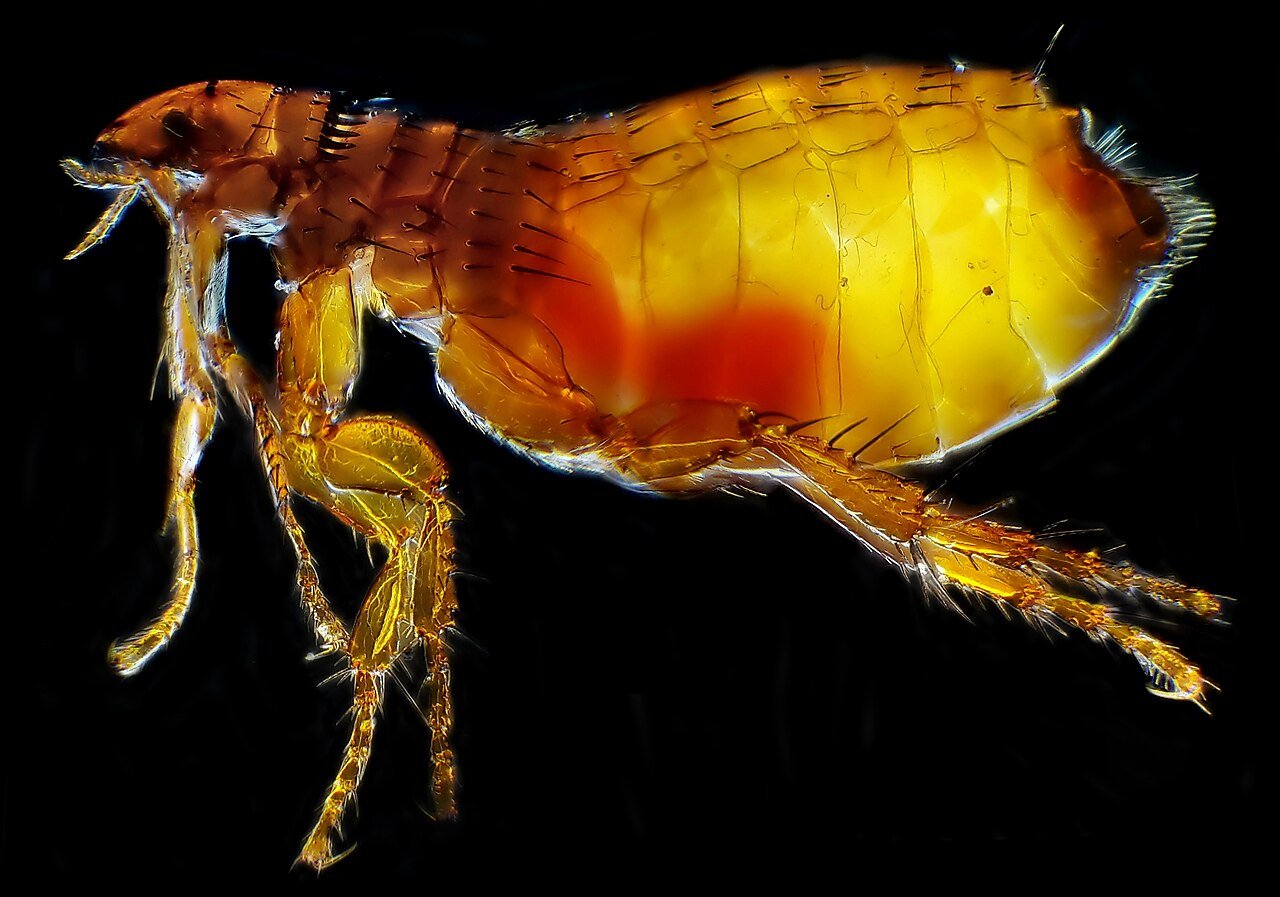
Nearly every flea we deal with in Ohio homes is the cat flea, which despite the name is the species found on dogs, cats, and most backyard mammals alike. An adult female begins laying within a day or two of her first blood meal and produces on the order of forty to fifty eggs a day. Those eggs do not stay on the animal. They are smooth and they fall off wherever the pet goes, which means the eggs are concentrated exactly where your pet sleeps, rests, and moves through the house.
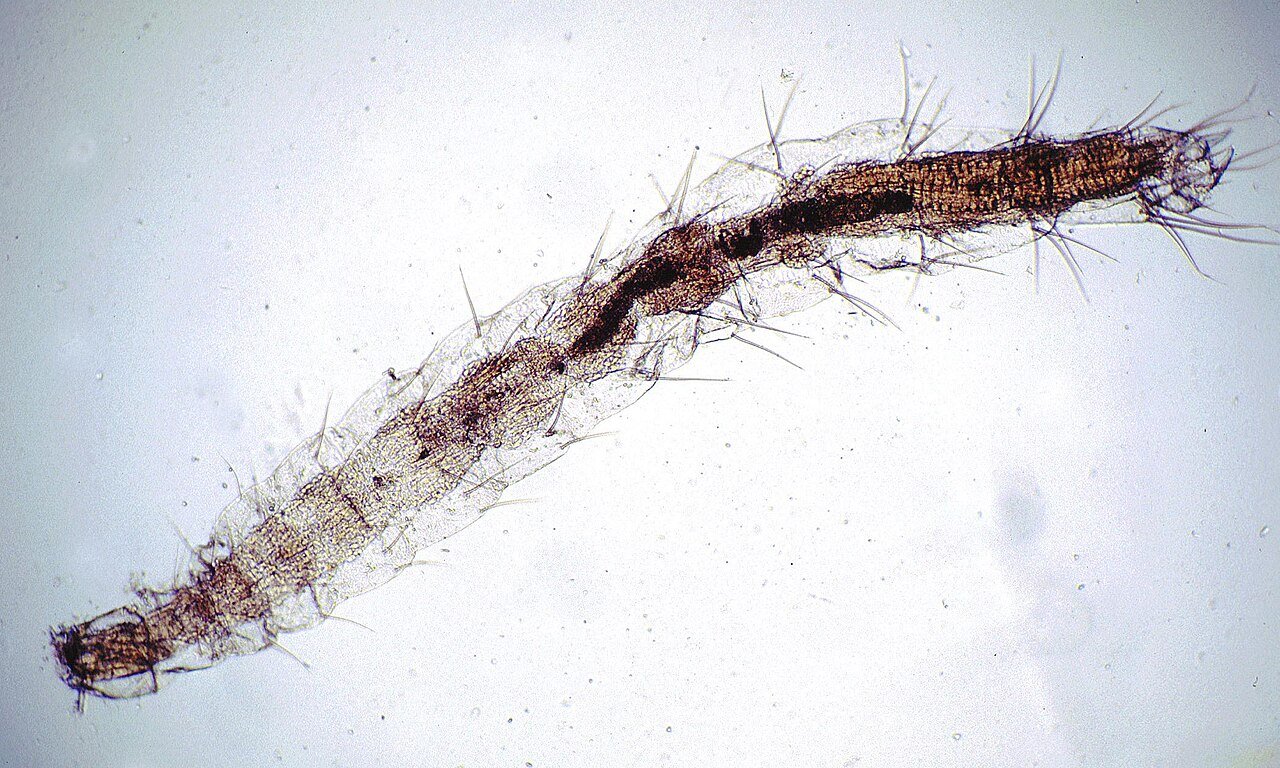
Eggs hatch into larvae that avoid light and burrow down into carpet, rug pile, upholstery seams, and floor cracks, where they feed on organic debris including the dried blood in adult flea droppings. After a week or two they spin cocoons and become pupae, and this is the stage that defeats treatment. The pupal cocoon is sticky, it collects debris, and it is genuinely resistant to insecticide. A pupa can also wait — for weeks, and in some conditions for months — until it detects the vibration, warmth, and carbon dioxide that mean a host has arrived.
That waiting behavior is why a family returns from a week away and walks into a house full of fleas that were not there when they left. Nothing new arrived. An entire cohort of pupae detected footsteps and emerged simultaneously. It is also why a treatment can look like it failed on day ten when it is actually working exactly as expected, because emerging adults have to reach the treated surfaces before they die.
How They Get Into a House With Treated Pets
Plenty of West Chester households do everything right with veterinary flea prevention and still end up with an infestation, and the explanation is usually the yard rather than the pet. Fleas are maintained outdoors by wild mammals, and this township provides them generously — subdivisions back onto open ground, the Voice of America park, creek corridors, and the fields still waiting on development. Animals move along those edges at night and drop eggs and adults wherever they rest.
The shaded, protected places under a deck, under a shed, in a crawl space, and along the foundation on the north side of the house are the ones that matter. Fleas need humidity and they die quickly in direct sun and dry open lawn, so the flea population in a yard is not spread evenly across it. It is concentrated in a handful of small, damp, shaded spots, which is genuinely good news because it means yard treatment can be targeted rather than blanket.
The other route is a previous occupant or a previous animal. Pupae surviving in a house between owners is a real phenomenon, and so is a newly adopted pet arriving with a population already established. Neither reflects on anyone. It is simply how the biology works.
- Vacuum before and after treatment — the vibration triggers pupae to emerge into treated surfaces.
- Empty the vacuum outside immediately, every single time.
- Wash all pet bedding hot on the same day as the treatment.
- Keep veterinary prevention current on every animal in the house, not just the one scratching.
- Expect fleas after treatment for one to two weeks as pupae hatch. That is the process, not a failure.
Why Vacuuming Is Not Optional
This is the single most useful thing a household can do and it is routinely skipped because it sounds too simple. Vacuuming physically removes eggs, larvae, and the organic debris larvae feed on, and the mechanical action of the beater bar pulls larvae up out of carpet pile where sprays do not reach well. More importantly, the vibration and warmth of vacuuming is one of the cues that triggers pupae to emerge from their cocoons.
That last part is what turns vacuuming into a weapon. Pupae are the stage insecticide cannot reliably kill, so the goal is not to kill them in the cocoon — it is to make them come out onto a treated surface where the residual can work. A household that vacuums daily for two weeks after treatment resolves a flea problem dramatically faster than one that treats and then leaves the carpet alone, and it is the same treatment either way.
Do it thoroughly and do it where the pet actually spends time: along baseboards, under furniture edges, the pet’s sleeping areas, area rugs on both sides where practical, upholstered furniture the animal uses, and the routes between rooms. Then empty the canister or bag outside every time, because a vacuum with flea eggs in it is a flea incubator sitting in your closet.
What Treatment Involves Here
Indoors, treatment covers the areas where larvae and eggs actually concentrate rather than the whole floor indiscriminately — pet resting areas, carpeted rooms, area rugs, upholstery the animal uses, and the perimeter where carpet meets baseboard. Materials that include an insect growth regulator matter, because a growth regulator interrupts development so that eggs and larvae never become biting adults, which shortens the whole cycle considerably.
Outdoors, the work is targeted at the shaded, humid harborage: under decks, along the north foundation, under sheds, in crawl access areas, and wherever pets rest in the yard. Treating open sunny lawn is largely wasted effort, and we would rather not charge you for it.
Every animal in the household needs to be on current veterinary prevention at the same time, and that part has to come from your veterinarian rather than us. Treating the house while an untreated pet keeps reintroducing adults is a cycle that never closes, and it is the most common reason a flea job needs a third visit.
Across the Lakota Corridor
Liberty Township has the same field edges and the same under-deck harborage. Fairfield is west, and Mason is east across the county line.
General service in the township is on the West Chester pest control page.
Frequently asked questions
My pets are on flea prevention. How do we still have fleas?
Usually the yard. Fleas are maintained outdoors by wild mammals moving along the field edges, creek corridors, and open ground around these subdivisions, and they concentrate in shaded damp spots under decks and along north foundations. Prevention protects the animal; it does not stop the outdoor population from producing new fleas.
Why are there still fleas a week after treatment?
Because pupae are resistant to insecticide and emerge on their own schedule. Adults hatching over the following one to two weeks have to contact treated surfaces before they die. Continued activity in that window is the process working, not a failed treatment.
We came back from vacation and the house was full of fleas.
Classic pupal emergence. A cohort of pupae had been waiting for a host, and the vibration and carbon dioxide of people returning triggered all of them to emerge at once. Nothing new came into the house while you were gone.
Do I really need to vacuum every day?
It genuinely matters. Vacuuming removes eggs and larvae, pulls larvae out of carpet pile, and the vibration triggers pupae to emerge onto treated surfaces where the residual can reach them. Daily vacuuming for about two weeks after treatment shortens the whole thing substantially.
Should I treat the whole yard?
No. Fleas die quickly in dry open sun, so a yard population is concentrated in a few shaded, humid spots — under the deck, under a shed, the north foundation line, and wherever pets rest. Targeted treatment of those areas is effective, and blanket lawn treatment is mostly wasted money.
Can fleas live in a house with no pets?
Adults need a blood meal to reproduce, but pupae can wait for weeks or months for a host. That is why a vacant house or a newly purchased home can produce fleas when people move in, and why an infestation can persist after a pet is gone.
Do fleas bite people?
They will, usually around the ankles and lower legs, though people are not their preferred host. Heavy biting of humans generally indicates a large population or an absent animal host, which is worth mentioning when you call.
What is an insect growth regulator?
A material that interrupts flea development so eggs and larvae never mature into biting adults. Including one is what stops the next generation rather than only killing the current one, and it is a meaningful part of why a professional treatment resolves faster than store-bought products.